
The allure of artificial marble lies in its ability to mimic the timeless elegance of its natural counterpart, offering a sophisticated and durable surface for a myriad of applications. From countertops and flooring to decorative accents, its smooth, often lustrous finish elevates any space. However, even the most resilient materials are not entirely immune to the ravages of time and usage. A dropped object, an accidental impact, or even subtle shifts in foundation can lead to the formation of unsightly cracks, threatening to mar the pristine beauty of your artificial marble surfaces. The sight of a fissure can evoke a sense of dismay, a feeling that the integrity and aesthetic appeal of your cherished materials are compromised. Yet, before succumbing to despair or considering costly replacements, it’s important to understand that these imperfections are often not the end of the story. The world of material restoration offers a captivating array of solutions, transforming the seemingly irreparable into the seamlessly renewed. The process of repairing artificial marble, particularly its cracks, is more than just a practical necessity; it’s an art form, a delicate dance between science and skill that breathes new life into what might otherwise be considered lost.
At its core, artificial marble, also known as engineered stone or composite stone, is a composite material. Unlike natural marble, which is quarried directly from the earth, artificial marble is manufactured. Its primary components typically include crushed natural stone (often quartz or marble chips), polymer resins, and pigments. These ingredients are mixed, heated, and then compressed under intense pressure, forming solid slabs. This manufacturing process allows for greater control over color, pattern, and consistency, and often results in a material that is denser, less porous, and more resistant to staining and scratching than some natural marbles. However, the very nature of its composite structure also dictates the approach to its repair. The polymer resins act as a binder, holding the stone particles together. When a crack occurs, it signifies a disruption in this matrix, a separation of the binder and the aggregate.
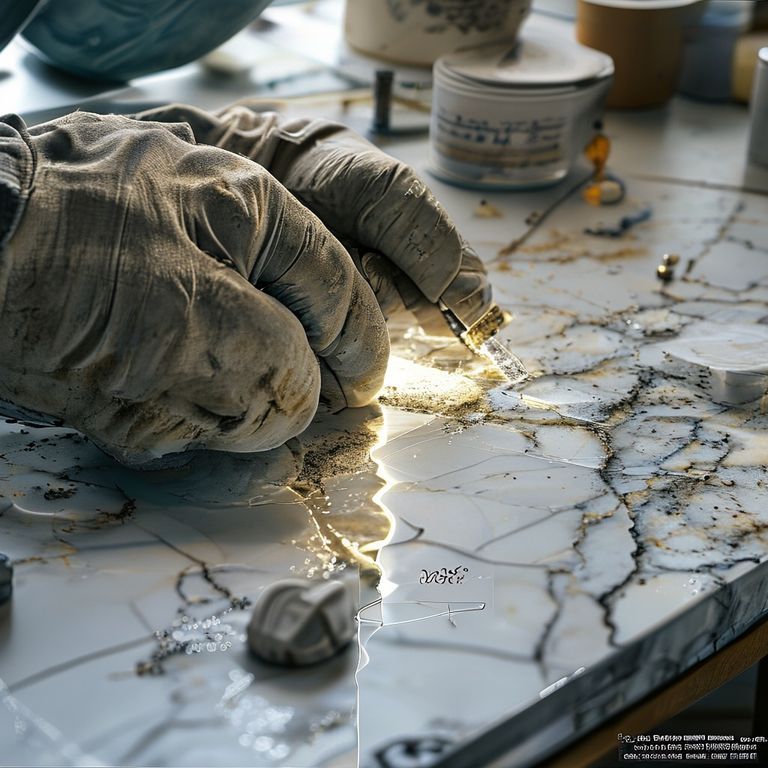
The approach to repairing a crack in artificial marble is highly dependent on the severity and nature of the damage. A hairline fracture, barely perceptible to the touch, requires a different intervention than a deep, gaping chasm that compromises the structural integrity of the surface. For hairline cracks, the primary goal is to fill the fissure with a material that bonds effectively and matches the surrounding surface as closely as possible. This often involves specialized adhesives designed for stone and composite materials. These adhesives are typically epoxy-based or acrylic-based, formulated to cure hard and create a strong bond. The key to a successful repair lies in selecting an adhesive that is not only strong but also aesthetically compatible. Many repair kits offer a range of colors or a clear formulation that can be tinted to precisely match the veining and hue of the artificial marble. The process begins with thoroughly cleaning the crack to remove any dust, debris, or loose particles that could interfere with adhesion. This might involve using a fine brush, compressed air, or a mild cleaning solution. Once clean, the adhesive is carefully applied, often using a fine-tipped applicator or a syringe, ensuring it penetrates the depth of the crack. Excess adhesive is then meticulously wiped away before it cures, a critical step that minimizes the need for extensive post-repair finishing. The curing process can vary depending on the product, but patience is essential. Rushing this stage can compromise the bond and the overall quality of the repair.
For more significant cracks, the process becomes more involved. These larger fissures may require a more robust filler material that can not only bond strongly but also provide structural support. In some cases, this might involve using a two-part epoxy filler. These fillers are typically mixed on-site, allowing for customization of color and consistency. They are often formulated to be slightly more viscous than simple adhesives, enabling them to fill larger voids effectively. The application process for these fillers is similar to adhesives, with an emphasis on thorough cleaning and careful application. However, for deeper cracks, multiple applications might be necessary, allowing each layer to partially cure before applying the next. This layered approach helps prevent shrinkage and ensures a solid, continuous fill. Once the filler has fully cured, the surface will likely require sanding and polishing to restore its original sheen. This is where the true artistry comes into play. Using progressively finer grits of sandpaper, starting with a coarser grit to level the repaired area and moving to much finer grits, the surface is smoothed. This meticulous sanding process gradually removes the excess filler and transitions the repaired area back to the texture of the surrounding material. The final stages involve polishing with specialized stone polishing compounds and buffing wheels to achieve a seamless blend of shine and texture, making the repair virtually indistinguishable from the original surface. This attention to detail, the slow and steady progression through sanding and polishing grits, is what separates a functional repair from an invisible one.
Beyond the simple act of filling, the visual integration of the repair is paramount. Artificial marble often features intricate veining and patterns. A successful repair not only fills the crack but also replicates these visual elements. This might involve using specialized tinting agents to color the filler, carefully matching the hues and tones of the surrounding marble. Artists in this field often use fine brushes and a keen eye for detail to paint subtle veins and striations onto the repaired surface, mimicking the natural flow of the original pattern. This level of customization transforms a basic repair into a true restoration, demonstrating a deep understanding of the material’s aesthetic qualities. The goal is not just to mend the damage but to erase the evidence of its existence, to return the surface to its former glory, if not better. The satisfaction derived from a well-executed repair lies not only in the strength of the bond but in the visual harmony achieved, a testament to the skill and dedication of the restorer. This intricate process underscores the fact that repairing artificial marble is not merely a DIY task for the faint of heart; it can also be a professional endeavor requiring specialized knowledge and tools.
The journey of restoring a cracked artificial marble surface is a captivating blend of precision engineering and artistic intuition. While DIY enthusiasts can achieve remarkable results with careful attention to detail and the right materials, professional restoration offers a level of expertise and refinement that is often unparalleled. These seasoned professionals possess an intimate understanding of artificial marble’s composition, its vulnerabilities, and the most effective methods for its rejuvenation. Their toolkit extends beyond basic adhesives and fillers, often incorporating specialized equipment for color matching, UV curing, and precision polishing. The initial assessment by a professional is a crucial step. They can accurately diagnose the cause and extent of the damage, determining whether the crack is purely cosmetic or if it indicates a deeper structural issue. This assessment guides the selection of the most appropriate repair strategy, ensuring a durable and aesthetically pleasing outcome.
For deeper or more complex cracks, professionals might employ techniques that go beyond simple filling. In some instances, they may use a process called “inlay repair,” where a precisely shaped piece of matching artificial marble or a specially formulated composite material is carefully cut and fitted into the crack. This technique provides superior structural integrity and can be particularly effective for larger voids or chips. The inlay is then bonded into place using high-strength adhesives, and the surrounding area is meticulously ground and polished to create a seamless transition. This method demands a high degree of precision, often requiring specialized cutting tools and extensive experience in material manipulation. Another advanced technique involves the use of UV-curing resins. These specialized resins are applied to the crack and then exposed to ultraviolet light, which rapidly hardens them, creating a very strong and durable bond. This method is particularly useful for repairs in areas where quick turnaround time is essential, as the curing process is significantly faster than traditional air-cured adhesives. Furthermore, professionals have access to a wider spectrum of pigments and color-matching systems, allowing them to achieve an almost perfect match for even the most unique artificial marble patterns. They can meticulously recreate the subtle variations in color and veining, ensuring that the repair is not only structurally sound but also visually invisible.
The process of sanding and polishing is where the true artistry of professional restoration shines. Professionals utilize a range of specialized sanding pads and polishing compounds, often employing variable-speed grinders and polishers. They work through a progression of grits, starting with coarser abrasives to level the repaired area and gradually moving to ultra-fine grits that bring out the natural luster of the material. This meticulous process ensures that the repaired section blends seamlessly with the surrounding surface, achieving a uniform sheen and texture that is often indistinguishable from the original. The final stages might involve applying specialized sealants or coatings to protect the repaired area and enhance its longevity, further contributing to the overall aesthetic and functional restoration. This commitment to detail, from the initial diagnosis to the final polish, is what elevates professional artificial marble repair from a mere fix to a sophisticated art.
The investment in professional repair is often justified by the longevity and the undetectable nature of the results. While DIY kits are readily available and can be effective for minor imperfections, they often lack the specialized pigments, advanced adhesives, and precision tools that professionals employ. Moreover, attempting complex repairs without the necessary expertise can sometimes exacerbate the damage, leading to more costly interventions down the line. The peace of mind that comes with knowing a skilled hand has meticulously restored your prized surfaces is invaluable. It’s about preserving the beauty and integrity of your home, ensuring that your artificial marble continues to be a source of admiration and enjoyment for years to come. The decision to repair or replace is a significant one, but with artificial marble, the possibility of restoration is often far more accessible and sustainable than one might initially assume.
The enduring appeal of artificial marble lies in its ability to offer both aesthetic sophistication and practical resilience. When cracks appear, it can feel like a significant setback. However, the world of stone and composite restoration has advanced to a point where such imperfections are not necessarily permanent. Whether you choose to embark on a DIY journey for minor fissures or enlist the expertise of a professional for more substantial damage, the outcome can be truly transformative. The careful selection of materials, the patient application, and the meticulous finishing are all integral to the success of the repair. It’s a process that celebrates the inherent beauty of the material while skillfully mending its flaws. The ability to restore, to mend what appears broken, is a powerful testament to human ingenuity and our desire to preserve and enhance the environments we inhabit. The cracks in artificial marble, therefore, become not signs of decay, but opportunities for renewed beauty, showcasing the subtle yet profound art of mending. This commitment to restoration not only preserves the material’s aesthetic but also contributes to a more sustainable approach to home maintenance, prolonging the life of surfaces and reducing the need for resource-intensive replacements. The satisfaction derived from a perfectly restored surface is a quiet affirmation of skill, patience, and the enduring value of true craftsmanship.









