
The gleam of artificial marble countertops and surfaces has long been a hallmark of modern design, offering a sleek, durable, and often more budget-friendly alternative to its natural counterpart. Its seamless appearance, resistance to stains, and wide array of colors and patterns have made it a popular choice in kitchens, bathrooms, and commercial spaces alike. However, even the most resilient materials can bear the marks of time and everyday use. Scratches, chips, cracks, and dullness can diminish the aesthetic appeal and functionality of these surfaces, leaving one to wonder if their beloved artificial marble has reached the end of its lifespan. Fortunately, this is rarely the case. The world of artificial marble repair, often referred to as solid surface restoration or renovation, is a testament to the ingenuity of modern materials science and the skill of dedicated craftspeople. It’s an art form that breathes new life into worn surfaces, transforming them from lackluster to luminous once more.
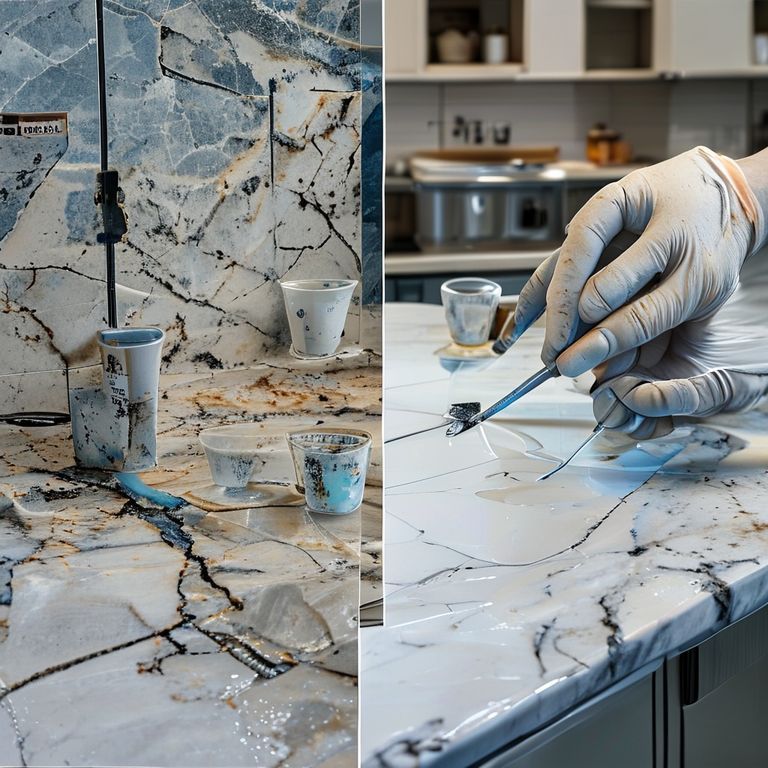
Understanding Artificial Marble: The Foundation of Repair Before delving into the repair process itself, it’s beneficial to understand what artificial marble is. Unlike natural marble, which is quarried from the earth, artificial marble is a composite material. The most common types are engineered stone (often made with quartz crystals bound by resin and pigments) and solid surface materials (typically acrylic or polyester resins mixed with fillers and pigments). This composite nature is key to its repairability. While natural stone can be porous and prone to absorbing stains, engineered and solid surface materials are generally non-porous and more uniformly composed. This uniformity means that damage, while visible, often doesn’t penetrate to the core of the material in a way that makes repair impossible. Instead, it affects the surface layer, which can be meticulously addressed.
The Palette of Imperfections: What Can Be Repaired? The scope of artificial marble repair is surprisingly broad. From minor cosmetic blemishes to more significant structural damage, many issues can be rectified. Scratches: These are perhaps the most common culprits. Light scratches can often be buffed out with specialized polishing compounds. Deeper scratches may require a more involved process of filling and re-surfacing. Chips: Small chips, especially along edges, can be carefully filled with a color-matched resin or epoxy. The key here is precision in matching the color and texture to ensure the repair is virtually invisible. Cracks: Cracks can range from hairline fractures to more substantial splits. Hairline cracks can often be sealed with clear resins. Larger cracks require meticulous cleaning, stabilization, and then filling with a strong adhesive and pigment-matched material. Stains and Discoloration: While generally resistant to stains, some substances can still cause discoloration, particularly if left for extended periods or if the sealant has worn off. Specialized cleaning agents and, in some cases, light abrasion can remove these marks. Burn Marks: Light scorch marks can sometimes be abraded and polished away. More severe burns might require filling. Dullness and Loss of Sheen: Over time, the protective top layer can become abraded, leading to a dull finish. This is a prime candidate for resurfacing and polishing.
The Repair Toolkit: Essential Materials and Tools The art of artificial marble repair relies on a specific set of tools and materials, each playing a vital role in the restoration process. For professionals, this toolkit is extensive, but understanding the components offers valuable insight into the meticulous nature of the work. Adhesives and Fillers: These are the building blocks of repair. Epoxy resins and acrylic-based fillers are commonly used. Their ability to cure hard and accept polishing makes them ideal for filling chips and cracks. Colorants are often mixed with these fillers to achieve a perfect match with the surrounding material. Color Matching Systems: Achieving an invisible repair hinges on accurate color matching. Professionals use sophisticated color matching systems, often involving a spectrum of pigments that can be mixed in precise ratios to replicate the exact hue, veining, and subtle variations of the artificial marble. Abrasives: Sandpaper of various grits, from coarse to ultra-fine, is essential for leveling filled areas, removing scratches, and preparing surfaces for polishing. Diamond abrasives are also used for their durability and effectiveness. Polishing Compounds: These are fine abrasive pastes that smooth and bring out the inherent gloss of the material. They range from coarser compounds for initial smoothing to very fine polishes for a high-gloss finish. Sealants: Once repaired and polished, a sealant is often applied to protect the surface from future staining and damage, and to enhance its sheen. Specialized Tools: This can include heat guns (for manipulating certain types of solid surface materials), scrapers, spatulas, buffers, and high-speed polishers. For DIY enthusiasts, a more streamlined selection of these tools will suffice for minor repairs.
The Repair Process: A Step-by-Step Approach While specific techniques vary depending on the type of artificial marble and the nature of the damage, a general process can be outlined.
Assessment and Preparation: The first and most critical step is a thorough assessment of the damage. This involves identifying the material type, the extent of the damage, and the underlying cause. The area to be repaired is then meticulously cleaned and degreased to ensure optimal adhesion of any fillers or adhesives. Any loose debris or fractured material is carefully removed.
Filling and Bonding: For chips and cracks, the void is meticulously filled with a custom-mixed resin or epoxy. The filler is often applied in layers, allowing each layer to cure partially before the next is added. This prevents shrinkage and ensures a strong bond. For deeper cracks, specialized techniques might be employed to stabilize the material before filling.
Leveling and Shaping: Once the filler has fully cured, the excess material is carefully leveled and shaped to match the surrounding surface. This is where precision with abrasives comes into play, starting with coarser grits to remove bulk material and progressively moving to finer grits to achieve a smooth transition.
Polishing: The leveled area is then polished to restore the original sheen. This process begins with finer abrasive pads and culminates in the use of polishing compounds. The goal is to blend the repaired area seamlessly with the surrounding material, making the repair virtually undetectable. This stage requires patience and a keen eye for detail.
Sealing and Finishing: After polishing, the entire surface, or at least the repaired section, is cleaned and a high-quality sealant is applied. This not only protects the surface but also enhances its overall appearance, bringing back that factory-fresh luster.
The choice between professional restoration and DIY repair often comes down to the severity of the damage and the homeowner’s confidence and available tools. Minor scratches and small chips can often be tackled by a determined DIYer with the right guidance and products. However, for larger cracks, significant structural damage, or when an absolutely flawless finish is desired, engaging a professional solid surface restoration specialist is the most prudent course of action. Their expertise in color matching, material handling, and access to professional-grade tools and compounds ensures a superior outcome.
The satisfaction derived from a perfectly restored artificial marble surface is profound. It’s not merely about fixing a blemish; it’s about reclaiming the beauty and integrity of a key element in one’s living or working space. The meticulous process of repair, from the initial assessment to the final polish, is akin to a form of material alchemy, transforming perceived flaws into a testament to resilience and skilled craftsmanship. This transformation is particularly impactful in kitchens and bathrooms, areas that see the most daily wear and tear. A countertop that has borne the brunt of chopping, heat, and spills, yet can be rejuvenated to its former glory, offers a unique sense of accomplishment and sustainability.
The nuances of artificial marble repair are where the true artistry lies. Consider the challenge of color matching. Artificial marble isn’t a monolithic block of a single color. It often features intricate veining, subtle speckles, and variations in tone that mimic natural stone. Replicating this with resins and pigments requires a deep understanding of color theory and an experienced hand. A professional repair technician will spend considerable time analyzing the existing surface, sometimes even taking small samples or high-resolution photographs under different lighting conditions. They’ll then meticulously mix pigments, adjusting hues, opacities, and undertones until they achieve a match that is not just close, but indistinguishable to the naked eye. This might involve multiple test batches, carefully applied and evaluated before the final repair is undertaken.
Beyond color, texture also plays a critical role. Different artificial marbles have varying degrees of matte, satin, or high-gloss finishes. A successful repair must not only match the color but also the sheen. This is achieved through a carefully orchestrated sequence of abrasive grits and polishing compounds. Coarse abrasives are used to level the repair material, while progressively finer grits smooth the surface. The final stages involve specialized polishing compounds, often using felt or wool pads on high-speed buffers, to bring out the intended luster. If the original finish was a matte satin, the polishing will stop at that specific level of sheen, avoiding the mirror-like finish of a high-gloss surface, and vice-versa.
The repair of cracks, in particular, demands a structural understanding. A simple filling might not suffice if the crack is under stress. In such cases, professionals might employ techniques like routing a small channel along the crack and inserting a reinforcing rod or a strong, flexible adhesive that can absorb movement. The goal is to not only fill the visual gap but also to restore the structural integrity of the material, preventing the crack from reappearing or worsening. This is where the experience of a seasoned technician truly shines, as they can diagnose the underlying cause of the damage and apply the most appropriate restorative solution.
The question of DIY versus professional repair is a common one. For minor issues like superficial scratches on a dark surface, a skilled homeowner might achieve satisfactory results with a good quality scratch removal kit. These kits typically contain fine abrasive pads and polishing compounds designed for solid surfaces. However, it’s crucial to understand the limitations. Over-sanding can create a dull patch, and an imperfect color match will remain noticeable. For more significant damage – a large chip in a prominent area, a deep crack, or a surface with complex veining – the risks associated with DIY repair increase. The potential for making the damage worse, or creating a repair that is visually jarring, is substantial.
This is where professional solid surface repair technicians excel. They possess a diagnostic acumen that allows them to identify the exact type of artificial marble, understand its composition, and tailor their approach accordingly. They have access to a wider array of specialized fillers, colorants, and polishing agents, as well as industrial-grade equipment that ensures consistent and high-quality results. Furthermore, their experience allows them to anticipate potential issues, such as thermal expansion or the effects of different cleaning agents on the repaired area, and to implement preventive measures.
The economic argument for repair is also compelling. Replacing an entire artificial marble countertop or a large vanity unit can be a significant investment. Repair, on the other hand, is often a fraction of the cost of replacement. This not only saves money but also represents a more sustainable approach to home maintenance, reducing waste and extending the life of existing materials. In an era where sustainability and conscious consumption are increasingly valued, the ability to restore rather than replace is a powerful advantage.
Moreover, the aesthetic rejuvenation that repair offers is invaluable. A kitchen or bathroom is often the heart of a home. When its surfaces are marred by damage, it can detract from the overall ambiance and enjoyment of the space. A successful repair can restore that sense of pride and aesthetic pleasure, making the space feel fresh, clean, and inviting once more. It’s about preserving the intended design and functionality, ensuring that these surfaces continue to serve their purpose beautifully and effectively for years to come.
The ongoing maintenance of artificial marble is also a crucial aspect to consider after repair. Regular cleaning with mild soap and water, avoiding abrasive cleaners or harsh chemicals, and using coasters and trivets to protect against heat and scratches will go a long way in preserving the repaired surface and preventing future damage. Understanding the material’s strengths and weaknesses, and treating it with appropriate care, is the final step in the art of restoration – ensuring that the renewed beauty of the artificial marble endures. In essence, artificial marble repair is more than just a fix; it’s an act of preservation, a testament to the enduring appeal of well-maintained surfaces, and a smart, sustainable choice for modern living.









