
The heart of any home often beats strongest in the kitchen. It’s where culinary dreams are born, where families gather, and where memories are made. And at the center of this vibrant hub often lie the countertops – the silent witnesses to countless meals, conversations, and everyday life. For many, artificial marble countertops are a cherished feature, their elegant appearance and practical nature making them a popular choice. However, even the most durable surfaces are susceptible to the rigors of daily use. Scratches from chopping, chips from dropped dishes, dulling from years of exposure, or even unfortunate stains can begin to mar their pristine surface, casting a shadow over the room’s overall aesthetic. But what if this damage wasn’t a permanent sentence? What if there was a way to resurrect these worn-out surfaces, to bring them back from the brink of dilapidation and restore their original luster? This is the realm of artificial marble countertop repair, a field that blends artistry with material science to achieve remarkable transformations.
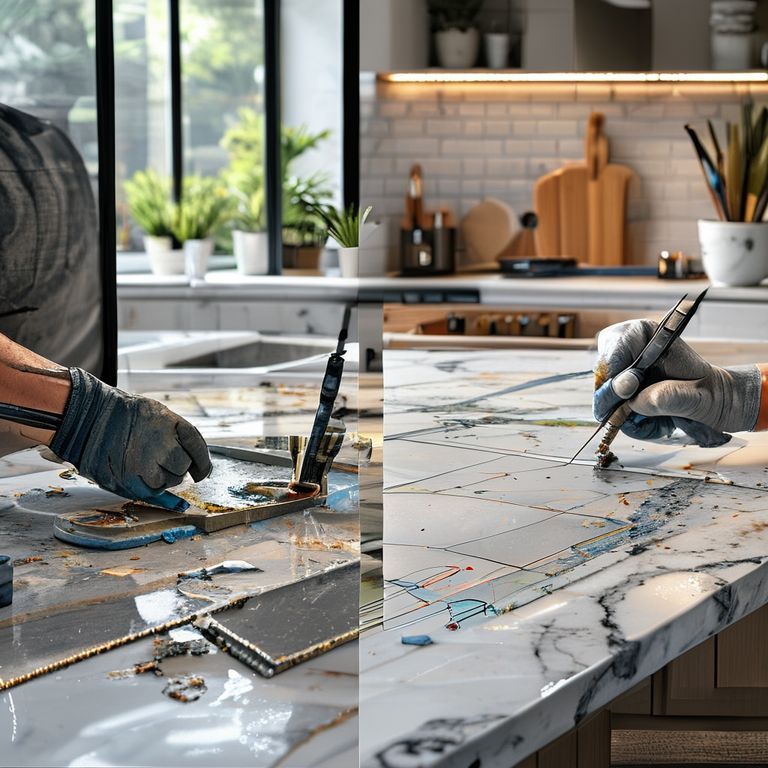
The allure of artificial marble, also known as engineered stone, lies in its sophisticated appearance and inherent resilience. Created by combining natural stone particles, such as quartz or marble, with resins and pigments, it offers a beautiful and often more practical alternative to natural stone. Its non-porous nature makes it resistant to stains and easier to clean, which is a significant advantage in a busy kitchen. However, this engineered composition also presents unique challenges and opportunities when it comes to repair. Unlike natural stone, which can sometimes be polished or sealed to mask minor imperfections, artificial marble requires a more nuanced approach. The resins and pigments are integral to its aesthetic, meaning that repairs must not only address the physical damage but also seamlessly blend with the existing pattern and color.
The journey of repairing artificial marble countertops is akin to a skilled artisan breathing life back into a masterpiece. It begins with a thorough understanding of the material’s composition and the nature of the damage. Minor scratches, often caused by everyday wear and tear, might seem superficial but can dull the surface and catch light in an unappealing way. These can sometimes be addressed with specialized polishing compounds and techniques. The key here is to carefully abrade the surface just enough to remove the scratch without creating a larger, more noticeable dull spot. This process often involves a series of progressively finer abrasive pads, starting with a coarser grit to level the damaged area and moving to finer grits to restore the shine. It’s a delicate dance, requiring a steady hand and a keen eye to ensure the repaired area blends seamlessly with the surrounding surface.
Deeper scratches or chips, on the other hand, present a more significant challenge. These are not mere surface blemishes; they represent a loss of material. In such cases, the repair process often involves filling the void. This is where the art of mimicry comes into play. Repair kits for artificial marble typically include specialized resins and color-matching compounds. The goal is to create a filler that not only matches the exact color and pattern of the countertop but also possesses similar structural integrity. This often involves mixing pigments to achieve a precise hue and then carefully applying the filler into the damaged area. Once hardened, the filled area will need to be meticulously sanded and polished to match the original finish. This stage is critical and can be the difference between a barely noticeable repair and a glaring imperfection.

The process of color matching is perhaps one of the most intricate aspects of artificial marble repair. Each slab of artificial marble, even from the same manufacturer, can have subtle variations in its veining and color distribution. Professionals in this field possess a trained eye and extensive experience in color theory and pigment mixing. They will meticulously analyze the surrounding countertop, observing the undertones, the intensity of the colors, and the patterns of the veins. Armed with a palette of pigments, they will then embark on a patient process of mixing and testing, aiming to create a filler that is virtually indistinguishable from the original material. This isn’t simply about matching a base color; it’s about replicating the complexity and nuance of the artificial marble’s design.
Beyond physical damage, artificial marble countertops can also suffer from a loss of sheen or a dull appearance over time. Exposure to harsh cleaning chemicals, excessive heat, or prolonged UV light can degrade the resinous component of the material, leading to a loss of its inherent luster. In these instances, a restoration process that goes beyond simple scratch repair becomes necessary. This often involves a multi-stage polishing process, using specialized compounds designed to bring back the deep, reflective shine that is characteristic of new artificial marble. It’s a rejuvenation, a process that removes the accumulated dullness and reveals the beauty hidden beneath. This type of restoration can dramatically alter the perception of the entire kitchen, making it feel brighter, cleaner, and more inviting.
The decision to repair artificial marble countertops is often driven by a desire to preserve the existing aesthetic and avoid the significant cost and disruption of a full replacement. A skillfully executed repair can not only restore the visual appeal of the countertop but also extend its lifespan, making it a sound economic and environmental choice. It’s a testament to the ingenuity of modern repair techniques and the dedication of those who master them, turning what might seem like irreparable damage into an opportunity for renewal. The next part will delve deeper into the practicalities of these repairs, exploring DIY possibilities and the crucial role of professional expertise.
The prospect of repairing artificial marble countertops might initially conjure images of costly professional interventions. While it’s true that complex damage often necessitates the skilled hands of a specialist, the world of countertop repair is not entirely inaccessible to the determined homeowner. For minor blemishes, a wealth of DIY solutions and products are available, offering a gateway into the world of surface restoration. These kits often provide a starting point for tackling everyday wear and tear, empowering individuals to take ownership of their home’s upkeep and aesthetics.
For superficial scratches, a good quality polishing compound designed specifically for engineered stone can be a game-changer. These compounds typically contain very fine abrasives that gently buff the surface, effectively leveling out minor imperfections without removing significant material. The key to success with DIY polishing lies in patience and following the product instructions meticulously. It’s usually recommended to start with a small, inconspicuous area to test the compound and technique. Applying the compound with a soft, lint-free cloth and working in a consistent pattern, often circular motions, is crucial. Over-polishing or using too much pressure can lead to an uneven finish or a dull spot, so a gentle and methodical approach is paramount.
When it comes to filling small chips or deeper scratches, DIY repair kits often include a two-part epoxy or resin system, along with a set of colorants. The process typically involves carefully mixing the resin and hardener, then adding colorants to match the countertop. This is where the challenge for the DIY enthusiast truly begins. Achieving a perfect color match without prior experience can be difficult. It often requires a keen eye for subtle variations in hue and undertones. Many kits provide a basic color chart, but replicating the intricate patterns of artificial marble can be a significant hurdle. The filler needs to be applied precisely into the damaged area, ensuring it fills the void without creating a raised or uneven surface. Once cured, the hardened filler will need to be sanded down to be flush with the surrounding countertop, followed by polishing to restore the shine.
The success of DIY repairs hinges significantly on the type and severity of the damage, as well as the homeowner’s skill and patience. For hairline scratches and very minor chips, a DIY approach can yield satisfactory results, breathing new life into a tired surface and offering a sense of accomplishment. However, for more extensive damage, such as large chips, cracks, or significant discoloration, attempting a DIY repair can sometimes exacerbate the problem. An improperly mixed filler, an inaccurate color match, or an uneven sanding job can create a more noticeable and potentially permanent blemish. In these situations, the cost and effort of a DIY attempt might outweigh the benefits, and professional intervention becomes the more prudent option.
This is where the expertise of professional countertop restoration specialists comes into play. These individuals are not merely technicians; they are often true artisans with a deep understanding of material science and a refined aesthetic sensibility. They possess specialized tools, industrial-grade polishing equipment, and a comprehensive palette of resins and colorants that far exceed what is typically available in DIY kits. Their ability to precisely match colors and patterns is a skill honed through years of practice and experience. They can analyze the unique characteristics of each countertop and formulate a repair that is virtually seamless.
Professional restoration goes beyond simply filling holes. It can involve techniques like diamond grinding to remove an entire layer of damaged material and then re-finishing the surface to like-new condition. They can address issues like thermal shock damage, which can cause delamination or cracking, and tackle stains that have penetrated deep into the material. For those seeking a complete overhaul, professionals can even re-polish and re-seal the entire countertop, restoring its original depth of color and shine across the whole surface, not just in localized repair areas. This comprehensive approach ensures a uniform and professional finish that is difficult, if not impossible, to replicate with DIY methods.
The decision between DIY and professional repair often comes down to a cost-benefit analysis. While DIY kits are considerably cheaper, the potential for error and the time investment can be substantial. If a DIY repair goes awry, the cost of rectifying the mistake by a professional can sometimes exceed the initial cost of hiring one in the first place. Professional repair services, while more expensive upfront, offer a guarantee of quality and a level of finish that is unmatched. For homeowners who value their time, seek a flawless result, or are dealing with significant damage, investing in professional restoration is often the wisest choice.
Ultimately, the beauty of artificial marble countertops lies not only in their initial splendor but also in their potential for renewal. Whether through the diligent efforts of a homeowner armed with a repair kit or the expert touch of a seasoned professional, the art of resurrection is alive and well in the world of countertop repair. It’s a testament to our ability to mend and restore, to preserve the beauty of our homes and extend the life of the materials we cherish, transforming worn surfaces back into the gleaming heart of our living spaces.









