
The allure of artificial marble lies in its remarkable ability to mimic the timeless beauty of its natural counterpart, while offering enhanced durability and versatility. From sleek kitchen countertops and luxurious bathroom vanities to sophisticated flooring and architectural accents, artificial marble has become a staple in modern design. However, even the most resilient materials can bear the marks of time and use. Scratches, chips, dullness, and stubborn stains can mar its pristine surface, diminishing its aesthetic appeal and potentially leading to more significant damage if left unaddressed. Fortunately, the realm of artificial marble repair is an art form in itself, a testament to human ingenuity in preserving and rejuvenating these beautiful surfaces.
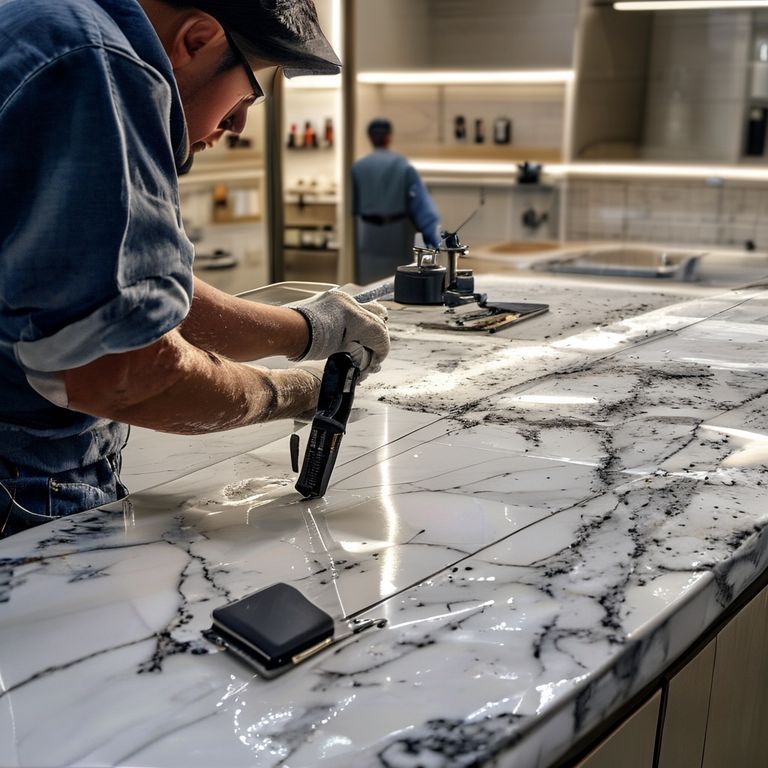
Understanding the nature of artificial marble is the first step in its effective maintenance and repair. Unlike natural stone, which is quarried and formed over millennia, artificial marble is a composite material. Its composition typically involves a blend of acrylic resins, polyester resins, or a combination of polymers, fillers (such as bauxite, marble dust, or alumina trihydrate), and pigments. This composition dictates its properties, including its porosity, hardness, and how it responds to different repair techniques. For instance, solid surface artificial marbles, often made with acrylic resins, are non-porous and can be more forgiving in terms of repairs, as damage often doesn’t penetrate deeply. Engineered quartz, another popular form of artificial stone, uses crushed quartz crystals bound with resins, making it exceptionally hard and resistant to stains and scratches, though repairs can be more specialized.
The most common adversaries of artificial marble’s flawless facade are scratches. These can range from fine hairline marks to deeper gouges, often incurred during daily use – sliding cookware, dropping utensils, or even the abrasive action of cleaning cloths. For minor scratches on solid surface materials, a gentle approach is often sufficient. Start with a fine-grit abrasive pad, such as a 400-grit or 600-grit wet/dry sandpaper. Employ a circular motion, applying even pressure, and periodically wet the surface to prevent overheating and to flush away debris. The goal is to gently abrade the surface around the scratch, effectively leveling it down. Be patient and work incrementally, checking your progress frequently. For slightly deeper scratches, you might need to move to a coarser grit, perhaps 220 or 320, before progressing through finer grits to restore the sheen.
Following the abrasion process, the surface will likely appear dull. This is where the restoration of the finish comes into play. For a matte or satin finish, you can often achieve the desired result by progressively using finer grit sandpaper, moving from 800 to 1500, and then to 2000 or even 3000 grit. For a high-gloss finish, which is common for many artificial marble installations, a polishing compound is essential. Apply a small amount of a dedicated artificial marble polishing compound or a non-abrasive automotive polishing compound to a soft, lint-free cloth. Buff the abraded area using firm, circular motions until the desired level of shine is restored. This process may require some elbow grease, but the results can be incredibly rewarding, making the scratch virtually disappear.

Chips are another common form of damage, particularly at edges and corners where impact is more likely. Repairing chips in artificial marble involves filling the void and then restoring the surface to match the surrounding material. For smaller chips, a specialized artificial marble repair kit is often the most practical solution. These kits typically contain a two-part adhesive or epoxy filler, color pigments, and application tools. The key to a successful chip repair is color matching. Carefully mix the filler and pigments to precisely match the color and pattern of your artificial marble. This may involve adding tiny amounts of different colored pigments until you achieve a near-perfect match. Once mixed, apply the filler to the chip, overfilling slightly to allow for sanding. Allow the filler to cure completely according to the manufacturer’s instructions.
After curing, carefully sand down the overfilled area, starting with a relatively fine grit sandpaper (e.g., 220 or 320) and progressing to finer grits, just as you would for scratch repair. The aim is to blend the repaired area seamlessly with the surrounding surface. Once the area is smooth and level, use a polishing compound to restore the original sheen. For larger chips or significant damage, a more professional approach might be necessary. This could involve using specialized resins and techniques to rebuild the damaged area, often requiring a skilled technician. The principle remains the same: fill, level, and polish, but the materials and application may be more advanced.
Stains are a persistent nuisance, and artificial marble, while generally resistant, can still succumb to them. The effectiveness of stain removal depends heavily on the type of stain and the composition of the artificial marble. For common household stains like coffee, tea, or food coloring, a mild detergent and warm water are often sufficient. Gently scrub the stained area with a soft cloth or sponge. If the stain persists, a non-abrasive household cleaner can be tried. Always test any cleaning product in an inconspicuous area first to ensure it doesn’t damage or discolor the surface.

For more stubborn stains, such as ink, rust, or permanent marker, a poultice can be an effective solution. A poultice is a paste made from an absorbent material (like baking soda, diatomaceous earth, or talc) mixed with a cleaning agent. For organic stains (food, drink), hydrogen peroxide can be used as the cleaning agent. For oil-based stains, mineral spirits or acetone might be effective. Mix your chosen absorbent material with the cleaning agent to form a thick paste, similar to peanut butter. Apply the poultice generously over the stain, covering it completely. Then, cover the poultice with plastic wrap and tape down the edges to keep it moist. Allow the poultice to sit for 24 to 48 hours, during which time it will absorb the stain from the material. Once removed, rinse the area thoroughly with water and dry. Repeat the process if necessary. It’s important to note that acetone can be a solvent and may dull certain types of artificial marble, so always test it in a hidden spot first.
Dullness is a gradual degradation of the surface’s shine, often caused by micro-abrasions from everyday cleaning and use, or by the residue from harsh cleaning chemicals. Restoring the shine typically involves the same process as removing fine scratches: progressive abrasion with increasingly finer grit sandpaper, followed by polishing. Many homeowners opt to have their artificial marble professionally polished periodically to maintain its original luster. This professional service often employs specialized polishing machines and compounds that can achieve a superior level of shine and smoothness. However, with the right tools and a bit of patience, a homeowner can achieve remarkable results on their own.
Regular, gentle cleaning is the cornerstone of preventing significant damage. Avoid abrasive cleaners, steel wool, or harsh scrubbing pads, as these can quickly dull and scratch the surface. For daily cleaning, a soft cloth dampened with warm water and a mild dish soap is usually all that’s needed. Wipe spills immediately, especially acidic substances like lemon juice or vinegar, as they can etch some types of artificial marble over time. Use coasters under glasses and placemats under dishes to protect against scratches and heat damage. For cutting, always use a cutting board.

The world of artificial marble repair is not just about fixing damage; it’s about understanding the material, employing the right techniques, and treating the surface with the care it deserves. Whether you’re tackling a minor scratch or a more significant chip, a methodical approach, patience, and the correct materials can restore your artificial marble to its former glory, ensuring its beauty endures for years to come.
The previous discussion laid the groundwork for understanding artificial marble’s composition and addressing common issues like scratches, chips, and stains. Now, we delve deeper into the nuances of repair, exploring more advanced techniques, preventative strategies, and the importance of choosing the right approach for different types of artificial marble. This continued exploration aims to equip you with the knowledge to confidently maintain and revitalize your artificial marble surfaces, ensuring they remain a source of pride and aesthetic appeal in your home.
When it comes to repairing more substantial damage, such as deep gouges or larger chips that go beyond the surface layer, the principles of filling and leveling remain paramount. However, the materials used become more critical. For many solid surface materials (like those made with acrylic resins), specialized repair kits are available that include color-matched fillers and hardeners. These fillers are often designed to chemically bond with the existing material, creating a strong and seamless repair. The process involves carefully cleaning the damaged area, applying the mixed filler to overfill the void, and allowing it to cure fully. Once cured, the excess filler is carefully sanded down, starting with a grit appropriate for the filler’s hardness (often around 180-220 grit) and progressively moving to finer grits until the repaired area is flush with the surrounding surface. The final stages involve wet sanding with increasingly fine grits (up to 2000 or 3000 grit) followed by polishing with a high-quality polishing compound.
For engineered quartz surfaces, repairs are generally more challenging due to the material’s extreme hardness and the nature of its composition. Deep scratches or chips on quartz are often best handled by professional restoration specialists. They possess the specialized diamond tooling and resins necessary to grind down the damaged area, fill it with a color-matched epoxy or resin, and then polish it back to a high shine. Attempting DIY repairs on deep damage to quartz can sometimes exacerbate the problem or lead to an uneven finish that is difficult to rectify. Minor surface scratches on quartz can sometimes be buffed out with specialized quartz polishing compounds, but caution is advised.
Beyond discrete repairs, artificial marble surfaces can suffer from a general loss of luster or a dull appearance over time. This dullness can be caused by a multitude of factors, including micro-scratches from abrasive cleaning, chemical etching from harsh cleaners, or simply the accumulation of microscopic residues. Restoring this lost sheen is often a multi-step process that begins with a thorough cleaning to remove any surface contaminants. Following this, a progressive abrasion technique is employed. This involves using a series of increasingly fine-grit abrasive pads or sandpaper, starting with something around 400 grit and moving up to 1500, 2000, or even 3000 grit. Each stage of abrasion removes the dull layer and creates a smoother surface for the next, finer grit to work on. This process is typically done wet to minimize dust and heat.
The final and arguably most crucial step in restoring the sheen is polishing. Once the surface has been abraded to a very fine grit, it will appear uniformly dull but smooth. A high-quality artificial marble polishing compound, or a specialized granite/quartz polish, is then applied. Using a soft, lint-free cloth or a polishing machine, the compound is worked into the surface with firm, circular motions. This process removes the microscopic imperfections left by the fine-grit abrasions and brings out the inherent reflectivity of the material. Patience is key here; multiple passes and consistent pressure will yield the best results. For those seeking a mirror-like finish, specialized polishing machines with variable speed settings can significantly enhance the outcome.
Preventative maintenance is, of course, the most effective strategy for preserving the beauty of artificial marble. A proactive approach can save considerable time, effort, and expense down the line. Daily cleaning is paramount. A soft cloth or sponge with warm water and a mild, pH-neutral dish soap is generally sufficient for routine cleaning. Avoid abrasive cleaners, scouring pads, steel wool, or powdered cleansers, as these can easily create micro-scratches that accumulate over time, leading to a dull appearance. Always wipe up spills immediately, especially acidic substances like wine, citrus juices, coffee, and tomato sauce, as these can etch or stain the surface if left to sit.
The use of coasters under beverages and placemats under dishes is a simple yet highly effective way to prevent water rings and scratches. Similarly, trivets should be used under hot pots and pans, as while many artificial marbles are heat-resistant, extreme or prolonged heat can cause discoloration or even thermal shock. When preparing food, always use a cutting board. Knives and sharp objects can scratch most surfaces, including artificial marble. For cleaning stubborn grime or residue, opt for specialized artificial marble cleaners or non-abrasive, all-purpose cleaners. Always test any new cleaning product in an inconspicuous area first to ensure it doesn’t cause discoloration or damage.
Understanding the specific type of artificial marble you have is also important for effective care. Solid surface materials, often made of acrylic or polyester resins, are generally non-porous and quite forgiving. Repairs are often easier because the damage doesn’t typically penetrate deeply. Engineered quartz, while incredibly durable and resistant to stains and heat, has a different repair profile. Its hardness makes it resistant to scratching but also more challenging to repair if deep damage occurs. Knowing whether you have a solid surface, engineered quartz, or another composite material will help you select the most appropriate cleaning and repair products and techniques.
In cases of significant damage, or if you’re simply not comfortable undertaking the repair yourself, professional restoration services are invaluable. These specialists have access to a wider range of materials, tools, and expertise, and can often achieve results that are indistinguishable from the original surface. They can handle everything from deep scratches and chips to refinishing entire surfaces. When considering a professional, look for those with experience specifically with artificial marble or solid surface materials. Ask for references and view examples of their work.
The maintenance and repair of artificial marble is not an insurmountable task. By understanding the material, employing gentle yet effective cleaning practices, and knowing when and how to address damage, you can ensure that your artificial marble surfaces retain their stunning beauty and functionality. It’s a commitment to preserving a material that brings both elegance and practicality to your living spaces, transforming minor imperfections into a testament to its enduring appeal and the care it receives. The art of revival, in the context of artificial marble, is about continuous engagement, understanding, and a touch of dedicated effort to keep these surfaces looking their absolute best.









