
The whisper of a perfectly honed countertop, the seamless integration of a sink, the subtle gleam that catches the light – these are the elements that elevate a space from functional to fabulous. In the realm of interior design, the choice of surfacing material is a pivotal one, shaping not only the aesthetic but also the very experience of a room. For years, homeowners and designers alike have been captivated by the versatility and beauty of engineered materials. Among these, “artificial stone” and Corian® stand out as prominent contenders, each offering a unique tapestry of properties. Yet, for many, the distinction between these two can feel as elusive as a mirage. This exploration aims to demystify these materials, peeling back the layers of their composition, fabrication, and inherent qualities to reveal what truly sets them apart.

Let’s begin by dissecting the term “artificial stone.” This is a broad umbrella term, encompassing a diverse range of composite materials engineered to mimic the appearance and often some of the characteristics of natural stone. The most prevalent forms of artificial stone are quartz surfaces and engineered stone, often referred to collectively as “quartz composite” or simply “quartz countertops.” The fundamental building blocks of these materials are typically crushed natural quartz crystals, which constitute a significant portion – often 90% or more – of the mixture. These natural quartz particles are then bound together with a polymer resin, usually a polyester or acrylic-based binder, and infused with pigments to achieve an astonishing array of colors and patterns. Some variations might also incorporate other minerals or glass fragments to create unique textural effects and visual depth.
The manufacturing process for quartz surfaces is a marvel of modern engineering. The raw ingredients are mixed, poured into molds, and then subjected to a process of vibrocompression under vacuum. This intense pressure and vacuum remove any air bubbles and ensure a dense, non-porous surface. The slabs are then cured, polished, and cut to size. This meticulous process results in a material that is not only visually stunning, replicating the veining of marble or the speckled beauty of granite with remarkable accuracy, but also boasts exceptional performance attributes.
One of the standout features of quartz surfaces is their inherent durability and low maintenance. Because the material is non-porous, it resists staining from common household liquids like wine, coffee, and oil. This means spills can generally be wiped away with ease, without the need for sealing that is often required for natural stone. Furthermore, quartz surfaces are highly resistant to scratches and heat. While it’s always advisable to use trivets and cutting boards to prolong the life of any countertop, quartz can generally withstand moderate heat exposure without scorching or discoloring. Its uniform composition also means that chips or deep scratches are less likely to reveal a different color underneath, unlike some natural stones. The fabrication of quartz surfaces is relatively straightforward for experienced fabricators, allowing for precise cuts and edge profiles. However, due to the hardness of the material, specialized tools are required, and the installation process often involves using adhesive to join seams, which can be visible under close inspection if not expertly executed.
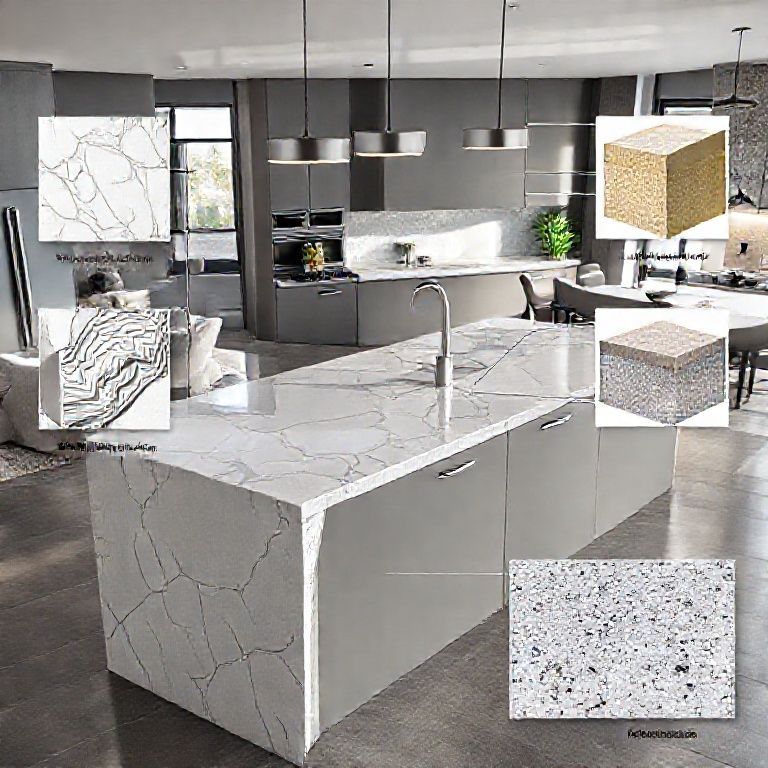
Now, let’s turn our attention to Corian®, a material that occupies a unique and pioneering space in the world of solid surfaces. Developed by DuPont in the late 1960s, Corian® was one of the very first solid surface materials to gain widespread recognition and popularity. Unlike quartz surfaces, which are primarily composed of natural quartz mineral, Corian® is an acrylic polymer composite. Its composition is typically around one-third acrylic resin (polymethyl methacrylate, or PMMA) and two-thirds natural minerals, primarily aluminum trihydrate (ATH). This ATH is derived from bauxite ore and gives Corian® its characteristic matte finish and its fire-retardant properties. Pigments are added to achieve a vast spectrum of colors, from solid, vibrant hues to patterns that emulate the look of stone or wood.
The manufacturing process for Corian® involves mixing the acrylic resin with the ATH and pigments, then casting the mixture into sheets or shapes. This casting process allows for a remarkable degree of design flexibility. Corian® is essentially a solid, homogeneous material throughout its entire thickness, meaning that the color and pattern are consistent from the surface all the way through. This uniformity is a key differentiator and unlocks a host of design possibilities that are not as readily achievable with other materials.
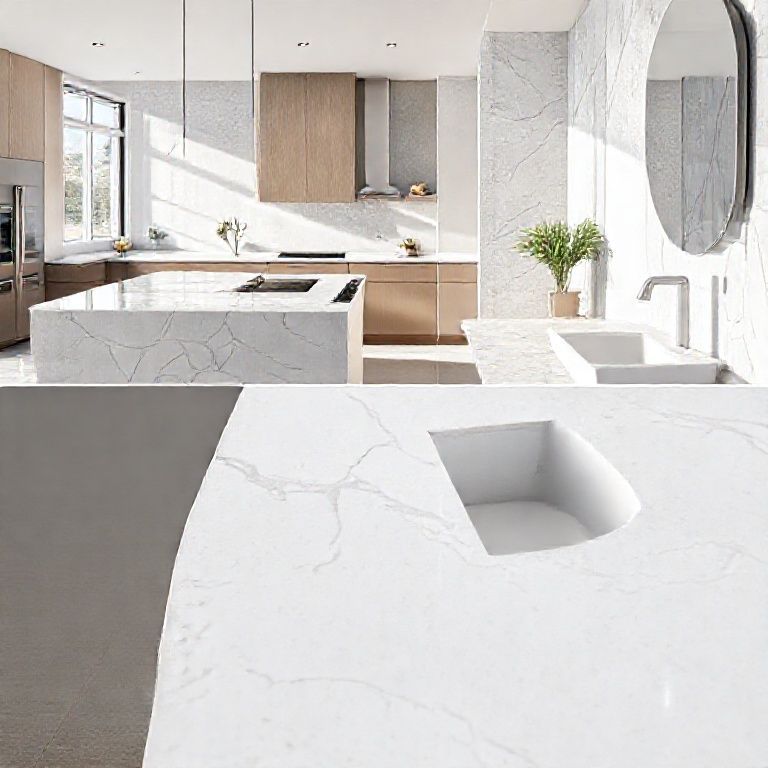
One of the most celebrated attributes of Corian® is its seamlessness. Because it is a solid, non-porous material that can be thermoformed and joined with special adhesives that cure to become invisible, it allows for the creation of truly monolithic designs. This means that sinks can be integrated directly into countertops with no visible seams, eliminating those unsightly grout lines where dirt and grime tend to accumulate. The same applies to backsplashes, shower walls, and even intricate curved forms. This seamless quality not only enhances the aesthetic appeal, offering a sleek and modern look, but also contributes to superior hygiene, as there are no crevices for bacteria to hide. Corian® is also non-porous, making it resistant to stains and easy to clean. While it is less resistant to scratches and heat than quartz surfaces, its ability to be repaired is a significant advantage. Minor scratches and scuffs can often be buffed out, and deeper damage can be professionally repaired by sanding and refinishing the surface, effectively restoring it to its original condition. The fabrication of Corian® requires specialized techniques, including cutting, routing, sanding, and thermoforming, which allows for a high degree of customization. It is typically installed by certified fabricators who are trained in the specific methods required to achieve the signature seamless results.
As we continue to explore the fascinating world of modern surfacing materials, the conversation around artificial stone and Corian® deepens, revealing how their distinct compositions translate into tangible differences in performance, aesthetics, and application. While both offer compelling alternatives to natural stone, their underlying structures dictate their unique strengths and ideal use cases.
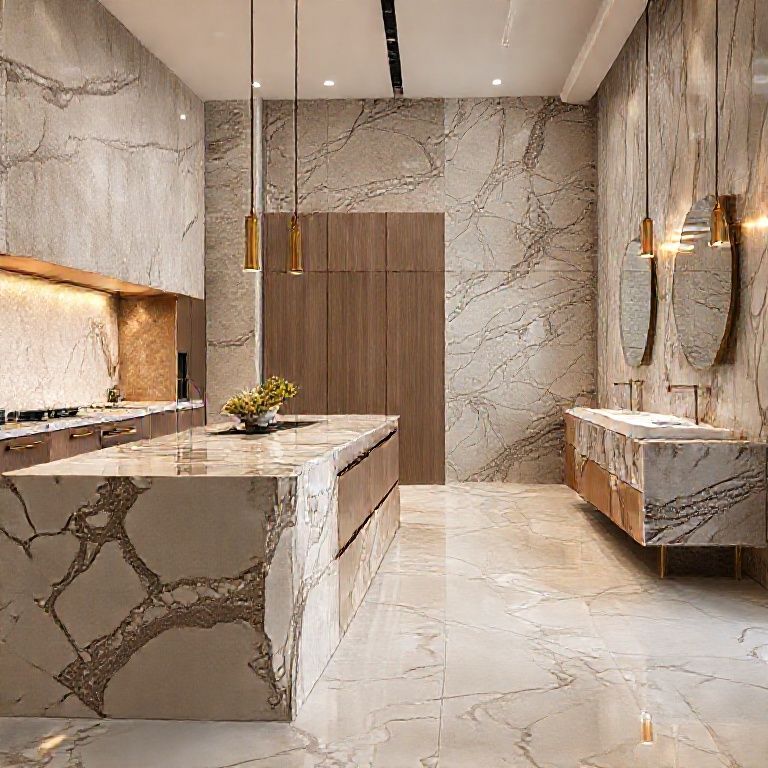
The aesthetic spectrum of artificial stone, particularly quartz surfaces, is vast and ever-expanding. Manufacturers have become incredibly adept at replicating the natural beauty of stones like marble, granite, and travertine, often with enhanced consistency and predictability. You can find quartz slabs that boast dramatic veining, intricate speckling, or subtle, understated elegance. The depth and complexity of these patterns are achieved through sophisticated printing technologies and the careful layering of pigments and quartz particles during the manufacturing process. The visual effect is often indistinguishable from natural stone to the untrained eye, offering designers the ability to achieve a specific look without the inherent variability and potential imperfections of quarried materials. The polished finish is the most common, offering a brilliant sheen that can illuminate a kitchen or bathroom. However, matte and textured finishes are also becoming increasingly available, further broadening the design possibilities. The consistent thickness and precise dimensions of quartz slabs also contribute to a streamlined fabrication and installation process, allowing for clean, sharp edges and a precise fit.
In contrast, Corian® offers a different kind of aesthetic – one that often leans towards modern, minimalist, and fluid design. Its homogeneous nature allows for an unparalleled range of solid colors, from crisp whites and deep blacks to vibrant reds and soft pastels. This makes it an excellent choice for spaces where a bold, monochromatic statement is desired, or where designers want to avoid the visual busyness that can sometimes accompany veined or speckled materials. Beyond solid colors, Corian® also excels at mimicking other materials, such as wood grain, brushed metal, or even translucent effects when specific formulations are used, allowing light to filter through. This translucency opens up exciting possibilities for backlighting, creating ambient glows in bars, reception desks, or decorative features. The ability to thermoform Corian® – to heat it and bend it into curves and organic shapes – is where its true design magic lies. This allows for the creation of truly unique countertops with integrated drainboards, waterfall edges that flow seamlessly to the floor, or even sculptural elements that blur the lines between furniture and fixture. The seamless integration of sinks, as previously mentioned, is a hallmark of Corian® design, providing a clean, hygienic, and visually uninterrupted surface.
When it comes to performance, the differences become more pronounced. The exceptional hardness of quartz surfaces, derived from the high percentage of natural quartz, makes them highly resistant to scratches. This is a significant advantage for busy kitchens where cutting and chopping are frequent activities. Similarly, their superior heat resistance means that hot pans can, with caution, be placed directly on the surface without causing damage. This robustness makes quartz surfaces an excellent choice for high-traffic areas that demand a durable and low-maintenance finish. However, this hardness can also make them more prone to chipping or cracking if subjected to a sharp, forceful impact, particularly on edges or corners. While repairs are possible, they are generally more involved than with Corian®.
Corian®, while not as inherently scratch or heat resistant as quartz, possesses a remarkable resilience in its own way. Its primary advantage lies in its repairability. Minor scratches, scuffs, and even small chips can often be sanded out and polished by a skilled fabricator, making the surface look as good as new. This is a major benefit for homeowners who want to maintain a pristine look over many years. Furthermore, its solid, non-porous nature makes it highly resistant to stains and mold and mildew, a critical factor in areas like bathrooms and kitchens where hygiene is paramount. The flexibility of Corian® in fabrication also contributes to its performance in specific applications. Its ability to be seamlessly joined means that large surfaces can be created without the visual interruptions of seams, which are not only aesthetically pleasing but also prevent moisture and bacteria from penetrating.
Considering the ideal applications for each material, quartz surfaces shine in environments that demand extreme durability and low maintenance, with a strong emphasis on replicating the look of natural stone. They are a popular choice for kitchen countertops, bathroom vanities, commercial flooring, and wall cladding in high-traffic areas where resilience is key. Their consistency and wide range of patterns make them a reliable option for designers seeking a specific aesthetic without the unpredictability of natural quarried materials.
Corian®, on the other hand, excels in applications where design flexibility, seamless integration, and hygienic properties are paramount. Its ability to be thermoformed and joined invisibly makes it ideal for custom countertops with integrated sinks, shower enclosures, reception desks, laboratory surfaces, and even furniture design. Its wide array of solid colors and its translucency open up creative avenues for architects and interior designers looking to create unique and visually striking environments. For healthcare settings or food service industries where sanitation is critical, Corian®’s non-porous and seamless nature offers significant advantages.
In conclusion, the distinction between artificial stone (primarily quartz surfaces) and Corian® lies fundamentally in their composition and the resulting properties. Quartz surfaces offer the robustness and aesthetic replication of natural stone with superior scratch and heat resistance. Corian® provides unparalleled design flexibility through its thermoformability and seamless fabrication capabilities, coupled with excellent repairability and hygienic qualities. Both materials represent significant advancements in surfacing technology, offering a wealth of options for creating beautiful, functional, and enduring spaces. The “better” choice is not an absolute, but rather a matter of prioritizing the specific needs and design aspirations of your project.








