
The allure of natural stone has captivated humanity for millennia. Its unique veining, rich colors, and inherent strength have adorned palaces, temples, and homes, serving as a testament to nature’s artistry. However, the quest for beauty and functionality in modern design has paved the way for a fascinating evolution: the rise of the artificial stone manufacturer. These aren’t simply imitators; they are innovators, chemists, and artists who, through sophisticated engineering and meticulous craftsmanship, are redefining the possibilities of surface materials. They harness the essence of natural stone’s appeal while imbuing their creations with enhanced properties that cater to the demands of contemporary living.

At its core, artificial stone, often referred to as engineered stone or solid surface, is a triumph of material science. While the specific compositions can vary, the principle remains consistent: a harmonious blend of natural minerals, resins, and pigments meticulously processed to create a material that is both aesthetically pleasing and remarkably durable. Quartz surfaces, a prominent category within artificial stone, typically comprise up to 90-95% crushed natural quartz, a mineral renowned for its hardness and resistance to scratching and abrasion. This quartz aggregate is then bound together with a polymer resin, usually polyester or epoxy, which provides flexibility and strength. Pigments are added to achieve an astonishing spectrum of colors and patterns, from the subtle elegance of Carrara marble to the bold drama of volcanic rock.
The manufacturing process itself is a marvel of precision. Large batches of the precisely measured ingredients are mixed thoroughly to ensure uniformity. This mixture is then poured into molds, often vibrated to eliminate air pockets and achieve a dense, homogenous structure. For many engineered quartz products, this is followed by a process of compression and curing under intense heat and pressure. This critical step locks the particles together, creating an incredibly strong and non-porous surface. This non-porous nature is a significant advantage over many natural stones, which can be susceptible to staining from liquids like wine, oil, or coffee. The inherent resistance to stains, coupled with its ease of cleaning, makes engineered quartz a highly practical choice for busy kitchens and bathrooms.
Beyond quartz, the realm of artificial stone also encompasses other innovative materials like solid surfaces. These are typically composed of acrylic polymers and alumina trihydrate (ATH), a derivative of bauxite ore. Unlike engineered quartz, solid surfaces are manufactured as a homogenous material throughout their thickness. This means that minor scratches or damage can often be repaired by sanding and polishing, seamlessly restoring the surface to its original condition. The versatility of solid surface manufacturing allows for more fluid and organic shapes, making it ideal for intricate designs, integrated sinks, and seamless backsplashes that create a sophisticated, uninterrupted aesthetic. The non-porous quality is also a hallmark, contributing to superior hygiene by preventing the growth of mold and bacteria.
The advent of artificial stone manufacturers has democratized access to luxurious and high-performing surfaces. While natural stones like granite and marble can be prohibitively expensive and require specialized sealing and maintenance, engineered alternatives offer a comparable, and in many cases, superior, performance profile at a more accessible price point. This has empowered designers, architects, and homeowners to elevate their spaces without compromising on budget or functionality. The ability to achieve consistent color and pattern is another key benefit. Natural stone, by its very nature, possesses variations that, while beautiful, can sometimes pose challenges in achieving a perfectly uniform look across a large project. Artificial stone manufacturers can precisely control these elements, ensuring that the material selected will appear identical from slab to slab, simplifying design planning and execution.
Furthermore, the environmental considerations are increasingly influencing the landscape of artificial stone manufacturing. Many manufacturers are embracing sustainable practices, utilizing recycled materials in their formulations and optimizing their production processes to minimize waste and energy consumption. The durability of these engineered surfaces also contributes to their sustainability. A well-maintained artificial stone countertop can last for decades, reducing the need for frequent replacements and the associated environmental impact of material extraction and manufacturing. This commitment to both innovation and responsibility positions artificial stone as a forward-thinking choice for conscientious builders and consumers alike. The journey from raw materials to a finished, breathtaking surface is a testament to human ingenuity, transforming minerals and resins into a canvas for modern living.
The transformative power of artificial stone extends far beyond its material composition and manufacturing process; it lies in its sheer versatility and the endless design possibilities it unlocks for architects and interior designers. The palette offered by artificial stone manufacturers is virtually limitless. From the pristine white of a minimalist kitchen to the rich, earthy tones of a rustic bathroom, there is an engineered surface to complement every aesthetic. This breadth of choice allows for a level of customization that was once unimaginable, enabling designers to create truly unique and personalized spaces.
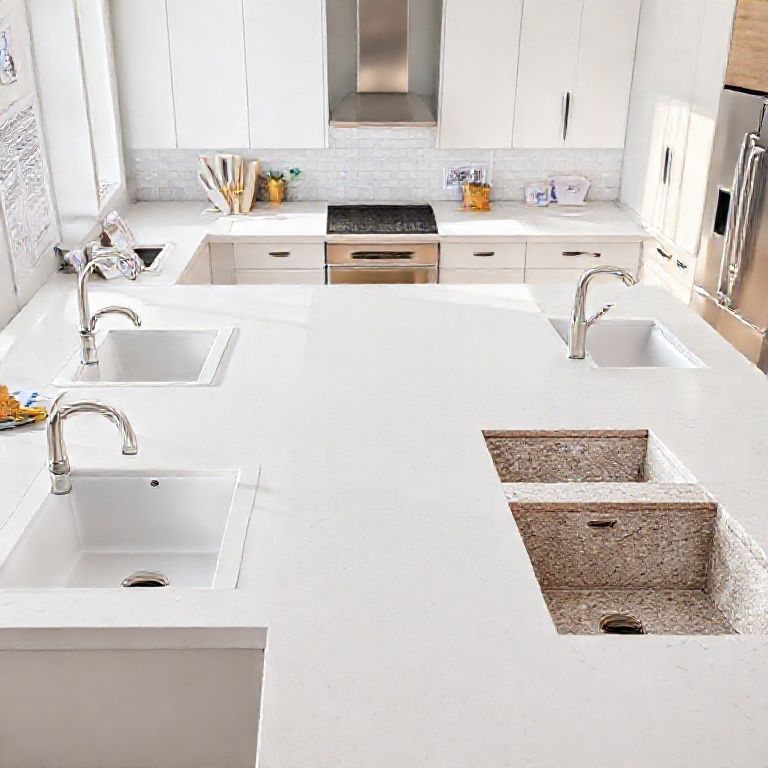
Take, for instance, the kitchen countertop. It is the functional heart of the home, a workspace that endures daily wear and tear, spills, and heat. Engineered quartz excels in this demanding environment. Its non-porous nature means that even acidic liquids like lemon juice or tomato sauce will not etch or stain the surface. Its hardness makes it highly resistant to scratches from knives, though the use of cutting boards is always recommended for longevity. The seamless integration of undermount sinks is another aesthetic and functional advantage. Unlike some natural stones where the seam between the countertop and the sink can be a point of weakness and a breeding ground for bacteria, the dense, homogenous nature of engineered quartz allows for a smooth, watertight bond, creating a clean and hygienic finish. The visual continuity achieved by an undermount sink, where the countertop material flows seamlessly into the basin, contributes to a sense of spaciousness and effortless elegance.
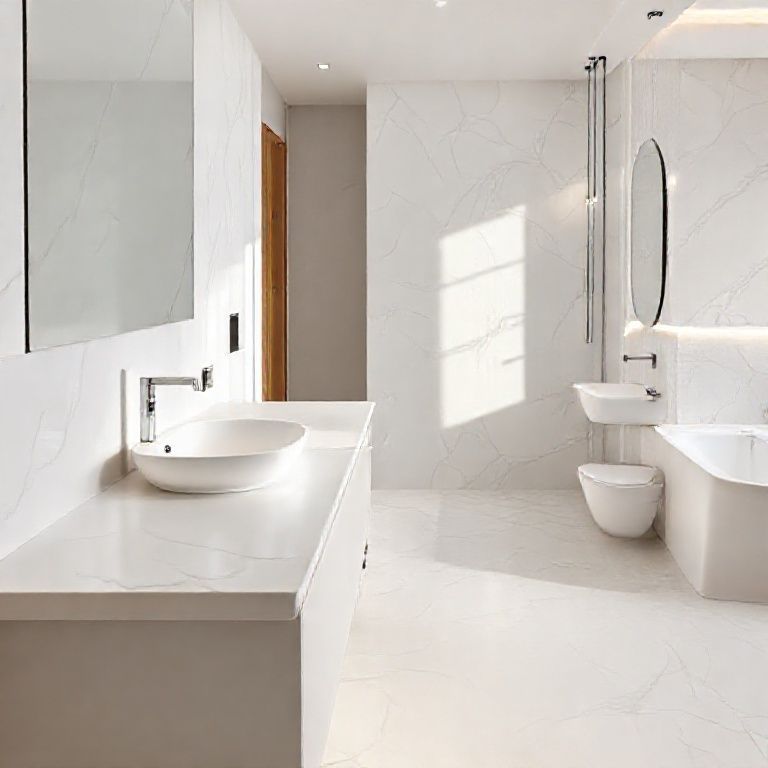
In bathrooms, artificial stone offers a sanctuary of style and practicality. Vanity tops, shower walls, and even bathtub surrounds can be crafted from these resilient materials. The ability to create large, seamless panels for shower walls eliminates grout lines, significantly reducing the potential for mold and mildew growth – a common concern in humid environments. This not only enhances hygiene but also contributes to a cleaner, more streamlined appearance. For freestanding vanities, the ability to create curved edges or intricate inlays with solid surfaces allows for bespoke designs that become focal points of the bathroom, demonstrating a sophisticated understanding of form and function. The tactile quality of artificial stone, often warm and smooth to the touch, adds to the sensory experience of the space, inviting relaxation and rejuvenation.
The application of artificial stone is not confined to residential spaces; its durability and aesthetic appeal make it an ideal choice for commercial environments. High-traffic areas such as reception desks, bar tops, restaurant tables, and retail displays benefit immensely from materials that can withstand constant use and are easy to maintain. Imagine a bustling hotel lobby with a striking reception desk crafted from a custom-colored engineered quartz, its polished surface reflecting the ambient light, exuding an air of sophistication and welcoming guests. Or consider a trendy restaurant where the bar top, subjected to countless glasses and spills, remains pristine thanks to the inherent stain and scratch resistance of its artificial stone surface. The ability to incorporate branding elements, such as logos or specific color schemes, through the precise manufacturing of these materials further enhances their appeal for commercial applications.
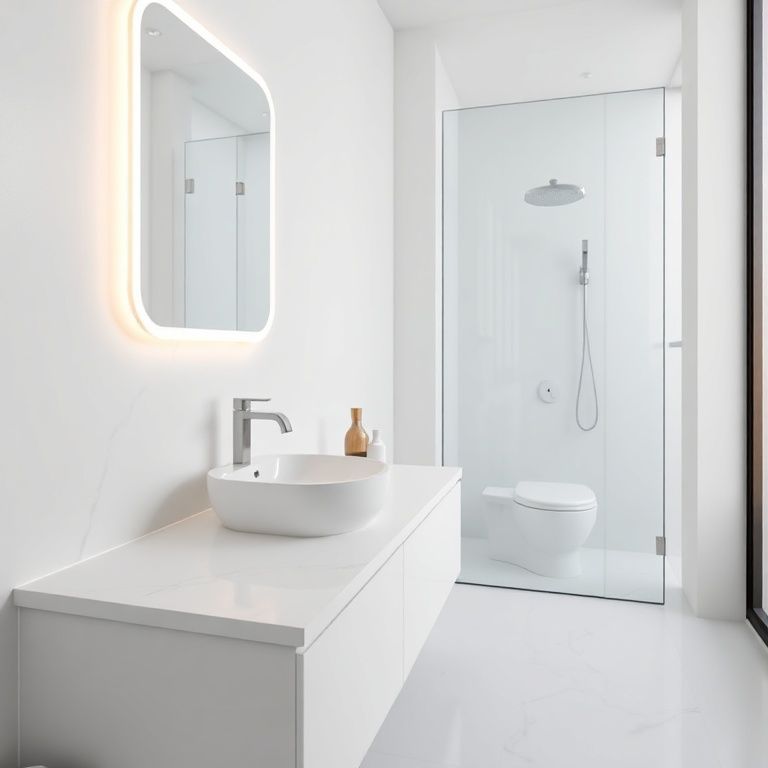
The trend towards minimalist and contemporary design has found a perfect partner in artificial stone. The clean lines, smooth finishes, and subtle color variations achievable with these materials align perfectly with the principles of modern aesthetics. Think of a sleek, handle-less kitchen where the countertops and cabinetry are unified by a seamless expanse of matte-finish engineered stone. The absence of unnecessary embellishments, coupled with the inherent beauty of the material, creates a sense of calm and order. Furthermore, the ability to achieve large slab sizes without the inherent weaknesses of natural stone means that expansive feature walls or dramatic waterfall islands can be realized, creating breathtaking architectural statements.
The future of artificial stone manufacturing promises even greater innovation. Research and development continue to push the boundaries of material science, exploring new binders, pigments, and aggregate combinations to enhance performance and expand aesthetic possibilities. We are seeing a growing interest in textured finishes, mimicking the natural variations found in wood or concrete, offering designers even more tactile and visual options. The integration of smart technologies, such as embedded lighting or wireless charging capabilities within surfaces, is also on the horizon, further blurring the lines between material and function. The artificial stone manufacturer is no longer just a producer of surfaces; they are curators of design, engineers of durability, and innovators shaping the future of the built environment, one exquisite slab at a time.









