
Sure, I can help you with that! Here’s a soft article comparing DuPont™ Corian® and quartz countertops, aiming for an attractive and engaging tone.

The heart of any home often beats strongest in the kitchen. It’s where culinary masterpieces are born, where laughter echoes during family gatherings, and where the day often begins and ends. And at the epicenter of this bustling hub lies the countertop – a surface that’s not just a workhorse but also a significant style statement. For homeowners embarking on a renovation or building a new sanctuary, the choice of countertop material can feel like a monumental decision. Two of the most popular contenders, each boasting a devoted following, are DuPont™ Corian® and quartz. While both offer compelling advantages, they inhabit distinct realms of material science and design philosophy. Understanding their nuances is key to unlocking the perfect surface for your unique vision.
Let’s begin our exploration with DuPont™ Corian®, a name that has become synonymous with innovative solid surface technology. First introduced by DuPont in 1967, Corian® was a revolutionary material, designed to be a more versatile and practical alternative to traditional natural stone. Its composition is a blend of acrylic polymer and alumina trihydrate (ATH), derived from bauxite ore. This unique formulation gives Corian® a distinctive set of properties that set it apart.
One of the most celebrated aspects of Corian® is its seamless nature. Because it’s non-porous, it can be fabricated and installed with inconspicuous seams. This means that a Corian® countertop can appear as a single, flowing piece, free from the grout lines that can trap dirt and bacteria in tile or the visible seams that can interrupt the visual continuity of other materials. This seamless integration lends itself beautifully to minimalist and modern designs, creating a sleek, uncluttered aesthetic. Furthermore, this non-porosity is a significant boon for hygiene. Spills and messes don’t penetrate the surface, making it exceptionally resistant to stains from common kitchen culprits like coffee, wine, and oils. Cleaning is typically a simple wipe-down with soap and water.
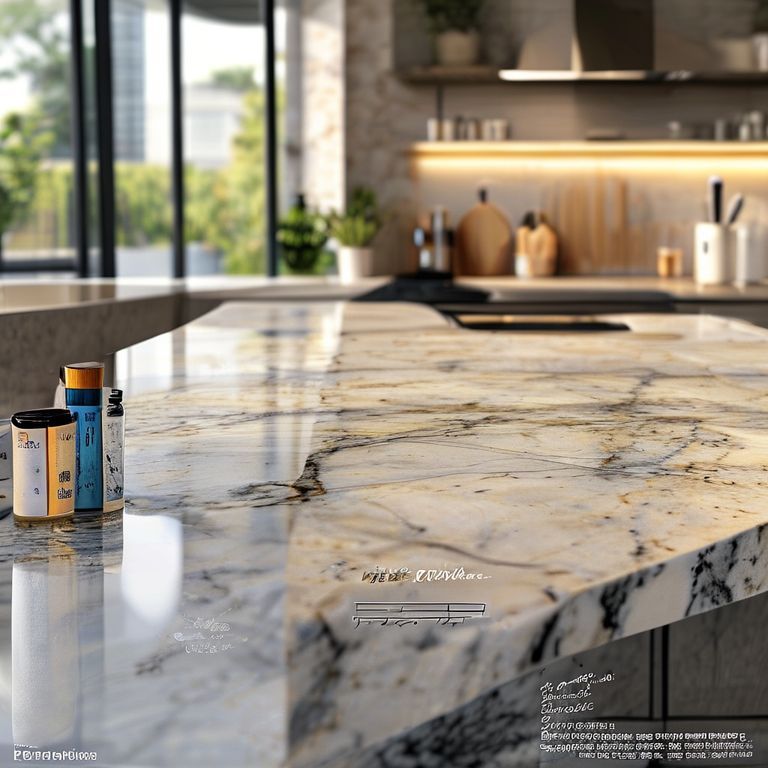
Beyond its hygienic properties, Corian® offers an unparalleled level of design flexibility. It can be thermoformed – meaning it can be heated and molded into virtually any shape. This opens up a world of creative possibilities, allowing for curved edges, integrated sinks that blend seamlessly with the countertop, and even intricate sculptural details. Imagine a waterfall edge that cascades elegantly down the side of your island, or a uniquely shaped sink that perfectly complements your kitchen’s layout. Corian® makes these design dreams a tangible reality.
The color palette available for Corian® is also vast and ever-evolving. From pristine whites and subtle neutrals to bold hues and intricate patterns that mimic natural stone, there’s a Corian® shade to match every décor. This extensive range allows for a highly personalized kitchen design, where the countertop can be a subtle backdrop or a vibrant focal point. Another practical advantage is its repairability. Minor scratches or chips can often be buffed out or repaired by a professional, restoring the surface to its former glory without the need for a complete replacement. This ability to refresh and renew the material over time adds to its long-term value and sustainability.
However, it’s important to acknowledge Corian®’s relative softness compared to quartz. While its durability is excellent for most kitchen activities, it can be more susceptible to scratches and heat damage than its engineered stone counterpart. Using cutting boards is a must for food preparation, and hot pots and pans should always be placed on trivets or heat pads. While repairable, avoiding such damage in the first place will preserve the pristine appearance of your Corian® surfaces for longer.
The installation of Corian® is a specialized process. Because it’s a solid surface, it’s typically fabricated off-site by certified fabricators and then installed as a complete unit. This ensures precision and quality in the finished product. The upfront cost of Corian® can vary widely depending on the color and complexity of the design, but it generally falls within a mid-range price point for premium countertop materials. When you consider its seamless design, hygienic properties, and design versatility, Corian® presents a compelling case for homeowners seeking a durable, beautiful, and highly customizable countertop solution that prioritizes seamless integration and ease of maintenance.
Now, let’s shift our focus to quartz, another material that has taken the design world by storm. Quartz countertops, often referred to as engineered stone, are a marvel of modern manufacturing. They are created by combining approximately 90-95% ground natural quartz crystals with about 5-10% polymer resins and pigments. This fusion results in a material that is incredibly strong, durable, and visually stunning, often rivaling the beauty of natural stone but with enhanced practical advantages.
The primary component, natural quartz, is one of the hardest minerals on Earth. This inherent hardness translates directly into the exceptional durability of quartz countertops. They are significantly more resistant to scratches, chips, and cracks than Corian® and even many natural stones like granite. This makes them an ideal choice for busy kitchens where heavy use and accidental impacts are a common occurrence. You can chop vegetables directly on a quartz surface (though a cutting board is still recommended to preserve knife edges) and rest hot pans on it for short periods without causing damage. The resin binders, while present in a smaller percentage, play a crucial role in enhancing this durability and providing a non-porous surface.
Speaking of non-porosity, this is another significant advantage of quartz. Unlike many natural stones that require regular sealing to prevent staining and bacterial growth, quartz is inherently non-porous due to the manufacturing process. This means it’s highly resistant to stains from liquids like wine, coffee, and juice. Cleaning is as straightforward as wiping with a damp cloth and mild detergent. The absence of pores also makes quartz inherently hygienic, as there are no tiny spaces for bacteria to harbor.
The aesthetic appeal of quartz is another area where it truly shines. The ground natural quartz crystals give it a natural depth and sparkle, and the addition of pigments allows for an almost infinite array of colors and patterns. Manufacturers have become incredibly adept at replicating the look of popular natural stones like marble and granite, often with more consistent veining and color distribution than their natural counterparts. You can achieve the luxurious look of Calacatta marble without the porous nature and high maintenance, or the rich, earthy tones of granite with added scratch resistance. Beyond stone replication, quartz also comes in solid colors, abstract patterns, and finishes that offer a modern and sophisticated look. The consistency in color and pattern from slab to slab also simplifies the design and installation process, ensuring a predictable and beautiful outcome.
The fabrication and installation of quartz are also a well-established process. Slabs are typically cut to size in a workshop and then installed on-site. While seams are generally less noticeable with quartz than with some other materials, they are usually visible, especially in intricate layouts or with patterned designs. However, advancements in fabrication techniques have significantly minimized their prominence.
In terms of maintenance, quartz is remarkably low-maintenance. Its non-porous nature means it doesn’t require sealing, and its durability means it can withstand the rigors of daily kitchen life with minimal fuss. For everyday cleaning, a soft cloth with soap and water is usually sufficient. For tougher stains, a non-abrasive cleaner can be used. The primary concern with quartz, similar to Corian®, is extreme heat. While it’s more heat-resistant than Corian®, prolonged exposure to very high temperatures can still cause discoloration or damage to the resin binders. Therefore, using trivets for hot cookware remains a good practice.
The cost of quartz countertops can vary depending on the brand, color, and complexity of the installation, but it generally sits at a higher price point than Corian®, often considered a premium material. When you weigh its superior scratch and heat resistance, its hygienic, non-porous surface, and its vast aesthetic possibilities, quartz offers a compelling blend of beauty and brawn for homeowners who demand a countertop that can stand up to the most demanding kitchen environments while exuding elegance and sophistication.
So, we’ve delved into the individual strengths of DuPont™ Corian® and quartz, painting a picture of two formidable countertop materials. But the ultimate question remains: which one is the right fit for your kitchen? The answer, as with most things in life and design, lies in a careful consideration of your priorities, lifestyle, and aesthetic aspirations. It’s not about one being definitively “better” than the other, but rather about which material aligns most harmoniously with your unique needs.
Let’s frame this decision by thinking about the practicalities of your kitchen life. If your household is a whirlwind of activity, with enthusiastic young chefs-in-training or a penchant for culinary adventures that involve a lot of chopping and dicing, then the sheer resilience of quartz might tip the scales. Its superior resistance to scratches and chips means you can worry a little less about the occasional accidental scrape or heavy item being set down a bit too forcefully. For those who embrace a “live and let live” approach to their countertops, where minor wear and tear are accepted as part of a well-used kitchen’s character, quartz offers peace of mind. The ease of maintenance, coupled with its robust durability, makes it a fantastic choice for those who want a beautiful surface that requires minimal fuss and can withstand the daily grind.
However, if your kitchen design vision leans heavily towards sleek, seamless integration and a truly bespoke aesthetic, then Corian® might be calling your name. The ability to create large, unbroken surfaces, integrate sinks seamlessly, and even incorporate curved elements opens up a universe of design possibilities that quartz simply cannot match. For those who dream of a minimalist sanctuary, where every line is clean and every transition is smooth, Corian® delivers an unparalleled sense of continuity and flow. Furthermore, if hygiene is an absolute paramount concern, and the idea of absolutely zero grout lines is highly appealing, Corian® excels. Its inherent non-porosity makes it incredibly easy to keep clean and sanitary, a significant advantage for families with young children or individuals with particular sensitivities. The repairability aspect of Corian® also adds a layer of long-term value. While quartz is incredibly durable, significant damage can sometimes mean a more involved repair or replacement. With Corian®, minor blemishes can often be buffed out, extending the life and pristine appearance of your countertop.
Now, let’s talk aesthetics. Both materials offer an incredible range of looks. Quartz is a master of mimicry, capable of replicating the most coveted natural stone patterns with remarkable accuracy. If you adore the veining of marble or the speckled beauty of granite but are deterred by their maintenance requirements, quartz offers a high-fidelity solution. Its consistent patterns also mean you can be confident in the final look, minimizing the guesswork often associated with natural stone variations. The depth and sparkle of the quartz crystals also lend a sophisticated, luminous quality to the surface.
Corian®, on the other hand, offers a different kind of aesthetic appeal. While it can be formulated to mimic stone, its true strength lies in its inherent versatility. It can achieve a matte finish, a subtle sheen, or a high gloss, and its ability to be molded into unique shapes allows for truly custom designs that go beyond simply replicating existing materials. Think of a striking, sculpted island base or a countertop with integrated drainage grooves that are invisible until needed. Corian® allows for a more sculptural and architectural approach to kitchen design, where the countertop can become a true design element in its own right. Its extensive color palette also includes many solid, vibrant colors that are not readily found in natural stone or easily replicated in quartz, offering a bolder design statement.
When it comes to cost, the landscape is nuanced. Generally, quartz tends to be more expensive than Corian®, particularly for more intricate designs or premium colors. However, the price can vary significantly. High-end Corian® colors and complex custom fabrications can certainly rival or even exceed the cost of mid-range quartz. It’s essential to get detailed quotes for your specific project, considering the material itself, fabrication complexity, edge profiles, and any integrated features like sinks. Remember that the initial cost is only one part of the equation; the long-term value, including durability and maintenance, should also be factored in.
Consider the heat tolerance. While both materials benefit from the use of trivets and hot pads, quartz generally exhibits slightly better heat resistance than Corian®. This is due to the high concentration of natural quartz crystals. However, it’s crucial to remember that neither material is impervious to extreme heat, and sustained high temperatures can damage the resins in both. If you’re someone who frequently places hot pots and pans directly on the counter (which, of course, is not recommended for any countertop material), quartz might offer a marginal advantage, but good habits are still the best defense.
Finally, think about your personal preferences and how you envision using your kitchen. Do you prefer the effortless elegance and seamless flow that Corian® provides? Or are you drawn to the robust, almost indestructible nature and the natural stone-inspired looks of quartz? Do you value the ability to sculpt and shape the material into unique forms, or do you prioritize a surface that can withstand the most vigorous use with minimal worry?
Ultimately, both DuPont™ Corian® and quartz are excellent choices that offer a significant upgrade to any kitchen. The “better” material is entirely subjective and depends on what you value most. If seamless design, custom shapes, and ultimate hygiene are your top priorities, Corian® might be your ideal match. If unparalleled scratch and stain resistance, a wide array of natural stone looks, and a virtually maintenance-free surface are what you seek, then quartz is likely to be your champion.
The journey to your dream kitchen is a personal one, filled with exciting choices. By understanding the distinct characteristics of DuPont™ Corian® and quartz – their strengths, their limitations, and their unique aesthetic contributions – you are empowered to make an informed decision that will lead to a beautiful, functional, and enduring centerpiece for your home. So, take a deep breath, consider your lifestyle, envision your ideal space, and choose the countertop that will best serve as the foundation for countless cherished memories to come.









