
The heart of any home, the kitchen, is a space where functionality dances with aesthetics. It’s where culinary creations come to life, where families gather, and where memories are made. And at the center of this vibrant hub often lies the countertop – a surface that bears the brunt of daily life while simultaneously defining the kitchen’s style. When embarking on a kitchen renovation or designing a new space, the choice of countertop material is paramount. Among the myriad of options, two contenders consistently rise to the forefront for their popularity and performance: DuPont™ Corian® solid surface and quartz.

These two materials, while both offering a sleek, modern finish, possess distinct characteristics that cater to different needs and preferences. Understanding these nuances is key to making an informed decision that you’ll cherish for years to come. This exploration isn’t about declaring a definitive “winner,” but rather about illuminating the unique strengths of each, empowering you to choose the material that best harmonizes with your lifestyle, design vision, and practical requirements.
Let’s begin by unraveling the magic of DuPont™ Corian®. For those unfamiliar, Corian® is not a natural stone; it’s a meticulously engineered composite material. Developed by DuPont in the late 1960s, it’s a blend of acrylic polymer and alumina trihydrate (ATH), derived from bauxite ore. This ingenious fusion results in a non-porous, homogeneous material that offers a unique set of advantages.
One of Corian®’s most celebrated attributes is its seamless integrity. Unlike natural stones or even some engineered materials, Corian® can be fabricated and installed with virtually invisible seams. This is achieved through a specialized adhesive that, when cured, becomes as strong and durable as the Corian® itself. The result? A smooth, unbroken surface that not only looks incredibly elegant but also offers unparalleled hygiene. The non-porous nature of Corian® means that it doesn’t harbor bacteria, mold, or viruses. Spills and crumbs have nowhere to hide, making it an exceptionally sanitary choice, particularly for families with young children or anyone who prioritizes a germ-free environment. Imagine preparing food without the worry of porous surfaces absorbing unwanted residues – that’s the Corian® promise.
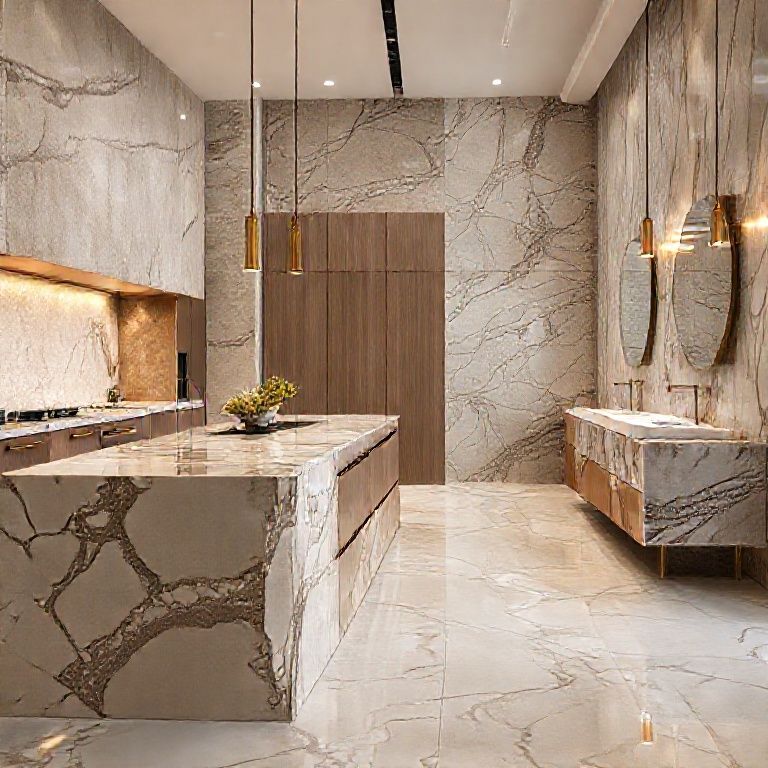
Beyond its hygienic benefits, Corian® boasts an impressive spectrum of colors and patterns. From crisp whites and subtle neutrals to bold hues and intricate veining that mimics natural stone, the design possibilities are vast. This versatility allows for a high degree of customization, enabling designers and homeowners to achieve a truly bespoke look. Want a vibrant turquoise countertop to add a pop of color to a minimalist kitchen? Corian® can deliver. Dreaming of a marble-like finish without the maintenance woes? Corian® offers stunning interpretations. Furthermore, its ability to be thermoformed means it can be shaped into curves, rounded edges, and even sculptural elements, opening up a world of creative design opportunities that are often unattainable with rigid materials like granite or quartz.
Another significant advantage of Corian® is its repairability. Scratches, chips, or even minor damage can often be repaired on-site by a qualified fabricator, restoring the surface to its original pristine condition. This ability to be “refreshed” can extend the lifespan of your countertops and maintain their beauty over time, a valuable consideration for a high-traffic area like the kitchen. This contrasts sharply with many other countertop materials where damage can be permanent and costly to fix.
However, like any material, Corian® does have its considerations. While durable, it is not as inherently scratch-resistant as quartz. Vigorous scrubbing with abrasive cleaners or dragging heavy, rough-bottomed pots and pans directly across the surface can lead to visible scratches. While these can be repaired, it’s a factor to keep in mind for those who tend to be a little less cautious in the kitchen. Similarly, while Corian® can withstand moderate heat, it is susceptible to thermal shock – sudden, extreme temperature changes. Placing a hot pot directly from a high-heat burner onto a cool Corian® surface could potentially cause discoloration or even cracking. Using trivets and hot pads is a non-negotiable habit for Corian® owners to preserve its pristine appearance.
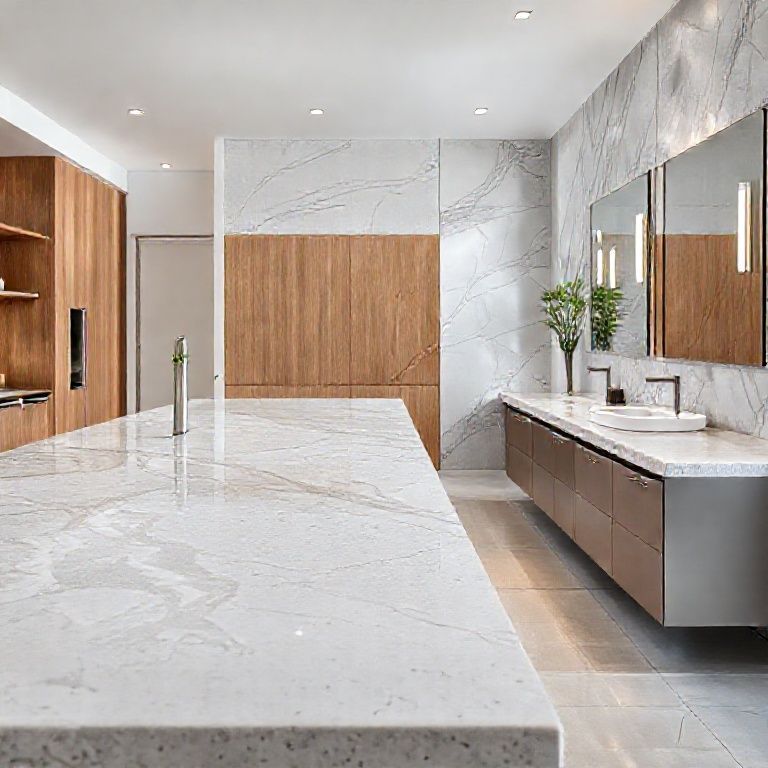
The aesthetic appeal of Corian® is also a matter of personal taste. While it offers a vast array of designs, some homeowners gravitate towards the unique, unrepeatable patterns found in natural stones like granite or marble. Corian®’s patterns, while sophisticated, are manufactured and thus can have a more uniform appearance. For those who crave the organic, one-of-a-kind character of natural stone, this might be a point of consideration.
In essence, DuPont™ Corian® solid surface presents a compelling case for homeowners seeking a hygienic, versatile, and aesthetically adaptable countertop solution. Its seamless installation, extensive color palette, and repairability make it a practical and beautiful choice, especially for families and those who value a low-maintenance yet highly customizable surface. It’s a material that prioritizes seamless integration and a clean, modern finish, offering a canvas for your culinary adventures without compromising on style or hygiene. As we delve into the world of quartz in the next part, we’ll see how it stacks up and what unique advantages it brings to the countertop arena.
Continuing our deep dive into the world of kitchen countertops, we now turn our attention to quartz. Unlike Corian®, which is a composite material, quartz countertops are engineered from one of the hardest minerals on Earth: natural quartz. Typically, quartz slabs are composed of about 90-95% crushed natural quartz, bound together with a small percentage of polymer resins and pigments. This powerful combination results in a surface that boasts an impressive array of strengths, making it a formidable competitor in the countertop market.
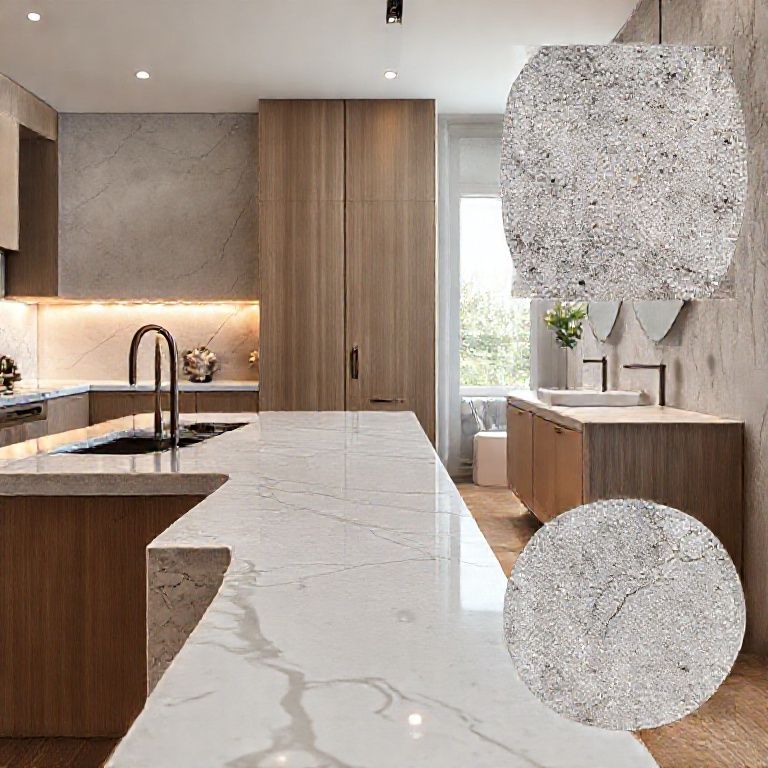
One of the most lauded characteristics of quartz is its extraordinary durability and hardness. Natural quartz is significantly harder than granite, and the addition of resins further enhances its resilience. This translates to exceptional resistance to scratches, chips, and cracks. For the home chef who enjoys effortless food prep, the ability to chop directly on the countertop (though still not generally recommended for the long-term preservation of your knives!) or place heavy appliances without significant worry is a major draw. Spills and stains are also a non-issue for quartz. Because it’s non-porous, liquids, food, and other common household substances simply can’t penetrate the surface. This makes it incredibly stain-resistant – no more fretting over spilled red wine or dark berry juices. The inherent non-porosity also means that, like Corian®, quartz is highly hygienic and resistant to the growth of bacteria and mold, offering peace of mind in a food preparation area.
The aesthetic appeal of quartz is another significant factor in its popularity. While natural stones are lauded for their unique patterns, quartz offers a remarkable ability to mimic these very looks, often with greater consistency and a wider range of design possibilities. Manufacturers can create quartz slabs that flawlessly replicate the veining of Carrara marble, the rich speckling of granite, or even offer entirely new, contemporary designs with bold colors and intricate textures. The engineering process allows for precise control over color and pattern, meaning that if you love a particular slab, you can be confident that subsequent slabs of the same design will be virtually identical, ensuring a cohesive look throughout your kitchen. This consistency can be a huge advantage for larger kitchens or when trying to match existing elements.
Furthermore, the maintenance requirements for quartz are refreshingly simple. Due to its non-porous and stain-resistant nature, cleaning is typically a breeze. A soft cloth, warm water, and a mild soap are usually all that’s needed to keep your quartz countertops looking pristine. Unlike natural stones that may require periodic sealing to maintain their protection against stains and etching, quartz generally does not need this extra step, saving you time and effort over the years. This low-maintenance aspect is a significant selling point for busy households.
However, the very hardness that makes quartz so resilient also presents certain limitations. While it’s highly resistant to heat, it’s not entirely impervious. Prolonged exposure to extreme heat, such as placing a very hot pot or pan directly from a burner onto the surface, can damage the resins within the material, potentially causing discoloration or scorching. Similar to Corian®, the use of trivets and hot pads is highly recommended to protect your investment.
Another consideration for quartz relates to its rigidity. While incredibly strong, it can be more prone to chipping or cracking if subjected to a sharp, direct impact, particularly on edges or corners. This is a less common occurrence but something to be aware of, especially if you have very young children or a lifestyle that involves a lot of heavy-duty kitchen activity.
The aesthetic of quartz, while diverse, is also engineered. While it can replicate natural stone beautifully, some purists might argue that it lacks the unique, unrepeatable “soul” of natural materials. The patterns, while stunning, are manufactured, and therefore can sometimes appear more uniform than a natural slab. If the ultimate goal is to have a completely one-of-a-kind surface with inherent geological variations, then natural stone might hold a greater appeal.
Finally, the cost of quartz can vary widely depending on the brand, design complexity, and installation. While it can be comparable to mid-to-high range granite, it can often be more expensive than many Corian® options, particularly for more intricate or premium designs.
In conclusion, both DuPont™ Corian® solid surface and quartz countertops offer compelling benefits for the modern kitchen. Corian® excels in its seamless integration, vast design flexibility, and repairability, making it an excellent choice for those prioritizing hygiene and customizable aesthetics. Quartz, on the other hand, stands out for its unparalleled durability, scratch and stain resistance, and low-maintenance appeal, ideal for busy households that demand a robust and easy-to-care-for surface.
The “better” choice is ultimately a personal one, contingent on your specific needs and priorities. Consider your cooking habits, your tolerance for maintenance, your desired aesthetic, and your budget. Do you envision seamless, flowing designs and worry about hygiene? Corian® might be your perfect match. Are you looking for a virtually indestructible surface that can withstand the rigors of daily life with minimal fuss? Quartz could be the answer. By understanding the unique strengths and considerations of each, you can confidently select the countertop that will not only elevate your kitchen’s design but also serve you beautifully for years to come.









