
The heart of any home often beats strongest in the kitchen, and the countertop is undeniably its centerpiece. It’s where culinary creations come to life, where morning coffees are savored, and where impromptu family discussions unfold. Similarly, in the bathroom, the vanity countertop is a daily touchpoint, a canvas for personal care rituals. Choosing the right material for these high-traffic, high-impact surfaces is a decision that impacts both the functionality and the aesthetic of your living space for years to come. Today, we’re pitting two formidable contenders against each other: Corian solid surface and porcelain. Both offer compelling advantages, but they cater to different priorities and design sensibilities. Let’s embark on a journey to unravel the nuances of each, helping you navigate this crucial design duel with confidence.

Corian, a brand name that has become almost synonymous with solid surface, burst onto the scene with a promise of seamless beauty and unparalleled versatility. Developed by DuPont, this engineered composite material is a blend of acrylic polymer and natural minerals, most notably alumina trihydrate. This unique composition bestows upon Corian a set of characteristics that have made it a darling of designers and homeowners alike. One of its most celebrated attributes is its non-porous nature. Unlike natural stone, which can absorb liquids and harbor bacteria, Corian is inherently resistant to staining and microbial growth. This makes it an exceptionally hygienic choice, particularly for kitchens where food preparation is a constant activity. Imagine spilling red wine or dropping a dollop of tomato sauce – with Corian, a quick wipe-down is usually all it takes to banish the stain, without the need for harsh chemicals or the dread of permanent discoloration.
Beyond its hygienic qualities, Corian’s true magic lies in its seamless integration. The material can be thermoformed, meaning it can be heated and shaped into curves, waves, and virtually any form imaginable. This allows for truly bespoke designs, from dramatic waterfall edges to integrated sinks that blend flawlessly with the countertop, eliminating those unsightly grout lines and crevices where grime can accumulate. This seamless aesthetic creates a sleek, modern, and sophisticated look that is difficult to achieve with other materials. Furthermore, Corian’s color palette is vast, ranging from subtle, marble-like veining to bold, vibrant hues and even translucent options that can be backlit for a dramatic effect. This extensive range empowers designers and homeowners to match their countertops to any interior style, be it minimalist modern, warm contemporary, or even a playful eclectic.
When it comes to durability, Corian holds its own. While it is not as impervious to scratches as some harder materials, its solid composition means that any minor scuffs or scratches can often be buffed out or repaired by a professional, restoring the surface to its original glory. This repairability is a significant advantage, offering a long-term investment that can be maintained and refreshed. The process of repairing Corian is often less invasive and costly than trying to restore a chipped or scratched natural stone surface. It’s a material that forgives a little, and when it doesn’t, it offers a path to restoration. This inherent repairability contributes to its longevity and its reputation as a practical yet beautiful choice for busy households.
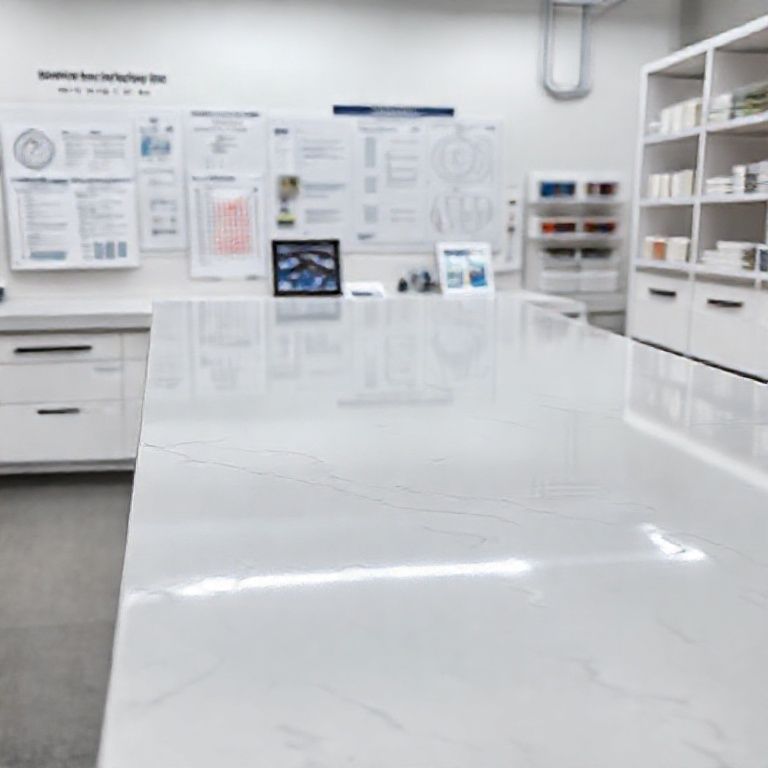
However, it’s not all smooth sailing with Corian. While resistant to stains, it can be susceptible to heat damage. Placing hot pots and pans directly on the surface without a trivet can lead to discoloration or even melting. This is a crucial consideration for anyone who frequently cooks and relies on placing hot items directly onto their countertops. Similarly, while durable, it’s not indestructible. Sharp objects can cause scratches, and heavy impacts can lead to chips or cracks, especially at edges or around sinks. These instances, while repairable, do require professional attention to maintain the seamless integrity of the material. The cost of Corian can also be a factor. While it often falls in the mid-to-high range of countertop materials, its installation, especially for complex custom designs, can add to the overall expense. However, when considering the longevity, repairability, and the unique design possibilities it offers, the investment can be well justified. The tactile feel of Corian is also worth mentioning; it’s warm to the touch, unlike the often cool, hard feel of stone or porcelain, adding to its inviting nature.
Moving on to our other contender, porcelain has emerged as a rising star in the world of countertop materials, challenging traditional notions of what a countertop can be. Unlike traditional ceramic tiles, which are often thinner and more brittle, porcelain slabs are manufactured using a high-density clay mixture fired at extremely high temperatures. This process results in a material that is incredibly dense, hard, and exceptionally durable. The manufacturing process involves pressing powdered clay and then firing it in kilns at temperatures exceeding 1200 degrees Celsius. This intense heat vitrifies the clay, creating a surface that is virtually non-porous and incredibly strong.
The primary draw of porcelain countertops is their phenomenal durability. They are exceptionally resistant to scratches, chips, and abrasions, making them a robust choice for even the most demanding kitchen environments. Think of a bustling family kitchen where knives might be used directly on the surface (though not recommended!), or where kids are constantly dropping toys – porcelain can generally withstand these everyday assaults with remarkable resilience. This inherent hardness means that maintaining their pristine appearance requires less constant vigilance compared to softer materials. They are also highly resistant to heat, capable of withstanding hot pots and pans placed directly on their surface, a significant advantage over many other countertop materials, including Corian. This thermal shock resistance provides a level of freedom and peace of mind for those who love to cook.
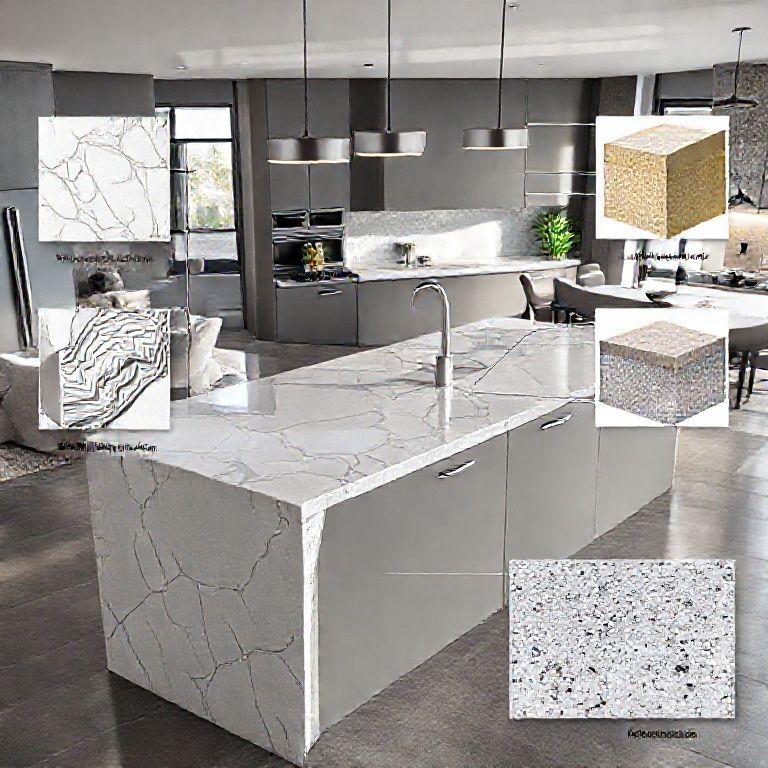
Aesthetically, porcelain has come a long way from its early iterations. Modern manufacturing techniques allow for incredibly realistic imitations of natural stone, such as marble, granite, and quartzite, as well as wood-look finishes and concrete-inspired designs. These patterns are often printed digitally onto the surface, creating a depth and realism that is truly impressive. The color and pattern are integral to the slab, meaning that even if the surface is scratched (which is rare), the underlying material will match, preventing unsightly discolored marks. The variety of finishes available, from matte to polished, further expands the design possibilities, allowing homeowners to achieve a sophisticated and luxurious look that rivals that of natural stone. Porcelain can also be fabricated with very thin profiles, offering a sleek and modern aesthetic that is highly sought after in contemporary kitchen and bathroom designs.
The non-porous nature of porcelain, similar to Corian, also contributes to its hygienic properties. It does not absorb liquids, which means it is resistant to stains and difficult for bacteria to penetrate. This makes cleaning and maintenance straightforward, typically requiring just soap and water. Unlike some natural stones that require regular sealing to maintain their non-porous quality, porcelain’s inherent density means it doesn’t need this additional upkeep. This ease of maintenance is a significant selling point for busy individuals and families who prefer a low-fuss approach to home care.
However, the very hardness that makes porcelain so durable also presents a potential drawback: it can be brittle. While resistant to scratching and chipping from everyday use, a very sharp, forceful impact, particularly on an edge or corner, could potentially cause a crack or chip. Unlike Corian, which can be seamlessly repaired, a significant crack in a porcelain slab is often difficult, if not impossible, to repair invisibly. Replacement of the affected section might be necessary, which can be costly and disruptive. Another consideration is the appearance of seams. While porcelain slabs are available in large formats, very long countertops or kitchens with complex layouts may still require visible seams. These seams, while often very fine, can be points where dirt can accumulate if not cleaned regularly. The cost of porcelain countertops can also be quite high, often comparable to, or even exceeding, that of high-end natural stone and Corian, especially when factoring in professional installation, which can be complex due to the material’s weight and hardness. The visual appeal is also subjective; while some adore the hyper-realistic patterns, others might find them less authentic than natural stone, or prefer the unique, organic variations found in quarried materials.
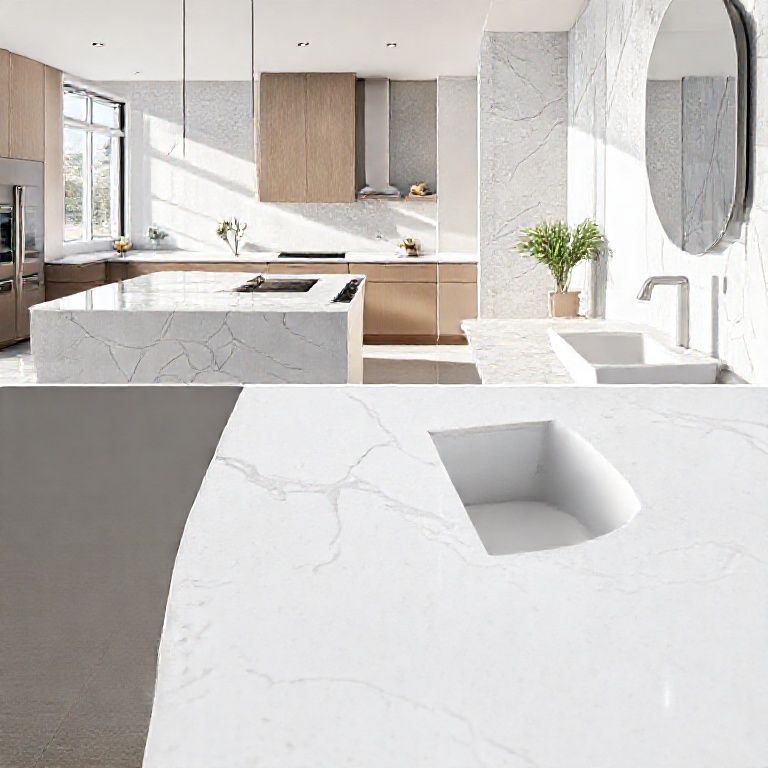
As we delve deeper into the comparison between Corian solid surface and porcelain, it’s time to dissect their performance in the real world, focusing on the practical aspects that influence daily life. When considering countertops, we’re not just looking at a pretty face; we’re evaluating a workhorse that needs to withstand the rigors of family life, culinary experiments, and the occasional accidental mishap.
Let’s revisit the realm of aesthetics and how each material truly transforms a space. Corian, with its ability to be thermoformed, offers a level of design flexibility that is unparalleled. Think of a curved island that flows seamlessly into a breakfast bar, or a monolithic vanity with an integrated, sculpted sink. This seamlessness creates an unbroken visual line, contributing to a sense of spaciousness and modern elegance. The color and pattern options for Corian are diverse, but they tend to be more uniform and consistent throughout the slab. This consistency can be a blessing for those who prefer a perfectly controlled design, but for others, it might lack the unique, organic variations found in natural stone. The translucency of some Corian colors is a particular design highlight, allowing for stunning backlit features that can add a dramatic, ethereal glow to a kitchen or bathroom. The surface itself has a warm, almost velvety feel to the touch, which can be more inviting than the cool, hard surfaces of stone or porcelain, especially in colder climates.
Porcelain, on the other hand, has mastered the art of imitation. Its ability to convincingly replicate the look of marble, granite, and even wood means you can achieve the aesthetic of high-end natural materials without their inherent maintenance challenges or price tag. The digital printing technology used in porcelain production allows for incredibly detailed patterns with a high degree of realism. Some porcelain slabs even feature rectified edges, meaning they are cut with extreme precision, allowing for very tight grout lines or even virtually seamless installations when combined with specialized adhesives. This precision contributes to a clean, sharp, and contemporary look. The visual depth of some porcelain designs can be quite stunning, mimicking the veining and mineral inclusions of natural stone with remarkable fidelity. However, for the purist, the artificiality, however well-executed, might be a detractor compared to the genuine article. The patterns, while beautiful, are often repeating or predictable, lacking the unique story that each slab of natural stone tells.
When it comes to maintenance and cleaning, both materials offer a significant advantage over porous natural stones. Corian’s non-porous surface means spills are easily wiped away, and it resists staining from everyday substances like coffee, wine, and cooking oils. The absence of grout lines in integrated sinks further simplifies cleaning, as there are no nooks and crannies for food particles to lodge. However, it’s crucial to remember the heat sensitivity. A forgotten hot pan can leave a tell-tale mark. Regular cleaning typically involves mild soap and water or an ammonia-based cleaner. For tougher stains or minor scratches, a non-abrasive cleaner and a soft cloth are usually sufficient.
Porcelain’s non-porous nature also makes it highly resistant to stains and easy to clean. Its extreme hardness means it can withstand more vigorous cleaning methods, and its resistance to heat means you don’t have to worry about placing hot items on it. Soap and water are usually all that’s needed for daily cleaning. Its resistance to UV light also means that colors won’t fade over time, making it a great option for areas that receive direct sunlight. However, while generally resistant to chips and scratches, a severe impact can cause damage. If a chip does occur, repairing it invisibly is a significant challenge, often requiring professional intervention and potentially leading to a less-than-perfect cosmetic outcome.
Let’s consider the long-term value and investment. Corian’s repairability is a key factor in its long-term value. A minor scratch or a dulling of the finish can often be buffed out by a professional, extending the life and appearance of the countertop significantly. This ability to refresh the surface means that a Corian countertop can look as good as new for many years, provided it’s reasonably well-maintained. The initial cost can be offset by its longevity and the ability to restore its appearance.
Porcelain, on the other hand, offers durability in a different way. Its extreme hardness means it is less likely to show wear and tear from daily use, maintaining its original aesthetic for a very long time. However, if a significant defect like a crack occurs, the repair cost can be substantial, and a perfect cosmetic fix may not be achievable. While it doesn’t require sealing like natural stone, its very hardness can make future modifications or repairs more challenging. The investment in porcelain is largely an investment in its inherent, unchanging resilience.
The installation process for both materials is critical and typically requires professional expertise. Corian is relatively lightweight and can be cut and shaped on-site, allowing for more intricate installations and on-the-fly adjustments. This can sometimes translate to slightly more flexible installation timelines. Porcelain, however, is very heavy and dense, requiring specialized tools and careful handling during transport and installation. This can sometimes lead to a more involved and potentially costlier installation process, especially for larger slabs or complex designs.
The choice between Corian solid surface and porcelain ultimately boils down to your priorities. If seamless design, integrated sinks, a warm tactile feel, and the ability to repair minor surface damage are paramount, Corian is a strong contender. Its versatility in shaping and its vast color palette allow for truly custom creations. It’s a material that invites creativity and offers a forgiving nature for everyday wear.
If, however, you prioritize ultimate durability against scratches, heat, and staining, coupled with a realistic imitation of natural stone or other high-end looks, and are willing to accept the potential for difficult repairs in the event of severe damage, then porcelain might be your ideal choice. Its robustness and low maintenance make it a practical option for high-traffic areas where resilience is key. It offers the look of luxury with the performance of a modern marvel.
Ultimately, both Corian solid surface and porcelain are excellent choices that offer a significant upgrade from traditional laminate or even some natural stone options. They both represent a significant investment in your home’s functionality and aesthetic appeal. The decision hinges on understanding your lifestyle, your design aspirations, and your tolerance for maintenance and potential repairs. Consider the way you use your kitchen and bathroom, the aesthetic you’re aiming for, and the long-term value you seek. Whichever you choose, you’ll be investing in a surface that is both beautiful and built to last, a testament to modern material science and design ingenuity. The countertop conundrum, while complex, can be solved with careful consideration and a clear understanding of what truly matters to you and your home.








