
The heart of any home often beats strongest in the kitchen. It’s where meals are crafted, conversations flow, and memories are made. So, when a jarring crack appears across your beloved countertop, it can feel like a betrayal – a sudden disruption to your domestic bliss. That familiar surface, once a steadfast stage for culinary adventures, now bears a scar. But before you resign yourself to expensive replacements or a lifetime of squinting past the fissure, let’s explore a different perspective. What if this crack isn’t an ending, but rather an unexpected beginning? What if it’s an opportunity to imbue your kitchen with even more character and stories?
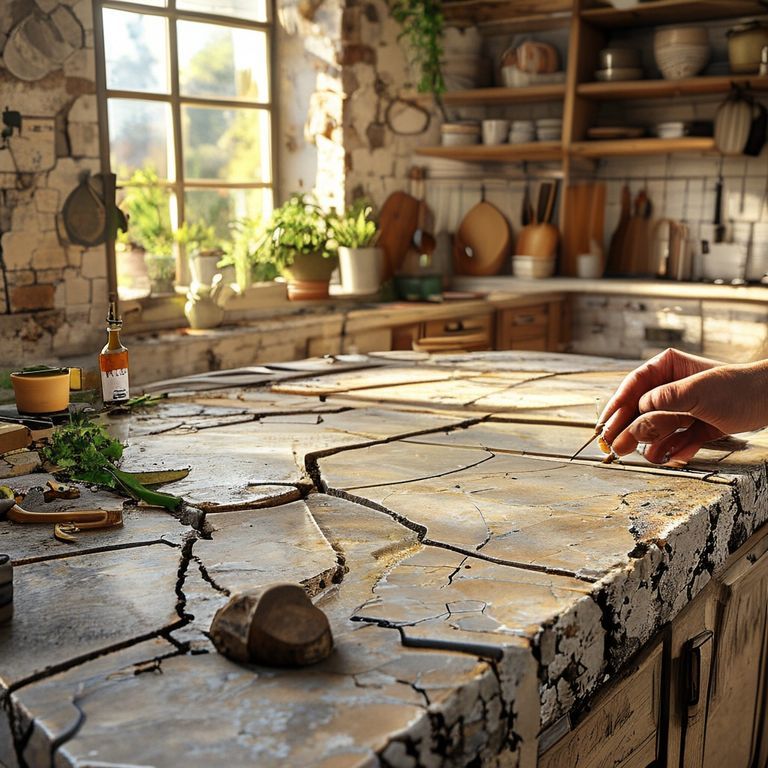
The initial shock of discovering a cracked countertop can range from a mild inconvenience to a full-blown kitchen crisis. You might be imagining the cost of a new slab, the disruption to your daily routine, or simply the aesthetic affront. However, the beauty of home improvement, and indeed life, often lies in our ability to adapt and innovate. Instead of viewing the crack as a flaw, let’s reframe it as a feature. Think of it as a unique birthmark, a testament to the life lived within your kitchen walls.
Consider the material of your countertop. Is it granite, quartz, marble, laminate, or something else entirely? Each material presents its own set of challenges and, more importantly, its own set of creative possibilities when faced with a crack. For natural stones like granite and marble, a crack can sometimes be a sign of underlying stress or a significant impact. While professional repair might be necessary for structural integrity, especially if the crack is deep or widening, there are also ways to blend the repair seamlessly, or even highlight it. Epoxy resins, often tinted to match the stone’s veining, can be expertly filled into the crack. But what if you don’t want to hide it completely? Some designers embrace visible repairs, turning them into subtle artistic statements. Imagine a fine, metallic-colored epoxy trace running through a dark granite, mimicking a lightning strike or a riverbed.
Quartz countertops, being engineered, are generally more resilient, but they can still crack, often due to thermal shock or excessive weight. The repair process for quartz can be more challenging to make invisible due to its uniform pattern. However, again, the “embrace the crack” philosophy can come into play. A well-executed repair with a contrasting colored epoxy can become a deliberate design element, adding a touch of industrial chic or modern artistry. It transforms a potential eyesore into a conversation starter, a piece of functional art that tells a story.
Laminate countertops, while more prone to surface damage, are also often the most budget-friendly to replace. However, if you’re attached to your laminate or looking for a more sustainable, cost-effective solution, there are still avenues to explore. For minor cracks or chips, specialized laminate repair kits can work wonders. But if the crack is more significant, consider it a chance for a bold makeover. Instead of a direct repair, you could explore resurfacing options. Many companies offer overlays or even specialized paints that can give your laminate a completely new look, potentially masking the crack entirely or allowing you to integrate a design that incorporates it.
Beyond the material, the location and nature of the crack are crucial factors. Is it a hairline fracture near the sink, a larger split along an edge, or a significant break in the middle of a work surface? A crack near the sink might require particular attention to prevent water ingress, which can lead to further damage. Here, a robust, waterproof epoxy is paramount. But even in this functional necessity, there’s room for aesthetic consideration.
The concept of “wabi-sabi,” the Japanese philosophy that finds beauty in imperfection, offers a powerful lens through which to view your cracked countertop. It celebrates the natural cycle of growth and decay, the transient nature of things. A cracked countertop, in this light, is not a flaw to be eradicated but a mark of authenticity, a sign of a well-used and loved space. Embracing this mindset can free you from the relentless pursuit of manufactured perfection and allow you to appreciate the unique character that imperfections bring.
Think about the stories a crack can tell. Did it happen during a particularly enthusiastic cooking session, a dropped pot, or perhaps a moment of pure, unadulterated joy that involved a bit too much exuberant movement? These are the hallmarks of a lived-in kitchen, a space that’s not just a showroom but a sanctuary. By choosing to repair and perhaps even highlight the crack, you are essentially validating these moments, embedding them into the very fabric of your home.
Moreover, in an era increasingly focused on sustainability and reducing waste, repairing rather than replacing is a commendable choice. A cracked countertop, when repaired creatively, can become a symbol of your commitment to eco-conscious living. You’re not contributing to landfill waste, nor are you engaging in the resource-intensive process of manufacturing and transporting new materials. You’re breathing new life into something that already exists.
So, before you reach for the phone to order a replacement, take a moment. Step back. Look at the crack not as a problem, but as a puzzle, a blank canvas, or a story waiting to be told. The solutions might be simpler, more creative, and far more rewarding than you initially imagined. The journey from countertop calamity to charming comeback begins with a shift in perspective, an openness to the unexpected, and a willingness to see the beauty that lies just beneath the surface of imperfection.
Having shifted our perspective from despair to opportunity, let’s dive into the practical and inspirational ways to transform that cracked countertop from a source of stress into a statement piece. The world of DIY and home decor is brimming with innovative approaches that can turn this seemingly unwelcome event into a unique selling point for your kitchen.
One of the most accessible and visually striking methods for dealing with cracks, especially in natural stone or concrete countertops, is the use of epoxy resin. While often used for structural repairs, epoxy can be tinted to create stunning visual effects. For a subtle repair, you can mix a pigment that closely matches your countertop’s color and veining. However, for a truly captivating outcome, consider a contrasting color. A deep, jewel-toned blue or a vibrant emerald green flowing through a neutral-colored countertop can mimic a river or a vein of precious ore. Metallic epoxies, such as gold, silver, or copper, can add a touch of glamour and sophistication. Imagine a thin, shimmering line of gold traversing a black granite countertop – it’s unexpected, artistic, and undeniably chic. The key here is precision. Clean the crack thoroughly to remove any debris, then carefully pour or use a syringe to fill the epoxy, ensuring it makes good contact with both sides of the fissure. A little sanding and polishing afterward will reveal your new, artful addition.
For those with laminate or solid surface countertops, a different approach might be more fitting. If the crack is accompanied by some delamination or chipping, you might consider a more comprehensive resurfacing strategy. There are specialized countertop paints and coatings available that can completely transform the look of your existing surface. While these can often mask minor imperfections, you can also use them to create a design that embraces the crack. Perhaps a mosaic-inspired pattern where the crack forms one of the dividing lines, or a hand-painted design that intentionally incorporates the fissure as part of its narrative.
Another exciting avenue, particularly for those with a penchant for the unconventional, is the incorporation of other materials into the repair. Think of Kintsugi, the Japanese art of repairing broken pottery with lacquer dusted or mixed with powdered gold, silver, or platinum. The philosophy behind Kintsugi is that the breakage and repair are part of the history of an object, not something to disguise. Applied to countertops, this could mean filling the crack with a resin mixed with visible metallic particles, or even embedding small, polished gemstones or shards of colored glass into the epoxy. This turns a damaged surface into a piece of artisanal craftsmanship.
If the crack is significant, or if you’re seeking a more substantial transformation, consider the possibility of adding decorative elements that bridge the gap. For example, you could install a decorative metal inlay that spans the cracked area, functioning both as a structural reinforcement and a striking visual accent. This could be a custom-designed piece of metal art, a simple geometric band, or even a series of smaller decorative elements strategically placed.
Beyond the repair itself, the crack can inspire further kitchen design choices. If you’ve opted for a metallic epoxy repair, you might find yourself drawn to metallic hardware for your cabinets or appliances. If you’ve chosen a bold, colorful resin, it could inspire a new backsplash or accent pieces. The crack, once a source of dismay, can become the catalyst for a cohesive and intentional design refresh.
Let’s not forget the sheer satisfaction of a successful DIY project. Tackling a cracked countertop repair yourself can be incredibly empowering. There are numerous online tutorials and forums dedicated to countertop repair and renovation. Many materials, like epoxy and countertop paints, are readily available at hardware stores. While some repairs might require professional expertise, especially for very large or structural cracks, many common issues can be addressed with patience and the right approach.
Consider the context of your kitchen. Is it a rustic farmhouse, a sleek modern space, or a cozy bohemian haven? The chosen repair method should ideally complement your existing aesthetic, or perhaps even introduce a delightful contrast. A crack repaired with a bold, colorful resin might be perfectly at home in a vibrant, eclectic kitchen, while a more subtle, metallic inlay might suit a contemporary or minimalist design.
For those who are truly adventurous, the crack can be the starting point for a complete countertop transformation. Imagine a concrete countertop that develops a crack. Instead of trying to hide it, you could embrace it by staining the entire countertop with a marbled effect, allowing the crack to become a natural boundary within the design. Or, if the crack is in a less critical area, you could use it as a guide to embed a pattern of tiles or other decorative elements.
The key to successfully transforming a cracked countertop lies in viewing it as an opportunity rather than a disaster. It’s a chance to get creative, to inject personality into your space, and to practice sustainability. Whether you choose a subtle, almost invisible repair, a bold artistic statement, or a complete redesign, the outcome can be a kitchen that is not only beautiful but also deeply personal, bearing the unique story of its own resilience. So, the next time you notice a crack, don’t sigh; smile. It’s the beginning of something wonderful.









