
Sure, I can help you with that! Here’s a soft article exploring the theme “Is artificial stone acrylic?”

The term “artificial stone” often conjures images of sleek, modern countertops or perhaps the illusion of natural granite or marble without the hefty price tag. It’s a broad category, an umbrella term that encompasses a fascinating array of materials engineered to mimic the beauty and functionality of their natural counterparts. But beneath this seemingly straightforward label lies a world of intricate material science, where different compositions offer unique properties and aesthetics. Today, we’re going to pull back the curtain on one of the most persistent questions in this domain: Is artificial stone acrylic? The short answer, much like the materials themselves, is nuanced. It’s not a simple yes or no. While acrylic is a component, or even the primary material, in certain types of artificial stone, it’s far from the only player in this diverse field.
To truly understand the relationship between artificial stone and acrylic, we first need to appreciate what “artificial stone” actually refers to. It’s a man-made material designed to replicate the look and feel of natural stone, but with enhanced or modified properties. This can include improved durability, easier maintenance, a wider range of colors and patterns, and often, a more consistent appearance. The “artificial” aspect comes from its engineered nature – it’s not quarried from the earth. Instead, it’s a product of manufacturing processes that blend various raw materials.
Among the most prominent types of artificial stone that do incorporate acrylic is what’s commonly known as “solid surface” material. This is where the confusion often stems from. Solid surface materials are typically composed of a significant proportion of acrylic polymer (polymethyl methacrylate, or PMMA, to be precise) blended with mineral fillers, pigments, and binders. These ingredients are mixed and then cast into sheets or molded into specific shapes. The acrylic provides several key benefits: it offers excellent UV resistance, meaning it won’t yellow or degrade significantly when exposed to sunlight over time. It’s also non-porous, which is a major advantage for hygiene and stain resistance. Because it’s non-porous, spills and bacteria can’t seep into the material, making it ideal for kitchens, bathrooms, and healthcare settings. Furthermore, acrylic’s inherent flexibility allows for seamless fabrication. Seams can be virtually invisible, creating a continuous, flowing surface that’s both aesthetically pleasing and hygienic, as there are no grout lines or crevices for dirt to accumulate. This seamlessness is a hallmark of many solid surface installations, from countertops and sinks to shower walls and decorative elements.
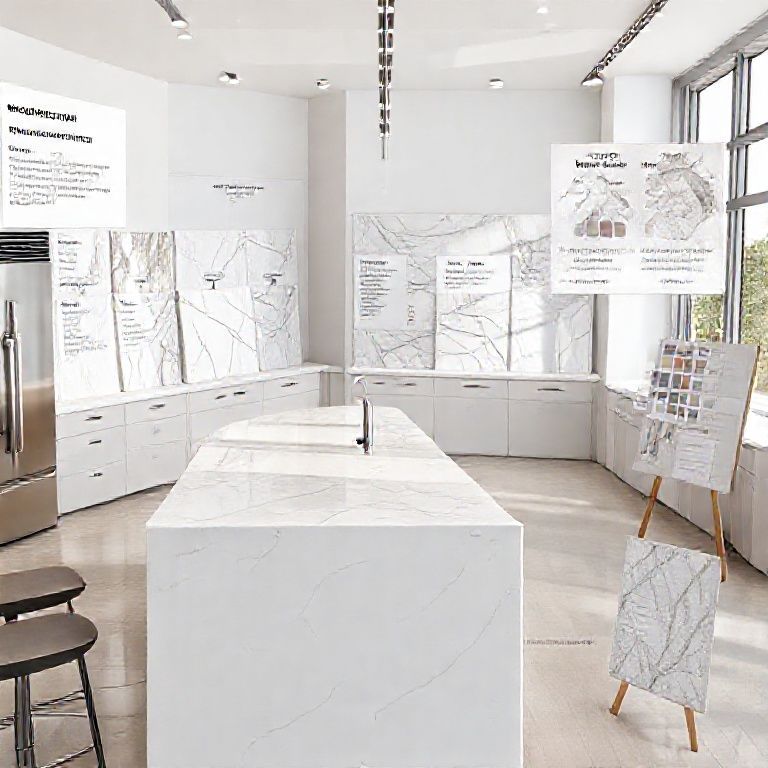
However, to equate all artificial stone with acrylic would be a significant oversimplification, and frankly, a disservice to the incredible diversity of engineered stone products available today. There are other major categories of artificial stone that utilize entirely different primary materials. One of the most popular and widely recognized is engineered quartz, also known as quartz composite or simply quartz. This material is fundamentally different from acrylic-based solid surfaces. Engineered quartz is made by combining approximately 90-95% ground natural quartz crystals with about 5-10% polymer resins (often polyester or acrylic-based binders, but in much smaller quantities than in solid surfaces) and pigments. The mixture is then subjected to intense pressure and heat, a process called vibrocompression, which binds the quartz particles together.
The result is a material that possesses many of the desirable qualities of natural quartz – incredible hardness, durability, and a beautiful, natural-looking crystalline structure – but with added benefits. Engineered quartz is exceptionally resistant to scratches, heat, and stains. Unlike natural stone, it is non-porous due to the resin binding, which further enhances its stain resistance and eliminates the need for sealing. The pigments allow for an almost limitless palette of colors and patterns, from pure whites and deep blacks to sophisticated marble or granite imitations, often with a consistency and uniformity that natural stone can’t always offer. While acrylic might be present in the binder system of engineered quartz, it’s the quartz crystals themselves that form the dominant component, dictating the material’s superior hardness and structural integrity.
Another category, often less discussed but still a form of artificial stone, is polymer concrete. This material uses synthetic polymers as the binder instead of traditional cement. It’s known for its excellent chemical resistance and durability, often used in industrial applications or for specialized decorative elements. The binder can be epoxy, polyester, or acrylic resins, and the filler materials can vary widely, sometimes including crushed stone or mineral aggregates. Again, the presence of acrylic as a binder doesn’t make the entire material “acrylic.”
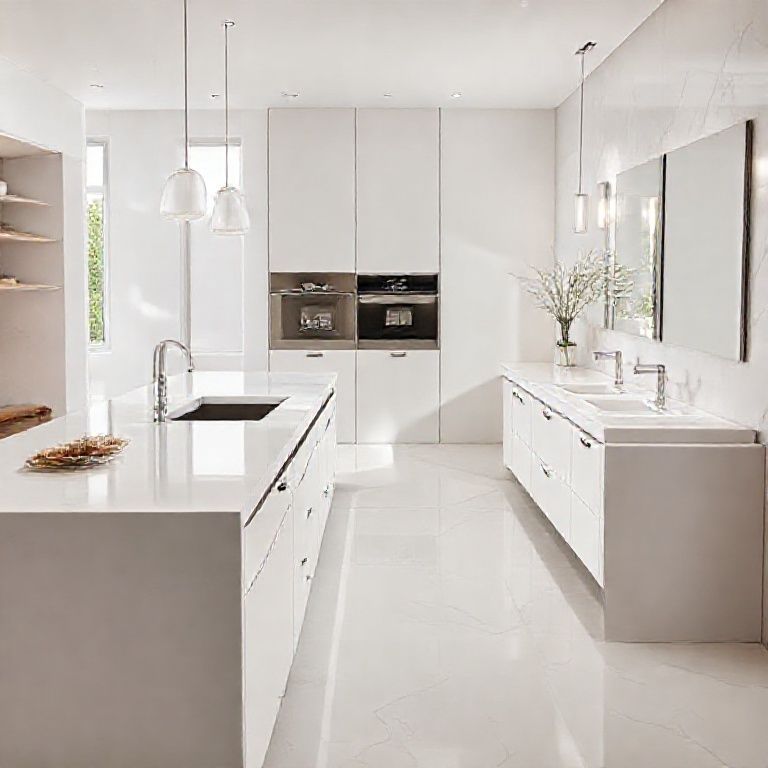
The key takeaway here is that “artificial stone” is a broad classification, and acrylic is a type of material used in some of these artificial stones, most notably solid surfaces. It’s like asking if all vehicles are cars. While cars are a very common type of vehicle, there are also trucks, buses, motorcycles, and many other forms. Similarly, while acrylic solid surface is a prevalent and versatile artificial stone, engineered quartz and other composite materials represent distinct and equally important categories. Understanding these distinctions is crucial for making informed choices about surfaces for homes, businesses, and public spaces, as each type offers a unique balance of aesthetics, performance, and cost.
Continuing our exploration, it becomes clear that the question “Is artificial stone acrylic?” is less about a direct, one-to-one equivalence and more about understanding the diverse compositions within the “artificial stone” family. While acrylic plays a starring role in solid surfaces, its presence in other forms of artificial stone is often as a supporting player, a binder, or a component within a more complex matrix. This distinction is vital because the properties and applications of these different materials vary significantly.
Let’s circle back to solid surface materials, where acrylic is truly the star. The acrylic polymer provides that signature smooth, non-porous finish. Think of it as the foundation that allows for such a wide range of design possibilities. The mineral fillers, often aluminum trihydrate (ATH), lend strength and fire-retardant properties, while pigments provide the color. The magic of solid surface lies in its workability. It can be thermoformed – heated and bent into curves and complex shapes – allowing designers to create truly bespoke pieces, from seamless integrated sinks and backsplashes to custom-molded furniture and architectural features. This is a capability that most other artificial stones, especially the harder quartz-based ones, simply cannot match. The ability to repair solid surface is another major advantage. Minor scratches or damage can often be sanded out and polished to look as good as new, a testament to the material’s homogeneous composition throughout its thickness.
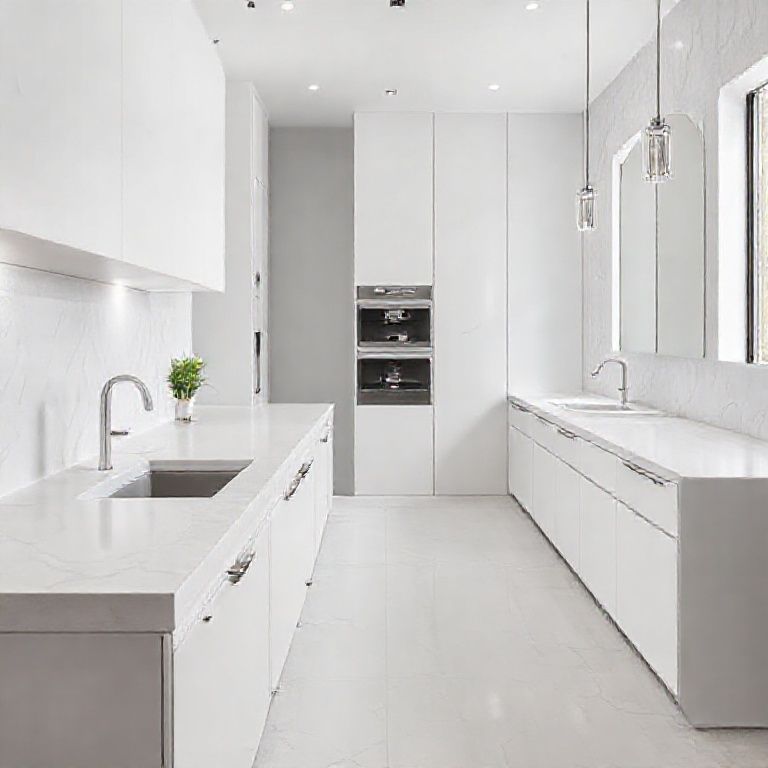
However, this very flexibility and softness, inherent to the acrylic component, also means solid surface is generally less resistant to scratching and high heat compared to engineered quartz. While it can withstand typical kitchen use, placing extremely hot pans directly on the surface can lead to scorching or discoloration. Similarly, while resistant to most common stains due to its non-porous nature, certain harsh chemicals or prolonged exposure to dyes could potentially affect the surface. This is why understanding the specific properties of your chosen artificial stone is paramount.
Engineered quartz, on the other hand, owes its exceptional durability to the high percentage of natural quartz crystals. These crystals are among the hardest minerals found on earth, second only to diamonds. When these crystals are bound together with a resin system (which may contain acrylic or other polymers, but in a lower proportion), the resulting material inherits that inherent hardness and resilience. This makes engineered quartz an excellent choice for high-traffic areas, kitchens where cutting and heat are common, and any application where robustness is a top priority. Its resistance to scratches, heat, and stains is generally superior to solid surface acrylic. However, its rigidity means it cannot be thermoformed like solid surface. Fabrication typically involves cutting and polishing, and while seams can be made relatively inconspicuous, they are usually visible to some degree, unlike the truly seamless nature achievable with solid surfaces. Also, while engineered quartz is highly stain-resistant due to its non-porous nature, very strong acids or solvents can potentially etch or damage the resin binder over time, though this is less common in typical household use.
The distinction between acrylic as a primary material (in solid surface) and as a binder component (in some other composites) is crucial for end-users. If someone is looking for a material that can be seamlessly integrated, thermoformed into curves, and easily repaired, they are likely looking at acrylic-based solid surface. If, however, their priority is extreme durability, scratch resistance, and heat tolerance, then engineered quartz (which may contain a small amount of acrylic binder) is likely the better fit.
It’s also worth noting that the term “artificial stone” itself is sometimes used loosely in the market. Some lower-cost countertop materials, often referred to as “laminate” or “melamine,” might have a printed pattern that mimics stone, with a clear acrylic or resin coating on top. While technically “artificial,” these are vastly different in composition, durability, and quality compared to solid surface or engineered quartz. They are essentially particleboard or MDF with a decorative top layer and are prone to chipping, scratching, and water damage. So, when discussing “artificial stone,” clarity about the specific material is paramount.
In essence, acrylic is a significant material in the artificial stone landscape, particularly in the realm of solid surfaces, where it defines many of the material’s unique advantages. However, it is not the sole defining component of all artificial stones. Engineered quartz, another immensely popular category, relies on the natural hardness of quartz crystals, with acrylic or other resins playing a binding role. This nuanced understanding empowers consumers and designers to make informed decisions, selecting the artificial stone that best aligns with their aesthetic preferences, functional needs, and performance expectations. The world of artificial stone is a testament to human ingenuity, a spectrum of engineered materials designed to bring beauty, durability, and practicality to our living spaces, with acrylic being one, albeit a very important, thread in its rich tapestry.








