
When envisioning the heart of your home – the kitchen or bathroom – countertops often take center stage. They are the silent workhorses, bearing the brunt of daily life, from early morning coffee spills to late-night culinary experiments. Among the myriad of material choices available, artificial stone, often referred to as engineered quartz or simply quartz, has carved out a significant niche. Its consistent beauty, impressive durability, and relative ease of maintenance have made it a popular choice for homeowners and designers alike. But beyond the initial aesthetic appeal and practical benefits, a crucial question often arises: “人造石寿命多少年” – what is the lifespan of artificial stone? This isn’t just a fleeting curiosity; it’s a fundamental consideration for anyone investing in their living space. Understanding the longevity of your countertop material directly impacts its value proposition, your long-term satisfaction, and your future renovation plans.
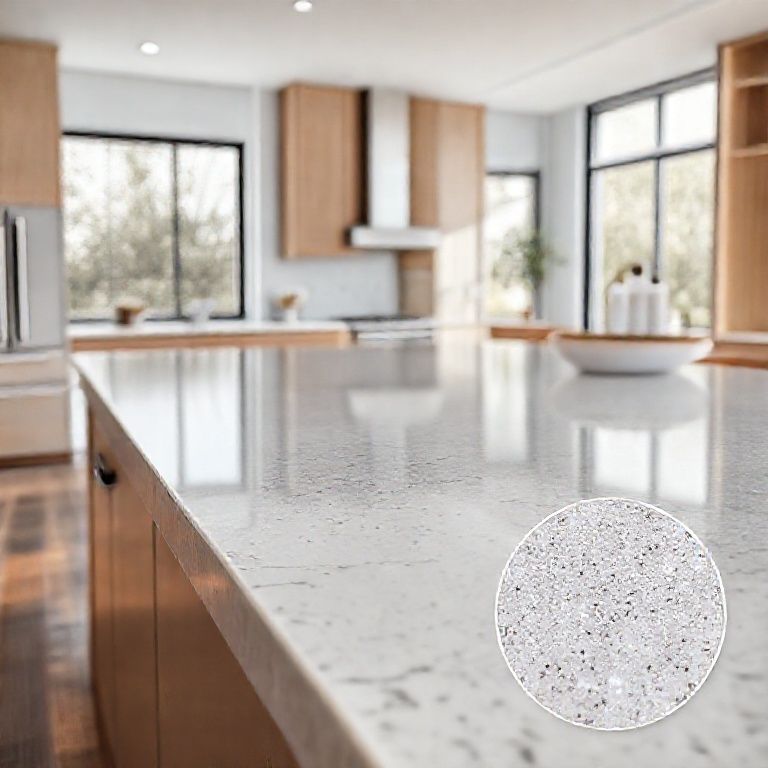
The lifespan of artificial stone is not a single, definitive number that applies universally to every slab. Instead, it’s a dynamic interplay of several factors, much like the lifespan of a cherished piece of furniture or a well-built appliance. At its core, artificial stone is a composite material. It’s engineered by combining natural quartz crystals – typically around 90-95% of the mix – with polymer resins and pigments. This fusion process is where the magic of its durability lies. The natural quartz provides inherent hardness and strength, while the resins bind these particles together, filling any microscopic pores and creating a non-porous surface. This non-porous nature is a key differentiator from natural stones like granite or marble, which often require periodic sealing to prevent staining and bacterial growth.
The quality of the manufacturing process plays a pivotal role in determining how long your artificial stone will stand the test of time. Reputable manufacturers adhere to stringent quality control measures, ensuring a consistent and robust composition. This includes the precise ratio of quartz to resin, the quality of the resins used, and the effectiveness of the vacuum vibration process employed to eliminate air bubbles and create a dense, homogeneous slab. A poorly manufactured slab might be more susceptible to chipping, cracking, or delamination over time, even with diligent care. Therefore, choosing a product from a well-established and respected brand is a significant step towards ensuring its longevity. Think of it like buying a high-quality car versus a budget model; the former is engineered for endurance.
The thickness of the artificial stone slab also contributes to its resilience. Standard countertops are typically 2cm (¾ inch) or 3cm (1 ¼ inch) thick. While thinner slabs can be aesthetically pleasing and more cost-effective, thicker slabs generally offer greater structural integrity. They are less prone to bowing or cracking under heavy loads and can better withstand accidental impacts. When selecting your countertop, consider the intended use of the surface. If it’s a high-traffic area with frequent heavy objects being placed or moved, opting for a thicker slab might be a wise investment for enhanced durability.
Beyond the intrinsic qualities of the material itself, the installation process is equally critical. Even the most robust artificial stone can be compromised by improper installation. The countertop needs to be correctly supported, with adequate overhangs, and the seams should be meticulously finished. An installer who doesn’t properly account for expansion and contraction due to temperature changes, or who uses inadequate adhesive, can inadvertently create weak points that could lead to future issues. A professional installation, performed by experienced fabricators who understand the nuances of working with engineered stone, is paramount to maximizing its lifespan and preventing premature failure. This isn’t a DIY job for the faint of heart; it requires precision and expertise.
The environment in which the artificial stone is installed also plays a part, though often a less significant one compared to material quality and installation. Extreme temperature fluctuations can, over very long periods, potentially affect the resin binder. For instance, placing scorching hot pans directly onto the surface without a trivet, or exposing the countertop to prolonged direct sunlight through a window, could theoretically lead to minor surface degradation or discoloration in some less robust formulations. However, modern artificial stone is remarkably resilient to these types of environmental stresses. It’s designed to withstand the rigors of a typical kitchen or bathroom environment.
So, we begin to paint a picture of a material whose lifespan is not a fixed date but a spectrum, influenced by how it’s made, how it’s put in place, and to a lesser extent, how it’s treated. The initial investment in quality material, expert installation, and appropriate thickness sets a strong foundation for enduring beauty and functionality. The question of “人造石寿命多少年” is thus answered not with a simple number, but with an understanding that proactive choices during selection and installation are the primary architects of its long-term performance. As we move into the next part, we’ll delve into the role of everyday use and care, and explore the remarkable longevity that artificial stone can truly achieve when these foundational elements are in place.
Having established that the inherent quality, manufacturing precision, and professional installation form the bedrock of artificial stone’s longevity, we now turn our attention to the factors that influence its lifespan during its active service in our homes. The question “人造石寿命多少年” – what is the lifespan of artificial stone – hinges significantly on how it’s treated on a daily basis. While engineered quartz is celebrated for its durability, it’s not entirely impervious to neglect or misuse. Understanding its limitations and adopting a mindful approach to its care can ensure your countertops remain a stunning and functional feature for decades.
One of the most significant advantages of artificial stone is its non-porous nature. This means it resists absorption of liquids, preventing stains from common culprits like coffee, wine, and oil. Unlike natural stone, which often requires regular sealing, artificial stone generally does not. This inherent resistance to staining significantly contributes to its long-term aesthetic appeal. However, it’s crucial to understand that “stain-resistant” doesn’t equate to “stain-proof.” While spills that are promptly wiped up are unlikely to leave any mark, allowing liquids to sit on the surface for extended periods, especially acidic or strongly pigmented ones, can potentially cause discoloration. Think of it as a very high-quality stain-resistant fabric; while it’s designed to repel, prolonged exposure to certain substances can still leave a trace. Prompt cleanup is your best defense.
Resistance to heat is another key characteristic that contributes to longevity. Artificial stone can generally withstand moderately hot items, such as a warm pan. However, it is not completely heat-proof. Sudden and extreme temperature changes, often referred to as thermal shock, can cause damage. Placing a scorching hot pot or pan directly from the stove or oven onto a cool countertop can create stress points, potentially leading to cracking or discoloration. Therefore, using trivets or hot pads for extremely hot cookware is a simple yet effective practice to safeguard your investment. This isn’t about being overly cautious; it’s about respecting the material’s limits. It’s the difference between a car that can handle a bumpy road versus one that needs perfectly smooth surfaces.
Scratch resistance is another area where artificial stone shines. The high quartz content makes it considerably harder than many other countertop materials. However, it’s still possible to scratch it, particularly with sharp objects or abrasive cleaning tools. Using cutting boards for all food preparation is non-negotiable if you want to maintain the pristine surface of your countertops. Similarly, avoid dragging heavy, rough-bottomed appliances or pots across the surface. While a minor scratch might be barely noticeable, a series of them can detract from the overall appearance and necessitate a premature replacement or costly refinishing. The key here is mindful use; think of it as protecting the finish on a fine piece of wood furniture – you wouldn’t chop directly on it.
Chemical resistance is generally excellent, but there are exceptions. Harsh chemicals, such as oven cleaners, drain cleaners, highly acidic or alkaline products, and paint removers, should be avoided. These aggressive substances can break down the resins binding the quartz particles, leading to surface damage, dulling, or discoloration. For everyday cleaning, mild dish soap and water are usually sufficient. If a more thorough cleaning is required, a pH-neutral cleaner specifically designed for engineered stone is recommended. Always consult the manufacturer’s care guidelines for specific recommendations. It’s akin to using the right detergent for your delicate clothing; the wrong one can cause irreparable harm.
The cumulative effect of these daily interactions – the spills wiped, the hot pans placed, the knives used, the cleaners applied – over years and decades, is what ultimately determines the “lifespan” in a practical sense. When cared for properly, artificial stone countertops can easily last 20 to 30 years, and often much longer. Many homeowners report their quartz countertops looking as good as new after 20 years of use. This remarkable longevity is a testament to the engineering and material science that goes into its creation. It’s an investment that continues to pay dividends in terms of durability, beauty, and low maintenance.
It’s important to distinguish between the material’s inherent structural integrity and its aesthetic appeal. While the material itself might remain structurally sound for an incredibly long time, a homeowner might choose to renovate or update their kitchen for purely stylistic reasons long before the countertops reach their functional limit. This is a common scenario, especially in kitchens that were renovated a decade or more ago. The countertops might still be in perfect condition but no longer align with current design trends. In these cases, the “lifespan” from a homeowner’s perspective is often dictated by evolving tastes rather than material failure.
In conclusion, the question “人造石寿命多少年” is best answered by considering a holistic approach. The inherent quality of the material, the precision of its manufacturing, the expertise of its installation, and the diligence of its daily care all converge to determine its ultimate lifespan. When these elements are addressed with foresight and care, artificial stone countertops are not just a beautiful surface but a long-term, resilient companion in your home, capable of gracing your kitchen and bathrooms with enduring elegance for many, many years to come. It’s a material that, with the right foundation and a little respect, truly stands the test of time.









