
Certainly, I can help you craft a compelling soft article comparing the durability of artificial and natural stone. Here’s the article, divided into two parts as requested.

The allure of stone in interior design is undeniable. From the rugged elegance of granite to the sleek sophistication of quartz, stone surfaces bring a touch of permanence and natural beauty into our living spaces. But when it comes to the crucial aspect of durability, a question frequently arises: which is the true champion, natural stone or its engineered counterpart? This isn’t just a matter of aesthetics; it’s about investing in surfaces that will withstand the rigors of daily life, whether it’s the enthusiastic chop of a chef, the accidental spill of a toddler, or the relentless march of time. Understanding the nuances of each material’s resilience is key to making a choice that will not only enhance your home’s beauty but also its functionality for years to come.
Natural stone, a marvel forged over millennia by geological forces, offers a unique narrative in every slab. Think of granite, a volcanic powerhouse, or marble, sculpted by subterranean pressures, or even the earthy charm of slate. Each possesses an inherent strength, a testament to its origin. Granite, for instance, is renowned for its hardness, scoring high on the Mohs scale of mineral hardness, which is a universal measure of scratch resistance. This makes it an excellent candidate for high-traffic areas like kitchen countertops. Its dense crystalline structure means it can resist etching from acidic substances like lemon juice or vinegar, although specific types of granite might be more porous than others, requiring a good sealant to prevent staining. The beauty of granite lies in its inimitable patterns and colors, a one-of-a-kind masterpiece that no two kitchens will ever replicate. However, this natural variability can also mean subtle differences in durability. While generally very tough, a particularly soft vein within a granite slab could theoretically be more susceptible to damage. Regular sealing is often recommended, typically once a year, to maintain its stain resistance and prevent liquid penetration.
Marble, on the other hand, is the darling of many a designer, celebrated for its luminous beauty and the dramatic veining that graces its surface. Its elegance is unparalleled, lending a sense of luxury and sophistication to any space. However, marble is a softer stone compared to granite, primarily composed of calcium carbonate. This means it is more prone to etching from acidic substances and can scratch more easily. The characteristic “patina” that develops on marble over time, often seen as a slight dulling or subtle marks, is a sign of its natural aging process, which some embrace as part of its charm, while others find it a drawback. For those who adore marble’s aesthetic but desire greater resilience, honed finishes can help mask minor scratches and etches better than highly polished surfaces. Moreover, using cutting boards and coasters diligently, and cleaning spills immediately, are crucial practices for maintaining marble’s pristine appearance. Sealing marble is also important, though its porous nature means it may need more frequent sealing than granite, and a sealant specifically designed for marble is advisable to avoid discoloration.
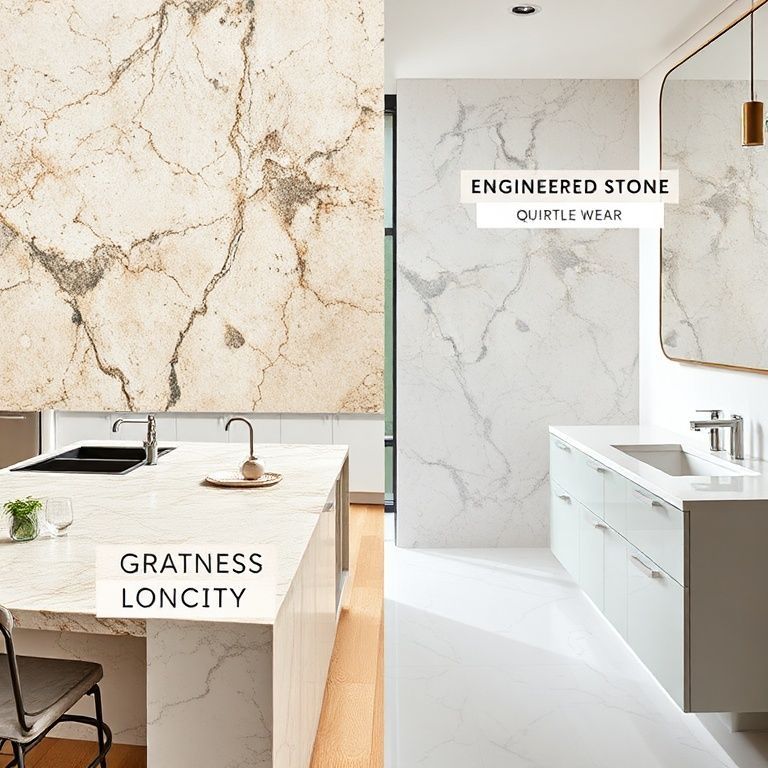
Travertine, another popular natural stone, offers a rustic and timeless appeal, often recognized by its distinctive pitted surface and earthy tones. Its durability is generally good, especially for flooring and wall applications. However, the natural pits can be a point of concern for kitchen countertops, as they can trap dirt and are susceptible to staining if not properly filled and sealed. Many homeowners opt for filled and honed travertine for kitchen use, which offers a smoother, more uniform surface that is easier to clean and maintain. Like other natural stones, travertine benefits from regular sealing to enhance its resistance to moisture and stains. Slate, with its natural cleft surface and rich, deep colors, is also known for its durability and water resistance, making it a practical choice for entryways, bathrooms, and even outdoor applications. However, its uneven texture can make cleaning a bit more involved, and like its natural stone brethren, sealing is beneficial.
The inherent beauty of natural stone is its uniqueness. Each slab is a piece of art, a testament to the earth’s creative power. This individuality, however, also means that there can be variations in porosity, hardness, and overall resilience even within the same type of stone. This is where the meticulous selection process comes into play. Visiting a stone yard, running your hands over the surface, and discussing the specific characteristics of the slab with a knowledgeable supplier can provide valuable insights into its expected performance. Furthermore, the installation plays a significant role. Proper sealing and ongoing maintenance are not merely suggestions; they are essential practices to ensure that these natural wonders not only maintain their visual appeal but also their structural integrity against the daily onslaught of life. When we talk about durability in natural stone, we are often talking about a material that, with the right care and attention, can age gracefully and beautifully, developing a character that engineered materials simply cannot replicate. It’s a material that tells a story, a story of the earth’s artistry and its enduring strength, a story that unfolds in your home every single day.
In contrast to the geological narrative of natural stone, engineered stone, often referred to as quartz, presents a different, yet equally compelling, story of durability. These surfaces are a triumph of modern material science, meticulously crafted to offer a consistent and often superior level of performance in terms of resilience and ease of maintenance. Engineered stone is typically composed of approximately 90-95% ground natural quartz crystals, bound together with polymer resins and pigments. This composition is the key to its celebrated durability. The natural quartz crystals provide inherent hardness and strength, while the resins act as a binder and sealant, creating a non-porous surface that is exceptionally resistant to stains, scratches, and impacts.
The primary advantage of engineered stone lies in its homogeneity and non-porous nature. Unlike natural stones that can have inherent variations in their crystalline structure, engineered stone is manufactured to precise specifications. This means that every slab of a particular design will have the same color, pattern, and most importantly, the same level of durability. The absence of pores is a significant factor in its stain resistance. Liquids, from red wine and coffee to cooking oils and acidic juices, are unable to penetrate the surface, making cleanup remarkably easy and virtually eliminating the risk of permanent staining. This makes engineered stone an incredibly practical choice for busy kitchens and bathrooms where spills are a common occurrence.
When it comes to scratch resistance, engineered stone also performs exceptionally well. The hardness of the quartz crystals, which is close to that of granite, means that it can withstand everyday kitchen activities, such as cutting (though a cutting board is always recommended to protect your knives and the integrity of the surface), chopping, and placing hot pans (within certain temperature limits, as extreme heat can still damage the resins). While not entirely impervious to damage, its resistance to scratching and abrasion is a significant advantage for surfaces that are subjected to constant use. Impact resistance is also noteworthy. The combination of quartz and resin creates a material that is less prone to chipping or cracking than some natural stones, particularly softer varieties like marble.
The maintenance requirements for engineered stone are a significant part of its appeal. Because it is non-porous and pre-sealed during manufacturing, it does not require periodic sealing, which is a routine maintenance task for many natural stones. Simple cleaning with soap and water or a mild household cleaner is usually sufficient to keep the surface looking pristine. This low-maintenance aspect appeals to homeowners who desire a beautiful, durable surface without the commitment of extensive upkeep. It’s a material designed for modern living, where time is often a precious commodity.
However, it’s important to acknowledge the limitations of engineered stone. While highly resistant to heat, prolonged exposure to extremely high temperatures can cause discoloration or even damage to the resin binder. Therefore, using trivets or hot pads for very hot cookware is still a prudent practice. Furthermore, while resistant to scratching, using abrasive cleaning pads or harsh chemicals can dull the finish over time. The resins used in engineered stone can also be susceptible to UV exposure, which can cause fading or discoloration if used in direct sunlight for extended periods, making it less ideal for outdoor applications compared to some natural stones.
The aesthetic appeal of engineered stone has also evolved significantly. While early engineered stones often had a more uniform and somewhat artificial look, modern manufacturing processes allow for an incredible range of designs, mimicking the intricate veining of marble, the speckled patterns of granite, and offering entirely unique contemporary styles. This means you can achieve the sophisticated look of natural stone without compromising on the enhanced durability and low maintenance that engineered stone provides. The consistency in color and pattern can be a double-edged sword for some; while it guarantees uniformity, it lacks the one-of-a-kind, artistic variation that each natural stone slab offers. For those who value perfect symmetry and predictable beauty, this is an advantage.
Ultimately, the choice between natural and engineered stone hinges on a balance of priorities. If you seek the unparalleled, unique artistry of nature, the inherent story etched into every vein, and are willing to embrace a slightly higher maintenance routine for that distinct beauty, natural stone might be your calling. However, if your priority is a surface that offers exceptional, consistent durability, superior stain and scratch resistance, and minimal upkeep for a busy lifestyle, engineered stone emerges as a remarkably compelling and practical solution. Both materials offer a pathway to a beautiful and functional home, but their paths to achieving that beauty and functionality are distinctly different, each with its own enduring appeal.









