Natural marble countertops: a symbol of timeless luxury and sophisticated design. For centuries, this exquisite stone has graced the kitchens and bathrooms of discerning homeowners, adding an unparalleled touch of elegance and value to any space. Its unique veining, subtle color variations, and cool, smooth touch are simply unmatched by any manufactured material. However, like any well-loved surface, marble countertops are not immune to the passage of time and the rigors of daily use. Spills, scratches, etching, and dullness can, over time, detract from their original luster. But before you resign yourself to a costly replacement, understand this: the beauty of natural marble is often not lost, merely masked. The art of natural marble countertop restoration offers a remarkable path to reviving your cherished surfaces, bringing them back to a state that rivals their initial installation, and often, even improving their resilience for the future.
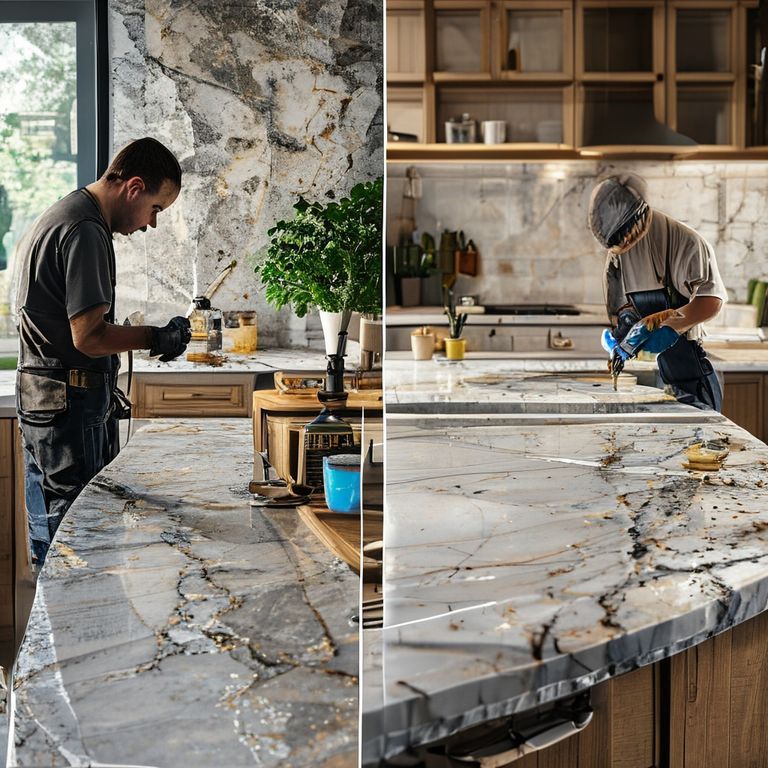
The allure of marble lies in its natural origin. Each slab is a unique masterpiece, carved by geological forces over millennia. This inherent uniqueness, while a significant part of its charm, also means that each piece requires a tailored approach to care and restoration. Unlike engineered stones, marble is a porous material, which makes it susceptible to staining and etching from acidic substances like lemon juice, vinegar, or wine. Moreover, its relative softness compared to granite means it can be more prone to scratching from knives or abrasive cleaning tools. The development of dull spots, often referred to as “hazing,” is also a common concern, arising from the abrasion of the polished surface over time. These issues, however, are not irreversible. Restoration is not about replacing the marble; it’s about revitalizing the existing stone, addressing the surface imperfections, and fortifying its natural beauty.
The first crucial step in the restoration process is a thorough assessment of the countertop’s condition. This involves identifying the types of damage present. Are there deep scratches, chips, or cracks? Is the surface generally dull, or are there specific etched areas that appear as lighter, matte spots? Are there any stubborn stains that have penetrated the surface? The answers to these questions will dictate the subsequent course of action. For minor surface issues like dullness or light scratches, a skilled professional might employ a process of honing and polishing. Honing involves using progressively finer abrasive pads to remove the damaged top layer of the marble and create a smooth, matte finish. This is then followed by polishing, using specialized polishing compounds and pads to bring back the high-gloss shine. This multi-step process effectively buffs out superficial imperfections, revealing the pristine marble beneath.
For more significant damage, such as chips or cracks, a more involved repair strategy is necessary. This typically involves using epoxy or resin fillers that are color-matched to the marble. These fillers are carefully applied to the damaged areas, and once cured, they are ground down and polished to seamlessly blend with the surrounding stone. This meticulous process can effectively make chips and cracks virtually disappear, restoring the structural integrity and the visual continuity of the countertop. It’s a testament to the precision and artistry involved in marble restoration, transforming what might seem like irreparable damage into a hidden repair.
Stains are another common adversary of marble. The porosity of the stone means that liquids can be absorbed, leaving unsightly marks. The effectiveness of stain removal depends on the type of stain and how deeply it has penetrated. For recent spills, immediate blotting and cleaning with a pH-neutral stone cleaner are often sufficient. However, for set-in stains, poultices are the go-to solution. A poultice is a paste made from an absorbent material (like diatomaceous earth, kaolin clay, or even paper towels) and a chemical agent tailored to the specific stain. For example, an organic stain like coffee or wine might require an oxygen bleach-based poultice, while an oil-based stain could necessitate a degreaser. The poultice is applied to the stained area, covered with plastic wrap to keep it moist, and allowed to sit for 24-48 hours. As it dries, it draws the stain out of the marble and into the absorbent material, leaving the stone clean. Multiple applications may be necessary for stubborn stains, but the results can be truly astonishing.
Beyond addressing visible damage, a crucial element of countertop restoration, and indeed ongoing care, is proper sealing. Marble, by its nature, is porous. Sealing creates a barrier that significantly reduces the absorption of liquids, thereby preventing future stains and etching. High-quality impregnating sealers are designed to penetrate the pores of the stone without forming a surface film, thus maintaining the marble’s natural breathability and appearance. The frequency of sealing depends on the type of sealer used, the amount of traffic the countertop receives, and the cleaning products employed. A professional restoration will always include a thorough sealing of the newly revitalized surface, offering immediate protection and peace of mind. It’s an investment in the longevity of your marble, ensuring that its beauty can be enjoyed for years to come.
The decision to restore rather than replace your marble countertops is often driven by both economic and environmental considerations. Replacing a marble countertop is a significant undertaking, involving not only the cost of new material and fabrication but also the disruption and expense of demolition and installation. Restoration, on the other hand, is typically a fraction of the cost. It’s a more sustainable choice, too, as it avoids the energy and resources required to quarry, transport, and manufacture new materials. By choosing restoration, you are not only preserving the inherent beauty and value of your existing marble but also making a conscious decision to reduce waste and support a more circular approach to home improvement. The process itself can be fascinating to watch, as skilled artisans work their magic, transforming worn surfaces into radiant centerpieces once more.
The journey of natural marble countertop restoration is a blend of meticulous craftsmanship and a deep understanding of the stone’s inherent properties. It’s a process that respects the material’s origins while employing modern techniques to overcome the challenges posed by daily life. As we delved into in the first part, the initial assessment and subsequent targeted treatments for etching, scratches, and stains form the bedrock of restoration. However, the story doesn’t end there. The true triumph of restoration lies in the final stages, which focus on revitalizing the surface’s aesthetic appeal and ensuring its long-term protection and ease of maintenance. This is where the marble truly sings again, its inherent luster brought back to life.
Following the repairs of chips, cracks, and the removal of stubborn stains, the countertop’s surface might present a varied texture. Some areas might be perfectly smooth, while others, particularly those that underwent significant grinding or honing, could feel slightly rougher or appear less reflective. This is where the art of polishing truly shines. The goal is to achieve a uniform, high-gloss finish across the entire surface, making it virtually impossible to discern where repairs were made. This is achieved through a systematic process of using progressively finer abrasive pads, often starting with diamond-impregnated pads. Each stage of grit removes microscopic imperfections left by the previous one, gradually refining the surface.
The choice of polishing compound is also critical. Beyond simple abrasives, specialized polishing slurries, often containing tin oxide or cerium oxide, are used. These compounds, when worked into the marble with high-speed polishers and appropriate pads, create a chemical and physical reaction that polishes the stone to a mirror-like finish. This is not a superficial wax or coating; it’s a deep polishing that reveals the inherent reflectivity of the marble itself. The skill of the technician is paramount here; too much pressure or too little time can lead to inconsistent results. They must be able to read the stone, understanding how it responds to the polishing process, and adjust their technique accordingly. The result is a surface that not only looks spectacular but also feels incredibly smooth to the touch, a tactile reminder of the marble’s natural beauty.
Once the desired level of polish is achieved, the focus shifts to protection. As discussed, marble’s porosity makes it vulnerable. This is where the application of a high-quality impregnating sealer becomes indispensable. Unlike topical sealers that form a film on the surface and can alter the marble’s appearance or lead to delamination, impregnating sealers penetrate deep into the pores of the stone. They chemically bond with the mineral structure, creating a barrier that repels liquids without hindering the stone’s natural breathability. This breathability is important; it allows moisture vapor from beneath to escape, preventing potential issues like efflorescence (white powdery deposits) or spalling (flaking of the surface).
The sealing process itself requires careful execution. The marble surface must be impeccably clean and completely dry before application. The sealer is typically applied liberally using a microfiber cloth or applicator, allowing it to soak into the stone. Excess sealer is then wiped away before it has a chance to dry on the surface, as this can leave a sticky residue that is difficult to remove and can dull the newly polished finish. The number of coats required depends on the type of sealer, the type of marble, and the desired level of protection. A professional restoration will usually involve at least one, often two, coats of sealer, ensuring thorough saturation and maximum efficacy.
The longevity of the restored finish and the effectiveness of the sealer are directly linked to ongoing maintenance. This is not to say that maintaining marble is arduous, but rather that it requires a mindful approach. The cardinal rule is to use pH-neutral cleaners specifically formulated for natural stone. Avoid abrasive cleaners, scouring pads, and acidic or alkaline household products (like vinegar, lemon juice, ammonia, or bleach), as these can etch or dull the marble surface, undoing the restoration efforts. Wiping up spills promptly is also a simple yet highly effective habit. For routine cleaning, a damp microfiber cloth is often all that’s needed.
When it comes to resealing, a good indicator of when it’s time is the “water bead test.” If you spill a small amount of water on your countertop and it beads up, the sealer is still effective. If the water spreads out and darkens the stone, it means the sealer has worn down, and it’s time for another application. Depending on usage, this might be anywhere from once a year to once every few years. Professionals can advise on the best type of sealer for your specific marble and environment, ensuring optimal protection.
The beauty of natural marble is its timeless appeal. It’s a material that can truly elevate a home’s aesthetic and add significant value. Restoration offers a compelling alternative to replacement, preserving this inherent value while breathing new life into worn surfaces. It’s a process that requires expertise, patience, and the right tools, but the results are undeniably spectacular. A well-restored marble countertop is not just a functional surface; it’s a piece of art that tells a story of its journey, now renewed and ready to be a central part of your home’s narrative for years to come. It’s a testament to the enduring power of natural materials and the skill of those who know how to bring them back to their most radiant state. The subtle dance of light across its polished surface, the cool touch underhand, the unique patterns whispering tales of geological time – these are the elements that make marble restoration such a rewarding endeavor, both for the homeowner and for the craftspeople involved.