
When considering materials for our homes, especially high-traffic areas like kitchens and bathrooms, we often weigh aesthetics against practicality. The allure of a sleek, modern countertop or a beautifully tiled shower is undeniable, but the nagging question always lingers: “How well will this hold up over time?” For a long time, natural stones like granite and marble reigned supreme, prized for their perceived inherent strength and unique beauty. However, in recent years, artificial stone, often referred to as engineered stone or quartz surfaces, has emerged as a formidable contender, challenging the traditional hierarchy. So, let’s get straight to the heart of it: “人造石牢固吗?” – Is artificial stone sturdy? The answer, in a nutshell, is a resounding yes, and understanding why it’s so robust requires a look beneath its polished surface.

The very term “artificial” might conjure images of something less authentic, perhaps even flimsy, compared to its natural counterpart. This couldn’t be further from the truth when it comes to engineered stone. The magic lies in its sophisticated manufacturing process. Unlike natural stones that are quarried from the earth, often in irregular slabs, artificial stone is meticulously created. The primary ingredient is quartz, a naturally occurring mineral known for its exceptional hardness and durability. In fact, quartz is one of the hardest minerals on Earth, rating a 7 on the Mohs scale of hardness – just below diamond and sapphire. This inherent strength is the bedrock upon which artificial stone is built.
To create these surfaces, approximately 90-95% of finely ground quartz crystals are mixed with a small percentage of polymer resins and pigments. These resins act as a binder, holding the quartz particles together and giving the material its cohesive structure. The pigments, of course, are responsible for the vast array of colors and patterns available, allowing for a level of customization rarely seen in natural stone. This mixture is then subjected to a process called vibrocompression under vacuum. This high-pressure, low-vibration technique is crucial. It eliminates any air pockets or voids within the material, resulting in an incredibly dense and homogenous slab. Think of it like compressing a sponge to remove all the air – the remaining material is far more solid and less susceptible to damage.
This manufacturing process directly translates to superior performance characteristics compared to many natural stones. One of the most significant advantages is its non-porosity. Natural stones, even when sealed, can have microscopic pores that allow liquids to seep in. This can lead to staining, especially from substances like red wine, coffee, or oil. Furthermore, these pores can harbor bacteria, raising hygiene concerns. Artificial stone, due to its dense, non-porous structure, actively resists absorption. Spills simply sit on the surface, making it incredibly easy to wipe clean and maintain. This makes it an exceptionally hygienic choice for kitchens where food preparation is paramount.
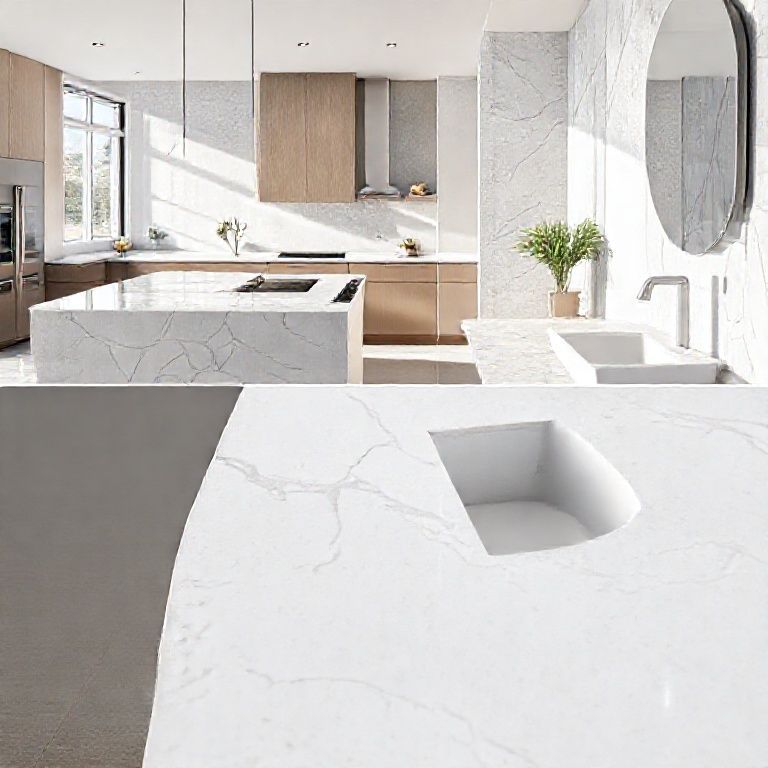
The durability of artificial stone extends beyond its stain resistance. Its hardness makes it highly resistant to scratches and chips. While no surface is entirely impervious to damage, engineered quartz surfaces are remarkably resilient to the everyday wear and tear of a busy household. Imagine chopping vegetables directly on your countertop (though a cutting board is always recommended for longevity and hygiene!). While a very sharp knife could potentially scratch even the hardest surfaces, the likelihood of accidental damage from pots, pans, or everyday utensils is significantly lower with artificial stone compared to softer natural stones or even laminate surfaces. This inherent toughness means that your artificial stone surfaces will likely maintain their pristine appearance for years to come, requiring minimal upkeep to stay looking fresh and new.
The consistency of artificial stone is another key factor contributing to its perceived sturdiness. When you choose a slab of granite or marble, each piece is unique, with its own natural variations in color, veining, and mineral composition. While this uniqueness is part of its appeal, it can also mean that some areas might be slightly harder or softer than others. The controlled manufacturing process of artificial stone ensures a uniform composition throughout the entire slab. This means that the strength and performance characteristics are consistent across the entire surface, providing a predictable and reliable material for your home. You know exactly what you’re getting, and you can be confident in its uniform resilience.
Beyond the physical properties, the design flexibility of artificial stone also contributes to its appeal and practicality. The ability to control the color and pattern means that designers and homeowners can achieve a specific look that might be difficult or impossible to find in natural stone. Whether you desire a pure white surface, a deep black with subtle veining, or even a bold, contemporary color, artificial stone can deliver. This design versatility, combined with its exceptional durability, makes it a highly sought-after material for a wide range of applications, from kitchen countertops and bathroom vanities to shower walls, backsplashes, and even flooring in some cases. The fusion of aesthetic appeal with robust performance is where artificial stone truly shines, answering the question of its sturdiness with a resounding and tangible affirmation of quality and resilience.

Continuing our exploration into the robust nature of artificial stone, the question “人造石牢固吗?” – Is artificial stone sturdy? – is not just about its ability to resist scratches or stains. It’s about its overall resilience, its long-term performance, and how it integrates into the demands of modern living. We’ve already established the formidable strength derived from its high quartz content and non-porous nature, but its sturdiness manifests in several other crucial ways that make it a wise investment for any homeowner.
One of the most significant aspects of artificial stone’s sturdiness is its resistance to heat. While it’s never advisable to place extremely hot pots or pans directly onto any countertop surface without protection, engineered quartz exhibits a remarkable tolerance to heat. The polymer resins used in its composition have a high heat deflection temperature, meaning they can withstand moderate heat without scorching, discoloring, or deforming. This is a considerable advantage over many natural stones, which can be susceptible to thermal shock – a sudden change in temperature that can cause cracking or pitting. While using trivets is always a best practice to ensure the longevity of any kitchen surface, artificial stone provides an extra layer of confidence, allowing for a bit more flexibility in the heat of a busy cooking session.
The uniformity of artificial stone also contributes to its structural integrity. Unlike natural stones, where fissures or inclusions might exist within the slab, engineered quartz is manufactured to be free of these inherent weaknesses. This means that the entire slab possesses uniform strength, making it less prone to unexpected breaks or cracks when subjected to stress. When fabricated into a countertop, for example, the precise cutting and fabrication techniques used by experienced professionals ensure that the material is utilized to its full potential, with no hidden vulnerabilities. This predictable strength is a significant factor in its reliability for demanding applications.

Furthermore, the longevity of artificial stone is a testament to its sturdiness. When properly cared for, engineered quartz surfaces can last for decades. Manufacturers often back their products with extensive warranties, sometimes for 10 years or even longer, which speaks volumes about their confidence in the material’s enduring performance. This longevity translates into a cost-effective choice in the long run. While the initial investment for artificial stone might be comparable to or even higher than some natural stones or laminate options, its resistance to wear, staining, and damage means fewer replacements or costly repairs over time. It’s a surface designed to withstand the test of time, maintaining its aesthetic appeal and functional integrity year after year.
The ease of maintenance associated with artificial stone also contributes to its perception of sturdiness. Because it doesn’t require regular sealing or specialized cleaning products (mild soap and water are usually sufficient), homeowners are less likely to inadvertently damage the surface through improper care. This low-maintenance aspect ensures that the material continues to perform optimally without demanding excessive effort or specialized knowledge. Its inherent resilience means it can handle the rigors of daily life without requiring constant vigilance or expensive upkeep, further solidifying its reputation as a robust and dependable material.
Considering the environmental aspect, the manufacturing process of artificial stone also plays a role in its overall appeal. While it’s an engineered product, many manufacturers are increasingly focused on sustainable practices. This can include using recycled content in their mixtures and employing energy-efficient production methods. This focus on responsible manufacturing adds another layer to the material’s desirability, allowing homeowners to choose a beautiful and durable surface that also aligns with their environmental values. It’s not just about how the material stands up physically, but also how it stands up to scrutiny in a broader sense.
In conclusion, the question of whether artificial stone is sturdy is answered with a resounding affirmation. Its strength is not merely a superficial claim; it’s deeply embedded in its composition and manufacturing process. The high quartz content, the non-porous structure, the resistance to heat, scratches, and stains, coupled with its consistent uniformity and exceptional longevity, all contribute to its remarkable durability. Whether you are designing a dream kitchen, a luxurious bathroom, or any space that demands both beauty and resilience, artificial stone offers a compelling combination of performance and aesthetics. It’s a material that doesn’t just look good; it’s built to last, making it a truly solid choice for modern homes.









