
The Great Basin Debate: Integrated vs. Undermount – Which Reigns Supreme in Your Kitchen?
The kitchen. It’s the beating heart of the home, a sanctuary for culinary exploration, and often, the vibrant hub of social gatherings. As we embark on the journey of designing or revamping this cherished space, countless decisions loom. From the gleam of cabinet hardware to the subtle hue of the backsplash, each choice contributes to the overall narrative of our home. But amongst these stylistic considerations, a fundamental question often arises, one that impacts both form and function profoundly: the sink. Specifically, the eternal debate between the integrated sink (一体台盆, yī tǐ tái pén) and the undermount sink (台下盆, tái xià pén). This isn’t merely a matter of taste; it’s a choice that influences the perceived spaciousness, the ease of cleaning, and the overall flow of your precious countertop real estate.
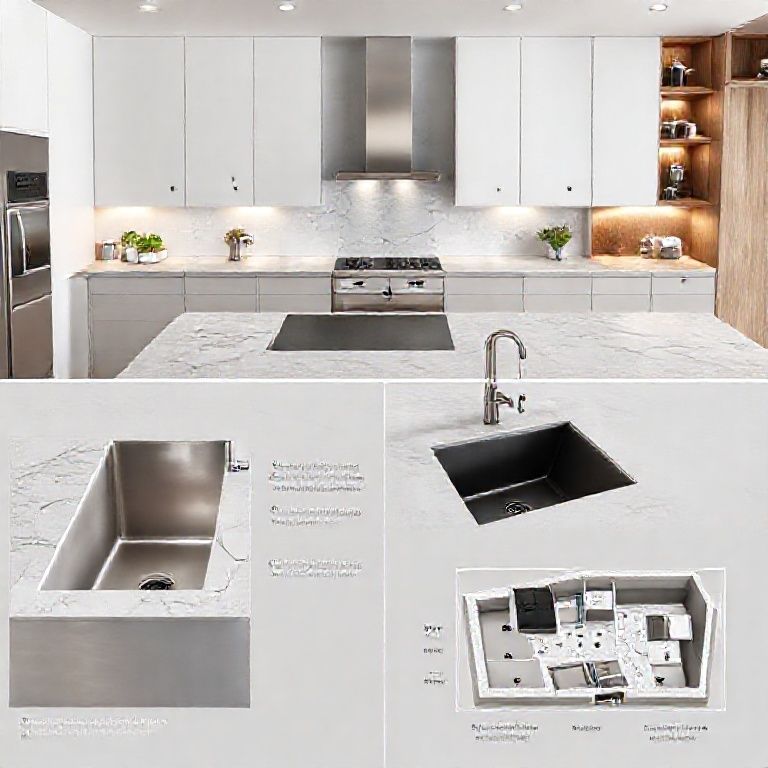
Let’s first delve into the world of the integrated sink, often referred to as a “seamless” or “all-in-one” basin. In its purest form, an integrated sink is molded as a single unit with the countertop material itself. Imagine a countertop that flows seamlessly into a sink basin, with no visible seams or joints. This creates an undeniably sleek and modern aesthetic, a visual whisper rather than a shout. The primary allure of the integrated sink lies in its uninterrupted surface. When you’re wiping down your countertops, that stray crumb or splash of water doesn’t encounter any edges, any crevices where it can lodge itself. It simply glides off into the basin. This makes cleaning an absolute breeze, a task that can often feel like a battle against microscopic invaders. For those who cherish a pristine kitchen and find joy in effortless maintenance, the integrated sink presents a compelling case.
The materials used for integrated sinks are typically the same as the countertop itself. This could be solid surface materials like Corian, quartz composite, or even certain types of natural stone engineered for this purpose. This material unity is key to its aesthetic appeal. The color and texture of the countertop extend uninterrupted into the sink, creating a harmonious and cohesive look. This can be particularly effective in minimalist or contemporary kitchen designs where a clean, uncluttered visual is paramount. Think of a stark white quartz countertop flowing into a matching white quartz sink basin. The effect is one of pure sophistication, a statement of understated elegance. The absence of a distinct sink rim also contributes to a more expansive feel for the countertop. It tricks the eye into perceiving a larger surface area, making smaller kitchens feel more open and airy.
However, the integrated sink isn’t without its potential drawbacks. While the seamless design is a boon for cleaning, it can sometimes be a limitation in terms of material choice and durability. Not all countertop materials are suited for integration, and the process of molding these units can be more complex and, consequently, more expensive. If the integrated sink is damaged or stained, it can be more challenging and costly to repair or replace compared to a separate sink. Think about it: if a chip occurs in the basin of an integrated sink, you’re not just replacing a sink; you’re potentially looking at a partial or even complete countertop replacement, depending on the material and the extent of the damage. This can be a significant investment and a considerable inconvenience.
Furthermore, the aesthetic of the integrated sink, while undeniably chic, might not appeal to everyone. Some homeowners prefer the visual contrast that a separate sink can provide, breaking up the monotony of a large countertop expanse. Others might find the all-in-one look a little too “manufactured” or lacking in character. The absence of a distinct rim means there’s no opportunity to introduce a different material or a contrasting color to the sink area, which some designers use to add visual interest. It’s a design choice that leans heavily into uniformity.
Let’s shift our gaze to the other contender in this kitchen arena: the undermount sink (台下盆, tái xià pén). The name itself offers a clue to its defining characteristic. Unlike a drop-in sink, which rests on top of the countertop with its rim visible, an undermount sink is installed beneath the countertop. This means that the countertop extends all the way to the edge of the sink opening, and the sink itself is mounted from below. This installation method creates a clean, uncluttered look that many homeowners find incredibly appealing. The most celebrated benefit of the undermount sink is, undoubtedly, its superior functionality when it comes to countertop cleaning.
With an undermount sink, there’s no lip or rim to obstruct your wiping motion. When you’re clearing your countertops, any debris, crumbs, or spills can be effortlessly swept directly into the sink with a simple swipe of your hand or a damp cloth. This eliminates those frustrating little pockets where dirt can accumulate, a common annoyance with traditional drop-in sinks. The result is a perpetually cleaner-looking and more hygienic workspace. This is a game-changer for anyone who spends a significant amount of time in the kitchen and appreciates a streamlined cleaning routine. The visual effect is also significant. By eliminating the visible rim, the undermount sink contributes to a more expansive and continuous countertop surface. This creates an illusion of greater space, making even smaller kitchens feel more open and elegant. It’s a subtle detail that can have a dramatic impact on the overall perception of your kitchen’s design.
The popularity of undermount sinks has surged in recent years, and for good reason. They offer a sophisticated and modern aesthetic that complements a wide range of kitchen styles, from minimalist and contemporary to transitional and even certain traditional designs. They are particularly well-suited for materials like granite, quartz, marble, and solid surface, allowing these beautiful materials to take center stage without the interruption of a sink rim. The flexibility in material choice for the sink itself is another significant advantage. While integrated sinks are typically made from the same material as the countertop, undermount sinks come in a vast array of materials, including stainless steel, fireclay, composite granite, and cast iron. This allows for greater personalization and the opportunity to introduce a contrasting element to your kitchen design. For instance, a sleek stainless steel undermount sink can provide a striking visual counterpoint to a warm granite countertop, adding depth and character to the space.
Installation of an undermount sink, while requiring professional expertise, is generally straightforward. The sink is secured from underneath using clips and adhesives, creating a strong and stable bond with the countertop. This method ensures that the weight of the sink is supported by the cabinet structure, not the countertop itself, which is particularly important for heavier sink materials like cast iron. The aesthetic of a perfectly flush or slightly recessed undermount sink is incredibly pleasing to the eye, contributing to a refined and high-end finish for your kitchen. It’s a detail that speaks to a discerning eye for design and an appreciation for both form and function.
Continuing our exploration of the integrated versus undermount sink conundrum, let’s delve deeper into the practicalities and considerations that can sway your decision. While both offer a cleaner aesthetic than traditional drop-in sinks, their differences in installation and material compatibility lead to distinct advantages and disadvantages.
When we talk about integrated sinks (一体台盆), the primary benefit, as previously touched upon, is that seamless flow. It’s like a well-choreographed dance between countertop and basin. However, this seamlessness also means that if one part of the unit is compromised, the entire unit often needs attention. For example, if you choose an integrated sink made from a solid surface material and it develops a deep scratch or a stubborn stain that cannot be removed, the repair process can be more involved. It might require specialized resurfacing techniques, and the outcome might not always be as pristine as the original. In some cases, particularly with very large integrated units, a significant repair could even necessitate the replacement of the entire countertop and sink assembly, a prospect that can be both costly and disruptive.
The aesthetic of integrated sinks is often characterized by a uniform material and color. This can be a dream for those seeking a minimalist, monochromatic look. However, for those who enjoy adding visual texture or contrast to their kitchen, the integrated sink might feel a bit too… well, integrated. There’s no opportunity to juxtapose different materials for a striking effect. For instance, you can’t have a marble countertop with a contrasting stainless steel sink basin in an integrated design. The sink is the countertop, or at least an inseparable extension of it. This uniformity, while beautiful to some, can feel limiting to others who wish to use the sink area as an opportunity to inject personality or a different material element into their design palette. The choice here is essentially one of opting for ultimate harmony or embracing the potential for delightful divergence.
Moving on to the undermount sink (台下盆), its installation beneath the countertop offers a different set of considerations. The clean, edge-free transition from countertop to sink is a major draw, making daily cleanup a far more pleasant experience. However, this installation method does require a certain type of countertop material. Solid surface, quartz, granite, and other non-porous or well-sealed materials are ideal because they can support the weight of the sink from below without being damaged by moisture or requiring constant sealing. More porous materials like unsealed natural stone might not be the best candidates for undermount installations without significant sealing and careful consideration.
The durability and repair of undermount sinks also present a nuanced picture. Because the sink is a separate entity, a damaged undermount sink can often be replaced independently of the countertop. This is a significant advantage, especially if the sink material is more prone to wear and tear than the countertop. For example, if a stainless steel undermount sink develops a deep dent or scratch, it can be replaced with a new one without affecting the surrounding countertop. Similarly, if you decide to change the look of your kitchen down the line, you can swap out an old undermount sink for a new one, offering a relatively easy and cost-effective way to refresh the space.
However, the point where the countertop meets the sink is a crucial junction for undermount sinks. The sealant used to secure the sink and create a watertight seal is vital. Over time, this sealant can degrade or become discolored, requiring maintenance or reapplication. While not a common major issue, it’s something to be aware of. Furthermore, the underside of the countertop, where the sink is mounted, can be a potential area for moisture to seep in if the installation isn’t perfect or if the sealant fails. This is why proper professional installation is paramount for undermount sinks, especially when dealing with natural stone countertops. The integrity of the seal directly impacts the longevity and cleanliness of the installation.
The choice between an integrated sink and an undermount sink often boils down to personal priorities. If your ultimate goal is an uninterrupted, minimalist aesthetic and you’re willing to invest in materials that support this seamless integration, an integrated sink could be your dream come true. The ease of wiping down surfaces without interruption is a compelling argument for its adoption, particularly for those who value a perpetually tidy kitchen. It’s a design that whispers sophistication through its very simplicity.
On the other hand, if you appreciate the flexibility of material choices, the ability to introduce contrast into your kitchen design, and the practical advantage of being able to replace a damaged sink independently of the countertop, an undermount sink offers a more versatile solution. The clean line created by mounting the sink beneath the countertop is a highly sought-after feature that contributes to both aesthetics and ease of maintenance. It’s a design choice that balances modern elegance with functional practicality, allowing your chosen countertop material to truly shine while providing a superior cleaning experience.
Ultimately, the “better” option is the one that best aligns with your lifestyle, your aesthetic preferences, and your budget. Consider how you use your kitchen, how much time you’re willing to dedicate to cleaning, and what kind of visual statement you want to make. Both integrated and undermount sinks have carved out their significant niches in the world of kitchen design for very good reasons. Whichever you choose, the decision marks a significant step in crafting a kitchen that is not just functional, but also a true reflection of your personal style and a joy to inhabit. It’s about finding that perfect harmony between the practical necessities of a working kitchen and the aspirational beauty of a well-designed home.









