
The Heart of Your Kitchen: Unveiling the Perfect Thickness for Your Artificial Stone Countertop
The kitchen, as the adage goes, is the heart of the home. It’s where culinary creations come to life, where families gather, and where memories are forged over steaming meals and shared laughter. And at the epicenter of this vibrant hub lies the countertop – a crucial element that marries form and function, bearing witness to countless chopping sessions, spills, and the everyday rhythm of domesticity. When it comes to selecting the material for this workhorse, artificial stone has emerged as a frontrunner, captivating homeowners with its impressive blend of beauty, resilience, and low maintenance. But within the realm of artificial stone, a seemingly simple question arises, yet holds significant weight in the grand scheme of your kitchen’s design and practicality: “How thick should your artificial stone kitchen countertop be?”
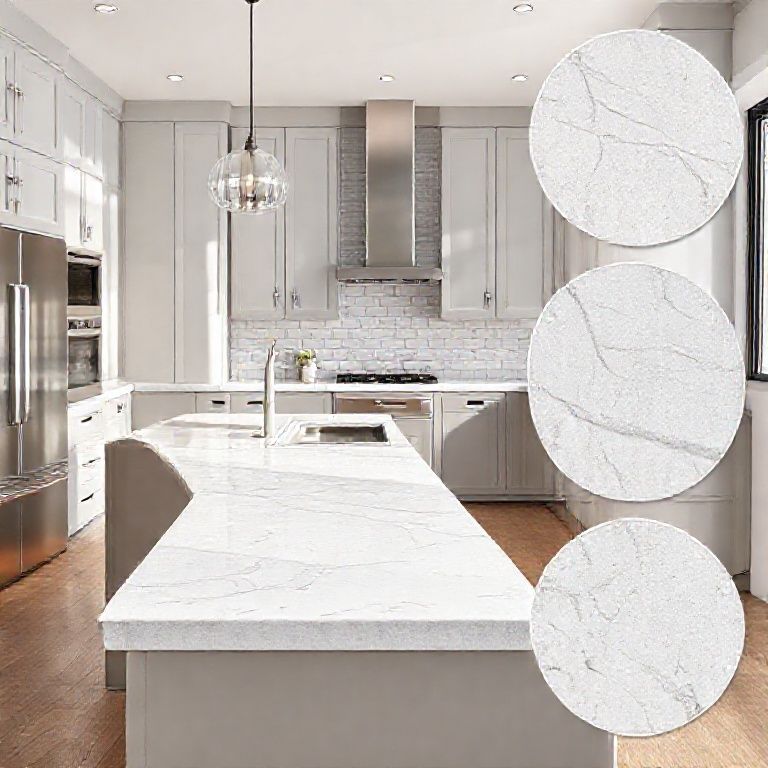
This isn’t just a technical query; it’s a gateway to understanding the multifaceted considerations that go into creating a kitchen that is not only visually stunning but also built to withstand the rigors of daily life. The thickness of your countertop directly influences its structural integrity, its visual impact, and even its cost. It’s a decision that ripples through the entire kitchen design, affecting everything from cabinet choices to the overall aesthetic. So, let’s embark on a journey to unravel the mystery of artificial stone countertop thickness, exploring the various dimensions available and the factors that ought to guide your choice.
Typically, artificial stone countertops, often made from engineered quartz or similar composite materials, are commonly available in thicknesses ranging from 2 centimeters (approximately 0.79 inches) to 3 centimeters (approximately 1.18 inches). While these might seem like subtle variations, they represent distinct levels of sturdiness and visual presence. The 2cm option is often considered the standard, a reliable choice that offers a good balance of durability and cost-effectiveness. It’s a popular pick for many homeowners who are seeking a sleek, modern look without a significant budget commitment. This thickness is perfectly adequate for most residential kitchen activities, providing a robust surface for food preparation, entertaining, and the general hustle and bustle of family life. It offers a more delicate, understated profile that can contribute to a minimalist or contemporary kitchen aesthetic, allowing other design elements to take center stage.
However, for those who crave a more substantial, luxurious feel, the 3cm thickness presents a compelling alternative. This greater depth lends an undeniable sense of gravitas and permanence to the countertop. Visually, it creates a bolder statement, a thicker edge that can exude an air of opulence and classic elegance. Beyond aesthetics, the increased thickness translates to enhanced structural integrity. A 3cm slab is inherently stronger and more resistant to cracking or chipping, especially when spanning longer distances or supporting heavier loads. This added resilience can be particularly appealing in kitchens where heavy appliances might be placed directly on the countertop or where robust culinary activities are a frequent occurrence. Furthermore, the 3cm thickness often allows for more elaborate edge profiles. While 2cm countertops can certainly be customized with various edge treatments, the extra material in a 3cm slab provides a more substantial canvas for intricate detailing, such as ogee or bullnose edges, further amplifying the countertop’s visual appeal and perceived value.
The choice between 2cm and 3cm isn’t always a straightforward “thicker is better” scenario. It involves a nuanced interplay of practical considerations and personal preferences. For instance, if you’re working with standard-sized cabinets, a 3cm countertop will naturally sit higher than a 2cm one, which can impact the overall working height of your kitchen. While this difference is often negligible, in some cases, it might require adjustments to cabinet heights or other components to maintain ergonomic comfort. Additionally, the weight of the material plays a role. Thicker slabs are heavier, which can affect installation logistics and potentially require reinforced cabinetry or sub-tops, especially in certain kitchen layouts or older homes. This added weight can also translate to higher material and installation costs.
The perceived value and aesthetic ambition of your kitchen renovation are also significant drivers. If you’re aiming for a high-end, custom-designed kitchen where every detail speaks of luxury and quality, the 3cm thickness might align more closely with that vision. It imparts a tangible sense of premium craftsmanship. Conversely, if your design leans towards sleek, modern lines and a less imposing visual presence, the 2cm option might be the more harmonious choice. It’s about finding the thickness that best complements the overall design narrative of your kitchen, ensuring that the countertop contributes positively to the intended atmosphere and functionality.
Furthermore, the type of artificial stone itself can subtly influence the perception of thickness. Some engineered quartz patterns and veining are designed to be more prominent and impactful, and these might benefit from the added depth of a 3cm slab to truly showcase their intricate details. Conversely, very subtle, minimalist patterns might appear equally striking on a 2cm surface, maintaining a lighter visual footprint. The edge profile you select is also intrinsically linked to the thickness. A standard square edge can look quite different on a 2cm versus a 3cm slab. A square edge on a 3cm countertop will present a more substantial, block-like appearance, while on a 2cm slab, it will appear more refined and delicate. If you’re drawn to more decorative edge profiles like a waterfall edge or a mitered edge, the thicker material often provides a better foundation and a more luxurious finish.
Beyond the standard 2cm and 3cm, some manufacturers may offer even thicker options, often achieved by laminating two slabs together or by using thicker core materials. These ultra-thick countertops are typically reserved for highly bespoke projects where an exceptionally dramatic and statement-making effect is desired. They command a premium price and can be quite heavy, necessitating careful planning and robust structural support. For most homeowners, however, the decision will likely center on the widely available 2cm and 3cm dimensions. Understanding these core options is the first step in making an informed decision that will shape the functionality and beauty of your kitchen for years to come. The quest for the perfect countertop thickness is well underway, and as we delve deeper, we’ll explore how this crucial dimension impacts installation, cost, and the overall harmony of your culinary sanctuary.
Continuing our exploration into the world of artificial stone kitchen countertops, we now pivot to the practical implications of choosing between different thicknesses, specifically focusing on how the chosen dimension impacts installation, cost, and the overall aesthetic coherence of your kitchen. As we’ve established, the standard thicknesses for artificial stone countertops generally hover around 2 centimeters (approximately 0.79 inches) and 3 centimeters (approximately 1.18 inches), with the former often being the more budget-friendly and visually slender option, and the latter offering a more substantial presence and enhanced durability. However, the implications of this seemingly minor difference extend far beyond mere millimeters.
Installation is a critical phase in any kitchen renovation, and countertop thickness plays a pivotal role. A 2cm slab, being lighter and thinner, is generally easier to transport and maneuver into place. This can translate to lower installation costs, as less specialized equipment or labor might be required. For homeowners with complex kitchen layouts, tight access points, or a desire to minimize installation disruption, the 2cm option can present a more streamlined and cost-effective solution. Installation for 2cm countertops often involves supporting the slab with a sturdy sub-top, typically made of plywood or particleboard, which is integrated into the cabinetry. This sub-top provides the necessary rigidity and support, ensuring the countertop remains stable and functional.
On the other hand, a 3cm countertop, due to its increased weight and thickness, often demands a more robust installation approach. While it can sometimes be installed without a sub-top, especially over solid cabinetry, it generally benefits from a well-supported structure. In many cases, particularly for longer spans or islands, a sub-top is still recommended or required to prevent bowing or potential stress fractures over time. The added weight means installers need to be particularly mindful of the load-bearing capacity of the cabinets and the overall kitchen structure. This can occasionally lead to higher installation fees, reflecting the increased labor, potential need for additional structural reinforcement, and the greater care required during handling and placement. However, for many, the peace of mind that comes with the inherent solidity of a 3cm slab, even with a sub-top, is well worth the investment.
The cost factor is, undeniably, a significant consideration for most homeowners. Generally speaking, artificial stone countertops in 3cm thickness will be more expensive than their 2cm counterparts. This price difference stems from several factors. Firstly, the raw material cost for a thicker slab is inherently higher, as more material is used. Secondly, the manufacturing process for thicker slabs can sometimes be more energy-intensive or require specialized equipment. Lastly, as mentioned, the installation costs can also be higher for 3cm countertops, contributing to the overall expense. So, if budget is a primary constraint, a 2cm artificial stone countertop can offer a fantastic way to achieve a high-end look and feel without breaking the bank. However, it’s important to remember that the “cheaper” option isn’t always the best long-term value. The superior durability and aesthetic impact of a 3cm countertop might justify the higher initial investment for some homeowners, especially if they plan to stay in their home for many years or prioritize a truly premium kitchen experience.
Beyond the tangible aspects of installation and cost, the chosen thickness profoundly influences the overall aesthetic of your kitchen. A 2cm countertop tends to offer a sleeker, more contemporary profile. It creates a lighter visual footprint, allowing other design elements, such as cabinetry hardware, backsplash tiles, or accent lighting, to take center stage. For minimalist kitchens or those with a desire for an uncluttered look, the slender profile of a 2cm slab can be highly complementary, fostering an open and airy atmosphere. It’s a choice that speaks of refinement and a less is more philosophy.
In contrast, a 3cm countertop exudes a more substantial, grounded, and often luxurious presence. The thicker edge provides a visual anchor, creating a sense of solidity and permanence that can be highly desirable in a kitchen designed for entertaining or as a central gathering space. This added thickness also allows for a wider range of edge profiles to be executed with greater impact. A beveled edge, for instance, will have a more pronounced angle on a 3cm slab, while a bullnose or ogee edge will appear more voluptuous and decorative. For kitchens aiming for a traditional, transitional, or even a bold, modern-luxe aesthetic, the 3cm thickness can be instrumental in achieving that desired look. It contributes to a feeling of quality and craftsmanship that is palpable.
When making your decision, consider the scale of your kitchen. In a smaller kitchen, a 2cm countertop might help maintain a sense of spaciousness. In a larger kitchen, a 3cm countertop can provide a sense of gravitas and prevent the surfaces from feeling too diminutive within the expansive space. Also, think about your lifestyle. If you have young children who might be prone to banging toys on the edges, or if you frequently place heavy appliances on your countertop, the added resilience of a 3cm slab might offer greater peace of mind. Conversely, if your kitchen use is more moderate, a 2cm countertop is more than capable of handling everyday demands.
Ultimately, the “best” thickness for your artificial stone kitchen countertop is not a one-size-fits-all answer. It is a deeply personal decision that hinges on your specific needs, your budget, your design aspirations, and your lifestyle. The 2cm option offers an excellent balance of style, durability, and affordability, making it a popular choice for a wide range of kitchens. The 3cm option, while often carrying a higher price tag and requiring more careful installation, delivers an undeniable sense of luxury, enhanced durability, and a more commanding visual presence. By carefully weighing the advantages and considerations of each, you can confidently select the thickness that will best serve as the beautiful, resilient heart of your kitchen for years to come, a surface that not only withstands the demands of daily life but also enhances the joy and functionality of your culinary endeavors.









