
The term “artificial stone,” or “人造石” (rénzào shí) in its native tongue, might conjure images of something less than authentic, a pale imitation of nature’s raw splendor. But to dismiss it as such is to overlook a revolution in material science and design. “人造石大全” – the complete compendium of artificial stone – reveals a world where innovation, artistry, and advanced technology converge to create surfaces that are not only aesthetically captivating but also remarkably functional. Far from being mere substitutes, these engineered materials have carved out their own distinct niche, offering a spectrum of possibilities that often surpass their natural counterparts in terms of consistency, durability, and creative potential.

At its core, artificial stone is the product of human ingenuity, a testament to our desire to harness the inherent beauty and strength of minerals and binders, and to mold them into forms that suit our modern lives. The term itself is broad, encompassing a diverse family of materials, each with its unique composition, manufacturing process, and resulting characteristics. This vastness is precisely what makes a “大全” – a comprehensive guide – so valuable. It allows us to navigate the intricate landscape of engineered surfaces, understanding the subtle yet significant differences that dictate their suitability for various applications.
Perhaps the most recognizable and ubiquitous member of the artificial stone family is quartz. Engineered quartz, as it’s often called, is a marvel of consistency and resilience. Unlike its natural counterpart, granite or marble, quartz slabs are manufactured in controlled environments, ensuring a uniform color and pattern throughout. This is achieved by combining approximately 90-95% ground natural quartz with 5-10% polymer resins and pigments. The mixture is then compacted under intense vibration and pressure, creating a non-porous, incredibly hard surface. The resulting material boasts an unparalleled resistance to stains, scratches, and heat, making it an ideal choice for high-traffic areas like kitchen countertops. The beauty of engineered quartz lies not just in its performance but also in its aesthetic flexibility. Manufacturers can achieve an astonishing range of colors and patterns, from pristine whites and deep blacks to intricate veining that mimics natural marble with remarkable fidelity. This ability to replicate the look of natural stone while offering superior practicality is a key reason for its enduring popularity.
Moving beyond the realm of quartz, we encounter solid surfaces, another significant category within the “人造石大全.” Brands like Corian have become household names, synonymous with this versatile material. Solid surfaces are typically composed of acrylic polymers and alumina trihydrate (ATH), a mineral derived from bauxite ore. The manufacturing process involves casting these ingredients into sheets or shapes. The defining characteristic of solid surface is its seamless nature. Because it is non-porous and can be thermoformed, seams can be virtually invisible, allowing for intricate designs, integrated sinks, and flowing countertops that are as practical as they are beautiful. This seamlessness also contributes to its hygienic properties, as there are no grout lines or crevices where bacteria can harbor. Solid surfaces are also repairable; minor scratches or chips can often be sanded out and polished, restoring the surface to its original condition. Their palette is equally vast, offering a spectrum of colors, textures, and even translucency that allows for backlighting, creating a soft, ethereal glow.
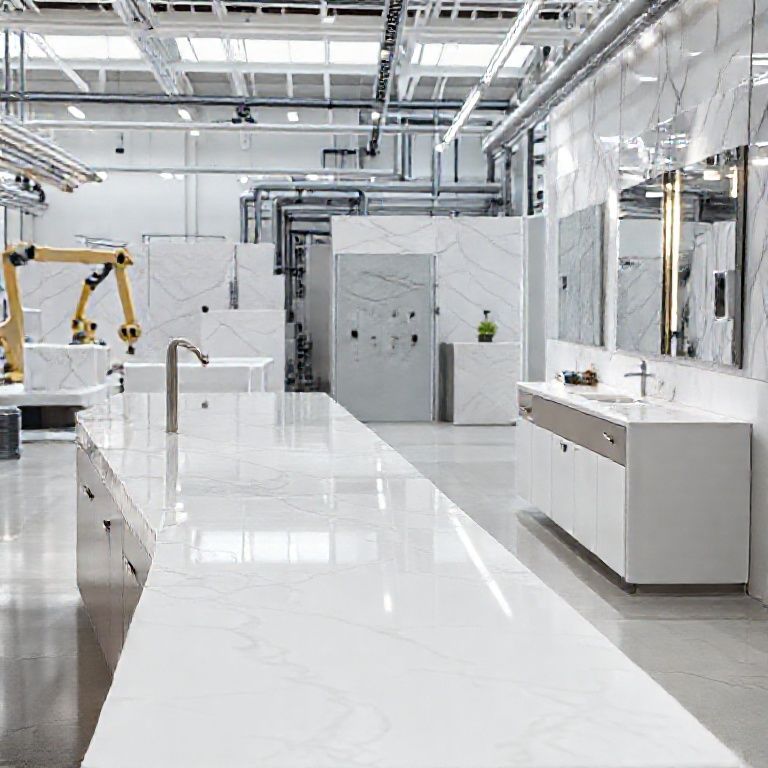
Then there is the increasingly popular sintered stone. This material takes the concept of engineered surfaces a step further, utilizing a process that mimics and accelerates the geological formation of metamorphic rocks. Sintered stone is made from a blend of natural minerals – feldspar, quartz, and metallic oxides – that are finely ground and then subjected to extreme heat and pressure (in excess of 1,000°C and 15,000 tons of pressure). This process fuses the minerals together at a molecular level, creating a material that is incredibly dense, hard, and non-porous. The result is a surface that is highly resistant to heat, stains, scratches, and UV rays. Sintered stone often emulates the look of natural stone, such as marble or quartzite, with stunning realism, but its inherent strength and durability make it suitable for a wider range of applications. From countertops and wall cladding to flooring and even outdoor furniture, sintered stone offers a robust and elegant solution for demanding environments. Its ability to be produced in large format slabs also lends itself to creating grand, uninterrupted surfaces, further enhancing its visual impact.
Terrazzo, a composite material traditionally made from cement or epoxy binder mixed with marble, granite, quartz, or glass chips, also finds its place within the broader definition of artificial stone, especially in its more modern, resin-based iterations. While historically a flooring material, advancements in technology have elevated terrazzo into a sophisticated surfacing option for countertops, walls, and even furniture. Modern terrazzo, often using epoxy resins as a binder, offers a vibrant, highly customizable aesthetic. The clear binder allows the colorful chips to shine through, creating a unique mosaic effect that can be tailored to any design scheme. Its durability and the ability to achieve a high polish make it a striking choice for both residential and commercial projects seeking a touch of retro charm with contemporary performance.
The “人造石大全” is not merely a catalog of materials; it’s an exploration of the very essence of design and functionality. These engineered stones represent a conscious choice by architects, designers, and homeowners to embrace materials that offer predictability, performance, and a canvas for creativity. They are born from a desire to replicate the beauty of the natural world, but also to transcend its limitations, offering surfaces that are easier to maintain, more durable in specific applications, and endlessly adaptable to the evolving demands of modern living. Understanding this diverse family of materials is the first step towards unlocking their transformative potential within our homes and beyond.
The journey into the world of “人造石大全” continues, moving from an understanding of the distinct materials themselves to appreciating their practical applications and the creative dialogues they foster within the realm of interior design. The allure of artificial stone lies not only in its inherent qualities but also in its remarkable versatility, allowing it to seamlessly integrate into virtually any design aesthetic, from the ultra-modern and minimalist to the classically elegant and the boldly eclectic.
Consider the kitchen, often hailed as the heart of the home. Here, countertops are not merely surfaces for food preparation; they are focal points, working canvases that bear witness to culinary adventures and convivial gatherings. Engineered quartz reigns supreme in many kitchens due to its exceptional durability and low maintenance. Its non-porous nature means spills from wine, coffee, or oil are easily wiped away without staining, a boon for busy households. The consistent patterns and colors offered by quartz also provide designers with a level of predictability that is difficult to achieve with natural stone. This allows for precise coordination with cabinetry, backsplashes, and flooring, enabling a cohesive and harmonious design. Whether opting for a pristine white surface that evokes a sense of airy spaciousness or a dramatic, veined pattern that adds a touch of sophisticated drama, quartz delivers on both form and function.
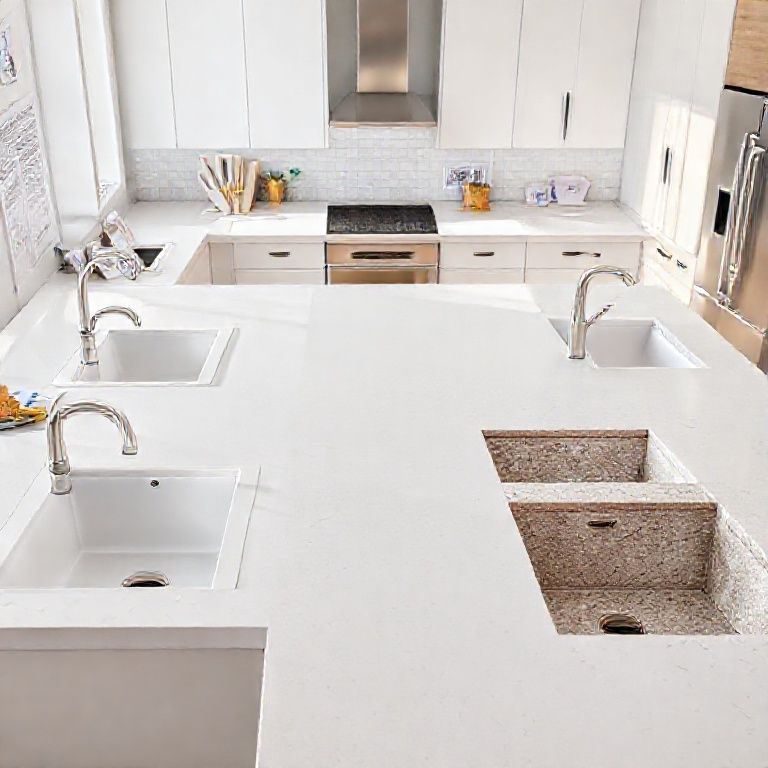
Solid surfaces, with their inherent ability to be shaped and joined seamlessly, offer a different, yet equally compelling, set of advantages in the kitchen. Imagine a kitchen island with an integrated sink, where the countertop flows uninterrupted into the basin, eliminating unsightly seams and creating a sleek, hygienic workspace. This ability to form complex shapes and curves opens up a world of design possibilities, allowing for truly bespoke kitchen designs. Beyond the countertop, solid surfaces are frequently used for backsplashes, allowing for a continuous, easy-to-clean vertical surface that ties the entire kitchen together. The ability to repair minor damages also makes them a pragmatic choice for families with young children or for those who frequently entertain.
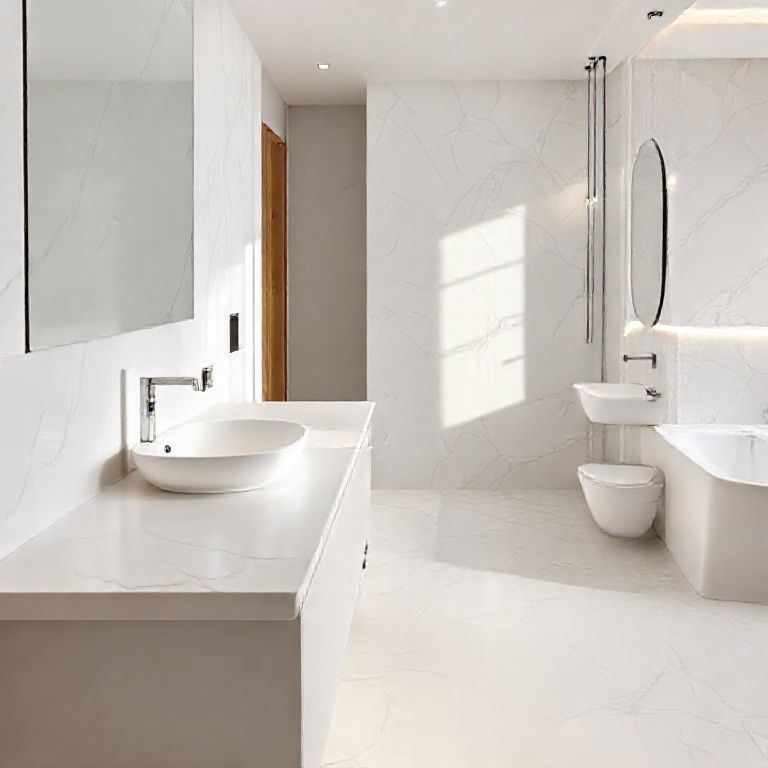
Sintered stone, with its incredible strength and heat resistance, is a game-changer for kitchens that demand the utmost in performance. Its ability to withstand high temperatures means that hot pots and pans can often be placed directly onto the surface without fear of scorching or damage, though using trivets is always a wise precaution. This robustness makes it an excellent choice for busy kitchens, but also for more adventurous applications. Large format sintered stone slabs can create dramatic, unbroken surfaces, making a bold statement in any kitchen design. The realistic veining of marble-like sintered stone offers the aesthetic appeal of natural marble with a fraction of the maintenance, making it a popular choice for those who desire the luxury of marble without the inherent porosity and susceptibility to etching.
In the bathroom, the considerations shift slightly, with moisture resistance and hygiene taking center stage. Here again, the artificial stone family shines. The non-porous nature of quartz and sintered stone makes them ideal for vanity tops, resisting water spots and the absorption of moisture that can lead to discoloration or damage in less resilient materials. The seamless possibilities of solid surfaces are particularly advantageous in bathrooms, where integrated sinks and backsplashes create a spa-like feel and simplify cleaning. Imagine a floating vanity with a solid surface top that extends up the wall as a continuous backsplash – it’s a design that is as functional as it is visually stunning. Furthermore, the vast array of colors and textures available in artificial stones allows for the creation of serene and personalized bathroom retreats, from calming neutral tones to vibrant pops of color.
Beyond the kitchen and bathroom, the “人造石大全” reveals the expansive potential of these engineered materials in other areas of the home and in commercial spaces. Flooring, for instance, has seen a significant impact from modern terrazzo and engineered stone tiles. These offer durability, a wide range of aesthetic options, and often a more consistent and predictable installation compared to natural stone tiles. Wall cladding, both interior and exterior, is another area where sintered stone and solid surfaces are making their mark. Large-format slabs can create dramatic, seamless feature walls, while textured surfaces can add depth and visual interest. In commercial settings, the durability, ease of maintenance, and vast design possibilities of artificial stones make them a popular choice for reception desks, bar tops, retail displays, and public restrooms.
The innovation within the “人造石大全” is ongoing. Manufacturers are continually pushing the boundaries of what’s possible, developing new compositions, textures, and finishes. We see a growing trend towards sustainability, with some manufacturers incorporating recycled materials into their products. The development of thinner, yet stronger, slabs is also expanding the application possibilities, making these materials lighter and easier to transport and install.
Ultimately, “人造石大全” is more than just a collection of materials; it’s a testament to human creativity and our ability to engineer solutions that enhance our living spaces. It represents a conscious decision to embrace materials that offer a blend of aesthetic beauty, practical performance, and design flexibility. Whether you are renovating your kitchen, designing a luxurious bathroom, or embarking on a commercial project, understanding the diverse and dynamic world of artificial stone will empower you to make informed choices, unlocking a world of possibilities for surfaces that are as enduring as they are exquisite. The infinite palette of artificial stone awaits, ready to be transformed into the backdrop of your everyday life.









