
The allure of smooth, seamless surfaces has captivated designers and homeowners alike, transforming ordinary spaces into havens of modern elegance. In the realm of contemporary interior design, two materials consistently vie for the spotlight: acrylic and solid surface. Often mentioned in the same breath, and sometimes even confused, these engineered materials offer a dazzling array of possibilities. Yet, beneath their polished exteriors lie fundamental differences that dictate their performance, application, and overall suitability for a given project. Understanding these distinctions is not merely an academic exercise; it’s the key to unlocking the full potential of your design vision and ensuring a lasting, beautiful result.

Let’s begin by demystifying “solid surface.” This is a broad category, an umbrella term that encompasses a range of composite materials. At its core, solid surface is typically composed of a blend of natural minerals (often alumina trihydrate, derived from bauxite ore) and acrylic or polyester resins, along with pigments. The exact composition can vary significantly between manufacturers, leading to a spectrum of properties. Think of it as a family of materials, each with its own unique genetic makeup. This inherent variability is both a strength and a point of careful consideration.
The manufacturing process for solid surface involves mixing these components into a slurry, which is then poured into molds and cured under heat and pressure. This process creates a non-porous, homogeneous material that extends all the way through. This “solid” nature is its defining characteristic, meaning that scratches or minor damage can often be repaired by sanding and refinishing, restoring the surface to its original glory. This regenerative capability is a significant advantage, particularly in high-traffic areas like kitchen countertops and bathroom vanities.
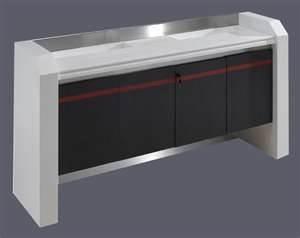
Aesthetically, solid surface offers a vast palette. It can be manufactured in a stunning array of colors, patterns, and textures, often mimicking the look of natural stone like granite or marble, but without the inherent porosity and maintenance demands of its natural counterparts. The ability to create intricate inlays, custom shapes, and seamless joints further amplifies its design versatility. Imagine a kitchen island with a waterfall edge, a bathroom sink seamlessly integrated into the vanity, or a reception desk that curves and flows like a sculpture – solid surface makes these ambitious designs a tangible reality. The absence of visible seams is a major draw, contributing to a clean, hygienic, and visually uninterrupted finish. This makes it particularly well-suited for environments where hygiene is paramount, such as healthcare facilities and food preparation areas.
The fabrication of solid surface is a craft in itself. It can be cut, routed, thermoformed, and joined using specialized adhesives that create invisible seams. This allows for a high degree of customization, enabling designers to push the boundaries of what’s possible with surfacing materials. Thermoforming, in particular, opens up a world of curved and organic shapes, moving beyond the traditional flat planes. This adaptability is a cornerstone of its appeal in bespoke interior design projects.
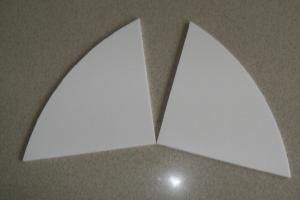
However, not all solid surfaces are created equal. The choice between acrylic-based solid surfaces and polyester-based ones can influence their performance. Acrylic-based solid surfaces generally offer better UV resistance and are more flexible, making them suitable for outdoor applications or areas with significant sun exposure. Polyester-based solid surfaces, while often more cost-effective, may be more susceptible to UV degradation and can be more brittle. When specifying solid surface, it’s vital to understand the specific composition and intended application to ensure optimal performance and longevity.
Now, let’s turn our attention to acrylic, or more precisely, what is often referred to as “cast acrylic” or “solid acrylic” when used as a surfacing material. While solid surface can contain acrylic resins, “acrylic” as a distinct surfacing material generally refers to a material that is predominantly, or entirely, cast acrylic. Think of it as a more refined, purer form of acrylic. This material is typically manufactured by polymerizing methyl methacrylate (MMA) monomer. The result is a transparent or translucent material that can be pigmented to achieve a wide range of colors and effects.
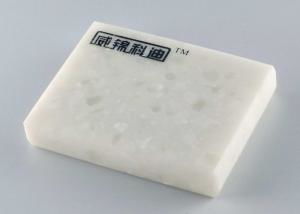
The key differentiator here is the material composition and its inherent properties. Acrylic, in its pure solid form, possesses a remarkable clarity and depth that other surfacing materials simply cannot replicate. This transparency is its superpower, allowing for the creation of “floating” effects, embedded designs, and illuminated features. Imagine a reception desk with integrated LED lighting that glows from within, or a bar top that appears to be carved from solid ice. Acrylic excels at these dramatic, attention-grabbing applications.
Furthermore, acrylic is exceptionally lightweight compared to natural stone or even some solid surface formulations. This can simplify installation and reduce structural load requirements, making it a practical choice for a variety of projects. Its non-porous nature, similar to solid surface, ensures excellent hygiene and ease of cleaning, resisting stains and microbial growth.
However, acrylic’s prowess comes with its own set of considerations. While it is durable, it is also more susceptible to scratching than many solid surface materials or natural stone. The scratches on acrylic tend to be more visible due to its inherent clarity. While minor scratches can often be buffed out, deeper gouges may be more challenging to repair seamlessly. This means that in very high-traffic, abrasive environments, careful consideration of its scratch resistance is paramount.
The fabrication of acrylic also differs. It can be cut and shaped, but its thermoforming capabilities are even more pronounced than some solid surfaces. It can be heated and molded into complex curves and shapes with ease, allowing for truly organic and fluid designs. The joining of acrylic pieces typically involves specialized acrylic cements that chemically bond the material, creating a strong, seamless bond that is often indistinguishable from the original material.
When we talk about “artificial stone” in the context of these materials, it’s important to note that both acrylic and solid surface can fall under this broad descriptor. However, the term “artificial stone” can sometimes be associated with materials that have a more stone-like appearance, which is often the domain of solid surface. Acrylic, with its potential for transparency and unique light-play, often ventures into territories far removed from mimicking natural stone, exploring its own distinct aesthetic language.
In essence, while both acrylic and solid surface offer seamless, non-porous, and versatile surfacing solutions, their fundamental compositions lead to distinct performance characteristics and aesthetic possibilities. Solid surface, in its varied forms, often leans towards mimicking natural materials with enhanced durability and repairability, while acrylic, in its purer form, unlocks a world of transparency, luminescence, and intricate design possibilities, albeit with a greater emphasis on managing its scratch susceptibility. The “luminous divide” between them lies not just in their chemical makeup, but in the very essence of the visual and tactile experiences they deliver.
Continuing our exploration of acrylic and solid surface, we delve deeper into the practicalities of their application and performance, moving beyond their fundamental compositions to understand how these differences translate into real-world scenarios. The choice between these two sophisticated surfacing materials often hinges on a nuanced understanding of their strengths and weaknesses in relation to specific project demands.
When considering kitchen countertops, for instance, both acrylic and solid surface present compelling arguments. The non-porosity of both materials is a significant advantage, making them inherently hygienic and resistant to stains from common kitchen culprits like coffee, wine, and oils. This ease of maintenance is a major selling point for busy households. However, the heat resistance of these materials can differ. While many solid surfaces offer moderate heat resistance, allowing for the placement of warm (but not scalding hot) items for short periods, pure acrylic generally has lower heat resistance. This means that for a kitchen countertop where hot pots and pans are frequently placed, the use of trivets or heat pads is an absolute necessity with acrylic. Some manufacturers of solid surface may offer formulations with enhanced heat resistance, but this is a specification that warrants careful inquiry.
In the bathroom, the non-porous nature of both materials is equally beneficial, preventing water absorption and the potential for mold and mildew growth – a common concern with natural stone. The ability to create seamless integrated sinks with both acrylic and solid surface is a game-changer for bathroom design, eliminating the crevices where grime can accumulate and offering a sleek, continuous aesthetic. The repairability of solid surface is a particular boon in bathrooms, where scratches from jewelry or accidental impacts might occur. Minor repairs can often be addressed with a DIY approach or a professional refinish, breathing new life into the surface. Acrylic, while also repairable, might require a more specialized touch for significant scratch removal.
The aesthetic considerations are where the divergence becomes most pronounced. Solid surface, as mentioned, excels at mimicking natural materials. If the goal is to achieve the look of a veined marble or a speckled granite without the associated maintenance or ethical sourcing concerns, solid surface is often the go-to choice. Its ability to be fabricated in a continuous sheet means that the veining can flow seamlessly across large surfaces, creating a remarkably natural appearance. Furthermore, its slightly softer feel underfoot, compared to the often colder, harder feel of natural stone, can contribute to a more comfortable and inviting ambiance.
Acrylic, on the other hand, truly shines when its inherent properties are leveraged. Its transparency and translucency open up a world of design possibilities that are simply unattainable with solid surface. Imagine a feature wall in a restaurant that glows with backlighting, a translucent bar top that reveals the intricate patterns of embedded objects, or a reception desk that appears to be sculpted from light itself. Acrylic’s ability to be thermoformed into dramatic curves and organic shapes also allows for a level of sculptural design that is less common with traditional solid surface fabrication. This makes it ideal for statement pieces and high-impact architectural features.
When it comes to durability and longevity, the nuances are important. Both materials are engineered for performance, but their susceptibility to different types of wear and tear varies. As discussed, acrylic is more prone to scratching. While this can be managed with careful use and readily available repair techniques, it’s a factor to consider for surfaces that will experience heavy abrasion. Solid surface, particularly those with a higher mineral content, can offer superior scratch resistance, though this can sometimes come at the expense of flexibility in fabrication.
The cost factor is also a significant consideration. Generally, solid surface materials can range in price, with some basic formulations being quite competitive with laminate, while higher-end, more complex designs can rival natural stone. Pure acrylic, particularly for high-quality cast acrylic sheets, can also represent a significant investment, especially when complex fabrication or specialized finishes are involved. The overall cost will depend not only on the material itself but also on the complexity of the design, the fabrication techniques required, and the installation expertise needed.
The environmental impact is another area where differences emerge. Both materials are manufactured products, and their production processes have an environmental footprint. However, the ingredients and processes involved can vary. Many solid surface manufacturers are increasingly focusing on sustainable sourcing of raw materials and energy-efficient production methods. Recyclability is also a growing consideration, with many solid surface materials being designed for recyclability at the end of their lifespan. Acrylic, being a petroleum-based product, has its own set of environmental considerations. However, acrylic is also highly recyclable, and advancements in recycling technologies are making it an increasingly viable option for sustainable projects. The longevity and repairability of both materials also contribute to their sustainability, as they reduce the need for frequent replacement.
When choosing between acrylic and solid surface, it’s often helpful to ask yourself a series of targeted questions: What is the primary function of the surface? What level of heat exposure will it endure? What kind of visual aesthetic am I aiming for – a natural stone look, or something more avant-garde and translucent? What is my tolerance for minor wear and tear, and what are my expectations for repairability? What is my budget, and how does that align with the desired material and fabrication complexity?
In essence, the “luminous divide” is not a hard and fast line but rather a spectrum of possibilities. Solid surface offers a robust, versatile, and often aesthetically familiar option that excels in mimicking natural materials and providing a durable, repairable finish for a wide range of applications. Acrylic, on the other hand, ventures into the realm of the extraordinary, offering unparalleled transparency, light-play, and design freedom for those seeking to create truly unique and visually striking spaces. Both materials represent the pinnacle of modern surfacing technology, each offering a distinct pathway to achieving beautiful, functional, and contemporary interiors. The “artificial stone” dialogue, therefore, is not about which is superior, but rather about understanding the unique strengths of each to make the most informed and inspired design decisions.









