
The Petite Kitchen Masterclass: Unlocking the Potential of Your 2-Meter Culinary Canvas
The mere mention of a “2-meter kitchen” might conjure images of cramped countertops and a constant game of culinary Tetris. For many, it’s a space that feels more like a compromise than a command center. But what if I told you that a kitchen measuring just two meters wide isn’t a limitation, but a canvas? A canvas ripe for innovation, intelligent design, and surprisingly, a touch of elegance. Forget the notion that only sprawling estates boast enviable kitchens; with the right approach, your petite culinary haven can be a masterpiece of efficiency and style.
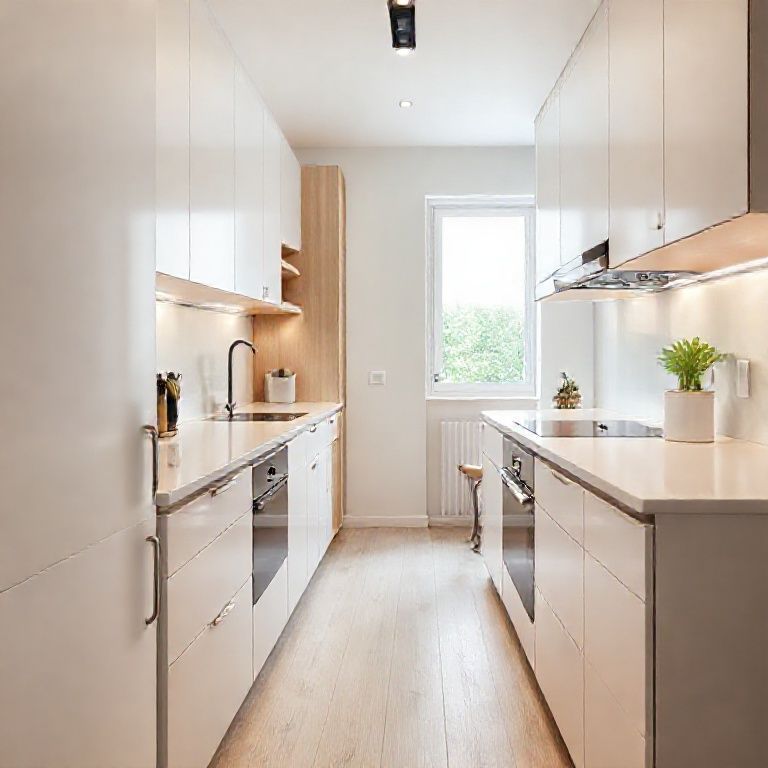
Let’s start by dispelling a common myth: small kitchens are inherently impractical. This couldn’t be further from the truth. In fact, a well-designed narrow kitchen can be more functional than a large, cluttered one. The key lies in meticulous planning and a deep understanding of how you actually use your kitchen. Think of it as a design challenge, an opportunity to become a connoisseur of space optimization.
The first step in taming your 2-meter territory is to embrace a minimalist mindset. Before you even think about cabinets and appliances, conduct a ruthless inventory of your kitchen essentials. Every pot, pan, gadget, and spice jar needs to justify its presence. If you haven’t used that novelty avocado slicer in two years, it’s probably time for it to find a new home. This decluttering process isn’t just about freeing up physical space; it’s about freeing up your mental space too, allowing you to focus on what truly matters for your cooking and living.
Once you’ve streamlined your possessions, it’s time to consider the layout. For a 2-meter wide kitchen, the most common and often most effective layout is the single-wall or galley kitchen. A single-wall kitchen places all your functional elements – sink, stove, refrigerator – along one wall. This maximizes open floor space, making the kitchen feel less enclosed. A galley kitchen, on the other hand, features cabinets and appliances on two parallel walls. While this can feel more contained, it can also be incredibly efficient if the gap between the two walls is well-proportioned, typically between 1.2 to 1.8 meters. This allows for a smooth workflow without excessive walking.
Within this linear framework, the “work triangle” – the conceptual arrangement of sink, stove, and refrigerator – still holds relevance. Even in a single-wall design, try to position these elements in a logical sequence. For instance, having the refrigerator close to the entrance for easy access to groceries, followed by the sink for washing, and then the stove for cooking, creates a natural flow. Avoid placing the stove directly next to the refrigerator; the heat from the stove can impact the efficiency of the fridge.
Now, let’s talk about cabinetry. This is where the magic of maximizing vertical space truly shines. Opt for floor-to-ceiling cabinets. This might seem daunting, but it instantly doubles your storage capacity. Think about the upper cabinets: instead of standard depths, consider shallower cabinets for items you use less frequently, or even open shelving for frequently used items, which can also create a sense of spaciousness. For the lower cabinets, custom solutions are your best friend. Instead of traditional drawers, consider pull-out shelves, deep drawers for pots and pans, and specialized organizers for spices and utensils. Lazy Susans in corner cabinets (if you have any, though less common in a 2-meter width) can transform awkward dead space into accessible storage.
When it comes to countertops, every inch counts. Opt for durable, low-maintenance materials like quartz or solid surface. Consider integrated sinks, which create a seamless look and reduce visual clutter. For prep space, think about multi-functional elements. A pull-out cutting board that slides over a drawer or a butcher block countertop section that can be extended can be invaluable. Don’t underestimate the power of wall-mounted storage. Pot racks, magnetic knife strips, and open shelving can keep your countertops clear and your most-used tools within easy reach.
Appliances are another crucial consideration. In a 2-meter kitchen, scale is paramount. Opt for compact, narrow appliances. A 45cm dishwasher instead of a standard 60cm model can save significant space. Consider a slimline refrigerator or one that can be integrated into your cabinetry for a cohesive look. For the hob, a two-burner induction cooktop can be surprisingly efficient for most everyday cooking tasks, and induction offers superior control and speed. Think about multi-functional appliances too; a microwave that doubles as a convection oven can reduce the need for separate appliances.
The visual aspect of a small kitchen is just as important as its functionality. Light colors are your allies. White, cream, pale grey, and soft pastels can make a space feel larger and more airy. Consider a high-gloss finish for cabinets and countertops, as these reflect light and create a sense of depth. Lighting is also key. Ample task lighting under cabinets ensures that your work surfaces are well-lit, while ambient lighting from pendant lights or ceiling fixtures can create a warm and inviting atmosphere. Avoid heavy, dark curtains; opt for sleek blinds or light, sheer fabrics. Mirrors can also be a strategic addition, reflecting light and the illusion of more space.
Finally, let’s consider the flooring. Light-colored tiles, wood-look vinyl, or polished concrete can all contribute to a feeling of openness. Ensure the flooring is durable and easy to clean, as a compact kitchen can often see heavy use. The overall goal is to create a space that feels light, bright, and effortless to navigate. Don’t be afraid to inject your personality through thoughtful details like cabinet hardware, a colorful backsplash, or a few well-chosen decorative items. A 2-meter kitchen, when designed with intention, can be a testament to the fact that good things often come in small packages.
Having laid the groundwork for a functional and visually appealing 2-meter kitchen, let’s delve deeper into the nuanced strategies that elevate it from merely “small” to exceptionally “smart.” The initial design phase is crucial, but the ongoing management of your compact culinary space is where its true potential is unlocked. It’s about cultivating a system that makes cooking a joy, not a chore, even within your defined dimensions.
One of the most impactful design choices for a narrow kitchen is the selection of cabinet doors and drawer fronts. Opt for sleek, handleless designs or minimalist hardware. This creates a clean, unbroken visual line that contributes to a sense of spaciousness. Think about the finish as well. Matte finishes can absorb light, while high-gloss or semi-gloss finishes reflect it, making the space feel larger. Consider integrated appliances that blend seamlessly with your cabinetry, further reducing visual clutter. When selecting cabinetry, prioritize functionality over sheer volume. Deep drawers are significantly more efficient than standard cabinets for storing pots, pans, and smaller appliances. Pull-out shelves are a game-changer for accessing items at the back of cabinets, and specialized organizers for cutlery, spices, and baking sheets can transform chaos into order.
The strategic use of vertical space continues to be a recurring theme. Beyond floor-to-ceiling cabinets, consider incorporating open shelving. This can be particularly effective above the sink or on a section of wall where a full cabinet might feel too imposing. Use these shelves to display attractive everyday items like your favorite mugs or cookbooks, or to store frequently used ingredients. However, be mindful of not overdoing it; too much open shelving can lead to visual clutter. A good rule of thumb is to balance closed storage with a few carefully curated open elements. Wall-mounted solutions are also invaluable. A magnetic knife strip frees up valuable counter space and keeps your knives readily accessible and safely stored. Hanging pots and pans from a ceiling-mounted rack can be both a practical storage solution and a design statement, adding a touch of professional flair.
Lighting plays a pivotal role in a small kitchen. Beyond general ambient lighting, task lighting is essential. Under-cabinet LED strips are a must-have, illuminating your countertops without creating glare. Consider a well-placed pendant light over your sink or a small dining nook, if you have one. Dimmable lighting options allow you to adjust the mood of the kitchen, transforming it from a workhorse during meal prep to a cozy space for conversation. Natural light is also your best friend. Maximize it by keeping window treatments minimal and choosing light-colored, reflective surfaces throughout the kitchen. If possible, consider a slim-profile backsplash that reflects light upwards, further enhancing the sense of openness.
When it comes to appliances, consider the “less is more” principle, but with an emphasis on multi-functionality. A combination microwave oven that can also bake and grill can be a space-saving marvel. If you’re a serious cook, a powerful, compact induction hob with two or three burners might be sufficient. For refrigeration, look for slimline models or integrated units that disappear into your cabinetry. A narrow dishwasher, often called a “slimline” or “45cm” model, can still handle a surprising amount of dishes and is a worthwhile investment for maximizing floor space. Think about where you place these appliances. The refrigerator should ideally be near the entrance of the kitchen for easy unloading of groceries. The sink and stove should be within a comfortable working distance, creating a functional workflow.
The concept of “zones” can also be beneficial in a narrow kitchen. Designate specific areas for different tasks: a prep zone near the sink, a cooking zone around the stove, and a cleaning zone with the dishwasher. This compartmentalization helps maintain order and makes the workflow more intuitive. Even in a small space, clear zoning can prevent the feeling of being constantly in each other’s way.
Don’t overlook the power of mobile solutions. A well-designed kitchen island on wheels, though perhaps a stretch in a strict 2-meter width, could be a smaller, movable cart. This can provide extra prep space when needed and be tucked away when not in use. Similarly, expandable dining tables or breakfast bars that fold down from the wall can offer flexible dining solutions without permanently occupying precious floor space.
Color palette and materials are crucial for creating the illusion of space. Light, neutral colors are your most effective tools. Whites, creams, pale grays, and soft blues can make the kitchen feel larger and more airy. Consider using the same color for cabinets, countertops, and walls to create a seamless, expansive look. High-gloss finishes on cabinets and backsplashes will reflect light, further enhancing the sense of space. For flooring, opt for light-colored tiles or wood-look vinyl that can create a continuous visual flow.
Finally, remember that a small kitchen is also a place to express your personality. While functionality is paramount, don’t shy away from adding touches of style. A statement pendant light, a few well-chosen decorative items, or a colorful piece of artwork can add warmth and character. The goal is to create a space that is not only efficient but also a pleasure to be in. With thoughtful design and a commitment to organization, your 2-meter kitchen can be a testament to the fact that sophisticated living is not about square footage, but about smart, intentional design. It’s about transforming constraints into creative opportunities, proving that a compact culinary canvas can indeed yield the most delectable results.









