
Sure, I can help you with that! Here’s a soft article on the theme “1.5公分的石头有多大” (How big is a 1.5 cm stone?), written in attractive English.

The question, “How big is a 1.5 cm stone?” might seem disarmingly simple, almost trivial. Yet, like many things in life, the answer is anything but. This seemingly modest measurement, a mere 15 millimeters, holds within it a surprising depth of meaning, a tangible link to the vastness of our planet’s history, and the intimate, often overlooked, beauty that surrounds us. Let’s embark on a journey to truly grasp the scale and significance of this pocket-sized marvel.
Imagine holding a small, smooth stone in your palm. It fits comfortably, a gentle weight against your skin. Now, picture a standard dice. A typical six-sided die measures approximately 1.6 cm on each side. So, a 1.5 cm stone is just a hair smaller than that familiar cube, a subtle difference that emphasizes its compact nature. Think of a large grape, or a cherry tomato – these are also good benchmarks for visualizing the size. It’s not so small that it easily gets lost in the shuffle, yet not so large that it becomes cumbersome. It’s the perfect size for a keepsake, a worry stone, or a delightful discovery on a beach walk.
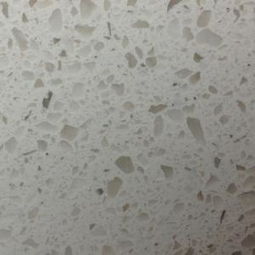
But beyond these everyday comparisons, the 1.5 cm stone represents something far grander: a fragment of Earth’s immense narrative. Geologically speaking, stones are the solidified remnants of ancient processes. A 1.5 cm stone could be a piece of a once-volcanic eruption, cooled and shaped over millennia by wind and water. It might be a shard of a colossal mountain range, slowly eroded and carried by rivers to its current resting place. Perhaps it’s a fossilized fragment, a whisper from a time when life on Earth was unimaginably different. The mineral composition, the texture, the very color of the stone – all tell a story. Is it a fleck of granite, with its characteristic speckles of quartz, feldspar, and mica, hinting at deep subterranean pressures? Or is it a smooth, dark piece of basalt, a testament to fiery volcanic origins? Could it be a piece of sedimentary rock, layered like a miniature geological cross-section, showing the slow accumulation of sand and silt over eons?
The journey of a 1.5 cm stone is a testament to the powerful forces of nature. It could have been tumbled and smoothed by the relentless crashing of ocean waves for hundreds, thousands, or even millions of years. Imagine the countless tides it has witnessed, the storms it has weathered, the sea creatures that have brushed past it. Or, it might have been carved by the patient flow of a river, its sharp edges gradually rounded by the constant friction of water and other stones. The sheer persistence of these natural forces, acting on a scale of time that is almost incomprehensible to us, is what creates the beauty and character of even the smallest stone.

Consider the texture. Is it rough and porous, like pumice, hinting at its airy, volcanic past? Or is it glassy smooth, polished to a high sheen by persistent abrasion? The surface might be etched with intricate patterns by lichens, tiny organisms that slowly colonize rocks, adding another layer to its history. These patterns are not merely decorative; they are the result of a biological partnership that can take decades to form.
The color of a 1.5 cm stone can also be a clue to its origins. Iron oxides often lend reddish or rusty hues, while manganese can create dark, almost black, streaks. The presence of certain minerals can result in vibrant blues, greens, or even purples. Each color is a chemical signature, a hint about the geological environment from which it emerged.
This seemingly insignificant size also makes it incredibly portable, a natural fit for our lives. We pick them up on walks, finding comfort in their solidity. We collect them, drawn to their unique forms and the stories they seem to hold. A 1.5 cm stone can become a tangible anchor to a memory – a holiday by the sea, a hike in the mountains, a childhood exploration of a local stream. It’s a tiny piece of the world that we can carry with us, a reminder of places visited and experiences cherished. This portability transforms the geological wonder into a personal treasure, a whisper of adventure in the palm of our hand. The allure isn’t just in its size, but in the potential it represents – a miniature world of history, artistry, and personal connection, all contained within a few millimeters of rock.
Continuing our exploration of the 1.5 cm stone, we move from its grand geological narrative to the intimate human experiences it can evoke. While its size might be measured in millimeters, its impact on our perception and personal lives can be far more substantial. This small object serves as a potent symbol, a catalyst for reflection, and a delightful invitation to engage with the world around us on a different scale.

The act of finding a 1.5 cm stone is often an exercise in mindfulness. It requires us to slow down, to observe, and to notice the details that often escape our hurried glances. On a busy street, amidst the concrete and asphalt, a glint of unusual color or texture might catch our eye, leading us to a tiny geological gem. On a sprawling beach, the sheer abundance of stones can be overwhelming, but it’s often the distinctive 1.5 cm ones that capture our attention – a perfect circle, a striking vein, a pleasing smoothness. This conscious act of discovery is a form of engagement with our environment, a moment of connection that pulls us away from screens and schedules and grounds us in the present.
For children, a 1.5 cm stone can be an entire universe of imagination. It can be a dragon’s egg, a fallen star, a secret message from fairies. Its manageable size makes it perfect for little hands to hold, to examine with a magnifying glass, or to incorporate into elaborate games. The simplicity of the object allows their creativity to flourish, turning a humble pebble into an object of immense narrative power. It’s a fundamental tool in the early development of curiosity and scientific inquiry, encouraging questions about where it came from and what it’s made of.
In the realm of art and craft, these small stones find a new life. They can be meticulously painted with miniature designs, becoming unique pieces of wearable art or delicate decorations. They can be incorporated into mosaics, jewelry, or even miniature sculptures, each stone contributing its unique character to a larger creation. The challenge of working with such a small canvas often pushes artists to refine their skills and develop a keen eye for detail. The 1.5 cm stone, in this context, is not just a natural object but a medium, a collaborator in the creative process.
Furthermore, the 1.5 cm stone plays a role in various cultural practices and beliefs. In some traditions, certain types of stones are believed to possess healing properties or protective energies. A small, smooth stone carried in a pocket or worn as a pendant can serve as a personal talisman, a tangible source of comfort and reassurance. The belief itself, regardless of scientific validation, imbues the stone with a significance that transcends its physical properties. It becomes a conduit for intention, a focal point for personal well-being.
The simple act of collecting stones, a hobby that spans ages and cultures, often centers around these conveniently sized specimens. They are easy to transport, display, and organize. A curated collection of 1.5 cm stones can become a personal museum, a testament to travels, geological interests, or simply a love for the natural world. Each stone represents a memory, a place, a moment in time, and when arranged together, they form a cohesive narrative of the collector’s journey.
In the context of medicine, stones of a specific size, like kidney stones measuring around 1.5 cm, can present significant health challenges. This seemingly arbitrary measurement, which feels so small in the context of a natural discovery, can become a source of considerable pain and concern when found within the human body. It highlights how scale and context dramatically alter our perception of size and its implications. What is a delightful find on a beach can be a medical hurdle within.
Ultimately, the 1.5 cm stone, in its unassuming size, offers a profound lesson in perspective. It reminds us that significance is not always measured in grandeur or volume. It teaches us to appreciate the small wonders, the quiet details, and the enduring stories that nature, and life itself, presents to us. Whether it’s a geological marvel, a childhood plaything, an artistic medium, a personal talisman, or a medical concern, this humble pebble invites us to look closer, to think deeper, and to find the extraordinary in the ordinary. It’s a universe in your hand, waiting to be discovered.









