
The gleam of a new kitchen, the smooth, cool touch of a pristine countertop – these are the aspirations that fuel countless home renovation projects. Among the pantheon of surface materials, engineered quartz has carved out a significant niche, celebrated for its blend of beauty and resilience. Yet, within this popular category, a subtle yet crucial distinction exists: the difference between quartz 1.8 and 2.0. While both offer the inherent advantages of quartz, understanding this numerical nuance is key to unlocking the true potential of your surfaces. This isn’t just about numbers; it’s about millimeters, about the very molecular structure that dictates a material’s performance and aesthetic appeal. For those embarking on the journey of selecting countertops, or perhaps contemplating an upgrade, the question arises: “Which is better, 1.8 or 2.0 quartz?” And the answer, as we shall explore, leans decisively towards the latter, the more refined and robust 2.0.

Let’s first ground ourselves in what quartz countertops fundamentally are. They are not simply slabs of natural stone, but rather engineered marvels. A vast majority of a quartz surface, typically around 90-95%, is composed of ground natural quartz crystals – one of the hardest minerals on Earth. This natural quartz is then bound together with polymer resins and pigments. This ingenious combination results in a material that inherits the strength and beauty of natural quartz while mitigating some of its inherent weaknesses, such as porosity and susceptibility to staining. This is the foundation upon which the 1.8 and 2.0 variations are built, but the subtle shifts in their composition and manufacturing processes lead to significant divergences in their capabilities.
The “1.8” designation, in this context, often refers to a standard thickness, typically around 1.8 centimeters (or approximately 3/4 of an inch). This has long been a prevalent thickness for quartz countertops, offering a solid and reliable surface suitable for most residential applications. It’s the workhorse, the dependable choice that has graced many kitchens and bathrooms for years. It possesses the characteristic non-porous nature of quartz, meaning spills are unlikely to seep in and cause stains, making it inherently hygienic and easy to clean. Its resistance to scratches and heat is also a hallmark, allowing for a degree of freedom in the kitchen that natural stones sometimes restrict. You can place a hot pot on it (with a trivet, of course, as extreme temperature shocks can still be an issue), chop vegetables directly on it (though a cutting board is always recommended to preserve the knife’s edge), and wipe away coffee spills with ease.
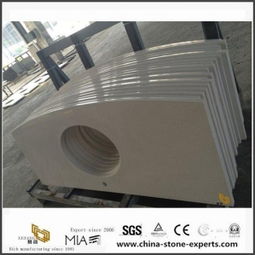
However, as with many things in life, there’s always room for improvement, for pushing the boundaries of what’s possible. This is where the “2.0” enters the arena, signifying a slightly thicker slab, typically around 2.0 centimeters (or approximately 7/8 of an inch). At first glance, this seemingly minor increase in thickness might appear negligible, a mere detail. But in the world of material science and engineering, even incremental changes can yield substantial benefits. This added thickness translates directly into enhanced structural integrity. A 2.0 cm slab is inherently stronger, more robust, and less prone to chipping or cracking, especially around edges and cutouts for sinks and cooktops – areas that are often subjected to greater stress.
Think of it like building a bridge. While a thinner span might suffice for light traffic, a thicker, more substantial structure is required to bear heavier loads and withstand greater forces. Similarly, a 2.0 cm quartz countertop provides a more substantial foundation, offering greater peace of mind for busy households, avid home cooks, and anyone who appreciates a material that can truly stand the test of time and daily use. This increased thickness doesn’t just offer a theoretical advantage; it translates into a tangible difference in how the countertop performs and endures. It means fewer worries about accidental impacts, fewer concerns about the long-term integrity of your investment, and a surface that feels more substantial and luxurious underhand.
Beyond the sheer strength, the 2.0 cm thickness also opens up new possibilities in design and fabrication. Thicker slabs can sometimes accommodate more intricate edge profiles, adding a touch of bespoke elegance to your kitchen or bathroom. While 1.8 cm offers a good range of edge options, the extra millimeter or two in 2.0 cm can allow for more pronounced details, creating a more dramatic and custom look. This subtle difference can elevate a standard countertop into a statement piece, a true focal point of your interior design. It’s about the finer points, the details that distinguish the ordinary from the extraordinary, and in this regard, 2.0 quartz offers a distinct advantage.
Furthermore, the manufacturing processes for 2.0 cm quartz often incorporate advancements in resin technology and quartz particle aggregation. Manufacturers are continually refining their techniques to create denser, more uniform slabs. This means that even at the same thickness, a higher-quality 2.0 cm quartz might exhibit superior consistency in its veining, color distribution, and overall finish. The improved bonding of the quartz particles to the resin can lead to an even more durable and less porous surface than its 1.8 cm counterparts, offering an elevated level of performance that is simply not achievable with older or less advanced manufacturing methods. It’s a testament to ongoing innovation in material engineering, constantly striving for perfection.

The perception of quality also plays a role. When homeowners and designers encounter a 2.0 cm quartz slab, there’s often an immediate, subconscious recognition of its enhanced substance and quality. It feels more premium, more substantial, and this perception can significantly influence the overall satisfaction with a renovation project. In a competitive market where aesthetics and durability are paramount, choosing a material that exudes quality from the outset is a wise decision. The extra thickness of 2.0 cm quartz contributes to this perception of luxury and robustness, making it a desirable choice for those who seek the best.
In essence, while 1.8 cm quartz has served well for many years and continues to be a viable option, the 2.0 cm variant represents an evolution, a step forward in the pursuit of the ideal countertop material. It’s a subtle but significant enhancement that translates into greater strength, improved design flexibility, and an elevated sense of quality. As we move into the second part of our exploration, we will delve deeper into the aesthetic considerations and the long-term value proposition of choosing 2.0 quartz, solidifying its position as the superior choice for discerning individuals.

Continuing our deep dive into the world of engineered quartz, we’ve established that the 2.0 cm thickness offers a tangible advantage in terms of structural integrity and fabrication possibilities compared to its 1.8 cm counterpart. But the story doesn’t end with sheer strength; it extends into the realm of aesthetics, long-term value, and the nuanced beauty that 2.0 quartz brings to any space. For those who envision a kitchen or bathroom that is not only functional but also a visual masterpiece, understanding these aspects is paramount. The choice between 1.8 and 2.0 is not just about durability; it’s about the exquisite details that define a truly exceptional surface.
Aesthetically, the 2.0 cm thickness can often allow for a more pronounced and luxurious appearance. While both 1.8 and 2.0 cm quartz can mimic the look of natural stone with remarkable accuracy, the added thickness of 2.0 cm can contribute to a richer, more dimensional effect, especially with designs that feature intricate veining or deep, complex patterns. When light plays across the surface of a thicker slab, it can create subtle shadows and highlights that add depth and character, making the design appear more lifelike and sophisticated. Imagine the realistic marbling of Carrara marble or the bold streaks of Calacatta – these natural inspirations are often rendered with even greater impact on a slightly thicker canvas.
Furthermore, the fabrication of edge profiles is an area where 2.0 cm quartz truly shines. While 1.8 cm quartz can accommodate a wide array of edge treatments, the extra millimeter or two in 2.0 cm allows for more elaborate and dramatic edge profiles. Think of a “chiseled” edge that appears naturally fractured, a “bullnose” edge that is perfectly rounded and substantial, or a “waterfall” edge where the countertop material flows seamlessly down the side of a cabinet. These more complex and visually impactful edges often require a certain thickness to be executed with precision and to achieve their full aesthetic potential. With 2.0 cm quartz, these design elements feel more robust and less prone to chipping, adding a touch of custom luxury that can significantly elevate the overall design of your kitchen or bathroom. It’s these refined details that transform a functional space into a curated environment.
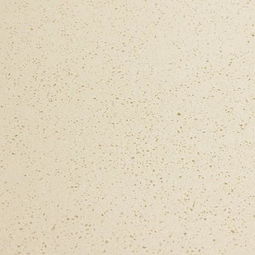
The selection of quartz patterns and colors has exploded in recent years, and manufacturers are increasingly using thicker slabs to showcase their most intricate and high-definition designs. The depth and dimension that 2.0 cm quartz offers can make subtle color variations and complex veining patterns appear more vibrant and dynamic. This is particularly true for quartz that aims to replicate the nuanced beauty of natural stones like granite or marble, where subtle shifts in tone and texture are crucial to their visual appeal. A 2.0 cm slab can provide a more authentic and captivating rendition of these natural wonders.
From a practical standpoint, the long-term value proposition of 2.0 cm quartz is undeniable. While the initial cost might be marginally higher than 1.8 cm, the increased durability translates into a significantly better return on investment over the lifespan of your home. The enhanced resistance to chips, cracks, and impacts means fewer potential repair needs and a surface that retains its pristine appearance for longer. In a world where countertops are a substantial investment, choosing a material that offers superior longevity and resilience is a financially prudent decision. It’s about investing in quality that endures, minimizing the need for premature replacement or costly fixes.
Moreover, the slightly heavier nature of 2.0 cm quartz can contribute to a more substantial and stable installation. While professional installation is always recommended for any countertop material, a thicker, heavier slab can feel more grounded and secure once in place. This is particularly relevant in areas prone to seismic activity or in households with young children and pets, where accidental bumps and knocks are more frequent. The added weight provides an extra layer of reassurance, contributing to a sense of permanence and solidity.
The perception of quality is a powerful factor in home renovation. When potential buyers or guests enter your kitchen, the countertops often make a strong first impression. A 2.0 cm quartz countertop conveys a sense of luxury, durability, and meticulous attention to detail. It communicates that you have invested in high-quality materials that are built to last, which can significantly enhance the perceived value of your home. This is not about superficiality; it’s about the tangible and intangible benefits that superior materials bring to a living space.
In conclusion, the distinction between 1.8 cm and 2.0 cm quartz might seem subtle on paper, but its implications for your home are profound. The 2.0 cm variant represents an evolution in engineered stone, offering not only enhanced structural integrity and resistance to wear and tear but also a more luxurious aesthetic and greater design flexibility. From the richness of its visual presentation to the confidence of its enduring performance, 2.0 cm quartz stands as the superior choice for those who demand the best. It’s an investment in beauty, durability, and lasting value, ensuring that your dream surfaces remain as captivating and functional for years to come. When faced with the choice, opting for the robust elegance of 2.0 cm quartz is a decision that will undoubtedly enhance the heart of your home.









