
The allure of quartz countertops is undeniable. They offer a stunning blend of natural beauty and modern engineering, boasting a non-porous surface that’s resistant to stains, scratches, and heat. When embarking on a kitchen or bathroom renovation, the choice of countertop material is often one of the most significant decisions, impacting both the overall aesthetic and the budget. Among the various factors influencing the price of quartz, one often overlooked yet crucial element is the thickness of the slab. We’re talking about the difference between a 1.5cm (approximately 0.6 inches) slab and a 2.0cm (approximately 0.8 inches) slab. While it might seem like a minor distinction, this half-centimeter can translate into a noticeable price variation and even affect the perceived quality and durability of your finished countertops.

Let’s break down why thickness matters and how it plays into the price of quartz. At its core, the price of any material is driven by the cost of its raw components, the manufacturing process, transportation, and the labor involved in fabrication and installation. With quartz, the raw components include natural quartz crystals (which make up about 90-95% of the material) bound together by polymer resins and pigments. The manufacturing process involves crushing the quartz, mixing it with resins and pigments, and then compressing it under immense pressure and heat to form large slabs.
So, how does thickness factor into this equation? It’s quite straightforward: a thicker slab naturally requires more raw material. For every square foot of countertop, a 2.0cm slab will contain more quartz crystals, more resin, and more pigment than a 1.5cm slab of the same design. This increased volume of material directly translates to a higher cost for the manufacturer. Imagine a baker making cookies; if they decide to make each cookie twice as thick, they’ll need twice as much dough, and thus, the cost per cookie will rise. The same principle applies here. The sheer quantity of material used is a primary driver of cost.

Beyond the raw materials, the manufacturing process itself can be influenced by thickness. While the compression and heating processes are largely standardized, producing thicker slabs might require slightly longer curing times or adjustments to the machinery to ensure uniform density and integrity throughout the entire slab. These minor adjustments, while perhaps not drastically increasing energy consumption, can contribute to the overall manufacturing overhead, which is then reflected in the price.
Transportation is another area where thickness can play a role, albeit a less significant one than material volume. Quartz slabs are heavy. A 2.0cm slab will, of course, be heavier than a 1.5cm slab of the same dimensions. This increased weight can affect shipping costs, as freight charges are often calculated based on weight and volume. While the difference in weight between 1.5cm and 2.0cm might not double the shipping cost, it certainly adds to it, especially when considering the logistics of transporting large, heavy slabs from the manufacturer to the distributor, and then to your home.
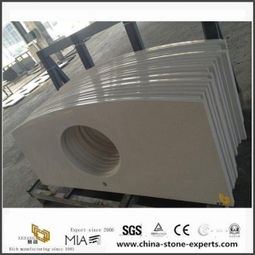
Now, let’s talk about fabrication. This is where the thickness difference can become more apparent to the end-user. Fabricators are the skilled artisans who cut, shape, and polish the quartz slabs to fit your specific kitchen or bathroom layout. For a 2.0cm slab, the fabrication process might involve slightly different techniques or tooling compared to a 1.5cm slab. For instance, edge profiles can be a key differentiator. Many popular edge profiles, such as a mitered edge or a bullnose, are more easily and effectively achieved with a thicker slab. While it’s possible to create these profiles on a 1.5cm slab, it often requires lamination—a process where a thin strip of quartz is glued to the underside of the edge to create the illusion of thickness. Lamination adds an extra step and cost to the fabrication process.
A 2.0cm slab, on the other hand, can often accommodate a more substantial and visually impressive edge profile directly from the slab’s thickness, eliminating the need for lamination. This can result in a cleaner, more seamless look and, paradoxically, sometimes a more cost-effective edge treatment for certain styles when considering the labor involved in lamination. The perceived quality and solidity of a thicker edge are often highly valued by homeowners.
Furthermore, the choice of thickness can also influence the required support structure beneath the countertop. While both 1.5cm and 2.0cm quartz are engineered for durability, a 2.0cm slab generally offers greater rigidity and can sometimes reduce the need for extensive cabinet support, particularly for islands or peninsulas with overhangs. This might seem counterintuitive from a cost perspective, but it can simplify the overall renovation process. However, for most standard kitchen and bathroom applications, both thicknesses are perfectly adequate when properly installed on standard cabinetry.
The market also plays a role in pricing. Supply and demand, the reputation of the manufacturer, and the rarity of a particular quartz pattern can all influence the final price per square foot. However, within the same brand and the same pattern, the price difference between 1.5cm and 2.0cm is consistently present. It’s a fundamental aspect of material costing.

When you’re browsing showrooms or online catalogs, you’ll likely notice that 2.0cm quartz is almost always priced higher than 1.5cm quartz. This price difference can range from a few dollars to upwards of $20 or more per square foot, depending on the brand, the specific design, and the geographic location. It’s not uncommon to see a price difference of 15-30% between the two thicknesses for the exact same quartz color. This is a significant consideration when budgeting for a project, especially for larger kitchen spaces.
It’s important to understand that 1.5cm quartz is often referred to as “thinner slab” or sometimes used for applications where a less substantial profile is desired or in areas where the countertop is not subject to heavy daily use. It’s a perfectly viable option for many homeowners, especially those looking to save on costs without compromising on the beauty of quartz. However, the perception of 2.0cm as the “standard” or more premium option often holds true due to its inherent solidity and the broader range of edge profile possibilities without added fabrication steps like lamination.
Ultimately, the decision between 1.5cm and 2.0cm often boils down to a balance of budget, desired aesthetic, and the intended use of the space. Understanding the underlying cost factors—more material, potentially more complex fabrication for certain looks on thinner slabs, and slight increases in shipping—will empower you to make a choice that you’ll be happy with for years to come.
Continuing our exploration into the quartz countertop conundrum, let’s delve deeper into the practical implications of choosing between 1.5cm and 2.0cm thickness, focusing on aesthetics, durability, and the often-crucial factor of budget. The price difference, as we’ve established, is directly tied to the quantity of material and fabrication nuances, but how does this translate into the visual and functional experience of your kitchen or bathroom?
From an aesthetic standpoint, thickness plays a subtle yet significant role in how a countertop is perceived. A 2.0cm slab tends to offer a more substantial and robust visual presence. When you look at a countertop with a 2.0cm thickness, especially with a square or eased edge profile, it conveys a sense of solidity and luxury. It feels more grounded, more permanent. This is particularly noticeable on kitchen islands or breakfast bars where the countertop surface is a prominent focal point. The slightly greater visual weight of a 2.0cm slab can add a touch of gravitas to the overall design.
In contrast, a 1.5cm slab, while still offering the beautiful patterns and colors of quartz, might appear slightly less imposing. This isn’t necessarily a negative trait; in fact, for certain minimalist or Scandinavian-inspired designs, a slimmer profile can be highly desirable. It can contribute to a lighter, airier feel in the space. However, if you’re aiming for a classic, high-end look, the 2.0cm thickness often aligns better with that vision.
The edge profile is where the aesthetic impact of thickness becomes most pronounced. As mentioned in part 1, 1.5cm slabs often require lamination for thicker or more decorative edge profiles. Lamination involves gluing a separate strip of quartz to the edge to achieve a desired thickness, such as a half-bullnose or a double-ogee. While modern lamination techniques are quite sophisticated, there’s always a slight risk of the seam becoming visible over time, especially with frequent use or if the adhesive weakens. Furthermore, the glued seam can sometimes be a weak point if subjected to sharp impacts. The aesthetic appeal of a perfectly seamless, integrated edge is a significant advantage of the thicker 2.0cm slabs. With 2.0cm, you can achieve many popular edge profiles like a simple eased edge, a bevel, or a bullnose directly from the slab thickness, resulting in a cleaner, more unified appearance. This seamlessness contributes to the perceived quality and durability of the countertop.
When it comes to durability, both 1.5cm and 2.0cm quartz are incredibly robust materials. They are engineered to withstand the rigors of daily use. However, there are some subtle differences worth noting. A 2.0cm slab, being thicker, inherently possesses greater structural integrity. This means it’s less prone to flexing or cracking under heavy loads or impacts, especially in areas with significant overhangs, such as on kitchen islands or breakfast bars. While proper support from cabinetry is crucial for both thicknesses, a 2.0cm slab offers an added layer of resilience.
The non-porous nature of quartz, which makes it resistant to staining and bacterial growth, is consistent across all thicknesses. So, in terms of hygiene and stain resistance, you’re getting the same excellent performance whether you opt for 1.5cm or 2.0cm. The primary difference in durability lies in its resistance to physical stress and potential breakage. If your kitchen is a high-traffic zone where heavy pots and pans are frequently placed down or where children might inadvertently cause impacts, the extra thickness of 2.0cm can provide greater peace of mind.
Now, let’s address the elephant in the room: cost. The price difference between 1.5cm and 2.0cm quartz can be substantial, especially for larger projects. If you’re renovating a spacious kitchen, the cumulative cost of opting for 2.0cm over 1.5cm could run into hundreds or even thousands of dollars. This financial consideration is often the deciding factor for many homeowners.
For budget-conscious renovators, 1.5cm quartz offers a fantastic opportunity to enjoy the beauty and benefits of quartz at a more accessible price point. It allows you to achieve the desired look without breaking the bank. This is especially true if you’re satisfied with simpler edge profiles or are comfortable with the lamination process for more decorative edges. In some cases, especially for wall-mounted vanities or areas with minimal overhang, 1.5cm is perfectly adequate and a smart financial choice.
On the other hand, if your budget allows, investing in 2.0cm quartz can offer long-term value. The perceived higher quality, the seamless edge profiles, and the enhanced structural integrity can contribute to a more luxurious and durable finish. It’s an investment in the overall appeal and longevity of your kitchen or bathroom. Think of it as choosing a slightly heavier gauge of material for a piece of furniture; it generally feels more substantial and lasts longer.
When comparing prices, it’s essential to get detailed quotes that clearly specify the thickness of the quartz slab, the type of edge profile, and any associated fabrication costs (like cutouts for sinks or cooktops). Don’t hesitate to ask your fabricator about the benefits of each thickness for your specific project and how the edge profiles might differ in cost and appearance between 1.5cm and 2.0cm.
It’s also worth noting that availability can sometimes be a factor. While most popular quartz colors are readily available in both 1.5cm and 2.0cm, some very specific or high-end patterns might be produced primarily in one thickness, usually 2.0cm. Always confirm the availability of your chosen design in your preferred thickness before making a final decision.
In conclusion, the choice between 1.5cm and 2.0cm quartz is a nuanced one, balancing aesthetic preferences, perceived durability, and, of course, your budget. While 2.0cm generally offers a more substantial look, enhanced structural integrity, and the advantage of seamless edge profiles, 1.5cm provides a more budget-friendly entry point into the world of quartz countertops, still delivering the beauty and performance that make quartz so popular. Carefully consider your priorities, the intended use of the space, and your financial comfort zone to make the best decision for your home.









