
The allure of a beautifully crafted countertop is undeniable. It’s the centerpiece of many kitchens, the stage for culinary creations, and often, a significant investment in a home’s aesthetic and functionality. Among the popular choices are artificial stone and its prominent iteration, Corian®. Both offer a sleek, durable, and customizable alternative to natural stone, but as homeowners become increasingly aware of indoor air quality, a crucial question arises: which of these materials harbors more of that unwelcome silent guest, formaldehyde?

Understanding Formaldehyde: A Pervasive Player
Before we dive into the specifics of artificial stone and Corian®, it’s helpful to understand what formaldehyde is and why it’s a concern. Formaldehyde is a colorless gas with a pungent odor, commonly used as a preservative and in the manufacturing of resins and adhesives. In the context of building materials, it’s often a byproduct of the binders and resins used to hold composite materials together. While present in many everyday items, from furniture to cosmetics, the concentration in our homes becomes a point of interest when it’s emitted from building materials. Elevated levels of formaldehyde have been linked to respiratory problems, headaches, and skin irritation, making its presence in our living spaces a legitimate concern for many.
The Landscape of Artificial Stone
“Artificial stone” is a broad category that encompasses a range of engineered materials designed to mimic the look and feel of natural stone. These often consist of a blend of crushed stone (like quartz or granite), mineral fillers, and polymer resins. The binding agents are where the potential for formaldehyde lies. The specific type and amount of resin used, as well as the manufacturing processes, can influence the extent to which formaldehyde is released.
The manufacturing of artificial stone typically involves combining finely ground natural minerals with a polymer resin, often polyester or epoxy-based. Pigments are added for color, and then the mixture is cured under heat and pressure. This process creates a dense, non-porous surface. However, the resins used in this process, particularly those with urea-formaldehyde (UF) or melamine-formaldehyde (MF) components, can be sources of formaldehyde emissions. The curing process is designed to chemically bind these components, but residual unreacted formaldehyde can remain, and over time, some can off-gas into the surrounding air.
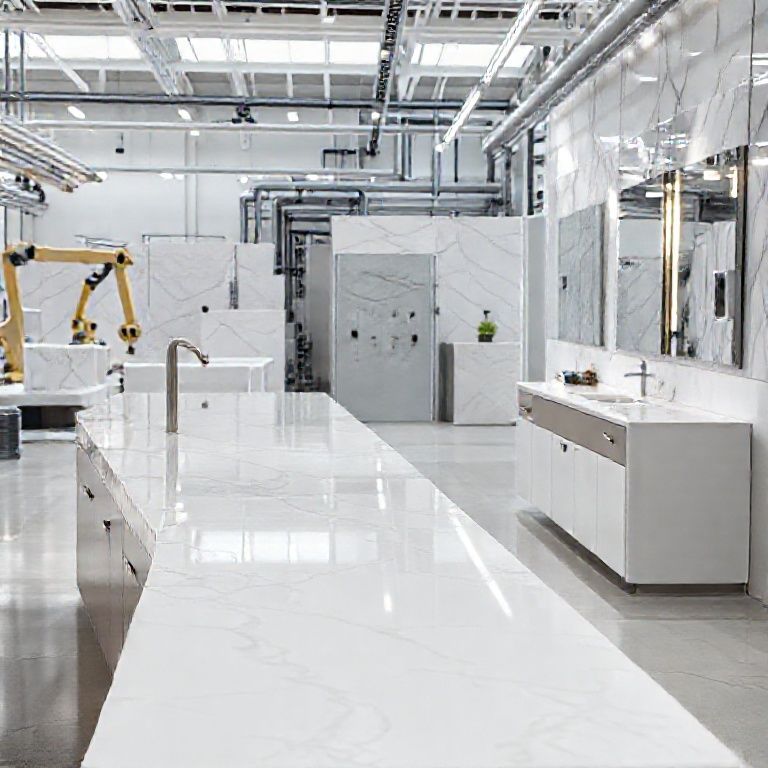
Different manufacturers employ varying formulations and production techniques. Some may utilize more advanced, low-emission resins, while others might rely on older or less expensive formulations that could have a higher potential for formaldehyde release. This variability is a key factor when considering the formaldehyde content of artificial stone. The density and porosity of the final product also play a role. A less porous material might inherently trap more volatile organic compounds (VOCs), including formaldehyde, within its structure, leading to a slower but potentially longer-term release. Conversely, a more porous material might allow for quicker off-gassing, meaning a higher initial release that diminishes more rapidly.
The Crucial Role of Testing and Standards
Evaluating the formaldehyde content of any building material isn’t a simple visual inspection. It requires rigorous testing under controlled conditions. Various international standards and certifications exist to measure VOC emissions, including formaldehyde. In Europe, for instance, standards like EN 717-1 and ISO 16000-9 are used to determine formaldehyde emissions. Certifications from bodies like GREENGUARD, EPD (Environmental Product Declaration), and OEKO-TEX® often indicate that a product has been tested for harmful emissions and meets specific environmental and health criteria.
When looking at artificial stone, consumers might encounter varying levels of transparency regarding these tests. Some manufacturers are proactive in providing detailed emission data, while others may be less forthcoming. This lack of standardized, readily available information can make direct comparisons challenging. The term “artificial stone” itself is so broad that it can encompass products from numerous manufacturers, each with its own proprietary blend of materials and manufacturing processes. Therefore, generalizations about “artificial stone” and its formaldehyde content must be approached with caution.
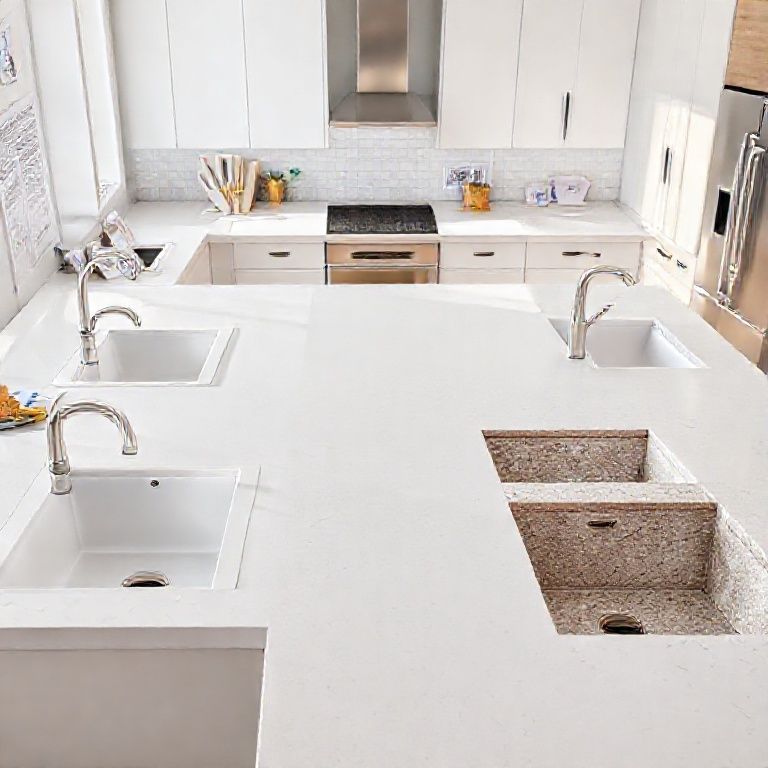
The key takeaway for artificial stone is its heterogeneity. It’s not a monolithic category. The exact composition, the resins used, the manufacturing process, and the manufacturer’s commitment to low-emission practices all contribute to the final formaldehyde profile of the product. This means that one brand of artificial stone might have negligible formaldehyde emissions, while another, using different binders, could have a more significant presence.
Corian®: A Brand Apart
Now, let’s turn our attention to Corian®. Corian® is a specific brand of solid surface material developed by DuPont™. While it falls under the umbrella of “artificial stone” in a broad sense, it’s important to recognize that Corian® is a proprietary product with a distinct composition and manufacturing process. Corian® is primarily composed of acrylic polymer and alumina trihydrate (ATH), a mineral derived from bauxite ore. This composition is what gives Corian® its unique properties, including its non-porous nature, thermoformability (meaning it can be heated and shaped), and seamless appearance when joined.
The formulation of Corian® is crucial when discussing formaldehyde. Unlike some composite artificial stones that rely on polyester or epoxy resins which can contain formaldehyde-based binders, Corian®’s primary binder is an acrylic polymer. Acrylic polymers are generally considered to have a much lower propensity to emit formaldehyde compared to the resins sometimes found in other artificial stone products. The manufacturing process for Corian® also aims to create a stable, inert material.
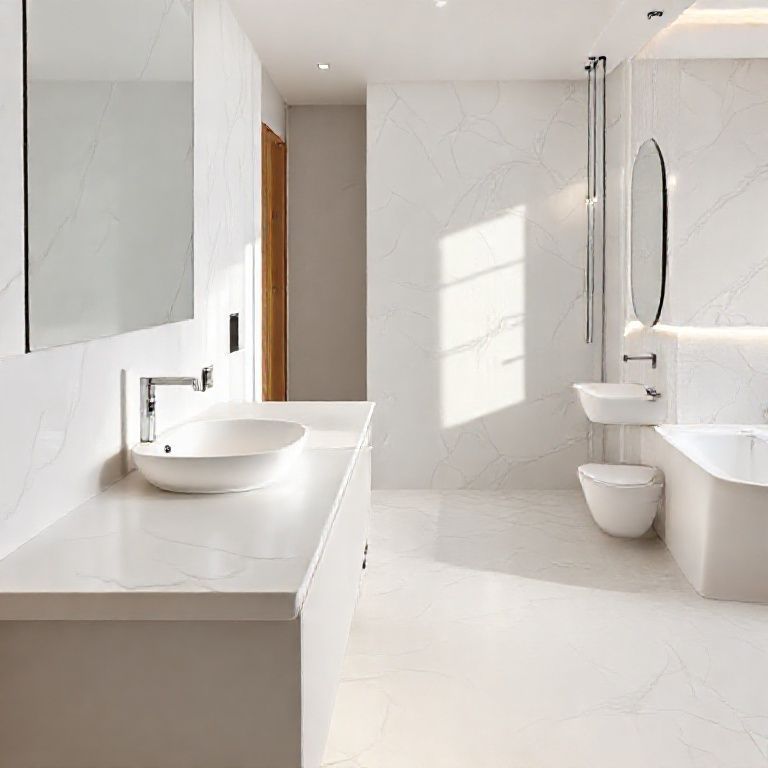
DuPont™ has invested significantly in ensuring their products meet stringent environmental and health standards. Corian® has been tested extensively for VOC emissions, including formaldehyde. Many Corian® products carry certifications like GREENGUARD, which specifically validates low chemical emissions. These certifications are not merely marketing badges; they represent independent verification that the material has undergone rigorous testing and meets predefined acceptable levels of harmful substances released into indoor environments.
The non-porous nature of Corian® is also a factor. Similar to denser artificial stones, it can trap VOCs. However, the inherent composition, with its acrylic base, generally means there’s less formaldehyde to begin with compared to some other composite materials. The absence of formaldehyde-releasing resins like UF or MF in the primary binder is a key differentiator.
When comparing Corian® to the general category of “artificial stone,” it’s essential to distinguish between the brand’s specific formulation and the wide array of products that fall under the broader “artificial stone” classification. Corian®’s acrylic-based composition and DuPont’s manufacturing standards generally position it favorably in terms of formaldehyde emissions. However, it’s not an absolute guarantee. Trace amounts of formaldehyde could potentially be present in adhesives used during installation, or in pigments and additives, although these are typically minimized through manufacturing controls and testing. The focus for Corian® is on its core material composition, which is designed to be very stable and low-emitting.
The nuances of these materials highlight why a direct, blanket answer to “which has higher formaldehyde” is complex. It’s not about a simple yes or no, but rather about understanding the underlying components and manufacturing processes. For Corian®, the emphasis is on its acrylic polymer base. For the broader category of artificial stone, the variance is much wider, hinging on the specific resins and binders employed by different manufacturers.
Continuing our exploration into the realm of artificial stone and Corian®, we now shift our focus to a more direct comparison of their potential formaldehyde emissions and what this means for the discerning homeowner. The question of which material has a higher formaldehyde content is not always straightforward, as it involves a complex interplay of materials, manufacturing, and certification. However, by dissecting the components and understanding the industry standards, we can paint a clearer picture.
The Case for Lower Formaldehyde in Corian®
As touched upon in the previous part, Corian®’s primary composition of acrylic polymer and alumina trihydrate is a significant factor in its generally lower formaldehyde emission profile. Acrylic polymers are synthetic resins that, in their cured state, are considered very stable and inert. Unlike some other resins used in composite materials, they do not inherently contain or readily release formaldehyde. DuPont™’s proprietary manufacturing process for Corian® is designed to create a dense, non-porous solid surface with minimal off-gassing.
The key difference lies in the binder. Many “artificial stones” that are essentially engineered quartz or granite composites use polyester or epoxy resins to bind the mineral particles together. These resins, if not formulated with advanced low-emission technologies, can be derived from or contain formaldehyde-based components. This means that the potential for formaldehyde release is baked into the material’s very structure. Corian®, by contrast, bypasses this by using acrylic as its primary binder.
Furthermore, the commitment to certifications like GREENGUARD plays a crucial role. GREENGUARD certification requires products to be tested for a wide range of common and uncommon chemical emissions, including formaldehyde. Achieving this certification signifies that the product meets stringent indoor air quality standards. While some artificial stone manufacturers also pursue such certifications, the inherent properties of Corian®’s acrylic-based composition give it a strong starting advantage in minimizing formaldehyde.
However, it’s important to acknowledge that no material is entirely devoid of potential emissions. Trace amounts of formaldehyde can sometimes be found in pigments, additives, or even the adhesives used during installation. The manufacturing process itself, while designed to minimize it, might not always eliminate every last molecule of unreacted formaldehyde. Yet, when comparing the bulk material, Corian® generally presents a significantly lower risk profile. The focus for Corian® is on minimizing the source of formaldehyde by choosing a binder that doesn’t inherently contain it.
The Variability of “Artificial Stone”
The term “artificial stone” is a broad umbrella, encompassing a vast array of products from numerous manufacturers worldwide. This inherent variability is where the formaldehyde question becomes more complex. Within this category, you can find everything from high-end engineered quartz countertops with advanced low-emission binders to more budget-friendly composite materials that may utilize older or less stringently controlled resin systems.
Engineered quartz, for instance, is a popular type of artificial stone. It typically consists of about 90-95% ground natural quartz crystals mixed with polymer resins (polyester or epoxy) and pigments. The resins act as the glue that holds the quartz particles together. If these resins are based on formulations that include formaldehyde, then the engineered quartz can emit formaldehyde. Manufacturers in this space are increasingly aware of VOC emissions and are developing low-VOC formulations. However, the extent to which these are adopted and rigorously tested can vary significantly between brands and even product lines within the same brand.
Other forms of artificial stone might use different mineral fillers and a wider range of binding agents. Some might even use materials that are closer in composition to the original solid surface materials, while others are purely mineral composites. This means that a homeowner looking at “artificial stone” needs to be prepared for a much wider spectrum of formaldehyde emission potential compared to a specific, branded product like Corian®.
The key differentiator for “artificial stone” versus Corian® is the lack of a single, uniform standard or composition. A buyer might encounter an artificial stone product that has been rigorously tested and certified to have negligible formaldehyde emissions, while another, seemingly similar product from a different manufacturer, might have a more notable formaldehyde presence. This underscores the importance of looking beyond the general category and investigating the specific product’s specifications and certifications.
Installation: A Shared Consideration
Regardless of whether you choose Corian® or another type of artificial stone, the installation process introduces another variable that can affect formaldehyde levels. Many countertops are installed using adhesives and sealants. Some of these adhesives, particularly older formulations or those not specifically designed for low VOC emissions, can themselves be a source of formaldehyde.
This is why it’s crucial to inquire about the types of adhesives and sealants used by the installer. Reputable installers will be knowledgeable about low-VOC options and may even offer them as standard. The curing time of these adhesives also plays a role. Freshly installed countertops may emit higher levels of VOCs as the adhesive cures, and adequate ventilation during and after installation is paramount.
The installation of both Corian® and artificial stone requires careful attention to the ancillary materials used. Even a low-emission countertop material can have its overall indoor air quality impact diminished by the use of high-VOC adhesives. Therefore, a holistic approach that considers both the primary material and its installation is always the best strategy for creating a healthy living environment.
What Does This Mean for Homeowners?
So, to directly address the question: “人造石和可丽耐哪个甲醛含量高” (Which has higher formaldehyde content, artificial stone or Corian®?), the general consensus and material science point towards Corian® typically having lower formaldehyde emissions than many products classified under the broad umbrella of “artificial stone.” This is largely due to Corian®’s acrylic-based composition and its manufacturer’s focus on stringent testing and certification.
However, this is not an absolute rule. There might be specific artificial stone products that are formulated with extremely low-emission resins and have passed rigorous testing, potentially rivaling or even surpassing Corian® in their formaldehyde levels. Conversely, there could be older or less carefully manufactured Corian® products or installations that contribute more to formaldehyde levels.
The most prudent approach for a homeowner is to:
Inquire Specifically: Don’t rely on broad categories. Ask manufacturers and retailers for specific information on formaldehyde emissions and VOCs for the exact product you are considering. Look for Certifications: Prioritize products with recognized certifications like GREENGUARD, GREENGUARD Gold, EPD, or similar environmental and health labels. These provide independent assurance. Consider the Binder: Understand that the resin or binder system is a primary source of formaldehyde in composite materials. Acrylic-based materials (like Corian®) often have an advantage here. Ventilate Adequately: Ensure good ventilation during and after installation of any new countertop, regardless of its material. Choose Low-VOC Adhesives: Discuss adhesive and sealant options with your installer, opting for low-VOC or zero-VOC products.
Ultimately, creating a healthy home environment is about informed choices. By understanding the nuances of materials like artificial stone and Corian®, and by asking the right questions, homeowners can make decisions that contribute to both beautiful living spaces and healthier indoor air quality. The silent guest, formaldehyde, can be significantly managed with knowledge and diligence.









