
The very essence of a home’s character often whispers from its surfaces. From the heart of the kitchen to the serene sanctuary of the bathroom, the materials we choose to adorn these spaces speak volumes about our personal style, our priorities, and our appreciation for beauty and functionality. Among the most coveted materials for countertops, vanities, and feature walls are stones – those ancient, elemental treasures that have graced human dwellings for millennia. Yet, in today’s design landscape, we encounter two distinct, yet equally compelling, categories: natural stone and its ingenious counterpart, engineered stone. This exploration is not merely a comparison of materials; it’s an invitation to understand the soul of stone, to appreciate its inherent narratives, and to discern which voice best harmonizes with the symphony of your own living space.

Natural stone, as its name so eloquently suggests, is a gift from the earth, forged over eons through geological processes of immense pressure, heat, and mineral deposition. Think of granite, the undisputed king of durability, quarried from deep within the earth’s crust. Each slab tells a unique story, a tapestry woven with intricate patterns of crystals, veins, and subtle color variations. No two pieces of granite are ever truly identical, and this inherent singularity is precisely where its profound charm lies. It’s a piece of the planet, brought indoors, carrying with it an authenticity that is unparalleled. Imagine a kitchen island crowned with a slab of black galaxy granite, its dark expanse peppered with tiny, shimmering crystals that evoke a distant, starlit sky. Or envision a bathroom vanity surfaced with the ethereal, swirling patterns of Carrara marble, its delicate grey veins tracing delicate artistic strokes across a field of pristine white. This is the allure of natural stone: its raw, untamed beauty, its inherent imperfections that lend it character, and its connection to a lineage stretching back to the very formation of our world.
Marble, in particular, carries a historical gravitas, often associated with classical architecture, opulent palaces, and timeless elegance. Its soft, luminous quality and distinctive veining have captivated artists and designers for centuries, transforming mere surfaces into works of art. However, this delicate beauty comes with a need for careful consideration. Marble, while stunning, is a softer stone than granite and can be more susceptible to etching from acidic substances like lemon juice or vinegar, and staining from oils and colored liquids. This is not to say it’s impractical, but rather that its use requires a conscious embrace of its inherent nature, a willingness to maintain it with a gentle hand and perhaps a touch of mindfulness in the kitchen or bathroom.
Granite, on the other hand, is renowned for its robustness. Formed under immense subterranean pressure, it is exceptionally hard, resistant to scratches, heat, and staining. This makes it a highly popular choice for busy kitchens where culinary adventures are frequent and spills are inevitable. The sheer variety of granite is astonishing – from the deep, moody charcoals and grays to vibrant reds, blues, and greens, often shot through with dramatic veining or speckled with contrasting mineral deposits. Each quarry yields a unique palette, ensuring that your granite countertop will be as individual as a fingerprint. Its resilience means that while it still benefits from sealing to prevent deep-set stains, it can generally withstand more vigorous use than marble, making it a more forgiving option for those who prefer a low-maintenance approach to their surfaces.
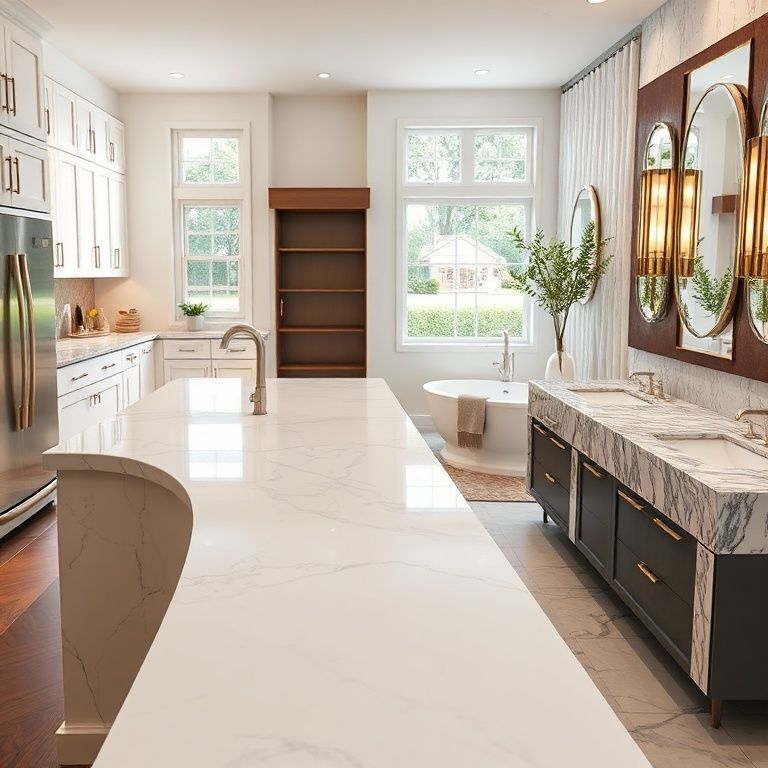
Beyond granite and marble, a world of natural stones awaits. Soapstone, with its velvety texture and deep, rich hues, is celebrated for its ability to absorb heat and its natural antimicrobial properties. It develops a beautiful patina over time, a testament to its age and use. Slate offers a more rustic and earthy appeal, often found in darker tones with a natural cleft surface that provides a unique textural dimension. Travertine, with its characteristic pits and pores, lends an ancient, Romanesque charm to any space, and when filled and polished, it offers a smooth, sophisticated finish. The beauty of exploring natural stone lies in the sheer diversity of its origins, its textures, its colors, and the unique geological stories each slab holds. It’s an exploration of the earth’s artistry, a chance to bring a piece of its enduring power and exquisite, unrepeatable beauty into the very fabric of our homes. The decisions surrounding natural stone are not just about selecting a surface; they are about choosing a narrative, a whisper from the ancient world, a testament to the earth’s enduring creative spirit.
While natural stone captivates with its organic origins and unique artistry, the modern world demands innovation, and this is where engineered stone steps into the spotlight, offering a compelling blend of performance and aesthetics. Engineered stone, also commonly known as quartz, is a triumph of human ingenuity, meticulously crafted to capture the beauty of natural stone while enhancing its practical attributes. It’s a material that acknowledges the allure of granite and marble but seeks to refine it, offering a predictable elegance and a robust performance that appeals to a contemporary lifestyle.
At its core, engineered stone is composed primarily of natural quartz crystals, typically accounting for 90-95% of the material. These quartz particles are bound together with a small percentage of polymer resins and pigments. This carefully controlled manufacturing process results in a material that is not only visually stunning but also incredibly functional. The natural quartz provides the inherent hardness and durability that consumers have come to associate with high-quality stone, while the resins ensure a non-porous surface, a significant advantage over many natural stones.
The appeal of engineered stone, particularly quartz, lies in its consistency. Unlike natural stone, where variations in color and pattern are part of its charm, quartz offers a predictable and uniform appearance. This is a distinct advantage for designers and homeowners who desire a specific look and want to ensure that the material in their home precisely matches the sample they fell in love with. Imagine wanting a pure white countertop with no veining – a look that is exceedingly rare and expensive in natural marble. Engineered quartz can achieve this flawless, modern aesthetic with ease. Similarly, if you desire the look of a particular granite but with enhanced stain resistance, engineered stone can replicate that visual appeal with its precise color and pattern control.
The non-porous nature of engineered stone is arguably its most significant practical benefit. Natural stones, even when sealed, can have microscopic pores that allow liquids to seep in, leading to staining or, in some cases, harboring bacteria. Engineered quartz, due to its resinous binder, creates a completely sealed surface. This makes it exceptionally resistant to stains from common kitchen culprits like red wine, coffee, and oil. It also means that it’s inherently more hygienic, as bacteria and mold have no surface to penetrate and multiply. For busy households, families with young children, or anyone who prioritizes ease of cleaning and peace of mind, this non-porous quality is a game-changer.
Furthermore, the durability of engineered stone is exceptional. The high concentration of quartz, one of the hardest minerals on earth, makes it incredibly resistant to scratches and chips. It can withstand the rigors of daily kitchen use, from chopping (though a cutting board is always recommended for blade longevity) to placing hot pans (though trivets are still a wise precaution). This resilience, combined with its stain resistance and ease of maintenance, positions engineered stone as a highly practical and long-lasting investment for any home.
Maintenance is another area where engineered stone shines for those seeking simplicity. Because it is non-porous and highly resistant to stains, cleaning is typically a breeze. A simple wipe with a damp cloth and mild soap is usually all that’s needed to keep it looking pristine. Unlike some natural stones that require specialized cleaners or regular sealing, engineered quartz offers a virtually maintenance-free experience, allowing homeowners to spend less time cleaning and more time enjoying their beautifully appointed spaces.
The design possibilities with engineered stone are also vast. Manufacturers offer an extensive range of colors, patterns, and finishes that mimic the look of natural stones like marble, granite, and even concrete, while also introducing entirely new and contemporary aesthetics. From subtle, monochromatic tones to bold, dramatic veining, the ability to precisely control the design elements allows for unparalleled creative freedom. This makes engineered stone a versatile choice for a wide array of interior design styles, from sleek and modern to more traditional or transitional looks.
In essence, the distinction between natural stone and engineered stone is not a hierarchy of superiority, but rather a spectrum of characteristics, each offering unique advantages. Natural stone appeals to those who cherish the inimitable beauty of geological art, the story whispered by imperfections, and the deep connection to the earth. Engineered stone, conversely, resonates with those who prioritize a harmonious blend of aesthetic sophistication and uncompromised functionality, a material that performs as beautifully as it looks, designed for the demands of contemporary living. The choice, ultimately, is a personal one, a reflection of your lifestyle, your design aspirations, and the kind of enduring beauty you wish to cultivate within your home.









