
The very ground beneath our feet, the towering mountains that scrape the sky, and the shimmering veins that lie hidden within the earth – these are the realms of natural stone. For millennia, humans have quarried these magnificent materials, harnessing their inherent beauty and enduring strength to construct everything from ancient pyramids to the grandest cathedrals. Think of the timeless allure of Carrara marble, the rugged elegance of granite, or the earthy warmth of sandstone. These are stones with a story, a geological history etched into their very being. Each slab is a unique masterpiece, a testament to the slow, deliberate artistry of nature. No two pieces are ever truly identical, offering an unparalleled depth of character and a sense of organic authenticity that is simply irreplaceable.

Natural stone is born from the earth’s fiery core and the relentless pressure of geological time. Granite, a favorite for countertops and flooring, is an igneous rock, formed from molten magma that cooled and solidified deep within the earth. Its crystalline structure, with interlocking grains of quartz, feldspar, and mica, gives it exceptional hardness and resistance to scratching. Marble, on the other hand, is a metamorphic rock, transformed from sedimentary limestone under intense heat and pressure. This process creates its signature swirling patterns and delicate veining, a testament to its fluid origins. However, this very beauty can also be its Achilles’ heel. Marble is softer and more porous than granite, making it susceptible to etching from acids (like lemon juice or vinegar) and staining from liquids. Limestone and travertine, also sedimentary stones, offer beautiful, often softer finishes but require more diligent sealing and care. Slate, a metamorphic rock formed from shale, provides a naturally cleft surface that’s both elegant and slip-resistant, often found on floors and roofing.
The allure of natural stone lies in its unparalleled uniqueness. When you choose a granite countertop, you’re not just selecting a surface; you’re bringing a piece of a mountain into your home. The subtle variations in color, the intricate patterns, the way light plays across its surface – these are all elements that contribute to its captivating charm. This individuality means that no two kitchens or bathrooms will ever look exactly the same, offering a bespoke feel that mass-produced materials struggle to replicate. Furthermore, natural stone is often perceived as a mark of luxury and quality, lending a certain prestige to any space it graces. Its connection to the earth evokes a sense of groundedness and timelessness, creating an environment that feels both sophisticated and deeply connected to the natural world.
However, this natural artistry comes with its own set of considerations. The mining of natural stone is an energy-intensive process, and the transportation of these heavy materials can contribute significantly to their carbon footprint. The inherent porosity of many natural stones means they require regular sealing to prevent staining and etching, a commitment that some homeowners find burdensome. While durable, they are not indestructible. A heavy pot dropped on a granite countertop can cause a chip, and acidic spills left unattended can leave visible marks on marble. The cost of natural stone can also be a significant factor, with premium varieties commanding high prices, often including installation as a substantial part of the overall expense. Moreover, the variability in natural stone means that it can be challenging to match existing pieces or to achieve a perfectly uniform look across a large installation. Sometimes, the very uniqueness that makes natural stone so appealing can also present practical challenges in terms of sourcing and consistent aesthetic.

Enter the realm of engineered stone, a modern marvel born from a desire to marry the beauty of natural stone with enhanced performance and greater design flexibility. Think of quartz countertops, a ubiquitous and highly sought-after material in contemporary kitchens. Engineered quartz is typically composed of around 90-95% crushed natural quartz crystals, bound together with polymer resins and pigments. This fusion results in a material that retains the stunning visual appeal of natural quartz – its subtle sparkle and earthy tones – but with a host of improved characteristics.
The manufacturing process allows for incredible consistency in color and pattern. Unlike natural stone, where you might find a vein running one way on one slab and a completely different way on the next, engineered quartz can be produced with predictable, repeatable designs. This makes it ideal for large-scale projects where a uniform look is desired, or for situations where homeowners want to ensure a perfect match for future repairs or additions. The resins used in engineered stone also fill in the natural pores of the quartz, creating a non-porous surface. This is a game-changer for kitchens and bathrooms, areas prone to spills and moisture. The non-porosity means that engineered quartz is highly resistant to staining, bacteria, and mold. Spills of red wine, coffee, or oil are far less likely to penetrate the surface and leave a permanent mark, making cleanup a breeze.
Furthermore, the addition of resins significantly enhances the durability of engineered quartz. It’s incredibly hard and resistant to scratching, chipping, and cracking, often outperforming many natural stones in terms of sheer resilience. This makes it an excellent choice for busy households with active kitchens where durability is paramount. The consistent composition also means that the material’s properties are uniform throughout, offering a predictable and reliable performance. The design possibilities with engineered stone are also vast. Manufacturers can create a dazzling array of colors and patterns, from those that mimic the intricate veining of marble and granite to entirely novel designs with unique textures and finishes. This allows designers and homeowners to achieve a specific aesthetic without being limited by the natural variations found in quarried stone. Whether you’re dreaming of a pure white countertop with subtle grey veins, a bold, graphic pattern, or a deep, lustrous black, engineered stone offers a canvas for almost any design aspiration.
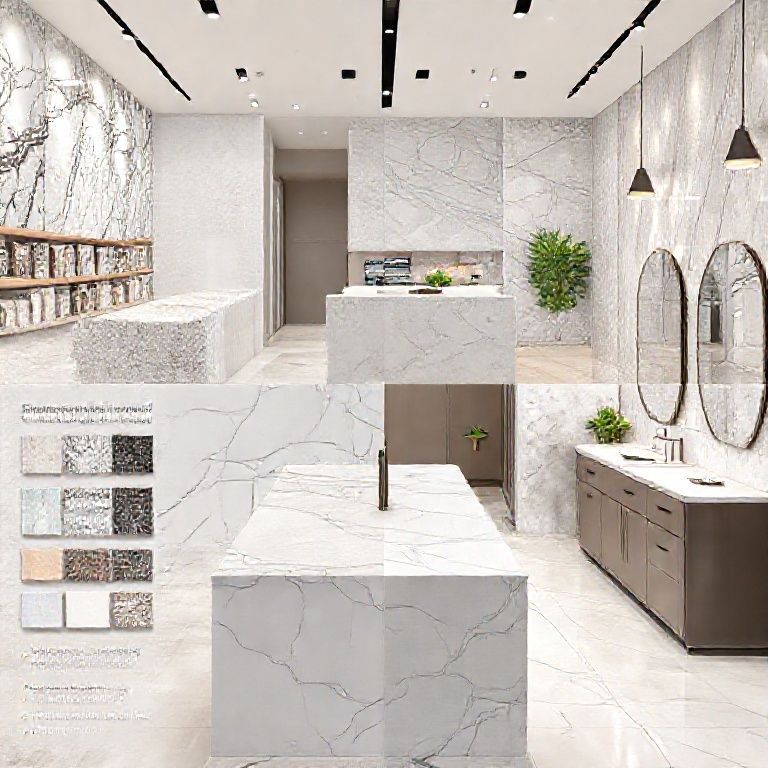
The conversation around stone materials inevitably leads to the practicalities of daily life. How do these materials perform under the rigors of a busy kitchen or a frequently used bathroom? This is where the differences between natural and engineered stone become particularly pronounced, impacting everything from your cleaning routine to the longevity of your surfaces.
Let’s revisit the star of many kitchens: granite. Its inherent hardness makes it remarkably resistant to everyday wear and tear. Scratches from knives are rare, and its heat resistance is generally excellent, allowing you to place hot pots and pans directly on its surface (though using trivets is always a wise precaution). However, as mentioned, granite is porous. This means that liquids – from spilled juice to cooking oils – can penetrate the surface if not wiped up promptly and if the sealant has degraded. Regular sealing, typically every one to two years depending on the specific granite and its use, is crucial for maintaining its stain resistance. Without proper sealing, a dark spill on a light-colored granite can become a permanent, unwelcome feature. Cleaning granite is straightforward; a mild dish soap and water are usually sufficient. Harsh chemicals or abrasive cleaners should be avoided, as they can degrade the sealant and potentially etch the stone itself over time.
Marble, with its undeniable elegance, demands a more delicate approach. While beautiful, it is significantly softer and more porous than granite. Its susceptibility to etching from acidic substances is a major consideration. A slice of lemon left on a marble countertop for even a few minutes can leave a dull spot, as the acid reacts with the calcium carbonate in the stone. This makes marble a more challenging material for high-traffic kitchen environments where spills are common. It’s often favored for bathrooms, less frequently used dining tables, or for homeowners who are meticulous about maintenance and appreciate the patina that develops over time – a sign of its natural use. Like granite, marble requires regular sealing. Cleaning should be done with pH-neutral cleaners, and immediate wiping of any spills is essential. The unique veining of marble can also make repairs more challenging, as matching the pattern perfectly can be difficult.

Now, let’s turn our attention back to the engineered marvels, particularly quartz. Its non-porous nature is its trump card in terms of performance. Stains are rarely an issue. Red wine, coffee, oil, and even strong dyes like those found in markers are easily wiped away, leaving the surface pristine. This makes quartz exceptionally hygienic, a significant advantage in food preparation areas. Its resistance to scratches and chips is also superior to many natural stones, making it a robust choice for active households. While quartz is highly heat-resistant, it’s not entirely impervious to thermal shock. Extremely high temperatures or prolonged exposure to heat can potentially damage the resins, leading to discoloration or even cracking. Therefore, using trivets and hot pads is still recommended for very hot items. Cleaning engineered quartz is remarkably easy. Non-abrasive cleaners, mild soap and water, or even glass cleaner are usually all that’s needed. The lack of porosity means it doesn’t require sealing, saving homeowners time and the ongoing cost of sealants.
Beyond the popular quartz, other engineered materials offer distinct advantages. Solid surface materials, like Corian, are typically made from acrylic polymers and alumina trihydrate. They are non-porous, seamless (as seams can be bonded invisibly), and thermoformable, meaning they can be shaped into curves and unique designs. They are also relatively inexpensive and easy to repair. However, they are softer than quartz and more susceptible to scratching and heat damage. Porcelain slabs, another advanced engineered material, offer exceptional durability, scratch resistance, and a completely non-porous surface. They can mimic natural stone or wood finishes with remarkable realism and are suitable for a wide range of applications, from countertops to cladding. Their main drawback can be their cost and the specialized installation required.
The cost comparison between natural and engineered stone is also a significant factor for many. Generally, entry-level natural stones like certain granites or marbles can be competitive with mid-range engineered quartz. However, as you move up the spectrum to rarer, more exotic natural stones, the price can skyrocket. Engineered quartz, while offering a wide price range, often provides a more predictable cost for a high-performance, aesthetically pleasing surface. The ongoing cost of maintenance for natural stone – sealants, specialized cleaners – also needs to be factored in. Engineered stone, with its low maintenance requirements, often proves more cost-effective over the long term.
Sustainability is another area where perceptions and realities can differ. While natural stone is a product of nature, its extraction and transportation can have a significant environmental impact. Engineered stone, particularly quartz, uses natural quartz as its primary component, but the manufacturing process involves resins and energy. Some manufacturers are now focusing on more sustainable production methods, using recycled content and reducing energy consumption. The longevity and low maintenance of engineered stone can also be seen as a sustainable advantage, as it reduces the need for replacement and the associated waste.
Ultimately, the choice between natural and engineered stone is a deeply personal one, guided by aesthetics, budget, lifestyle, and priorities. If the soul-stirring uniqueness of a one-of-a-kind slab, the ancient story etched in its veins, and the character that only time can impart are paramount, then natural stone beckons. It offers an unparalleled connection to the earth, a timeless elegance that has captivated humanity for centuries. However, if durability, ease of maintenance, hygiene, and a predictable, consistent aesthetic are your primary concerns, then engineered stone, particularly quartz, presents a compelling, modern solution. It delivers on the promise of beauty without compromising on the practical demands of contemporary living. Both materials have their own distinct magic, their own place in the tapestry of design, and understanding their differences empowers you to make the choice that will best adorn your space for years to come.









