
The question, seemingly simple, yet holding a universe of inquiry within its four words: “1.5 cubic stones equals how many tons?” It’s the kind of query that might arise during a landscaping project, a construction bid, or even a whimsical musing while admiring a sturdy stone wall. It’s not just about numbers; it’s about understanding the tangible weight of the world we shape and build. At its heart, this question is a gateway to the fascinating science of density and volume, and how they intertwine to define the physical reality of matter.

To even begin to approach an answer, we must first acknowledge the inherent variability of “stone.” Unlike a precisely manufactured item, stone is a product of geological processes, meaning its composition, and therefore its density, can differ dramatically. A cubic foot of granite will weigh significantly more than a cubic foot of pumice, for instance. This is where the concept of bulk density becomes paramount. Bulk density is the mass of a material per unit of volume, including the interstitial spaces between particles. For something as heterogeneous as stone, this isn’t a single, universal figure. It’s a spectrum, a range influenced by mineral content, porosity, and even the shape and packing of the individual stones if we’re talking about aggregate.
Let’s take our “1.5 cubic stones” as a starting point. This refers to the volume – 1.5 cubic meters (or perhaps cubic yards, depending on the context, though we’ll default to metric for broader applicability in this discussion). The critical missing piece of information is the type of stone and its corresponding density. Without this, any answer would be pure conjecture. However, we can explore some common scenarios and illustrative examples.
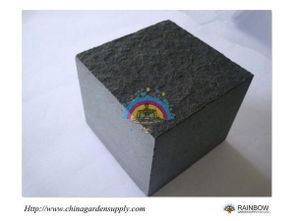
Consider common landscaping stones, often referred to as “decorative gravel” or “river rock.” These are typically rounded and can have a range of densities depending on their origin. A typical bulk density for such material might fall somewhere between 1.5 and 1.7 tons per cubic meter. If we take a midpoint of, say, 1.6 tons per cubic meter, then our 1.5 cubic meters of stone would weigh approximately 1.5 m³ * 1.6 tons/m³ = 2.4 tons. This is a reasonable starting point, but it’s crucial to remember the inherent approximation.
Now, let’s shift gears to a more structural application. If we’re talking about crushed stone, often used as a base for roads or foundations, the density can be slightly higher due to the angularity and tighter packing of the fragments. Crushed granite or basalt, for example, might have a bulk density ranging from 1.7 to 1.9 tons per cubic meter. Using our 1.5 cubic meter volume and a midpoint of 1.8 tons/m³, we’d be looking at approximately 1.5 m³ * 1.8 tons/m³ = 2.7 tons. The difference, while seemingly small in absolute terms, can become significant when dealing with large quantities, impacting everything from transportation costs to structural load calculations.
The concept of density itself is rooted in physics. Density (ρ) is defined as mass (m) per unit volume (V): ρ = m/V. Therefore, to find the mass, we rearrange this formula: m = ρ * V. The unit “ton” is a unit of mass, typically meaning a metric ton (1000 kilograms) or a short ton (2000 pounds). For clarity, let’s assume we are working with metric tons.
When we talk about “1.5 cubic stones,” we’re essentially saying V = 1.5 m³. The challenge lies in determining ρ. This is where geological knowledge and material specifications come into play. For any serious construction or landscaping project, obtaining accurate density information for the specific material being used is not just helpful, it’s essential. Suppliers of aggregate, gravel, and other bulk materials often provide specifications for their products, including typical densities or weights per cubic yard/meter.

Let’s explore some other common stone types and their approximate densities to illustrate the variability:
Granite: Generally dense. Bulk density can range from 2.6 to 2.7 tons per cubic meter. If our 1.5 cubic meters were solid granite (which is rarely the case for bulk material), it would be around 1.5 m³ * 2.65 tons/m³ = 3.975 tons. This highlights the difference between the density of the solid rock and the bulk density of crushed or fragmented material. Limestone: Also relatively dense, often in the range of 2.4 to 2.6 tons per cubic meter for crushed forms. For 1.5 cubic meters, this would be approximately 1.5 m³ * 2.5 tons/m³ = 3.75 tons. Sandstone: Can be more variable, with densities ranging from 2.0 to 2.4 tons per cubic meter. For 1.5 cubic meters, this would yield approximately 1.5 m³ * 2.2 tons/m³ = 3.3 tons. Gravel (mixed sizes): As mentioned, this is highly variable. A common estimate for general-purpose gravel is around 1.5 to 1.7 tons per cubic meter. So, 1.5 m³ * 1.6 tons/m³ = 2.4 tons.
It’s important to distinguish between the specific gravity of the rock material itself and its bulk density. Specific gravity refers to the density of the solid material, excluding any air pockets or voids. Bulk density, on the other hand, accounts for these voids and is the more practical measure for calculating the weight of a volume of loose material. For example, the specific gravity of quartz is about 2.65. However, a cubic meter of quartz sand will weigh less than 2.65 tons because of the air spaces between the grains.
The question “1.5 cubic stones equals how many tons?” therefore, is not a fixed equation with a single answer. It’s a question that demands context. It’s a prompt to understand the material properties of the earth’s bounty that we so readily use. It’s a reminder that even seemingly simple things carry weight, and understanding that weight requires a little bit of science and a lot of practical awareness. The journey to answer this question takes us from abstract numbers to the very real, grounding weight of the materials that form the bedrock of our built environment.
Continuing our exploration of “1.5 cubic stones equals how many tons?”, we’ve established that the answer hinges on the density of the stone in question. This variability is precisely why precise calculations are crucial in fields like civil engineering, landscaping, and construction. Underestimating the weight of materials can lead to structural failures, while overestimating can result in unnecessary costs and logistical headaches.
Let’s delve deeper into the practical implications. Imagine a homeowner planning a garden path. They might order 1.5 cubic meters of decorative gravel. If they’re aiming for a natural, rounded river rock look, and the supplier quotes a weight of, say, 1.6 tons per cubic meter, they’re looking at approximately 2.4 tons of material. This weight needs to be considered for delivery – can the driveway support it? Does the truck have a tipping point that can reach the desired location? If the homeowner decides on a heavier crushed stone for a more stable base, perhaps with a density of 1.8 tons per cubic meter, then 1.5 cubic meters would translate to 2.7 tons, a nearly 12.5% increase in weight for the same volume.
In larger-scale construction, the stakes are even higher. A civil engineer designing a roadbed will need to calculate the tonnage of aggregate required. If a project specifies 1.5 cubic meters of a particular grade of crushed stone per linear meter of road, and the material has a density of 1.75 tons per cubic meter, then each linear meter of road requires 1.5 m³ * 1.75 tons/m³ = 2.625 tons of material. Over kilometers of roadway, these figures accumulate rapidly, influencing quarrying, transportation logistics, and the overall project budget.
The source of the stone also plays a significant role. A dense igneous rock like basalt or gabbro will inherently have a higher specific gravity than a less dense sedimentary rock like sandstone or shale. For example, the specific gravity of basalt can be around 2.9-3.0, while sandstone might be closer to 2.2-2.4. When these rocks are quarried and processed into aggregate, the resulting bulk density will reflect these inherent material properties, along with the degree of crushing and screening.
Furthermore, the moisture content of the stone can significantly impact its weight. Damp or wet stone will weigh more than dry stone due to the added mass of the water held within the pores and between the particles. This is a critical consideration in stockpiling and handling. A ton of dry aggregate might occupy a certain volume, but a ton of the same aggregate after a heavy rain could occupy a slightly smaller volume, or conversely, if measured by volume, would weigh more. For contractual purposes, it’s common to specify material by weight (tons) rather than volume (cubic meters) to account for this variability, or to specify “loose, dry” density.
The units themselves can also be a source of confusion. While we’ve used metric tons and cubic meters, in some regions, particularly the United States, calculations might be done using short tons (2000 pounds) and cubic yards. One cubic yard is approximately 0.765 cubic meters. Conversely, one metric ton is approximately 1.102 short tons. If our 1.5 cubic meters of stone weighed 2.4 metric tons, this would be roughly 2.4 * 1.102 = 2.64 short tons. If the volume was measured in cubic yards, say 1.5 cubic yards, and the density was 1.5 tons per cubic yard, then the weight would be 1.5 yd³ * 1.5 tons/yd³ = 2.25 tons (short tons). This highlights the importance of clarity in units when discussing quantities and weights.
Let’s consider a simplified scenario for a homeowner wanting to fill a small raised garden bed. If the bed is 1.5 cubic meters in volume and they plan to fill it with a standard landscaping gravel that weighs approximately 1.6 tons per cubic meter, they’ll need about 2.4 tons of gravel. Ordering this would likely be done by the cubic meter or yard, with the supplier calculating the weight for delivery.
The question “1.5 cubic stones equals how many tons?” serves as an excellent starting point for understanding the practical application of density. It prompts us to think about the composition of the materials we encounter daily and how their physical properties translate into measurable weight. It’s a reminder that the world around us is not just visually present, but tangibly substantial. Whether we are designing skyscrapers, paving roads, or simply arranging stones in a garden, understanding the weight of these materials is fundamental to successful and safe execution.
The journey from a volume measurement (1.5 cubic stones) to a weight measurement (how many tons) is a testament to human ingenuity in quantifying and manipulating the physical world. It involves bridging the gap between abstract geometry and concrete reality, informed by the principles of physics and geology. So, the next time you see a pile of stones, or a landscape sculpted with them, take a moment to consider the weight of it all – a weight that can be calculated, understood, and responsibly managed, all starting with a seemingly simple question about cubic stones and their tons. It’s this continuous process of inquiry and calculation that allows us to build, shape, and understand the world, one ton of stone at a time.









