
The heart of many homes beats within the kitchen. It’s where culinary creations come to life, where families gather, and where memories are often made. But what happens when your kitchen is a slender 2.2 meters wide? Does that mean sacrificing your dreams of a functional and beautiful space? Absolutely not! In fact, a narrow kitchen can be an exciting design challenge, pushing us to think creatively and efficiently. And one of the most compelling solutions for a kitchen of this dimension is the concept of a “two-sided” or double-countertop layout. Imagine this: two parallel countertops, creating a central walkway, that unlock a surprising amount of workspace and streamline your cooking process. It’s a design that’s as practical as it is potentially elegant, turning a perceived limitation into a distinct advantage.
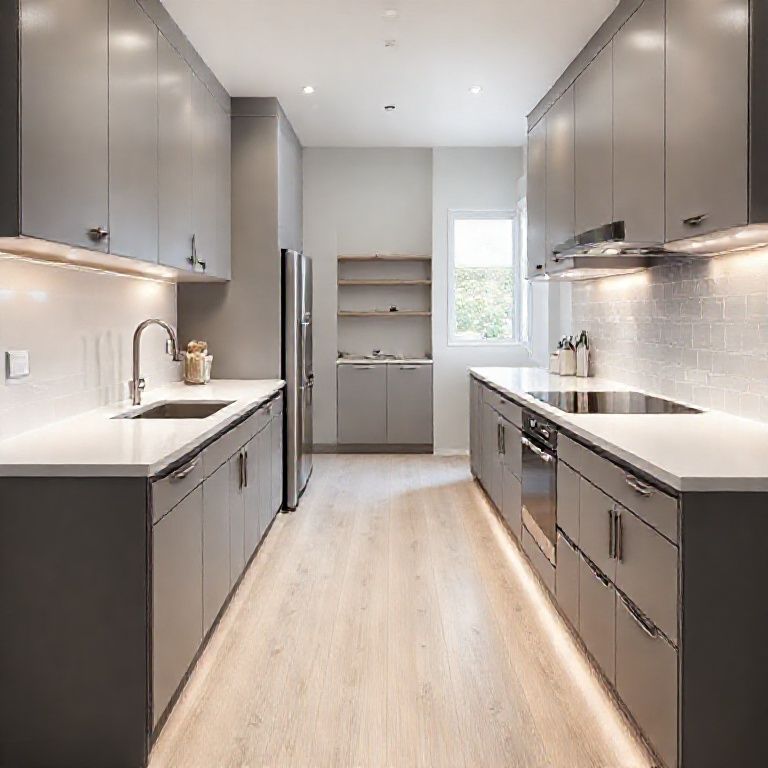
For those who love to cook, bake, or entertain, the idea of two distinct work zones is incredibly appealing. A 2.2-meter wide kitchen, when designed with this dual countertop approach, can become a surprisingly efficient and enjoyable space. Let’s break down what this looks like and why it might be the perfect solution for your culinary aspirations. The fundamental principle here is maximizing your lineal footage of usable counter space while maintaining a comfortable flow. Instead of a single, long run of cabinets and countertops, you’re creating two shorter, parallel runs. This immediately doubles your potential for prep areas, appliance placement, and storage.
Consider the classic galley kitchen, a long, narrow corridor. While functional, it can sometimes feel cramped. The double-countertop design takes the galley concept and elevates it. It’s like having two mini-galley kitchens facing each other, with a central pathway in between. This pathway is crucial; it needs to be wide enough for comfortable movement, typically between 1.2 to 1.5 meters, allowing for two people to work simultaneously or for easy passage even with open cabinet doors or appliance drawers.
The benefits of this layout for a 2.2-meter wide kitchen are numerous. Firstly, it inherently creates distinct zones. One side could be dedicated to food preparation – chopping vegetables, mixing ingredients, and plating. The other side could house your cooking appliances like the stove and oven, with ample space for placing hot pans or ingredients for immediate use. This separation minimizes the “back and forth” that can plague kitchens with less defined zones, making your cooking experience smoother and more intuitive.
Think about the workflow. You bring your groceries in, perhaps placing them on one counter for unpacking. Then, you move them to the prep zone, wash and chop, and then transfer them to the cooking zone. This logical progression is incredibly efficient. Furthermore, the abundance of countertop space means you can keep frequently used appliances, like a stand mixer or toaster, permanently out and accessible without cluttering your main prep areas. This is a game-changer for anyone who enjoys having their tools readily available.
Storage is another area where the double-countertop design shines. Both sides can accommodate base cabinets and wall cabinets, effectively doubling your storage potential compared to a single-sided layout of the same length. You can dedicate lower cabinets to pots, pans, and larger appliances, while upper cabinets can house everyday dishes, glasses, and pantry staples. This thoughtful organization keeps your countertops clear and your kitchen feeling spacious and tidy, even if the overall footprint is modest.
However, it’s not all sunshine and seamless workflows. There are considerations to keep in mind. The primary constraint is the width itself. A 2.2-meter width means that when you have two countertops, the space between them for the walkway is, at most, around 1.5 meters, assuming standard cabinet depths of 0.6 meters on each side. This is perfectly functional, but it means you need to be mindful of the depth of your cabinets and any protruding appliances. Opting for shallower cabinets on one or both sides might be a consideration, or choosing integrated appliances that sit flush with the cabinetry.
The visual impact is also important. A double-countertop design can make a narrow kitchen feel wider, by drawing the eye along the length of the space and creating a sense of symmetry. However, if not executed carefully, it can also feel a bit like a tunnel. This is where thoughtful material selection and lighting come into play. Light-colored countertops, reflective surfaces, and ample task and ambient lighting can all work to make the space feel more open and inviting.
For those who dream of a gourmet kitchen, the double-countertop layout offers a surprising amount of flexibility. Imagine one side with a spacious island-like counter for serious prep work, complete with a built-in chopping board or a dedicated sink. The other side could house your range, ventilation hood, and a small warming drawer. This creates a professional-grade cooking station without requiring an expansive room.
Ultimately, a 2.2-meter wide kitchen isn’t a limitation; it’s an invitation to design intelligently. The double-countertop approach is a powerful strategy for maximizing functionality, improving workflow, and creating a kitchen that feels both spacious and efficient. It’s about working with the dimensions of your space, not against them, to craft a culinary haven that perfectly suits your needs and your style. Whether you’re a seasoned chef or a weekend baker, this design can unlock a new level of joy and productivity in your home.
Continuing our exploration into the possibilities of a 2.2-meter wide kitchen, let’s delve deeper into the practicalities and stylistic considerations of implementing a double-countertop design. This layout, while offering immense potential, requires careful planning to ensure it’s not just functional but also a pleasure to be in. We’ve established the core benefits: enhanced workflow, doubled workspace, and increased storage. Now, let’s unpack how to make it truly sing.
The “zones” concept is paramount here. With two parallel countertops, you have a unique opportunity to create a highly organized and ergonomic kitchen. One side can be your “prep zone.” This is where you’ll do all your chopping, dicing, mixing, and measuring. Ideally, this counter should be clear of appliances, allowing for maximum uninterrupted surface area. Think of it as your culinary blank canvas. The other side can be your “cooking zone.” This is where your range, oven, and perhaps a microwave or other heat-generating appliances reside. It’s also the logical place for frequently used cooking essentials like olive oil, salt, pepper, and your favorite spatulas and whisks.
The spacing between these two countertops is critical. As mentioned, for a 2.2-meter width, you’re looking at a central walkway of approximately 1.5 meters, assuming standard 0.6-meter deep cabinets. This is a comfortable width for single-person operation and allows for two people to pass each other with relative ease, provided they’re not carrying bulky items. It’s essential to consider the depth of your cabinets carefully. If you opt for deeper cabinets on both sides, you’ll significantly reduce the walkway, making the space feel cramped and potentially hazardous. In some cases, you might consider shallower base cabinets on one side, perhaps for wall-mounted storage, to gain a little extra breathing room in the walkway.
Appliances also play a key role. For this layout, integrated or slimline appliances are often a good choice. A built-in oven under a countertop range, for example, maintains clean lines and minimizes protrusion. Consider the placement of your refrigerator. In a 2.2-meter wide kitchen with two parallel runs, the refrigerator might need to be positioned at one end of the kitchen, either integrated into the cabinetry or as a standalone unit. Its door swing needs to be accounted for to ensure it doesn’t obstruct the main walkway or adjacent cabinetry. Sometimes, a counter-depth refrigerator is a wise investment for narrow spaces.
The sink and dishwasher placement also need strategic thought. Ideally, your sink and dishwasher would be located on the same side, often referred to as the “wet zone.” This keeps plumbing runs consolidated and makes the cleanup process more efficient. Placing them on your prep side can be very convenient, allowing you to easily rinse produce and then move it directly to your cutting board.
Lighting is a crucial element that can transform the perception of space. In a narrow kitchen, good lighting is non-negotiable. Think about layered lighting:
Ambient Lighting: General overhead lighting to illuminate the entire space. Recessed ceiling lights or a flush-mount fixture work well. Task Lighting: Focused lighting directly over your countertops. Under-cabinet LED strips are excellent for this, casting light where you need it most for chopping and prep work. Consider pendant lights over a central island area if you opt for a more island-like configuration. Accent Lighting: Adding a touch of ambiance with decorative fixtures or lighting within glass-fronted cabinets.
Material selection can also have a significant impact on how spacious and inviting your kitchen feels.
Countertops: Light-colored countertops, such as white quartz, light granite, or a pale solid surface, will reflect light and make the space feel brighter and larger. Consider durable materials that are easy to clean and maintain. Cabinetry: Light-colored cabinets, especially in a matte or satin finish, can also contribute to a sense of openness. High-gloss finishes can reflect light but may also show smudges more readily. Flooring: A continuous flooring material throughout the kitchen and adjacent areas can help to visually expand the space. Light-colored tiles or wood-look flooring can be very effective.
Ventilation is another critical aspect, especially with a cooking zone in close proximity. A powerful and well-designed range hood is essential to keep the air in your kitchen fresh and free from cooking odors and grease. Ensure it’s appropriately sized for your range.
The aesthetic appeal of a double-countertop kitchen can be incredibly modern and sophisticated. The clean lines and symmetry inherent in the layout lend themselves well to minimalist or contemporary designs. However, with careful styling, it can also be adapted to more traditional or transitional aesthetics. Consider the hardware on your cabinets, the backsplash design, and decorative elements to personalize the space. A striking backsplash, for instance, can become a focal point and add visual interest to the narrow space.
Think about storage solutions that maximize vertical space. Tall, narrow pantry cabinets can provide significant storage without encroaching too much on the walkway. Wall-mounted shelves can offer accessible storage for frequently used items or decorative pieces. Smart drawer organizers and pull-out shelves within cabinets will ensure you can access everything efficiently.
Ultimately, a 2.2-meter wide kitchen with a double-countertop layout is a testament to smart design. It’s about embracing the constraints and turning them into opportunities. By focusing on workflow, strategic appliance placement, intelligent lighting, and thoughtful material choices, you can transform a narrow space into a highly functional, stylish, and enjoyable culinary heart of your home. It’s a design that proves that with a little ingenuity, even the most compact kitchens can become a dream to cook and live in.









