
The allure of natural stone in our homes is undeniable. It speaks of timeless elegance, a connection to the earth, and a certain gravitas that synthetic materials often struggle to replicate. When we talk about stone, particularly for applications like countertops, flooring, or feature walls, the thickness of the slab becomes a significant factor, influencing both its aesthetic presentation and, of course, its price. Today, we’re delving into the world of 2cm thick stone, exploring what that “2公分厚” (which translates to 2 centimeters thick) truly signifies in terms of value, appearance, and the investment it represents.

At first glance, the price of any material can seem like a straightforward calculation: square footage multiplied by the per-unit cost. However, with natural and engineered stones, the narrative is far richer. The “2cm thick stone price” isn’t just about the raw material; it encompasses a complex interplay of sourcing, processing, transportation, and the inherent qualities of the stone itself. Understanding this allows us to appreciate why a seemingly simple measurement can translate into such varied figures.
Let’s break down the primary drivers behind the cost of 2cm thick stone. Firstly, the type of stone is paramount. Are we talking about a ubiquitous granite, a luxurious marble, a robust quartzite, or a meticulously engineered quartz? Each has its own geological origins, rarity, and extraction challenges. For instance, exotic granites with unique veining and color patterns, or marbles with delicate, intricate patterns, often command higher prices due to their scarcity and the difficulty in finding large, flawless slabs. Engineered quartz, while manufactured, also has a price point influenced by the quality of the resin binders, the fineness of the quartz particles, and the complexity of the patterns and colors achievable.
Secondly, origin and sourcing play a crucial role. Stones quarried from renowned regions, known for producing high-quality materials, might carry a premium. The logistics of extraction – whether the quarry is easily accessible or requires specialized machinery and labor – also contribute to the overall cost. Think about the journey a slab of Italian marble or a Brazilian granite undertakes to reach your home; the transportation costs, import duties, and the markup by various intermediaries all factor into the final price.

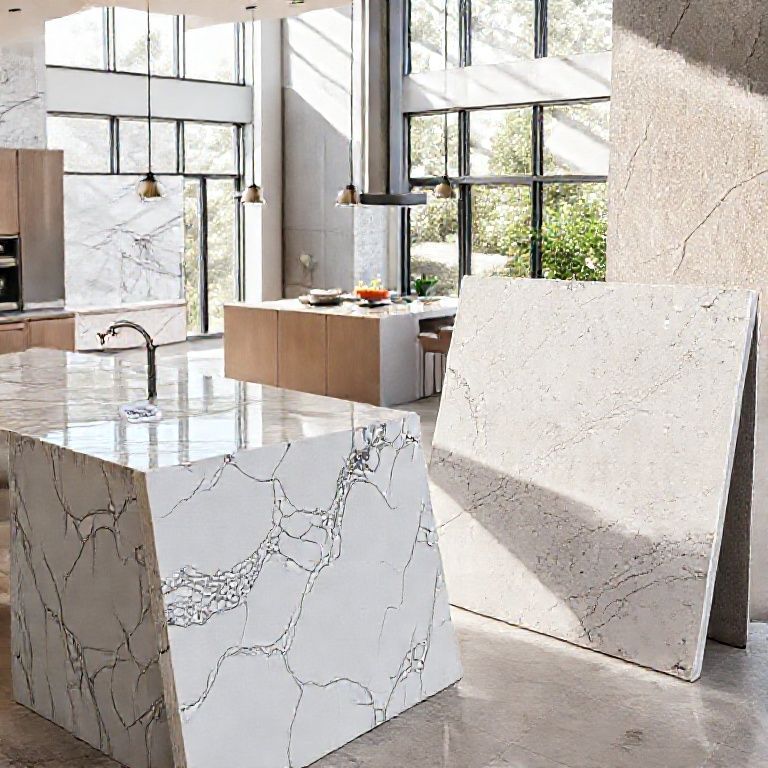
Thirdly, the processing and finishing of the stone significantly impact its value. A rough, unpolished slab will naturally cost less than one that has been expertly cut, polished to a mirror-like sheen, or given a honed, matte, or leathered finish. The precision required for cutting to a consistent 2cm thickness, ensuring minimal imperfections, and achieving a desired surface texture all involve skilled craftsmanship and sophisticated machinery, adding to the expense. For certain applications, like waterfall edges on countertops, the complexity of the cuts and the need for perfect seam alignment further escalate the cost.
The thickness itself – 2cm – also has implications beyond just material volume. While 3cm thick slabs are traditionally more common in some markets, particularly for countertops, 2cm offers distinct advantages and is gaining popularity for its versatility and lighter weight. It can be more economical in terms of raw material, but its installation might require a different support structure, especially for unsupported spans. This can sometimes offset material savings with increased labor or structural considerations, depending on the application. However, for wall cladding, backsplashes, or even countertops when properly supported, 2cm provides a sleek, modern aesthetic that is highly desirable. The perceived value isn’t just in its solidity but in its ability to offer a sophisticated look with potentially less visual bulk.
Furthermore, the rarity and exclusivity of a particular stone pattern or color can drive up the “2cm thick stone price.” Limited edition runs, unique geological formations, or stones with highly sought-after characteristics will naturally be priced higher. This is akin to investing in a piece of art; the more unique and desirable, the greater its perceived and actual value.
Finally, we must consider market demand and the supplier’s overhead. Like any commodity, the price of stone is influenced by how much is being bought and sold. Suppliers also have to cover their operational costs, including warehousing, staff, marketing, and the risks associated with handling such heavy and potentially fragile materials. A reputable supplier who offers excellent customer service, warranty, and expert installation advice will likely reflect these costs in their pricing.
When you see a price tag for 2cm thick stone, it’s not just a number; it’s a reflection of the earth’s artistry, human ingenuity in quarrying and fabrication, and the sophisticated logistics that bring these natural wonders into our living spaces. It’s an investment in durability, beauty, and a unique character that can elevate any home.
Continuing our exploration into the value proposition of 2cm thick stone, let’s shift our focus from the initial “why” of its pricing to the tangible benefits and considerations that make it a worthwhile investment for your home. The “2公分厚石材价格” is a gateway to understanding not just the material cost, but the long-term advantages it brings to your interior design and lifestyle.
One of the most compelling arguments for choosing 2cm thick stone lies in its durability and longevity. Natural stones, when properly selected and installed, are remarkably resilient. They resist heat, scratches, and stains far better than many laminate or solid surface alternatives. This means a countertop or flooring made from 2cm thick granite or quartzite can withstand the rigors of daily life – from busy family kitchens to high-traffic commercial spaces – for decades. The inherent hardness and density of these materials mean they age gracefully, developing a patina rather than degrading. This translates into significant long-term savings, as the need for frequent replacements or costly repairs is minimized. The initial investment in quality 2cm stone is an investment in a material that will likely outlast many other elements of your renovation.
Aesthetically, the 2cm thickness offers a sleek and contemporary look that is highly sought after in modern interior design. While thicker slabs can sometimes feel imposing, 2cm stone provides a more refined and understated elegance. This is particularly beneficial in smaller kitchens or bathrooms where a lighter visual presence can make the space feel larger and more open. For waterfall countertops, where the stone flows seamlessly down the side of the cabinet, 2cm can create a sophisticated, minimalist effect. It allows the natural beauty and veining of the stone to be the star without overwhelming the design. This versatility in achieving both modern and classic looks, depending on the stone chosen and the overall design scheme, adds to its appeal.
The lighter weight of 2cm stone is another practical advantage, impacting both transportation and installation. While still substantial, it is generally easier and less costly to transport than its 3cm counterpart. This can translate into lower shipping fees. Moreover, during installation, particularly for wall applications or where structural support might be a concern, the reduced weight can simplify the process, potentially leading to faster and more cost-effective labor. For DIY enthusiasts or those working with contractors, this ease of handling can be a significant plus.
When considering the “2cm thick stone price,” it’s important to factor in the installation requirements. While 2cm stone is lighter, it often requires a robust sub-base, especially for countertops. This might involve reinforcing cabinetry with plywood or a specialized support structure. Some may argue this adds to the overall cost. However, this also ensures the stone is perfectly stable and protected, guaranteeing its longevity. The expertise of the installer is crucial here. A skilled professional will understand how to properly support and install 2cm stone to maximize its performance and beauty. The price you pay for installation should reflect this specialized knowledge.
Furthermore, the versatility in application for 2cm stone is noteworthy. Beyond countertops, it’s an exceptional choice for backsplashes, shower walls, feature walls, and even tabletops. Its ability to be fabricated into thinner profiles and intricate shapes opens up a world of design possibilities. For instance, a striking accent wall clad in book-matched 2cm slabs of marble or onyx can become a breathtaking focal point in a living room or dining area. The seamless integration it allows for these surfaces contributes to a polished and cohesive interior.
When comparing the “2cm thick stone price” to other materials, it’s crucial to conduct a life-cycle cost analysis. While a high-quality granite or quartz might have a higher upfront cost than a laminate countertop, its lifespan, resistance to damage, and the aesthetic value it adds to your home often make it a more economical choice in the long run. The cost of refinishing or replacing a damaged laminate every few years can quickly exceed the initial investment in a durable stone slab.
Finally, the psychological and emotional value of living with natural stone cannot be overstated. There’s an inherent beauty and sense of luxury that comes from surrounding yourself with materials forged by nature over millennia. The unique patterns, colors, and textures of each slab tell a story, adding a layer of personality and warmth to your home that manufactured materials often lack. This tangible connection to the natural world enhances the feeling of comfort and well-being within your living space.
In conclusion, the price of 2cm thick stone is an investment in enduring beauty, exceptional durability, and versatile design. By understanding the factors that contribute to its cost and the myriad benefits it offers, you can confidently make a choice that not only enhances the aesthetics of your home but also adds lasting value and enjoyment for years to come. The “2公分厚石材价格” is not just an expense; it’s a declaration of quality and timeless style.









