
The hum of the factory floor, the clang of metal on metal, the sheer, imposing presence of colossal structures – steel is undeniably the backbone of our modern world. From the skyscrapers that pierce the clouds to the intricate machinery that powers our industries, steel’s strength and versatility are legendary. Yet, beneath this familiar façade lies a universe of fascinating physics and engineering, encapsulated in a question that seems deceptively simple: “How much does a 2 cm thick steel plate weigh per square meter?” This isn’t just a question for engineers and manufacturers; it’s a gateway to understanding the very essence of this ubiquitous material.
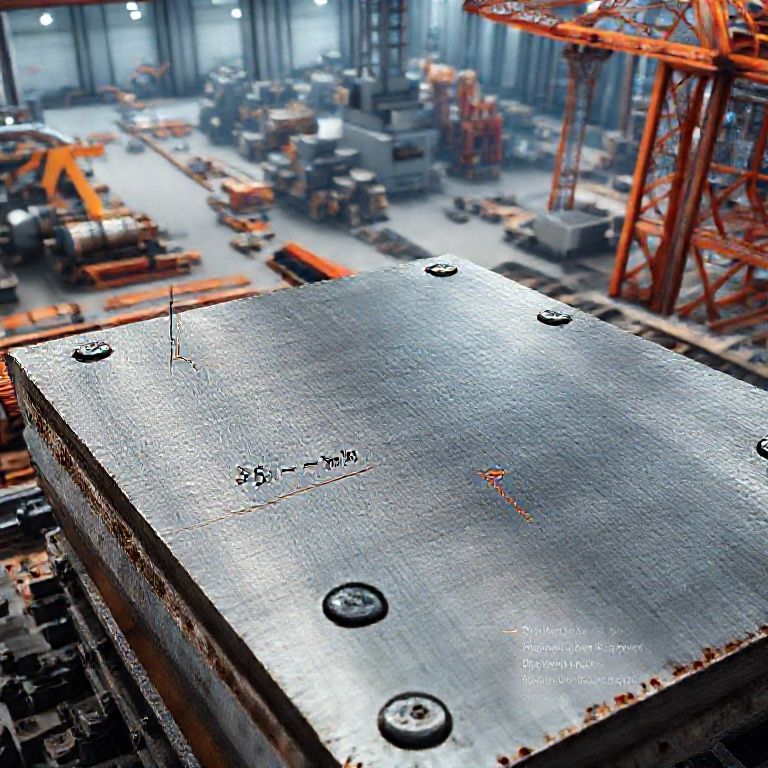
At its core, the weight of any object is determined by two fundamental properties: its volume and its density. For our 2 cm thick steel plate, the volume is straightforward to calculate. We’re looking at a flat sheet, so the volume is the area multiplied by the thickness. If we consider one square meter (1 m²), then the volume is 1 m² * 0.02 m = 0.02 cubic meters (m³). Simple enough, right? But here’s where things get a little more interesting. The real puzzle, the variable that dictates the ultimate heft of our steel plate, lies in its density.
Steel, as we commonly know it, isn’t a single, monolithic substance. It’s an alloy, primarily composed of iron and carbon, but with a dazzling array of other elements often introduced to impart specific properties. Think of it like a chef’s recipe for a gourmet meal; a little more of this, a dash of that, and you can completely transform the flavor and texture. Similarly, the precise composition of steel can drastically alter its characteristics, including its density.
The density of materials is typically measured in kilograms per cubic meter (kg/m³) or grams per cubic centimeter (g/cm³). For pure iron, the density is around 7,874 kg/m³. Now, steel, being an alloy, generally hovers around this figure. A commonly cited average density for structural steel, the kind you’d find in construction and heavy fabrication, is approximately 7,850 kg/m³. This number is a crucial benchmark, a constant in our calculation.
So, to determine the weight of our 2 cm thick steel plate per square meter, we can now combine our volume and density. Weight is simply volume multiplied by density. Weight = Volume * Density Weight = 0.02 m³ * 7,850 kg/m³
Notice how the units work out. The cubic meters (m³) cancel out, leaving us with kilograms (kg) – the unit of mass, which we colloquially refer to as weight in everyday contexts.
Performing the calculation: 0.02 * 7,850 = 157 kg
Therefore, a 2 cm thick steel plate, one square meter in area, weighs approximately 157 kilograms. This is a significant amount of weight, a testament to the inherent density of steel. Imagine lifting that – it’s the equivalent of about three average adult cats! This figure, however, is an approximation. The real world of steel manufacturing and application is far more nuanced.
The type of steel plays a pivotal role. For instance, stainless steel, known for its corrosion resistance due to the addition of chromium and nickel, can have a slightly higher density, perhaps closer to 8,000 kg/m³. This minor difference, when scaled up to massive structures, can translate into a considerable increase in overall weight. Conversely, some specialized alloy steels might have slightly lower densities depending on their composition.
Furthermore, manufacturing processes can introduce subtle variations. The way steel is rolled, heat-treated, and finished can affect its internal structure and, consequently, its density. While these variations are usually small, they are accounted for in precision engineering where exact weight and structural load calculations are paramount.
The question of “how much does it weigh” is not just about theoretical calculation; it has profound practical implications. In construction, engineers need to know the exact weight of steel components to ensure the structural integrity of buildings, bridges, and other infrastructure. Overestimation can lead to unnecessarily robust and expensive designs, while underestimation can have catastrophic consequences. In transportation, knowing the weight of steel components is critical for designing vehicles, cargo ships, and aircraft that can safely carry their loads. In manufacturing, the weight of materials directly impacts the cost of production, logistics, and the energy required for processing and assembly.
Think about the massive steel beams supporting a skyscraper. Each beam, each plate, is meticulously calculated. The cumulative weight of all that steel is a major factor in determining the foundation’s requirements, the load-bearing capacity of every connected element, and even the seismic resilience of the building. Similarly, on a bridge, the weight of the steel deck and supporting structures contributes significantly to the overall load the bridge must withstand.
The allure of steel lies not just in its raw strength, but in its predictability. While its composition can vary, the underlying principles of its density and weight are well-understood. This allows for reliable calculations that form the bedrock of engineering and design. The seemingly simple question of “2公分厚的钢板一平方多重” opens a door to appreciating the intricate science that underpins the very fabric of our built environment, revealing the unseen weight and the precise engineering that holds our world together. It’s a reminder that even the most familiar materials have depths to explore, and that the weight of a simple steel plate is a story told in numbers, elements, and the relentless laws of physics.
Continuing our exploration into the world of steel plate weight, we’ve established that a 2 cm thick plate, covering one square meter, typically weighs around 157 kg, based on an average steel density of 7,850 kg/m³. However, this figure is a starting point, a useful approximation for general purposes. For professionals in fields where precision is not just desirable but absolutely critical, delving deeper into the factors influencing steel density is paramount.
One of the most significant variables is the specific grade or type of steel being used. The designation “steel” is broad, encompassing a vast family of iron-based alloys. For example, consider the difference between a common mild steel, often used in general construction, and a high-strength, low-alloy (HSLA) steel, engineered for applications requiring superior strength-to-weight ratios, such as in automotive manufacturing or pipelines. These different compositions mean different densities.
Conversely, some specialized alloy steels, perhaps designed for extreme lightness in aerospace applications (though typically these are aluminum or titanium alloys, steel is still used in certain structural components), might incorporate elements that slightly reduce the overall density. However, for the vast majority of commonly encountered structural and industrial steels, the density remains firmly within the 7,800 to 8,000 kg/m³ range.
The manufacturing process itself also plays a subtle but important role. Steel is typically produced in large furnaces and then cast into ingots or slabs. These are then hot-rolled or cold-rolled into plates of desired dimensions. During these processes, factors like temperature, cooling rates, and the mechanical forces applied can influence the microstructure of the steel – the arrangement of its crystalline grains. Variations in grain size, internal stresses, and the presence of minute voids can lead to slight deviations in density. While modern manufacturing techniques aim for uniformity, perfect homogeneity is an ideal that is approached rather than perfectly achieved. For most applications, these density variations are negligible. However, in highly specialized fields like precision instrumentation or aerospace, where every gram counts and material properties are pushed to their limits, these subtle differences are taken into account.
The concept of “effective density” can also come into play. For instance, if a steel plate has been perforated or has a textured surface, its overall apparent density (mass per unit volume of the entire object, including any empty spaces) will be lower than the density of the solid steel material itself. However, when we refer to the weight of a steel plate, we are almost always concerned with the mass of the solid material.
The practical implications of these nuanced considerations are far-reaching. In the construction industry, the precise weight of steel beams and plates is critical for structural load calculations. Architects and engineers use detailed material specifications, including the exact density of the steel grade specified for a project, to ensure safety and efficiency. A bridge designed to carry a certain load must account for the precise weight of every structural element. An error in density calculation, however small, can have cascading effects on the overall structural design and safety margins.
In the realm of shipping and logistics, knowing the exact weight of steel components is vital for determining cargo capacity, fuel efficiency, and shipping costs. A container filled with steel plates that are denser than anticipated will carry more weight, potentially exceeding weight limits or requiring adjustments to shipping manifests and even the number of voyages needed.
For manufacturers of heavy machinery, the weight of steel components directly influences the performance, fuel consumption, and maneuverability of their products. For example, in the design of excavators or cranes, the weight distribution and the mass of structural steel are crucial for stability and operational efficiency.
When dealing with international trade and procurement of steel, understanding the precise density of different steel grades is also important for quality control and cost verification. Different standards and specifications may imply slightly different compositions and, therefore, different densities.
The seemingly straightforward question, “2公分厚的钢板一平方多重” (How much does a 2 cm thick steel plate weigh per square meter?), thus unravels into a complex interplay of material science, manufacturing precision, and practical application. While the average figure of 157 kg per square meter for a 2 cm thick steel plate provides a solid baseline, a deeper appreciation reveals the subtle yet significant factors that can cause this weight to vary. It highlights the constant pursuit of precision in engineering and manufacturing, where understanding the minute details of material properties is essential for building a safer, more efficient, and more robust world. The weight of steel, much like steel itself, is a foundational element that, upon closer inspection, reveals layers of complexity and ingenuity.









