
The allure of artificial stone is undeniable. It graces our kitchens with sleek countertops, adorns our bathrooms with elegant vanities, and lends a sophisticated touch to commercial spaces. Its versatility in mimicking natural stone’s beauty, coupled with its durability and low maintenance, has made it a star player in the world of interior design and construction. But beneath the polished surface and the captivating patterns lies a fundamental physical property that often gets overlooked: its weight. The question, “人造石1平方米多重?” – “How much does one square meter of artificial stone weigh?” – is far more than a simple curiosity. It’s a gateway to understanding the material’s intrinsic characteristics and its practical implications across a spectrum of applications.

To truly grasp the weight of artificial stone, we must first understand what “artificial stone” encompasses. Unlike naturally occurring granite or marble, artificial stone is a manufactured product. This umbrella term covers a variety of materials, each with its unique composition and, consequently, its distinct density. The most common types include quartz countertops (engineered quartz), solid surface materials (like Corian), and granite composites. Each of these is crafted from different blends of resins, polymers, pigments, and fillers, which directly dictate their physical properties, including their specific gravity and thus, their weight.
Engineered quartz, perhaps the most popular artificial stone for countertops, is a triumph of material science. It’s typically composed of around 90-95% ground natural quartz crystals, mixed with polymer resins and pigments. The quartz provides the incredible hardness and scratch resistance, while the resins bind the particles together and allow for a vast array of colors and patterns. The density of engineered quartz can vary slightly depending on the manufacturer and the specific formulation, but it generally falls within a range that makes it quite substantial. When we talk about one square meter, the weight will depend on the thickness of the slab. A standard countertop thickness is often around 2cm (approximately 0.79 inches) or 3cm (approximately 1.18 inches). For a 2cm thick slab of engineered quartz, one can expect a weight ranging from approximately 45 to 55 kilograms per square meter (around 100 to 120 pounds per square meter). If we opt for the thicker 3cm slabs, the weight will naturally increase, potentially reaching 65 to 80 kilograms per square meter (around 140 to 175 pounds per square meter). This is a considerable amount of material, akin to carrying a couple of very large dogs or a small adult!

Solid surface materials, on the other hand, often have a slightly different composition. These are typically made from acrylic polymers or polyester resins blended with mineral fillers, such as bauxite. The resulting material is non-porous, seamless, and can be thermoformed into various shapes. While also durable, solid surfaces tend to be less dense than engineered quartz. A typical 12mm (approximately 0.47 inches) thick slab of solid surface material might weigh in the range of 25 to 35 kilograms per square meter (around 55 to 75 pounds per square meter). Thicker options are available, but even at 20mm (approximately 0.79 inches), the weight would likely not exceed 45-55 kilograms per square meter. This lower density makes solid surfaces easier to handle and install, especially in more complex designs or where weight is a significant concern.
Granite composites, often marketed as an eco-friendlier alternative, are usually made from crushed granite (or other stones) bound together with resins. The proportion of stone particles to resin will influence the final density. These materials can also be quite heavy, often falling into a similar weight range as engineered quartz, especially for thicker applications. A 3cm thick granite composite slab could easily weigh 60-75 kilograms per square meter (around 130 to 165 pounds per square meter).
So, when we pose the question “人造石1平方米多重?”, the answer is not a single, definitive number. It’s a spectrum, influenced by the type of artificial stone, its thickness, and the specific manufacturing process. However, the general takeaway is that artificial stone, particularly engineered quartz and granite composites, is a material with significant heft. This weight is not just a number; it has tangible consequences. It impacts how these materials are transported from the factory to the fabrication shop, and then to the installation site. It dictates the type of support structures required beneath countertops and other surfaces. It influences the manpower needed for handling and positioning. And for those undertaking DIY projects, understanding this weight is paramount for safety and feasibility. The aesthetic appeal of artificial stone is a significant draw, but its physical presence, its density, is a crucial, often unspoken, factor in its successful integration into our living spaces.
Continuing our exploration of “人造石1平方米多重?”, we now delve deeper into the practical ramifications of this material’s weight. Understanding the density of artificial stone isn’t just an academic exercise; it’s a critical consideration for everyone involved in its lifecycle, from the initial design phase to the final installation and beyond. This tangible heft directly influences structural integrity, installation logistics, and even the long-term performance of the surfaces we so admire.

For architects and interior designers, the weight of artificial stone is a fundamental parameter when specifying materials. When designing kitchen countertops, for instance, the weight of a 3cm thick slab of engineered quartz can be substantial. If these countertops are to be supported by standard cabinetry, the existing structure is usually more than adequate. However, in more complex designs, such as islands with extended overhangs or custom-built structures, the cumulative weight becomes a significant factor. Designers must ensure that the supporting framework is robust enough to bear the load without compromising stability. This might involve specifying thicker support panels, adding reinforcing elements, or ensuring that the cabinetry is securely anchored to wall studs.
In the realm of commercial applications, where large-scale installations are common, the weight consideration escalates. Think of a busy airport or a large retail store with extensive artificial stone flooring or wall cladding. The total load exerted by these materials on the building’s structure can be immense. Engineers must meticulously calculate the weight of the chosen artificial stone and ensure that the subflooring and structural supports are designed to accommodate it safely. This is why, in some high-rise buildings, there might be restrictions on the types of materials that can be used, or specific engineering requirements for their installation, all driven by the weight factor.
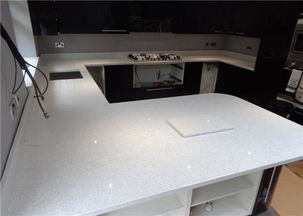
The logistics of transportation and installation are perhaps where the weight of artificial stone is most acutely felt. Slabs of engineered quartz and granite composites, especially the larger ones, are heavy and cumbersome. Transporting them requires specialized vehicles, often equipped with lifts or cranes. At the installation site, multiple people are usually needed to maneuver these heavy slabs into place. This is why professional fabricators and installers are essential. They have the experience, the equipment (like suction cups and specialized dollies), and the trained personnel to handle these materials safely and efficiently. Attempting to install heavy artificial stone without proper preparation and assistance can lead to injuries, damage to the material, and structural issues. The cost of installation often reflects this logistical challenge – the labor, specialized equipment, and time involved in moving and fitting these dense materials contribute to the overall expense.
Consider the installation of a large kitchen island. A typical island might feature a waterfall edge, where the countertop material extends vertically down the sides of the island. This design, while visually striking, significantly increases the amount of material and therefore the weight. The installer must carefully plan how to lift and secure these heavy sections, ensuring they are perfectly aligned and bonded. The adhesives used must also be strong enough to withstand the weight and the stresses placed upon them over time.
Furthermore, the weight of artificial stone can influence its long-term performance. For instance, if a countertop is installed on an inadequately supported base, it can sag over time, creating uneven surfaces and potentially stressing the material itself, leading to hairline cracks. This is particularly true for thinner slabs or materials with lower inherent rigidity. The density and rigidity provided by the composition of materials like engineered quartz contribute to their structural integrity, but proper support remains paramount regardless of the material’s inherent strength.
For homeowners embarking on renovations, understanding the weight of artificial stone is crucial for budgeting and planning. It’s not just about the material cost; it’s about the installation cost, which is often tied to the complexity and weight of the chosen product. If you’re considering a DIY installation, it’s wise to err on the side of caution. Opting for thinner slabs, or perhaps a lighter material like solid surface, might be a more manageable choice. If a heavier material is desired, it’s almost always advisable to hire professionals.
In conclusion, the question “人造石1平方米多重?” opens a Pandora’s Box of practical considerations. The weight of artificial stone, varying as it does by type and thickness, is a critical factor that impacts design, engineering, transportation, installation, and longevity. It is a tangible reminder that the beauty and functionality of these modern materials are underpinned by fundamental physics. By appreciating and accounting for this unseen weight, we ensure that our artificial stone surfaces are not only aesthetically pleasing but also structurally sound, safe, and built to last. It’s a testament to the fact that sometimes, the most important aspects of a material are not the ones that catch the eye, but the ones that bear the load.









