
When we think about the materials that form the backbone of our homes – the surfaces we chop on, the foundations that support us, the finishes that delight our eyes – we often gravitate towards the natural. Granite, marble, wood – these have been the go-to choices for centuries, imbued with a sense of timeless quality and inherent beauty. Yet, in the realm of modern interior design and construction, a different kind of material has quietly, yet powerfully, asserted its dominance: artificial stone. Often referred to by various trade names like engineered quartz, solid surface, or composite stone, this category of materials has transformed our understanding of what’s possible in terms of both aesthetics and, crucially, performance. Today, we’re going to pull back the curtain on one of its most compelling attributes: its strength.
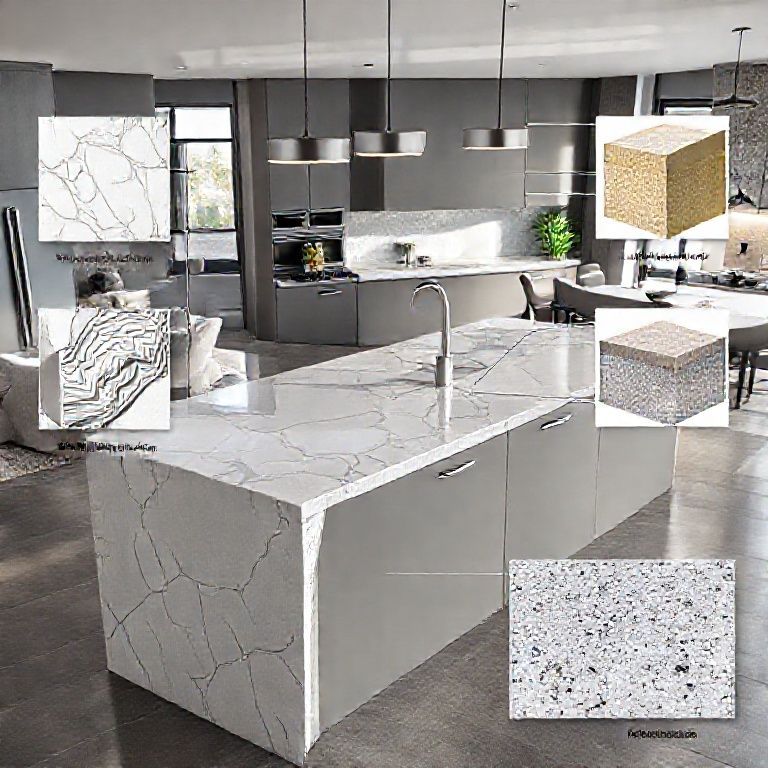
The question, “人造石强度多少” (roughly translating to “How much strength does artificial stone have?”), is more than just a technical inquiry; it’s a gateway to understanding the very essence of why this material has become so ubiquitous and beloved. It speaks to a desire for surfaces that can withstand the rigmarole of daily life, that can retain their pristine appearance without constant fuss, and that offer a tangible sense of quality and longevity. But what exactly is artificial stone, and what grants it this formidable strength?
At its core, artificial stone is a man-made composite material. While the precise formulations can vary significantly between manufacturers and material types, they generally involve combining natural mineral fillers with binders and pigments. For engineered quartz, the primary component is quartz – a mineral renowned for its hardness and resilience. This quartz, typically crushed into fine particles, is then mixed with a resin binder, often a polyester or epoxy resin, and a small percentage of pigments to achieve a vast spectrum of colors and patterns. This mixture is then subjected to intense vibration and heat under vacuum, a process that compacts the material and eliminates air voids, resulting in an exceptionally dense and homogenous slab.
Solid surface materials, on the other hand, often use a blend of acrylic or polyester resins with mineral fillers derived from bauxite ore, such as alumina trihydrate (ATH). These are also molded into sheets or shapes, offering a different set of properties, including seamless fabrication and repairability. Other composite stones might incorporate glass fragments, recycled materials, or specific mineral aggregates, each contributing to the final product’s characteristics.
The strength of artificial stone isn’t a singular, easily quantifiable metric like the tensile strength of steel or the compressive strength of concrete. Instead, it’s a multifaceted attribute encompassing several key properties. Perhaps the most significant is its hardness. Because of the high concentration of mineral fillers, particularly quartz in engineered quartz, these materials exhibit remarkable resistance to scratching and abrasion. Think about the daily onslaught a kitchen countertop endures: knives sliding, pots and pans being moved, abrasive cleaners being used. A hard surface is paramount to maintaining its aesthetic appeal over time.
Another crucial aspect is durability. This refers to the material’s ability to withstand the stresses and strains of everyday use without cracking, chipping, or degrading. The dense, non-porous nature of many artificial stones plays a vital role here. Unlike natural stones like marble, which can be porous and susceptible to staining and etching from acidic substances, engineered quartz and many solid surfaces are virtually impermeable. This lack of porosity means they are less likely to absorb liquids, preventing stains and inhibiting the growth of bacteria and mold, which contributes to their overall resilience and longevity.
Impact resistance is also a key consideration. While extremely hard materials can sometimes be brittle, the resin binders in artificial stone offer a degree of flexibility and toughness, helping to absorb shock and resist damage from dropped objects. This is not to say they are indestructible, but compared to more brittle materials, they hold up remarkably well under typical domestic conditions.
The manufacturing process itself is instrumental in achieving this strength. The controlled environment and precise ratios of ingredients allow for a level of consistency and uniformity that is difficult to replicate in natural stone. This consistency means that the material’s properties are predictable across the entire slab, eliminating the weak points or inconsistencies that can sometimes be found in quarried stone. The process of vibrocompression, for example, effectively fuses the components together, creating a solid, monolithic structure with minimal internal voids. These voids, if present, would be potential points of failure, susceptible to cracks or chipping.
Furthermore, the development of artificial stone has been driven by an engineering mindset. Manufacturers have actively sought to enhance specific properties to meet and exceed the demands of modern living. This has led to innovations in resin technology, filler particle size and distribution, and curing processes, all aimed at optimizing the material’s strength, durability, and aesthetic versatility. The result is a class of materials that doesn’t just mimic natural stone; in many performance aspects, it surpasses it, offering a compelling blend of beauty and brawn that continues to redefine our built environments. Understanding the “how” and “why” behind artificial stone’s strength opens up a world of possibilities for designers and homeowners alike, promising surfaces that are not only beautiful to behold but also remarkably capable of standing the test of time.
Continuing our exploration into the impressive strength of artificial stone, we’ve established that it’s not a single, monolithic property, but rather a composite of hardness, durability, and impact resistance, all meticulously engineered through advanced manufacturing processes. Now, let’s delve deeper into how these qualities translate into practical applications and what specific types of artificial stone excel in these areas, painting a clearer picture of “人造石强度多少” in real-world scenarios.
When we talk about the strength of artificial stone, we’re often referring to its performance in demanding environments, most notably the kitchen. Here, countertops bear the brunt of daily activities. Imagine the relentless cycle of chopping, slicing, and dicing. This is where the exceptional scratch resistance of engineered quartz truly shines. Its hardness, often measured on the Mohs scale, rivals that of granite and significantly outperforms marble and many hardwoods. While no surface is entirely impervious to a determined knife or a stray grit of sand, engineered quartz requires deliberate effort to inflict noticeable damage, a far cry from softer materials that can bear the marks of everyday use within months. This inherent hardness means that under normal kitchen conditions, your quartz countertop will retain its smooth, unblemished surface for years, if not decades, without the need for specialized cutting boards to prevent superficial damage.
Beyond mere abrasion, there’s the matter of stain resistance. This is where the non-porous nature of engineered quartz and many solid surface materials becomes a superhero trait. Spills are inevitable in any home, especially in a kitchen. Red wine, coffee, olive oil, tomato sauce – these common culprits can wreak havoc on porous materials, leaving behind unsightly stains that are difficult, if not impossible, to remove. Engineered quartz, with its resin-bound structure, has virtually zero porosity. Liquids simply bead up on the surface, allowing for easy cleanup with a damp cloth. This impermeability also means it’s highly resistant to etching from acidic substances like lemon juice or vinegar, which can dull the surface of natural stones like marble. This robust defense against staining and etching contributes significantly to its perceived strength and its ability to maintain a like-new appearance with minimal maintenance.
Let’s also consider heat resistance. While artificial stones are generally quite capable of withstanding moderate heat, it’s important to understand their limits. Engineered quartz, for instance, can generally tolerate heat up to around 300°F (150°C). This means that placing a hot pot or pan directly from the stove onto the surface can cause thermal shock, potentially leading to discoloration or even cracking. However, for everyday use – placing a recently used (but not searing hot) pan down or a warm serving dish – it is typically more than adequate. Manufacturers often advise using trivets and hot pads as a precautionary measure, a small habit that ensures the longevity of even the most resilient materials. Solid surface materials, often being polymer-based, can be more susceptible to heat damage and will generally require more diligent use of trivets. The key here is understanding that while “strong,” these materials still have specific material properties that must be respected for optimal performance.
The strength of artificial stone also manifests in its flexural strength and compressive strength. These are more technical terms referring to a material’s ability to resist bending and crushing forces, respectively. The combination of hard mineral fillers and flexible resin binders in engineered quartz results in excellent flexural strength, meaning it can span longer distances without needing extensive support underneath. This allows for sleeker designs with fewer visible seams or support structures. Its compressive strength is also very high, indicating its ability to withstand significant downward pressure without failing. This makes it ideal not only for countertops but also for flooring, wall cladding, and even structural elements in certain applications.
The versatility of artificial stone extends its strength into numerous applications beyond the kitchen. In bathrooms, its non-porous nature makes it ideal for vanity tops, shower surrounds, and bathtub decks, offering superior resistance to water, soap scum, and mildew compared to grout and tile. In commercial settings, the durability and ease of maintenance of engineered quartz and solid surfaces make them a popular choice for high-traffic areas like reception desks, bar tops, laboratory benches, and even hospital surfaces, where hygiene and resilience are paramount. The ability to create seamless, integrated sinks in solid surfaces also contributes to a more hygienic and visually cohesive design.
When contemplating “人造石强度多少,” it’s also worth noting the consistency and predictability that artificial stone offers. Unlike natural stone, where variations in color, veining, and mineral composition can lead to unexpected weaknesses or aesthetic discrepancies, artificial stone is manufactured under controlled conditions. This ensures that every slab meets strict quality standards, providing a reliable and uniform performance. This consistency simplifies the design and installation process, and gives homeowners the confidence that the material they choose will perform as expected, year after year.
In conclusion, the strength of artificial stone is a compelling narrative of material science meeting design innovation. It’s a testament to how human ingenuity can create materials that not only emulate the beauty of nature but often surpass it in practical performance. Whether it’s the near-indestructible surface of engineered quartz resisting scratches and stains, or the seamless, hygienic expanse of a solid surface vanity, artificial stone offers a robust and reliable foundation for modern living. Its strength is not just a technical specification; it’s the promise of enduring beauty and unwavering performance, making it an unsung hero in countless homes and spaces, quietly empowering our daily lives.









