
The allure of stone, in its myriad forms and textures, has captivated humanity for millennia. From the monumental pyramids of Egypt to the elegant facades of modern skyscrapers, stone speaks of permanence, strength, and an enduring beauty that transcends fleeting trends. When we encounter stone of significant thickness, say 15 centimeters, our minds instinctively grasp its substantial nature. It’s not just visually imposing; it carries a physical presence, a weight that hints at the geological processes that formed it and the engineering prowess required to utilize it. But have you ever stopped to truly consider what contributes to that heft? The question, “15公分厚石材一平方多重” (How much does one square meter of 15cm thick stone weigh?), is far more than a simple inquiry about mass. It’s an invitation to explore the intricate dance between material properties, density, and the very essence of what makes stone such a fundamental building block of our world.

At its core, the weight of any material, including stone, is determined by its volume and its density. The formula is elegantly straightforward: Weight = Volume × Density. For a piece of stone that is 15cm thick, the “thickness” is just one dimension of its volume. To calculate the volume of one square meter (which is 1m x 1m, or 10,000 square centimeters), we multiply the area by the thickness. So, for a 1m x 1m piece that is 15cm thick, the volume is 1 square meter × 0.15 meters, which equals 0.15 cubic meters. Alternatively, in centimeters: 10,000 cm² × 15 cm = 150,000 cubic centimeters.
The real magic, however, lies in the density. Density is a measure of how much mass is contained within a given volume. For stone, this is where the diversity of the material truly comes into play. Different types of stone, formed under vastly different geological conditions, possess inherently different densities. Think about the stark contrast between a light, porous travertine and a dense, crystalline granite. Their chemical compositions, the minerals they are made of, and the way these minerals are packed together all contribute to their unique densities.
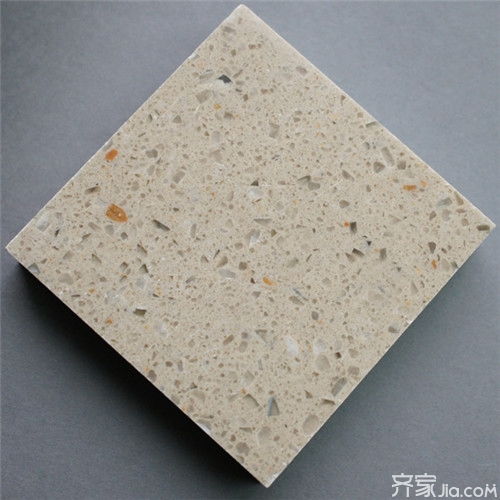
Let’s delve into some common examples to illustrate this point. Granite, a popular choice for countertops and architectural applications, is known for its robustness and relatively high density. A typical granite might have a density in the range of 2,600 to 2,800 kilograms per cubic meter (kg/m³). If we take an average of 2,700 kg/m³, then our 15cm thick slab of granite would weigh approximately 0.15 m³ × 2,700 kg/m³ = 405 kilograms. That’s a considerable weight, equivalent to a substantial portion of a small car!
Marble, another beloved natural stone, often exhibits a slightly lower density than granite, typically ranging from 2,500 to 2,700 kg/m³. Using an average of 2,600 kg/m³, a 15cm thick marble slab of one square meter would weigh around 0.15 m³ × 2,600 kg/m³ = 390 kilograms. While the difference might seem small, in large-scale architectural projects, these variations can translate into significant structural considerations and cost implications.
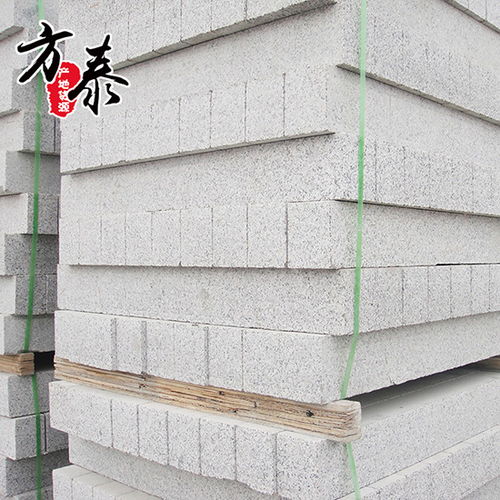
Limestone, often used for facades and interior design, generally has a lower density, often falling between 2,000 and 2,600 kg/m³. For a denser limestone, say 2,300 kg/m³, our 15cm slab would weigh approximately 0.15 m³ × 2,300 kg/m³ = 345 kilograms. This lower weight makes it a more manageable option for certain applications, especially where load-bearing capacity is a concern.
Travertine, with its distinctive natural holes and lighter appearance, typically has an even lower density, often in the range of 1,800 to 2,400 kg/m³. For a lighter travertine at 2,000 kg/m³, the weight would be around 0.15 m³ × 2,000 kg/m³ = 300 kilograms. This makes it significantly lighter than granite or denser marbles, offering a different set of advantages and challenges in installation and structural support.
Beyond the inherent density of the stone type, other factors can influence the actual weight of a 15cm slab. The presence of voids or pores within the stone, for instance, can slightly reduce its overall density and therefore its weight. This is particularly relevant for stones like travertine, where these natural features are characteristic. The finishing of the stone can also play a minor role. A highly polished surface might have a slightly different mass at the very surface compared to a honed or textured finish, though this difference is usually negligible in the grand scheme of calculating the weight of a thick slab.
The precision of the 15cm thickness itself is also worth mentioning. While specifications are typically adhered to, slight variations can occur during the cutting and processing of stone. These minor discrepancies, while usually insignificant for a single tile, can accumulate over a large area, subtly altering the total weight. Therefore, when undertaking significant projects, using average densities and precise measurements is crucial for accurate calculations.
Understanding these nuances is not merely an academic exercise. For architects, engineers, contractors, and even discerning homeowners, knowing the potential weight of stone is fundamental to the success of any project. It dictates everything from the type of foundation required, the structural support systems needed for walls and floors, to the logistics of transportation and installation. A 15cm thick slab of granite might require specialized lifting equipment and reinforced subflooring, whereas a similar-sized slab of travertine might be manageable with standard tools and less intensive structural considerations.
The question “15公分厚石材一平方多重” therefore opens a portal into a world where geology meets engineering, where the beauty of nature is carefully quantified for practical application. It’s a testament to our ability to harness the earth’s most resilient materials, transforming them into elements that shape our built environment. As we continue to explore the implications of this weight, we’ll see how this understanding is indispensable for creating structures that are not only aesthetically pleasing but also structurally sound and enduring.
The weight of a 15cm thick stone slab, as we’ve begun to explore, is a multifaceted characteristic influenced by its inherent density and its precise dimensions. This understanding is far from academic; it’s the bedrock upon which successful architectural and construction projects are built. When an architect specifies a 15cm thick slab of, for instance, a particular type of quartz or engineered stone, they are not just choosing an aesthetic; they are making a calculated decision about load, support, and logistics.
Let’s revisit our density figures and apply them to a practical scenario. Imagine a large commercial building where a feature wall is to be clad with 15cm thick granite. We calculated that a square meter of such granite can weigh upwards of 405 kilograms. If this wall spans 10 meters in width and 3 meters in height, that’s an area of 30 square meters. The total weight of the granite cladding alone would be 30 m² × 405 kg/m² = 12,150 kilograms. This is over 12 tonnes! This substantial load needs to be accounted for in the building’s structural design. The supporting wall structure must be engineered to bear this weight, and the fastening systems must be robust enough to secure these heavy panels.
Consider the implications for flooring. If a residential kitchen floor is to be tiled with 15cm thick marble, each square meter of that floor will be supporting around 390 kilograms of stone. In a standard kitchen that might be 15 square meters, that’s nearly 6 tonnes of stone weight distributed across the subfloor. This necessitates a subfloor system capable of handling such a load, potentially requiring additional joist reinforcement or specialized underlayment. Without this consideration, the floor could sag, crack, or even fail over time.
The transportation and installation phases are equally impacted. A single 15cm granite slab measuring, say, 60cm x 60cm (0.36 square meters) would weigh approximately 0.36 m² × 405 kg/m² = 145.8 kilograms. This is a manageable weight for a team of experienced installers using appropriate equipment like suction cups and dollies. However, if we’re talking about larger slabs, perhaps 300cm x 150cm (4.5 square meters), the weight jumps to an staggering 4.5 m² × 405 kg/m² = 1822.5 kilograms – nearly two tonnes for a single slab! Transporting and maneuvering such massive pieces requires specialized cranes, heavy-duty lifting gear, and a carefully planned logistical operation. This adds significant cost and complexity to the project.
The choice of stone, therefore, becomes a strategic decision influenced by more than just its visual appeal. An architect designing a high-rise building, where every kilogram of material adds to the overall structural load and thus the cost of the foundation and superstructure, might opt for a lighter stone like a denser limestone or even engineered materials if the aesthetic requirements can be met. Conversely, in a context where extreme durability and a specific visual gravitas are paramount, and where the structural capacity is already designed for heavy loads, a denser stone like granite might be the preferred choice.
Furthermore, the concept of “one square meter” for a 15cm thick slab also brings to the forefront the standardization and modularity of construction. In many cases, stone is cut into standardized dimensions for ease of use and cost-effectiveness. However, for bespoke architectural features, custom-cut slabs are common. In such instances, precise templating and cutting are essential. A slight deviation in the intended dimensions, compounded by the stone’s density, can lead to an unexpected difference in weight.
The role of moisture content should also be briefly mentioned, though it’s typically a minor factor for most dense stones. Porous stones, if saturated with water, can absorb a small percentage of their weight in liquid, increasing their overall mass. While not usually a primary concern for hard, dense stones like granite or marble used in structural applications, it can be a consideration for certain types of cladding or landscaping where prolonged exposure to moisture is expected.
In essence, the simple question “15公分厚石材一平方多重” is a gateway to understanding the practical engineering and design considerations that underpin the use of stone in construction. It highlights the critical interplay between material science and applied architecture. The weight of stone is not an abstract concept; it’s a tangible force that shapes how we design, build, and ultimately inhabit our spaces. Whether it’s the reassuring heft of a granite countertop, the imposing presence of a marble-clad lobby, or the earthy solidity of a limestone facade, the weight of stone is an integral part of its character and its utility. It’s a constant reminder of the earth’s raw power, meticulously shaped and integrated into the human-made world, demanding respect and informed decision-making at every step. This deep dive into the weight of stone underscores that beauty and strength are often intrinsically linked, and understanding their physical manifestations is key to unlocking their full potential in our built environments.









