
The sheer ubiquity of steel in our modern lives often makes us overlook the fundamental questions about its physical properties. We see it in the towering skyscrapers that define our cityscapes, the robust bridges that connect our communities, and the intricate machinery that powers our industries. Yet, how often do we stop to consider the sheer weight of these structures? Today, we’re going to embark on a journey to understand a specific, yet profoundly important, aspect of this ubiquitous material: the weight of a 1.5-centimeter thick steel plate per square meter. This isn’t just an academic exercise; it’s a practical consideration that underpins countless engineering marvels and industrial processes.

Imagine a construction site, a shipyard, or a manufacturing plant. The precise calculation of material weight is not just a matter of curiosity; it’s a critical factor in logistics, structural integrity, cost estimation, and safety. A contractor needs to know how much steel to order, how to transport it, and how it will contribute to the overall load of a structure. A factory manager needs to understand the payload capacity of machinery and the efficiency of material handling. In essence, understanding the weight of steel plates, down to specific dimensions like 1.5 cm thickness per square meter, is fundamental to the very fabric of our engineered world.
So, how do we arrive at this crucial figure? The answer lies in a fundamental principle of physics: density. Density is defined as mass per unit volume. For any given material, its density is a constant property, regardless of the shape or size of the piece. For steel, this density typically hovers around 7,850 kilograms per cubic meter (kg/m³). This number represents the mass of a cube of steel that measures one meter on each side. It’s a dense material, and its weight is a testament to its strength and reliability.

Now, let’s bring our specific scenario into focus: a steel plate that is 1.5 centimeters thick and we want to determine its weight for one square meter. The first step is to ensure our units are consistent. We have the thickness in centimeters and the density in cubic meters. It’s best practice in physics and engineering to work with consistent units, so let’s convert the thickness from centimeters to meters. Since there are 100 centimeters in a meter, 1.5 centimeters is equivalent to 1.5 / 100 = 0.015 meters.
With our thickness now in meters, we can calculate the volume of one square meter of this steel plate. A square meter, by definition, has an area of 1 m². If our plate has a thickness of 0.015 meters, then the volume of one square meter of this plate is simply the area multiplied by the thickness. So, Volume = Area × Thickness = 1 m² × 0.015 m = 0.015 cubic meters (m³).

Now that we have the volume of our specific piece of steel (one square meter of a 1.5 cm thick plate) and we know the density of steel, we can finally calculate its mass. The relationship between mass, density, and volume is given by the formula: Mass = Density × Volume.
Plugging in our values: Mass = 7,850 kg/m³ × 0.015 m³. Notice how the “m³” units cancel out, leaving us with kilograms, which is a unit of mass. Performing the multiplication, we get: Mass = 117.75 kilograms.
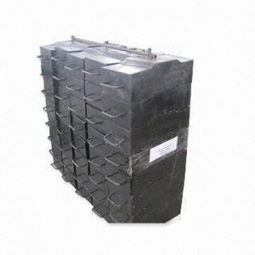
Therefore, one square meter of steel plate that is 1.5 centimeters thick weighs approximately 117.75 kilograms. This is a significant weight, and it underscores why careful planning and robust handling equipment are essential when working with such materials. It’s not just a number; it’s a tangible measure of the material’s substance and its contribution to any project. This calculation, simple as it may seem, is the bedrock upon which much of our engineered world is built. From the smallest bracket to the largest structural beam, understanding the weight is the first step in harnessing the immense power and utility of steel. This foundational knowledge empowers engineers, designers, and manufacturers to make informed decisions, ensuring that our built environment is not only functional and aesthetically pleasing but also safe and structurally sound. The next part will delve into the practical implications and applications of this calculated weight.
Having established the fundamental calculation – that a 1.5 cm thick steel plate weighs approximately 117.75 kilograms per square meter – we can now pivot to the fascinating realm of its practical implications and widespread applications. This seemingly straightforward numerical value is, in fact, a cornerstone in a multitude of industries, influencing everything from the design of skyscrapers to the efficiency of shipping logistics. Understanding this weight isn’t just an academic curiosity; it’s a critical piece of information that directly impacts engineering decisions, economic considerations, and operational strategies.

Consider the construction industry. When architects and structural engineers design buildings, the weight of every component is meticulously accounted for. A 1.5 cm thick steel plate might be used as a reinforcing element, a support beam, or even a façade panel. Knowing its weight per square meter allows engineers to accurately calculate the dead load – the weight of the building’s permanent components – on the foundation and supporting structures. This is crucial for ensuring stability and preventing structural failure. For instance, if a design calls for a large area of such steel plating, the cumulative weight could be substantial, necessitating stronger foundations or a different structural approach altogether. The precise calculation prevents underestimation, which could lead to catastrophic consequences, and also avoids overestimation, which could result in unnecessary material costs and a heavier-than-required structure.
Beyond the static load, this weight consideration also plays a vital role in dynamic loads, such as those experienced by bridges subjected to traffic and wind. Engineers must factor in the weight of the steel components when analyzing how the structure will respond to various forces. The density and mass of the steel directly influence its inertia and its susceptibility to vibration, both of which are critical design parameters.
In the realm of manufacturing and fabrication, the weight of steel plates directly impacts material handling and processing. Heavy steel plates require specialized equipment like cranes, forklifts, and automated lifting systems. The 117.75 kg per square meter figure helps in determining the capacity of these machines, the layout of factory floors for efficient movement, and the safety protocols required for handling. For example, a workshop receiving a shipment of these plates will need to ensure their forklift can safely lift a bundle of plates, considering the total weight of the bundle based on its dimensions and the weight per square meter. This also extends to cutting and shaping processes, where the mass of the material can affect the tooling and energy requirements.
The transportation sector also relies heavily on these weight calculations. When shipping steel plates, whether domestically or internationally, the weight is a primary factor in determining shipping costs, cargo capacity of trucks, trains, and ships, and the associated permits required. Overweight shipments can incur hefty fines and delays. Accurate weight estimation ensures that logistics providers can optimize loads, utilize available space efficiently, and comply with all transportation regulations. A shipping container, for example, has a maximum payload limit. Knowing the weight per square meter of steel helps in calculating how much steel can be safely and economically transported in a single shipment.
Furthermore, the precise weight of steel is often a critical specification in contracts and material sourcing. When purchasing steel, buyers and sellers agree on specifications, and the weight per unit area is a standard metric used for quality control and invoicing. Variations from the specified weight could indicate inconsistencies in the manufacturing process or even a different grade of steel being supplied. This accuracy is essential for fair trade and for ensuring that the material meets the precise requirements of the intended application.
The applications of 1.5 cm thick steel plates are diverse. They are commonly found in shipbuilding, where they form part of the hull and internal structures, requiring robust strength and significant weight to withstand the forces of the sea. In the automotive industry, thicker steel plates are used for chassis components and safety structures, providing crucial protection in the event of a collision. For heavy machinery, such as excavators and cranes, thick steel plates are essential for constructing the load-bearing frames and arms that can withstand immense stress. Even in the renewable energy sector, large steel plates are used in the construction of wind turbine towers and foundations, demanding materials that can endure harsh environmental conditions.
In conclusion, the seemingly simple question, “How much does a 1.5 cm thick steel plate weigh per square meter?” unlocks a world of practical engineering, logistics, and economic considerations. The calculated figure of approximately 117.75 kg/m² is far more than just a number; it’s a fundamental property that enables the construction of our cities, the transportation of goods, and the manufacturing of countless products that define modern life. It’s a testament to the indispensable role of steel and the precise calculations that allow us to harness its power safely and effectively, ensuring the integrity and progress of our engineered world.









