
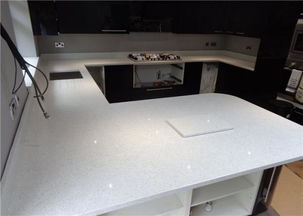
The allure of artificial stone, also known as engineered stone or quartz composite, lies in its remarkable versatility, durability, and aesthetic appeal. It mimics the beauty of natural stone like granite and marble while offering superior resistance to stains, scratches, and heat. As interior designers, architects, and homeowners increasingly opt for this material in everything from luxurious kitchen countertops to sleek bathroom vanities and elegant flooring, a fundamental question often arises: “How much does 1.5cm thick artificial stone weigh per square meter?” This might seem like a straightforward calculation, yet it opens a fascinating door into the world of material science, manufacturing processes, and practical considerations that influence the final weight of this engineered marvel.

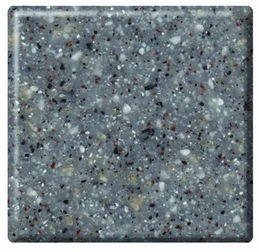
At its core, artificial stone is a composite material. The primary component is crushed quartz, which typically accounts for 90-95% of the mixture. These quartz particles are bound together with a polymer resin, usually polyester or acrylic-based, and an array of pigments to achieve the desired color and pattern. The addition of these binders and pigments, while essential for the material’s integrity and appearance, also contributes to its overall density and, consequently, its weight. The exact ratio of quartz to resin, the size and shape of the quartz aggregates, and the type of resin used all play significant roles in determining the final density.
The manufacturing process itself is another crucial factor. Engineered stone is typically produced through a process called vibrocompression. A mixture of quartz aggregates, resin, and pigments is placed into molds. This mixture is then subjected to intense vibration and vacuum, which compacts the material, eliminates air pockets, and ensures a homogenous distribution of components. Following this, the slab undergoes a curing process, often in an oven, which hardens the resin and solidifies the structure. The degree of compaction achieved during vibrocompression directly impacts the density. A more intensely compacted slab will have fewer voids and therefore a higher density, leading to a greater weight per unit volume.

To understand the weight of 1.5cm thick artificial stone per square meter, we first need to establish its typical density range. While manufacturers may have proprietary formulations, a widely accepted average density for high-quality engineered quartz is around 2,400 to 2,600 kilograms per cubic meter (kg/m³). This range accounts for variations in the specific quartz used, the resin content, and the manufacturing process. For practical purposes, let’s consider an average density of 2,500 kg/m³.
Now, let’s perform the calculation for a 1.5cm thick slab. We need to convert centimeters to meters for consistency: 1.5 cm = 0.015 meters.
The volume of 1 square meter of this material would be: Volume = Area × Thickness Volume = 1 m² × 0.015 m Volume = 0.015 m³
With an average density of 2,500 kg/m³, the weight per square meter can be calculated as: Weight = Density × Volume Weight = 2,500 kg/m³ × 0.015 m³ Weight = 37.5 kg
Therefore, a 1.5cm thick slab of artificial stone with an average density of 2,500 kg/m³ would weigh approximately 37.5 kilograms per square meter.
However, it’s vital to recognize that this is an average. Different brands and types of artificial stone will exhibit slight variations. For instance, some manufacturers might use a slightly higher resin content to achieve greater flexibility or unique visual effects, which could marginally decrease the density. Conversely, others might employ more advanced compaction techniques, leading to a denser, heavier product.

The color of the artificial stone can also be a subtle indicator. Darker pigments, which are often more mineral-based, might add a minuscule amount of weight. However, this effect is generally negligible compared to the impact of the quartz-to-resin ratio and compaction.
The thickness specification itself can also have some play. While the nominal thickness is 1.5cm, actual manufacturing tolerances mean slabs can vary by a millimeter or so in either direction. This slight variation, while often unnoticeable visually, will contribute to a difference in weight.
Furthermore, the type of artificial stone can matter. While “engineered quartz” is the most common term, there are other composite materials that fall under the broader umbrella of “artificial stone.” For example, some surfaces might incorporate recycled glass or other aggregates, which would alter the density. However, for the standard quartz composite widely used for countertops and vanities, the 37.5 kg/m³ figure serves as a robust benchmark.
Understanding this weight is not merely an academic exercise. It has significant practical implications for anyone involved in the selection, transportation, fabrication, and installation of artificial stone. For fabricators, knowing the weight of the slabs is crucial for selecting appropriate handling equipment, such as suction cups and lifting devices, to prevent injury and material damage. Transport companies need this information to calculate load capacities and ensure safe transit. Architects and designers need to consider the load-bearing capacity of supporting structures, especially in large installations or when specifying materials for vertical applications. For homeowners, while they may not be directly handling the material, understanding its density can help them appreciate the robust nature of their chosen surface and its implications for installation and potential repair. In essence, the weight of artificial stone is a tangible manifestation of its material composition and manufacturing precision, a silent testament to its engineered resilience.
Continuing our exploration into the weight of 1.5cm thick artificial stone, we’ve established a foundational understanding of its density and calculated an average weight of approximately 37.5 kilograms per square meter. This figure, derived from the typical density of engineered quartz (2,400-2,600 kg/m³), serves as an excellent reference point, but the reality in practical applications is that nuances can lead to variations. These variations are not mere curiosities; they have tangible consequences for various stages of a project, from logistics to installation.
One of the most significant factors influencing the weight beyond the average is the specific formulation employed by different manufacturers. While the general composition of quartz composite is consistent – primarily quartz particles bound by resin – the precise proportions can differ. Some brands might aim for maximum scratch and heat resistance, which often correlates with a higher percentage of quartz and a denser, therefore heavier, final product. Others may prioritize a more flexible or workable material, which could involve a slightly higher resin content, leading to a marginally lighter slab. This is akin to different types of concrete; while they all contain cement, aggregate, and water, variations in their ratios create distinct properties and densities.
The size and grading of the quartz aggregates also play a role. Some manufacturers use a blend of fine, medium, and coarse quartz particles. The way these particles pack together can affect the overall density. A more efficient packing, minimizing interstitial spaces, will result in a denser material. Conversely, if the aggregate blend leads to more air pockets before compaction, the final density might be lower. While modern manufacturing processes are highly sophisticated in achieving uniform compaction, subtle differences in aggregate distribution can contribute to weight variations.
The resin system itself can also contribute to slight density differences. Different types of polymers used as binders have their own inherent densities. While the quartz component dominates the weight, the resin, being less dense than quartz, can still influence the overall material density. The amount of resin used is also a critical factor, as mentioned earlier. A higher resin-to-quartz ratio will generally lead to a lighter material, but it can also impact other properties like thermal expansion and UV resistance.
Beyond the intrinsic material properties, the manufacturing process itself is a significant differentiator. The efficiency of the vibrocompression process, the duration and temperature of the curing cycle, and even the mold design can all influence the final density and, consequently, the weight. Manufacturers continually refine these processes to optimize material performance, consistency, and cost. Therefore, a slab from one high-end manufacturer might be demonstrably heavier than a slab of the same thickness from another, even if both are marketed as premium engineered quartz.
The implications of these weight variations are far-reaching. For transportation, a few extra kilograms per square meter can add up significantly when moving entire slabs or multiple sheets. This affects the load-bearing requirements of delivery vehicles, the type of forklifts or pallet jacks needed at the delivery site, and the overall logistics planning. A fabricator expecting a certain weight based on industry averages might be caught off guard if their delivered slabs are noticeably heavier, potentially requiring adjustments to their handling protocols and equipment.
In the fabrication workshop, accurate weight information is paramount for safe handling. Lifting heavy slabs without the proper equipment or technique can lead to serious injuries and costly damage to both the material and the surrounding environment. Whether using suction lifters, overhead cranes, or specialized dollies, understanding the precise weight per slab allows for the selection of appropriately rated equipment. This is particularly critical for larger slabs, where the total weight can easily exceed several hundred kilograms.
For installers, the weight of 1.5cm artificial stone, while manageable for a skilled team, is still a considerable factor. When working on elevated surfaces, in tight spaces, or on complex designs, the maneuverability of the stone is directly influenced by its weight. A heavier slab requires more effort to position accurately, increasing the risk of accidents or necessitating additional personnel.
Furthermore, the weight of artificial stone is a critical consideration in architectural and structural design. When specifying materials for wall cladding, particularly on upper floors or in buildings with specific seismic considerations, the cumulative weight of the stone becomes a factor in the structural engineer’s calculations. Similarly, for flooring applications, especially in multi-story buildings, the dead load contributed by the flooring material needs to be accounted for in the overall structural design. While 1.5cm thickness is relatively thin, large expanses of flooring can contribute a substantial amount of weight.
It’s also worth noting that “artificial stone” is a broad term. While our discussion has primarily focused on engineered quartz, other composite materials like solid surfaces (which often have a higher resin content and are therefore lighter) or sintered stone (which is extremely dense and very heavy) also exist. However, when the term is used in the context of durable, countertop-grade materials, engineered quartz is usually implied. If a different type of artificial stone is specified, its density and weight characteristics will differ significantly. For instance, sintered stone, while often thinner, can be considerably heavier due to its ultra-high density.
In conclusion, while a figure of approximately 37.5 kg per square meter for 1.5cm thick artificial stone provides a valuable benchmark, it is essential to consult the specific product data sheets provided by the manufacturer for precise weight information. These sheets will detail the material’s density, allowing for the most accurate calculations. This attention to detail is not just about numbers; it’s about ensuring safety, efficiency, and successful project execution. The seemingly simple question of “how much does it weigh?” unlocks a deeper understanding of the sophisticated engineering and material science that goes into creating the beautiful and durable surfaces we increasingly rely on in our homes and workspaces. It’s a reminder that even in the realm of aesthetics, the fundamental laws of physics and material properties play a significant and weighty role.









