
The hum of innovation, the whisper of possibility – these are the echoes that resonate within the world of modern interior design. Among the pantheon of materials that grace our homes and businesses, one stands out for its unique blend of aesthetics, functionality, and sheer adaptability: Corian. But what exactly is this enigmatic material? The question, “可丽耐人造石是什么材质做的呢视频” (What is Corian solid surface made of?), while posed in Chinese, unlocks a universe of intrigue for anyone seeking to understand the very essence of this design darling. At its heart, Corian is a testament to human ingenuity, a sophisticated composite born from the meticulous fusion of natural minerals and synthetic polymers.

To truly appreciate Corian, we must first dissect its fundamental components. The primary ingredients are two: acrylic polymers and alumina trihydrate (ATH). Think of the acrylic polymer as the binder, the master architect that holds everything together. This is typically a polymethyl methacrylate (PMMA), a type of plastic renowned for its clarity, durability, and resistance to UV light – qualities that contribute to Corian’s enduring beauty and resilience. It’s the same kind of acrylic that’s used in everything from airplane windows to high-end aquariums, a testament to its inherent strength and optical properties.
The second crucial ingredient is alumina trihydrate, often abbreviated as ATH. This is where the “mineral” aspect of Corian comes into play. ATH is derived from bauxite ore, a naturally occurring mineral. In its processed form, it’s a fine white powder, and it serves a multitude of purposes within the Corian matrix. Firstly, it’s a fire retardant, an important safety feature in any building material. Secondly, and perhaps more importantly for the aesthetic, ATH provides the bulk and the matte finish that is characteristic of Corian. It’s this component that gives the material its substantial feel and its ability to be pigmented into an astonishing array of colors and patterns.
The magic, however, isn’t just in the ingredients themselves, but in how they are combined. The manufacturing process is a carefully controlled ballet of chemistry and engineering. The acrylic resins and ATH are mixed together in precise ratios, along with pigments and other additives that impart specific properties. This slurry, a viscous liquid, is then poured into molds. The molds can be flat for sheets or shaped to create specific forms, like sinks or complex architectural elements.
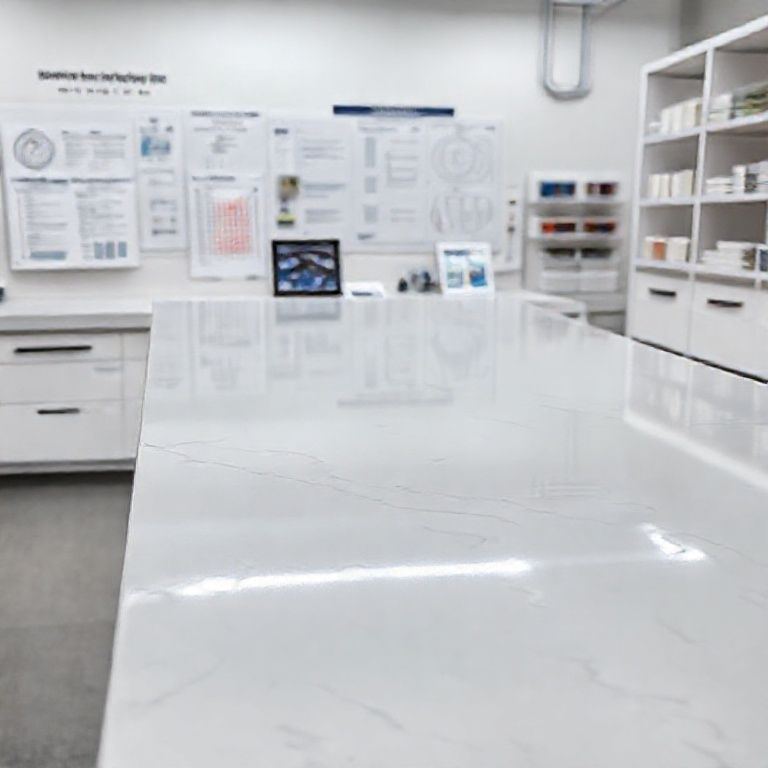
Once poured, the material undergoes a curing process, where it hardens and solidifies. This is often achieved through heat and sometimes the addition of initiators that catalyze the polymerization of the acrylic. The result is a solid, homogeneous sheet or shape. The beauty of this process is that the color and pattern are consistent throughout the entire material, not just a surface layer. This is a critical distinction from many other surface materials, such as laminates, where the decorative element is only on top.
The term “solid surface” itself is key to understanding Corian’s unique advantages. Unlike natural stone, which has inherent pores and fissures, or quartz, which is engineered with resin binders but still retains a crystalline structure, Corian is a truly monolithic material. This means it’s non-porous all the way through. This inherent characteristic is a game-changer for hygiene. Bacteria, mold, and mildew have no place to hide, making Corian an ideal choice for environments where cleanliness is paramount, such as kitchens, bathrooms, healthcare facilities, and food service areas.
The manufacturing process also allows for an unparalleled degree of design freedom. The liquid nature of the composite before curing means it can be cast into virtually any shape imaginable. This eliminates the need for traditional seams that can trap dirt and moisture. In fact, Corian is renowned for its ability to be fabricated with “inconspicuous” seams. Using a specialized adhesive that chemically bonds the material, two pieces of Corian can be joined together so seamlessly that the joint is virtually invisible to the naked eye. This opens up a world of possibilities for creating expansive, flowing surfaces – think of a kitchen island that appears to be carved from a single block, or a reception desk that curves and undulates like a sculpture.
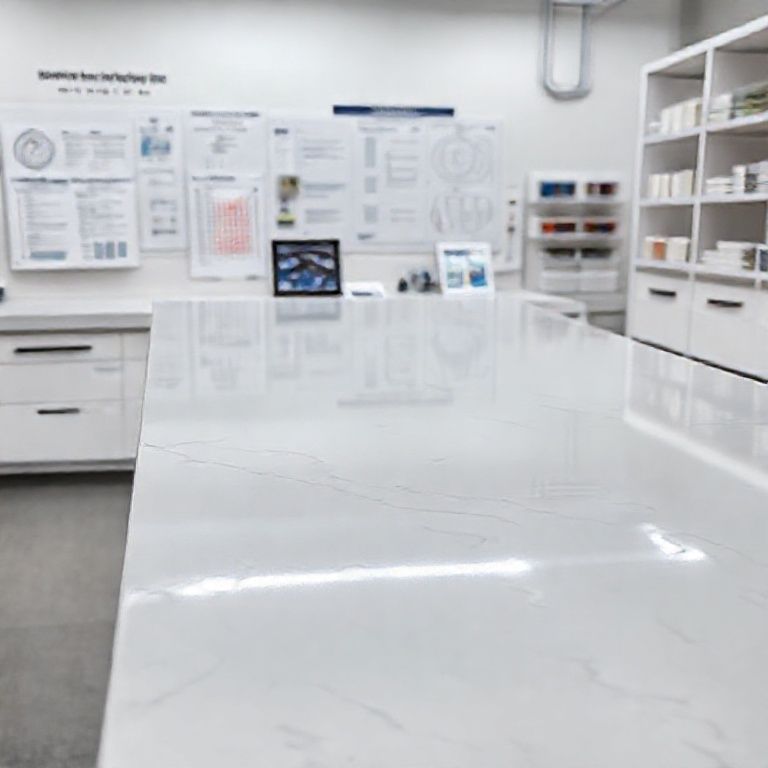
Furthermore, the thermal-formability of Corian is another remarkable property. When heated to a specific temperature, Corian becomes pliable and can be bent and molded into curves and complex shapes. This allows designers to move beyond flat planes and introduce organic, ergonomic, and visually dynamic forms into their creations. This ability to thermoform is what allows for integrated sinks and bowls that flow seamlessly from the countertop, eliminating those difficult-to-clean crevices where food particles and grime tend to accumulate. The “可丽耐人造石是什么材质做的呢视频” question, when explored through its materials and manufacturing, reveals a substance that is as much a product of advanced chemistry as it is a medium for artistic expression. It’s this deep understanding of its composition that truly unlocks the potential of Corian in transforming spaces.
The visual appeal of Corian is also a significant draw. The pigments are mixed directly into the acrylic and ATH matrix, allowing for an almost limitless spectrum of colors. From pristine whites and subtle neutrals to vibrant hues and intricate patterns that mimic the veining of natural stone or the subtle speckling of granite, there’s a Corian color to suit every aesthetic. The finishes can range from a matte, natural look to a high-gloss polish, further enhancing its versatility. This ability to customize color and pattern means that designers can achieve a cohesive look throughout a space, or create striking focal points with bold, contrasting elements. It’s a material that doesn’t just serve a purpose; it contributes significantly to the overall design narrative, elevating interiors from functional spaces to statements of personal style and sophisticated taste.
Having delved into the fundamental composition of Corian – its acrylic polymer binder and alumina trihydrate filler – and the ingenious manufacturing processes that bring it to life, we now turn our attention to the practical implications and the boundless creative potential that this remarkable material offers. The question “可丽耐人造石是什么材质做的呢视频” is not just about its constituent parts; it’s about the tangible benefits and the design-driven applications that stem from its unique makeup.
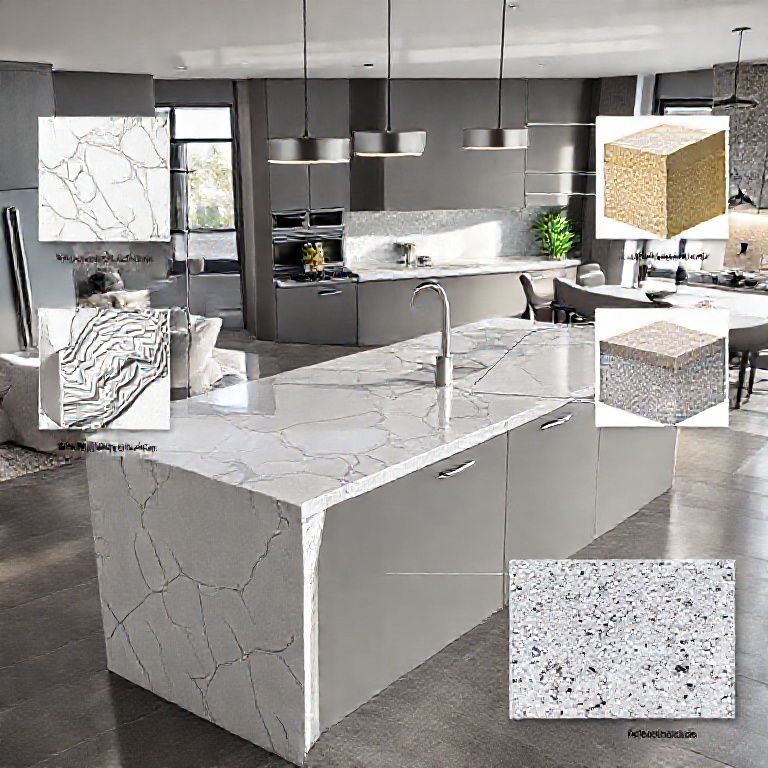
One of the most celebrated attributes of Corian, directly linked to its non-porous nature, is its exceptional hygiene. In environments where sanitation is paramount, such as hospitals, laboratories, and commercial kitchens, the absence of pores means that bacteria, viruses, and mold simply cannot penetrate the surface. This makes Corian incredibly easy to clean and maintain. A simple wipe-down with soap and water is usually sufficient to keep it pristine. This is a significant advantage over materials like natural stone or wood, which often require specialized sealants and rigorous cleaning protocols to prevent staining and bacterial growth. For homeowners, this translates to peace of mind, especially in areas prone to spills and splashes. The worry of permanent stains from coffee, wine, or grease is significantly reduced.
Beyond hygiene, the durability and repairability of Corian are key to its long-term value. While it is a solid, homogenous material, it is not indestructible. Like any surface, it can be scratched or chipped with excessive force or sharp objects. However, what sets Corian apart is its remarkable ability to be repaired. Minor scratches and scuffs can often be buffed out by a professional, or even a skilled DIYer, using fine-grit sandpaper and polishing compounds. For deeper damage, such as chips or cuts, the affected area can be expertly repaired by filling the void with a piece of matching Corian or a specially formulated adhesive, which is then sanded and polished to become virtually indistinguishable from the surrounding surface. This repairability means that a Corian countertop or vanity can last for decades, maintaining its beauty and functionality without needing to be replaced. This stands in stark contrast to materials like laminate, where a scratch or chip often means the entire piece must be discarded.
The seamless integration possible with Corian is a design marvel. As mentioned, the ability to join pieces with inconspicuous seams means that designers can create continuous surfaces of virtually any size or shape. This is particularly transformative in kitchen and bathroom design. Imagine a large kitchen island with an integrated sink, where the transition between the countertop and the sink basin is so smooth that you can barely feel it. This eliminates those unsightly and difficult-to-clean gaps that often plague traditional sink installations. The same applies to bathroom vanities, where integrated sinks can create a clean, minimalist aesthetic and simplify cleaning routines. This seamlessness also extends to wall cladding and shower surrounds, allowing for a modern, spa-like feel with fewer grout lines to maintain.
The aesthetic versatility of Corian is another compelling reason for its widespread adoption. The extensive palette of colors, patterns, and textures available means that it can be tailored to almost any design scheme. Whether you’re aiming for a minimalist, modern look with a crisp white surface, a warm, inviting ambiance with a wood-grain effect, or a dramatic statement with a bold, colored pattern, Corian can deliver. The material can also be backlit, allowing designers to create ethereal, luminous effects, particularly in feature walls or reception desks, adding a layer of sophisticated ambiance to a space. The ability to achieve such a wide range of looks from a single material family provides designers with immense creative freedom and consistency in their projects.
Furthermore, the environmental considerations of Corian are increasingly relevant in today’s conscious design landscape. Corian is manufactured using a significant proportion of recycled content, and the manufacturing process is designed to minimize waste. The durability and repairability of the material also contribute to its sustainability by extending its lifespan and reducing the need for premature replacement, which in turn lessens the environmental impact associated with manufacturing and disposal. DuPont, the original manufacturer, has also worked to ensure that Corian has low VOC (Volatile Organic Compound) emissions, contributing to healthier indoor air quality.
The “可丽耐人造石是什么材质做的呢视频” inquiry, when explored through its practical applications and design implications, reveals a material that is far more than just an inert surface. It’s a dynamic element that empowers designers and homeowners alike to create spaces that are not only beautiful but also highly functional, hygienic, and durable. Its ability to be thermoformed allows for organic, flowing shapes that challenge the rigidity of traditional materials. Integrated sinks and seamless backsplashes simplify cleaning and enhance aesthetics. The repairability ensures longevity, making it a wise long-term investment.
In essence, Corian represents a sophisticated fusion of material science and aesthetic ambition. It’s a testament to how understanding the fundamental components of a material – its acrylic polymers for strength and clarity, its alumina trihydrate for bulk and fire resistance – can lead to products that redefine the possibilities within architecture and interior design. From the smallest residential bathroom vanity to the grandest commercial installations, Corian continues to prove itself as a material that is as resilient as it is visually captivating, a true cornerstone of contemporary living. Its journey from raw materials to finished form is a story of innovation, precision, and an unwavering commitment to pushing the boundaries of what a surface material can be.









