
一条人造石板材生产线需要多少钱,人造石材整套生产设备
The global construction and interior design landscape is undergoing a massive tectonic shift. If you look at the countertops in high-end New York lofts or the flooring of Dubai’s luxury malls, you aren’t just looking at nature’s bounty; you’re looking at the peak of human engineering. Artificial stone—specifically quartz, solid surfaces, and the rising star, sintered stone—has moved from being a “cheap alternative” to the preferred choice for architects and homeowners alike. Naturally, the question on every savvy investor’s mind is: “How much does it actually cost to get a piece of this action?”
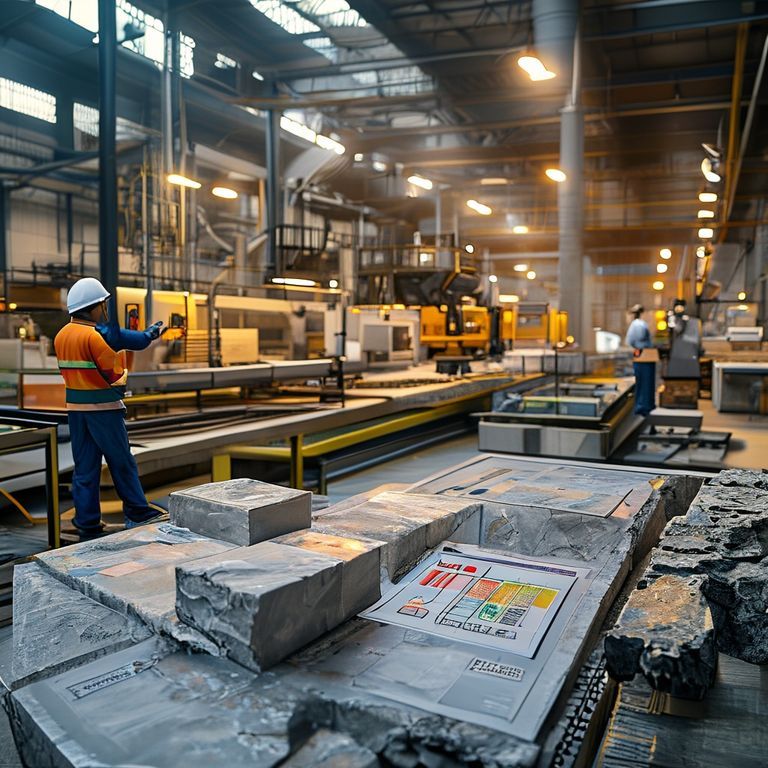
Calculating the price of an artificial stone production line isn’t as simple as checking a sticker price on a car. It is a multi-layered financial puzzle that depends on your ambition, your target market, and your technological appetite. Whether you are looking at a modest entry-level setup or a fully automated, high-output industrial behemoth, the financial spectrum is broad. Generally, a professional production line can range anywhere from $250,000 for a basic, semi-automated setup to well over $5 million for a state-of-the-art, high-capacity facility.
To understand where your money goes, we have to look at the anatomy of the line itself. An artificial stone production line is a symphony of heavy machinery, precision chemistry, and thermal engineering. The process starts at the raw material preparation stage. You need silos for quartz sand or stone chips, resin tanks, and weighing systems that can measure ingredients down to the gram. Accuracy here is everything. If your mix is off by 1%, your entire batch of slabs could end up as brittle waste or inconsistently colored. A high-quality automated dosing and mixing system alone can set you back $50,000 to $150,000, but it saves you millions in avoided waste over its lifetime.
Then comes the heart of the operation: the vacuum vibration press. This is where the “magic” happens. The mixture of stone aggregate and resin is subjected to intense pressure and vibration under a vacuum to remove all air pockets. This ensures the slab is non-porous and incredibly durable. The press is usually the most expensive single component. A top-tier European or high-end Chinese press can cost between $150,000 and $800,000. Why such a gap? It comes down to “cycle time”—how many slabs you can press per hour—and the dimensions of the slabs. In today’s market, “Jumbo” slabs are the gold standard, and a press capable of handling 3200mm x 1600mm dimensions commands a premium.
After pressing, the slabs move to the curing kiln. Artificial stone doesn’t just dry; it undergoes a chemical reaction facilitated by heat. A continuous curing oven ensures that every slab receives the same thermal treatment, preventing warping or internal stresses. Depending on the length and the fuel type (gas or electric), you’re looking at an investment of $80,000 to $200,000.
But the line doesn’t end when the slab is hard. In fact, for the high-end market, the finish is what sells the product. The calibration and polishing line is a massive stretch of machinery that grinds the slab to a precise thickness and then buffs it to a mirror shine or a silky matte finish. A 12-head or 20-head polishing machine is a significant investment, often costing $100,000 to $300,000. If you want to compete with the likes of Caesarstone or Silestone, you cannot afford to skimp on the polishing stage.
So, when you add up the “Big Four”—Mixing, Pressing, Curing, and Polishing—along with the conveyor systems and the control software, a “standard” professional line usually settles in the $600,000 to $1.2 million range for the hardware alone. However, this is just the tip of the iceberg. You also need to consider the “invisible” costs of entry. Shipping heavy industrial machinery across oceans is a logistical feat that can add $20,000 to $50,000 in freight and insurance. Then there is the installation. You will need a team of specialized engineers from the manufacturer to spend three to six weeks on-site, and you’ll likely foot the bill for their travel, lodging, and daily rates.
Furthermore, the type of stone you choose to produce changes the math. If you are aiming for “Sintered Stone” (often called porcelain slabs), the price tag jumps significantly. Sintered stone requires a completely different pressing technology (often 30,000 tons of pressure) and kilns that reach much higher temperatures than quartz curing ovens. A sintered stone line is a different beast entirely, often starting at $3 million and climbing rapidly.
For many entrepreneurs, the most attractive path is the Quartz Stone line. It offers a perfect balance of manageable entry cost and high market demand. But even within quartz, you have to decide: are you making basic monochromatic slabs, or are you going for the “Calacatta” look with intricate veins? Producing veined stone requires additional “veining machines” or manual labor stations, which adds to the footprint and the payroll.
In this first half of our exploration, we’ve established that the “machine price” is just the starting point. The real question isn’t just “how much does the line cost,” but “how much does it cost to get the line running profitably?” In the next section, we’ll dive into the operational expenses, the hidden environmental costs, and the strategic decisions that determine whether your production line becomes a gold mine or a money pit.
Once the machinery is bolted to the factory floor and the engineers have headed home, the reality of operational costs sets in. To run an artificial stone production line successfully, your budget needs to account for more than just the “iron.” You are now entering the world of raw material logistics, energy consumption, and environmental compliance—each of which can make or break your bottom line.
Raw materials are your largest ongoing expense. To make quartz slabs, you need high-purity quartz sand, polyester resin, and pigments. The price of resin, in particular, is tied to global oil prices and can be volatile. If you are running a high-capacity line producing 500 slabs a day, even a small fluctuation in resin price can swing your monthly costs by tens of thousands of dollars. You’ll need a working capital buffer of at least $200,000 to $500,000 just to keep your inventory of raw materials stable during the first year of operation.
Then there is the matter of “The Factory.” You can’t put a stone production line in a standard warehouse. These lines are long—often 100 to 150 meters from start to finish. You need a facility with reinforced flooring to handle the weight of the presses and the vibration they generate. You also need a sophisticated water recycling system. Polishing stone requires a massive amount of water to cool the diamond heads and wash away the slurry. In most jurisdictions, you cannot simply dump this water. A closed-loop filtration and recycling system is a non-negotiable part of the setup, costing between $40,000 and $100,000. This isn’t just about being “green”; it’s about avoiding massive fines and ensuring your machines don’t get clogged with stone dust.
Energy is another hungry beast. The curing kilns and the heavy motors of the polishing line consume electricity and gas at an industrial rate. Depending on your local utility costs, you might spend $10,000 to $30,000 a month on power alone. Smart investors are now looking at “intelligent” power management systems that optimize the heating cycles of the kilns to shave 15% off the energy bill. In the world of high-volume manufacturing, those percentages are where your profit lives.
Labor costs are often underestimated. While modern lines are highly automated, you still need a crew. You need chemists to manage the “recipe,” machine operators to monitor the press, and quality control inspectors who have a hawk-like eye for tiny bubbles or color inconsistencies. A typical shift might require 10 to 15 people. If you’re running 24/7 (which is the most efficient way to run a kiln), you’re looking at three shifts. Do the math based on your local labor rates, and don’t forget the cost of specialized training.
One of the most “hidden” costs of an artificial stone production line is the mold and design R









