
亚克力与人造石优缺点一样吗图片大全视频,亚克力和人造大理石哪个好
When you step into a high-end kitchen or a futuristic hotel lobby, your eyes are immediately drawn to the expansive, sweeping surfaces that define the space. There is a tactile magic to a perfectly executed countertop or a monolithic reception desk. However, beneath that polished exterior lies a complex choice that every designer and homeowner must eventually face: Acrylic or Artificial Stone? While they might look similar to the untrained eye in a catalog or a brief video clip, these two materials are fundamentally different creatures. If you’ve been scouring the internet for a “pictures and videos” gallery to decide, you’ve likely realized that a static image can’t tell you how a material breathes, ages, or responds to a hot pan.
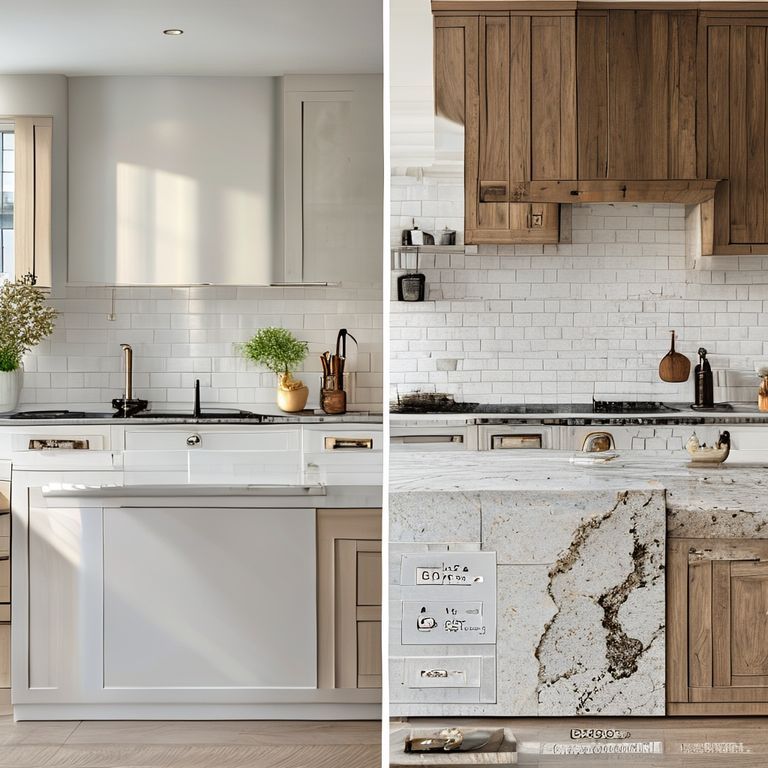
To understand whether their pros and cons are the same, we first have to strip away the marketing jargon. Let’s talk about Acrylic Solid Surface first. Often referred to by brand names like Corian, this material is essentially a blend of acrylic polymer (PMMA) and natural minerals. Think of it as the “chameleon” of the design world. Its greatest superpower isn’t just its beauty—it’s its malleability.
If you are looking for a design that defies traditional geometry, acrylic is your best friend. Through a process called thermoforming, acrylic can be heated and bent into almost any shape imaginable. Imagine a kitchen island that flows into a seating area without a single sharp edge, or a bathroom vanity where the sink and the countertop are one continuous, flowing piece of art. This is the “seamless” look that many people see in viral design videos. Because the joints are chemically bonded and then sanded down, they become invisible. There are no crevices for dirt to hide, no grout lines to scrub, and no breaks in the visual narrative. In terms of hygiene, acrylic is a king. It is non-porous, meaning it won’t soak up that spilled red wine or harbor bacteria from raw chicken.
However, every superhero has a weakness. For acrylic, it’s its “soft” nature. While it feels warm and silky to the touch—unlike the cold, clinical feel of natural stone—it is prone to scratches. If you’re the type of cook who slides heavy cast-iron pans across the counter, you’ll notice fine lines appearing over time. Furthermore, acrylic isn’t a fan of extreme heat. Placing a boiling pot directly onto an acrylic surface is a recipe for a permanent white ring or even a crack.
But here is where the “pros” of acrylic stage a comeback: repairability. This is a point that most comparison videos highlight for a reason. Because the material is consistent all the way through, most scratches can be buffed out with a simple abrasive pad. Even a significant burn can often be cut out and patched with a matching piece of material, sanded down until the “scar” vanishes. It is a material that allows for mistakes, making it a forgiving choice for a lived-in home.
When we talk about the “look” of acrylic, the variety is staggering. You can find everything from pure, clinical whites to deep, translucent teals that look like frozen ocean water. Because it’s a man-made resin-based product, the color consistency is perfect. If you order a slab today and another one six months from now, they will match. This is a massive advantage for large-scale commercial projects where uniformity is the goal.
So, does artificial stone share these traits? Not exactly. “Artificial stone” is a broad term, but in most modern contexts, it refers to Quartz or Engineered Stone. This material is a different beast entirely, composed of roughly 90-95% crushed natural quartz crystals bound together with polyester resins. If acrylic is the graceful gymnast of the material world, artificial stone is the heavyweight champion.
The aesthetic of quartz is designed to mimic the grandeur of natural granite or marble but without the high-maintenance drama. When you see pictures of artificial stone, you’ll notice the depth. It has a crystalline sparkle and a literal “stoniness” that acrylic lacks. It is heavy, it is cold to the touch, and it commands a room with a sense of permanence. But as we transition into the technical side of things, the differences between these two materials become even more pronounced. The pros and cons are not just different; they are often opposites. While acrylic thrives on flexibility and invisibility, artificial stone thrives on ruggedness and imitation.
As we look deeper into the comparison, we must address the “pictures and videos” aspect of your search. A photo might show you a beautiful quartz countertop, but it won’t show you the seam. Because quartz is so hard and rigid, it cannot be chemically melted together like acrylic. Every corner and every long run will have a visible joint. While modern installers are wizards at color-matching epoxy to hide these seams, they are there if you look for them. They are the “stitching” on a fine suit—a sign of the material’s structural reality.
Continuing our journey into the heart of the “Artificial Stone vs. Acrylic” debate, we have to look at the daily reality of living with these materials. If Part 1 established acrylic as the flexible, seamless artisan, Part 2 is about the unyielding strength of engineered stone.
Artificial stone, or quartz, was engineered specifically to solve the problems of natural stone. Marble is porous and stains if you look at it wrong; granite requires periodic sealing. Quartz says, “No thanks.” It is incredibly dense and virtually non-porous. In the kitchen, this translates to peace of mind. You can spill lemon juice, vinegar, or coffee, and as long as you wipe it up eventually, the surface remains pristine.
The biggest “pro” of artificial stone over acrylic is its sheer hardness. Quartz is one of the hardest minerals on Earth. On the Mohs scale, it’s right up there, meaning it is highly resistant to scratches. You can chop vegetables directly on many quartz surfaces (though your knives will hate you for it) and not leave a mark. It also handles heat better than its acrylic cousin. While you still shouldn’t put a 400-degree Dutch oven directly on it due to the risk of thermal shock to the resin binders, it is much more resilient to the occasional “oops” moment with a hot coffee mug or a warm plate.
However, the “cons” of artificial stone are the flip side of its strengths. Because it is so hard, it is also brittle. If you drop a heavy heavy heavy object on the edge of a quartz counter, it can chip. And unlike acrylic, repairing a chip in quartz is a specialized job. A technician has to fill the void with colored resin, but under certain lights, the repair will always be visible. It’s not “renewable” in the way acrylic is. You can’t just sand the whole thing down to make it look new again.
Now, let’s address the core question: “Are the pros and cons the same?” By now, the answer should be a resounding “No.” They are tools for different jobs.
If you are designing a space with complex curves—perhaps a spiral staircase wrap, a rounded reception desk, or an integrated sink where the bowl transitions perfectly into the counter—acrylic is your only choice. Its pros are its seamlessness and its “repairability.” Its cons are its softness and heat sensitivity.
If you are designing a high-traffic family kitchen where the counters are going to take a beating from knives, heavy pots, and messy kids, and you want the look of luxury stone without the maintenance, artificial stone is the winner. Its pros are its hardness and stain resistance. Its cons are its visible seams and its lack of flexibility.
When you are watching videos or looking at “pictures大全” (galleries), pay attention to the edges. Notice how the light hits the surface. Acrylic often has a soft, diffused glow, especially in lighter colors, because it is slightly translucent. Artificial stone has a sharp, mirror-like reflection because of the high mineral content.
There is also the “Value” factor to consider. In the current real estate market, quartz (artificial stone) often carries a higher perceived value. Buyers recognize it as a premium upgrade. Acrylic, while often just as expensive (or more so if complex thermoforming is involved), is sometimes unfairly characterized as “plastic” by those who don’t understand its high-tech composition. However, in the world of high-end bespoke design, acrylic is the “luxury” choice because of the craftsmanship required to create those seamless, gravity-defying shapes.
So, how do you choose? Don’t just look at the pictures; think about your lifestyle. Are you a “clean freak” who can’t stand the sight of a seam? Do you want your bathroom to feel like a single, carved piece of white marble? Go with acrylic. Do you want a countertop that feels like a mountain, something that can survive a decade of heavy cooking and still look like a million bucks? Go with artificial stone.
In the realm of modern materials, we are spoiled for choice. Both acrylic and artificial stone represent the pinnacle of human engineering—taking raw minerals and turning them into something more durable and beautiful than what nature provided. They aren’t “the same,” and that’s a good thing. Their differences are what allow us to create diverse, functional, and breathtaking environments.
In conclusion, when you see those “pictures and videos” online, remember that the “best” material isn’t the one with the most pros on paper. It’s the one whose pros align with your priorities and whose cons you can live with. Whether you choose the silky, seamless embrace of acrylic or the cold, stoic power of artificial stone, you are making a statement about how you interact with your space. Both are spectacular; they just speak different languages. One is the language of the curve, the other is the language of the stone. Choose the one that tells your story best.









