
When you first scroll through a gallery of high-end interior design, your eyes inevitably gravitate toward surfaces that seem to defy the laws of nature. You see a kitchen island that appears to be carved from a single, gargantuan block of white Carrara, yet it glows with an inner warmth that cold stone rarely possesses. You see a bathroom vanity where the sink and the counter are one continuous, flowing piece of art, devoid of the unsightly grout lines that usually plague wet spaces. These are not mere photographs; they are the visual manifesto of acrylic artificial marble. Often referred to in the industry as “solid surface,” this material has transitioned from a practical alternative to a premier choice for those who view their living space as a canvas for personal expression.
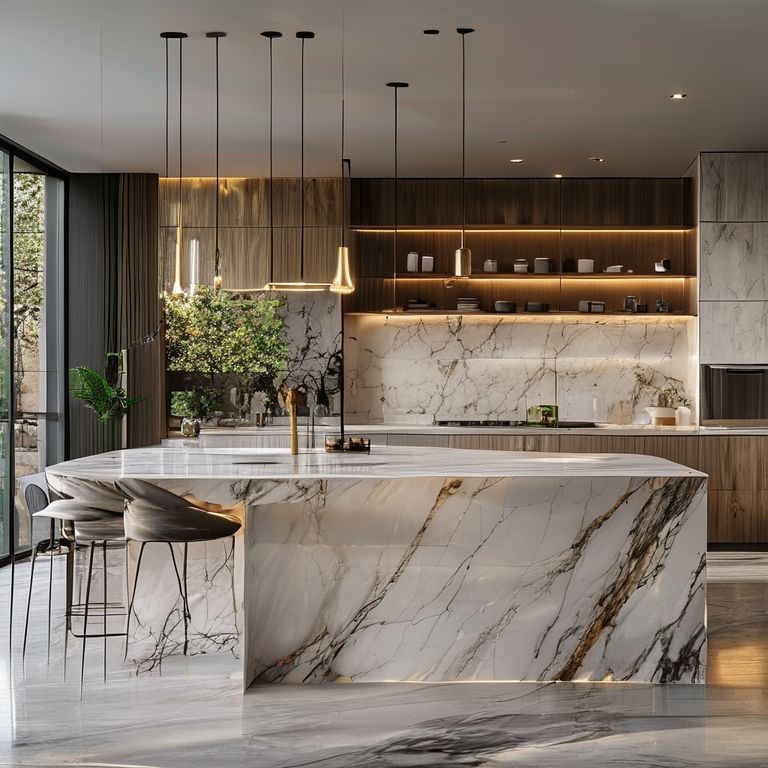
The allure of acrylic artificial marble lies in its paradoxical nature. It is a man-made marvel that captures the wild, untamed soul of natural stone while stripping away its inherent flaws. Natural marble, for all its prestige, is notoriously temperamental. It stains if you look at it sideways with a glass of red wine; it cracks under thermal shock; and it demands a level of maintenance that can feel like a part-time job. Enter the acrylic masterpiece. By blending high-performance acrylic resins with natural minerals and pigments, manufacturers have created a surface that doesn’t just mimic the “look” of marble—it elevates the entire experience of living with it.
When we talk about the visual impact of “亚克力人造大理石图片” (acrylic artificial marble pictures), we are talking about a spectrum of design possibilities that natural stone simply cannot reach. Because the material is non-porous and homogeneous, the patterns—the veining, the particulates, the depth—are consistent throughout the slab. This allows for a level of precision in design that is breathtaking. Imagine a waterfall countertop where the grey veins of a “Calacatta” style acrylic surface flow seamlessly from the horizontal plane down to the floor. In natural stone, matching these veins is a logistical nightmare known as book-matching, which often results in wasted material and astronomical costs. With acrylic artificial marble, that flow is intentional, perfect, and achievable.
But the true “superpower” of this material, and the reason it looks so spectacular in professional photography, is its thermoformability. Under the right heat conditions, these slabs can be bent, curved, and shaped into organic forms. This is where the “soft” in soft article meets the “hard” of construction. Architects are no longer restricted to the tyranny of the right angle. You can have a reception desk that curves like a wave, or a wall feature that undulates like wind-blown sand, all rendered in a finish that looks like the finest polished marble. The pictures of these installations often go viral on design platforms because they look futuristic, almost alien in their smoothness, yet they retain the timeless elegance of classical masonry.
Furthermore, we must discuss the play of light. Many high-grade acrylic artificial marbles possess a degree of translucency. When you back-light a panel of honey-veined acrylic marble, it transforms from a static surface into a glowing light fixture. This is a favorite trick in luxury hotel lobbies and upscale bars. The camera captures a glow that feels ethereal, casting a soft, expensive light across the room. It’s not just a table or a wall; it’s an atmosphere. This quality allows designers to play with the mood of a room in ways that were previously impossible. During the day, it is a solid, dependable surface of understated luxury. At night, with the flip of a switch, it becomes a radiant centerpiece that defines the entire architectural narrative.
The emotional resonance of these surfaces shouldn’t be underestimated. We spend ninety percent of our lives indoors. The textures we touch and the sights we wake up to significantly influence our psychological well-being. There is something profoundly calming about a seamless surface. Grout lines and joints are visual “noise”—they represent breaks in the story of a room. Acrylic artificial marble removes that noise. It provides a sense of continuity and “oneness” that helps a space feel larger, cleaner, and more serene. When you look at an image of a minimalist kitchen clad in this material, you aren’t just looking at a place to cook; you’re looking at a sanctuary from the cluttered, fragmented world outside. It is the architectural equivalent of a deep, cleansing breath.
Continuing our journey into the heart of this material’s dominance, we have to look past the initial “wow” factor of the photographs and consider the tactile reality. A picture can tell you that a surface is beautiful, but it cannot tell you how it feels under your hand on a cold Tuesday morning. Unlike natural stone, which can feel icy and unforgiving, acrylic artificial marble has a “soft” touch. It retains a bit of ambient warmth, making it much more comfortable for bare arms on a breakfast bar or for a lingering soak in a custom-molded bathtub. This tactile luxury is what turns a house into a home, shifting the focus from “showpiece” to “lived-in elegance.”
Beyond the feel, there is the incredible peace of mind that comes with the technical specifications. In the world of interior surfaces, “beauty” is often synonymous with “fragility,” but acrylic artificial marble breaks that cycle. Because it is non-porous, it is inherently hygienic. In an age where we are more conscious than ever of the cleanliness of our environments, the fact that bacteria, mold, and mildew have nowhere to hide on a seamless acrylic surface is a massive selling point. It doesn’t require sealing—ever. You don’t have to worry about the acidity of a lemon or the pigments in a turmeric latte ruining your investment. The pictures of these kitchens years after installation look just as pristine as the day they were photographed because the beauty is literally baked into the DNA of the material.
If the unthinkable happens—a heavy cast-iron pan is dropped, or a cigarette is left burning on the edge—acrylic marble shows its true worth. It is renewable. Because the color and pattern run all the way through, most scratches and burns can be buffed out by a professional, or even with a simple abrasive pad for minor scuffs. It is one of the few luxury materials that can be “reset” to its original glory. This longevity is a cornerstone of sustainable luxury. Choosing a material that doesn’t need to be replaced every decade is a quiet, powerful statement of quality over disposability.
The versatility of the “亚克力人造大理石图片” theme also extends to the sheer variety of the “look.” We aren’t just limited to white and grey. The manufacturing process allows for a kaleidoscope of creativity. You can find slabs infused with shimmering metallic flecks, translucent chips that mimic the depth of deep-sea glass, or solid, bold colors that pop with a high-gloss finish. Designers are using these materials to create bespoke furniture—coffee tables that look like liquid gold, or bookshelves that seem to be carved from obsidian. The material invites experimentation. It asks, “What if?” instead of saying “You can’t.”
In the commercial sector, the impact is even more pronounced. Imagine a high-end boutique where the shelving, the counters, and the wall cladding all share the same marble texture, creating a cohesive brand experience that feels expensive and curated. Or a healthcare facility where the need for clinical sterility is met with a material that looks warm and inviting, helping to reduce patient anxiety. The “soft article” nature of this material is that it bridges the gap between the sterile and the aesthetic. It proves that you don’t have to sacrifice performance for the sake of a pretty picture.
As you look for inspiration for your next project, let the imagery of acrylic artificial marble guide your imagination. Look for the way the light hits the edges, the way the “stone” flows around corners, and the way it integrates with other materials like wood, steel, and glass. It is a chameleon of the highest order, capable of anchoring a rustic farmhouse kitchen just as easily as it defines a sleek, ultra-modern penthouse.
Ultimately, the rise of acrylic artificial marble in global design trends is a testament to our desire for perfection that is also practical. We want the grandeur of the ancient world—the marbles of Rome and Greece—but we want it delivered with the technology and ease of the 21st century. We want surfaces that can keep up with our busy, messy, vibrant lives without losing their luster. When you invest in this material, you aren’t just buying a countertop or a wall panel; you are buying a piece of functional art. You are choosing a backdrop for your life that is as resilient as it is radiant. The next time you see a stunning image of a seamless, marble-clad interior, don’t just admire it from afar. Recognize it for what it is: the future of interior design, rendered in acrylic. It is an invitation to live beautifully, without compromise.









