
part 1:
“Rén. Gōng. Shí.”
If you were to trace the characters 人工石 with your finger, you’d be touching the literal translation of “Man-Labor-Stone.” In the West, we call it artificial stone, engineered surface, or perhaps synthetic gem. But there is something lost in translation when we simply use the word “artificial.” To the uninitiated, “artificial” implies a lack—a void where nature ought to be. Yet, in the high-stakes worlds of avant-garde architecture, sleek kitchen interiority, and high-jewelry ateliers, Ren Gong Shi is whispered with a different kind of reverence. It represents a pivot from the accidental beauty of the earth to the intentional brilliance of human ingenuity.
The question “人工石念什么?” (How do you read/pronounce Ren Gong Shi?) is often the first step in a much deeper journey. Phonetically, it is a simple sequence of tones. Philosophically, however, it asks us to reconsider what we value. For decades, the “natural” label was the ultimate pedigree. We wanted marble quarried from the hills of Carrara or diamonds forged in the crushing darkness of the mantle. We equated “natural” with “real” and “artificial” with “imitation.” But the tide has turned. We are entering the era of the Post-Natural, where Ren Gong Shi isn’t trying to be a cheap copy of nature; it is trying to be a perfected version of it.
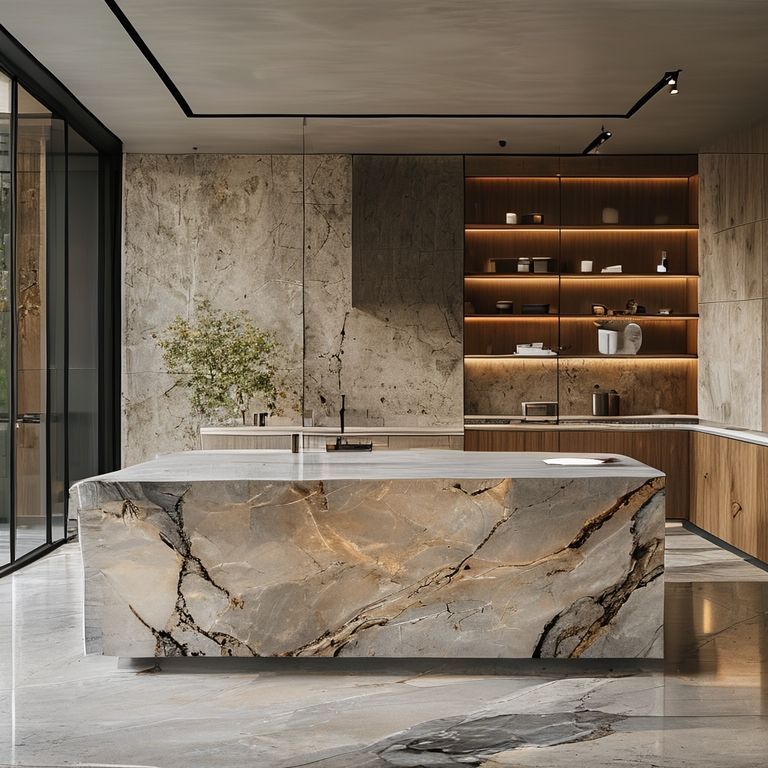
Think about the modern kitchen, the heart of the home. For years, granite was the king. It was rugged, speckled, and cold. But granite is porous; it breathes, it stains, and it harbors the ghosts of last week’s red wine spills. Enter engineered stone—the most common form of Ren Gong Shi in our daily lives. By vacuum-pressing crushed quartz with high-performance resins, we created a surface that is harder than granite, non-porous, and arguably more beautiful because it can be controlled.
In this part of the narrative, we must look at the “Nian” (念) of the stone—not just how we say it, but how we think about it. When you run your hand over a slab of high-end engineered quartz, you aren’t feeling a compromise. You are feeling the culmination of the Bretonstone process—a piece of technology that allowed us to take the waste of the earth (quartz dust) and bind it into a canvas that mimics the veining of Calacatta marble with mathematical precision.
The attraction here lies in the “Hyper-Real.” If nature provides the raw alphabet, human craft provides the poetry. Architects are now choosing Ren Gong Shi for projects that require a level of structural integrity and aesthetic consistency that nature simply cannot guarantee. Imagine a skyscraper where every single exterior panel must match perfectly in hue and grain to create a monolithic shadow. Nature is too chaotic for such a vision. Only the “Man-Made Stone” can deliver that level of atmospheric perfection.
But the allure of Ren Gong Shi isn’t limited to the surfaces we eat on or the walls we live within. It has migrated to the velvet cushions of the jewelry box. When people ask about “Artificial Stone” in the context of fashion, they are often looking at the dazzling rise of lab-grown diamonds and moissanites. For a long time, these were dismissed as “costume.” Today, they are a statement of ethics and intellectualism.
Choosing a lab-grown stone—a Ren Gong Shi of the highest order—is a way of saying that you value the light of the gem more than the carbon footprint of the mine. It is a way of acknowledging that the brilliance of a stone comes from its refractive index, not from the geological trauma of its birth. There is a sleek, modern confidence in wearing something that was birthed in a plasma reactor under the guidance of a scientist’s hand. It is the jewelry of the space age, the adornment of the “Thinker.”
As we move through the first half of this century, the “Ren” (Man) in Ren Gong Shi is becoming more important than the “Shi” (Stone). We are no longer passive collectors of what the earth happens to yield. We are creators. We are taking the elemental components of the universe—silica, carbon, pressure, and heat—and we are directing them.
This isn’t just about utility; it’s about the aesthetic of control. There is a specific kind of beauty in a material that has been “thought out.” When you look at a terrazzo floor—a classic form of Ren Gong Shi that has seen a massive resurgence in Milanese design—you are looking at a mosaic of history. Bits of marble, glass, and granite suspended in a cement or resin binder. It is a celebration of the fragment. It is a material that says: “We took the broken pieces and made something whole.” This is the core of the Ren Gong Shi philosophy. It is an art of synthesis.
part 2:
Transitioning from the technical to the emotional, we must address the “why” behind the global obsession with these engineered marvels. If Part 1 was about the “What” and the “How,” Part 2 is about the soul of the material. Why does a homeowner choose a “man-made” stone over a slab of 100-million-year-old rock? Why does a designer reach for a composite instead of a solid?
The answer lies in the concept of Curated Nature.
We live in a world that is increasingly messy. Our climate is changing, our resources are thinning, and our lives are cluttered with digital noise. In our physical spaces, we crave a sense of “Clean Beauty.” Natural stone, for all its majesty, is unpredictable. It has fissures that can crack, minerals that can rust, and “imperfections” that sometimes cross the line from charming to problematic. Ren Gong Shi offers a sanctuary of reliability. It allows us to design with a “God Mode” mentality. We want the look of Carrara marble, but we want it to be immune to lemon juice. We want the depth of emerald, but we want it to be conflict-free.
This brings us to the sustainability narrative, which is perhaps the most attractive “soft” sell of artificial stone. We are becoming a “Cradle-to-Cradle” society. The traditional stone industry is an extractive one—it involves carving away mountains and transporting massive weight across oceans. Ren Gong Shi, particularly the newer generations of sintered stone and bio-based composites, uses recycled content. It utilizes the “overspray” of the industrial world. It is the ultimate upcycling story. By “thinking” (念) about the stone differently, we see it as a renewable resource of human creativity rather than a finite resource of the crust.
Furthermore, the versatility of Ren Gong Shi allows for a sensory experience that nature can’t replicate. We are seeing stones that are translucent, allowing designers to back-light entire walls of “marble,” creating a glow that feels like a scene from a sci-fi epic. We are seeing stones that are ultra-thin—barely three millimeters thick—yet strong enough to clad the exterior of a building. This lightness of being is the hallmark of modern luxury. It is the ability to do more with less.
Then there is the color palette. Nature is beautiful, but it is limited by the chemistry of the earth. Ren Gong Shi is limited only by the human imagination. If a designer wants a stone that captures the exact shade of a Parisian dusk—a bruised purple fading into a dusty grey—they can have it engineered. This bespoke nature of the material makes it the darling of the “Individualist” era. We no longer want what everyone else has; we want what we have envisioned.
Let’s talk about the “Nian” (念) in terms of “Memory” and “Mindset.” In Chinese culture, the word can also imply a thought or a wish. To “read” or “think” of the stone is to project our desires onto it. When we choose Ren Gong Shi, we are projecting a desire for a future where technology and nature live in a symbiotic loop. It’s a move away from the “primitive” toward the “refined.” It is the difference between eating a wild berry and enjoying a Michelin-starred dessert. Both are “real,” but one is an accident, and the other is an achievement.
The conversation around Ren Gong Shi is also a conversation about the democratization of beauty. High-end natural stone has always been a gatekeeper of wealth. By mastering the art of the artificial, we have made the aesthetic of the elite accessible to the visionary. You can now have a kitchen that looks like a billionaire’s villa for a fraction of the cost, with ten times the durability. This isn’t “faking it”; it’s “hacking it.” It’s using intelligence to bypass the scarcity of the old world.
In the realm of jewelry, this democratization is even more profound. The “Artificial Stone” (be it a lab-grown sapphire or a high-grade zircon) allows a young couple to start their life with a symbol of love that is as brilliant as any mined stone, without the shadow of debt or the stain of unethical labor practices. The “Nian” here is one of compassion and clarity.
As we conclude this exploration, we realize that “人工石念什么?” is a question that answers itself through our choices. We “read” it as progress. We “read” it as a testament to the fact that humans are not just inhabitants of the world, but co-creators of it. The “Stone” is the medium, but the “Man” is the message.
Whether it is the sintered stone floor that withstands the footsteps of a thousand commuters, the quartz countertop that survives a decade of family dinners, or the lab-grown diamond that sparkles with a guilt-free fire, Ren Gong Shi is the material of our time. It is durable, it is ethical, and it is staggeringly beautiful. It invites us to stop looking backward at what the earth was, and start looking forward at what we can make it become.
So, how do you read it? You read it as the new standard. You read it as the alchemy of the 21st century. You read it as the stone that was not just found, but intended. And in a world where everything feels increasingly fragile, there is something deeply comforting about a beauty that was built to last, engineered by our own hands, and polished by our own dreams. This is the era of Ren Gong Shi. Wear it, live on it, and let it redefine your world.









