
When you encounter the phrase “人工石念什么字?” (How do you read the characters for artificial stone?), you aren’t just asking for a phonetic pronunciation. You are tapping into a deeper, more poetic inquiry about the intersection of human ambition and the raw, silent power of the earth. In the literal sense, the characters 人 (Ren – Human), 工 (Gong – Work/Craft), and 石 (Shi – Stone) combine to tell a story of synthesis. But to “read” artificial stone in the modern world of design and architecture is to understand a new dialect of luxury—one that speaks of resilience, infinite creativity, and the seamless marriage of technology and nature.

For centuries, humanity has been obsessed with stone. We’ve carved empires out of marble and paved our legacies in granite. Yet, natural stone, for all its breathtaking beauty, is a fickle partner. It is porous, it stains, it cracks under pressure, and its supply is governed by the caprices of geological time. Enter the “Artificial Stone.” If natural stone is a wild, untamed poem written by the planet, artificial stone is the carefully composed masterpiece of the human mind. It is the answer to the question: What if we could take the best parts of the earth and make them better?
To “read” this material is to first understand its origins. Whether we are talking about quartz, terrazzo, or the cutting-edge sintered stones that are currently dominating the high-end market, the process is akin to alchemy. We take the raw minerals—quartz crystals, marble chips, glass, and pigments—and bind them with advanced resins or subject them to extreme heat and pressure. The result is a material that doesn’t just mimic nature; it transcends it. When you run your hand across a premium quartz countertop, you aren’t feeling a “fake” product. You are feeling the culmination of decades of engineering. You are feeling a surface that has been purged of the “sins” of natural stone—the hidden fissures and the absorbent pores—leaving behind only strength and clarity.
The language of artificial stone is incredibly versatile. It allows a designer to “write” a room in any style imaginable. Want the dramatic, sweeping charcoal veins of an Italian Calacatta marble but without the constant anxiety of a lemon juice spill? Artificial stone speaks that language fluently. Looking for a minimalist, monolithic slab of pure, bone-white matte that would be impossible to find in a quarry? The man-made process delivers it with surgical precision. This is why the “reading” of this material has shifted from a skeptical glance to a look of profound respect. In the world’s most prestigious hotels and private residences, “artificial” is no longer a dirty word; it is a synonym for “bespoke.”
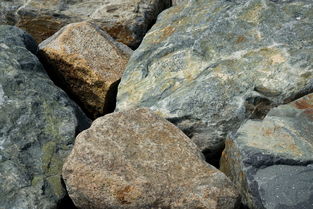
Furthermore, there is an intellectual depth to artificial stone that often goes unnoticed. It represents our ability to mimic the “Deep Time” of the Earth in a matter of hours. In nature, stone is formed over millions of years through tectonic pressure and volcanic heat. In the factory, we replicate these conditions using massive presses and kilns that reach temperatures rivaling the Earth’s mantle. This is the “Gong” (Craft) in 人工石. It is the human effort to master the elements. When you choose an engineered surface, you are choosing a product that has been tested against the rigors of modern life in a way that a slab pulled straight from a mountain never could be.
This brings us to the aesthetic vocabulary of the material. In the past, man-made stones were criticized for looking “printed” or repetitive. But the technology has evolved into a form of high art. Modern digital printing and “through-body” veining mean that the patterns aren’t just on the surface; they are integrated into the very DNA of the slab. This allows for book-matching—where two slabs are placed side-by-side to create a mirrored, symmetrical pattern—that is so precise it looks like a work of abstract expressionism. This is the visual language of the 21st century: bold, intentional, and flawlessly executed.
As we move beyond the technical marvel of its creation, we must look at how artificial stone is “read” in the context of our daily lives and our future. If the first part of its story is about strength and beauty, the second part is about harmony and sustainability. In a world increasingly conscious of its ecological footprint, the “Artificial Stone” narrative is evolving. We are no longer just making stone because it’s easier or more durable; we are making it because it can be a more responsible choice.
Many modern artificial stones utilize recycled content—crushed glass, post-industrial waste, and stone scraps that would otherwise end up in a landfill. By “reading” the stone this way, we see it as a circular material. It’s a way of honoring the Earth by making the most of what has already been extracted. Furthermore, because these materials are engineered to last a lifetime, the “throwaway” culture of home renovation is challenged. You don’t replace an artificial stone surface because it wore out; you pass it down to the next generation. It is a permanent fixture in a fleeting world.
But let’s talk about the emotional language of the home. The kitchen is the heart of the house, and the countertop is the stage upon which the drama of daily life unfolds. When we ask “what does it read like?”, we are asking how it feels to live with it. Natural marble is a diva; it demands attention, coasters, and special sealants. Artificial stone is a loyal companion. It invites you to cook, to spill, to create, and to live without the “preciousness” that often hampers the enjoyment of a luxury space. It says, “I am here to serve your lifestyle, not to dictate it.” This psychological freedom is perhaps the most attractive “word” in the vocabulary of synthetic surfaces.
In the realm of commercial architecture, the language of artificial stone expands to the scale of giants. Sintered stones, a high-tech evolution of artificial stone, are now being used as building facades. These ultra-thin, ultra-strong “skins” allow skyscrapers to breathe and endure the harshest elements—UV rays, acid rain, and extreme temperature fluctuations—without fading or warping. Here, the material reads as “Endurance.” It’s a testament to the fact that humans can create something that rivals the longevity of the mountains themselves.
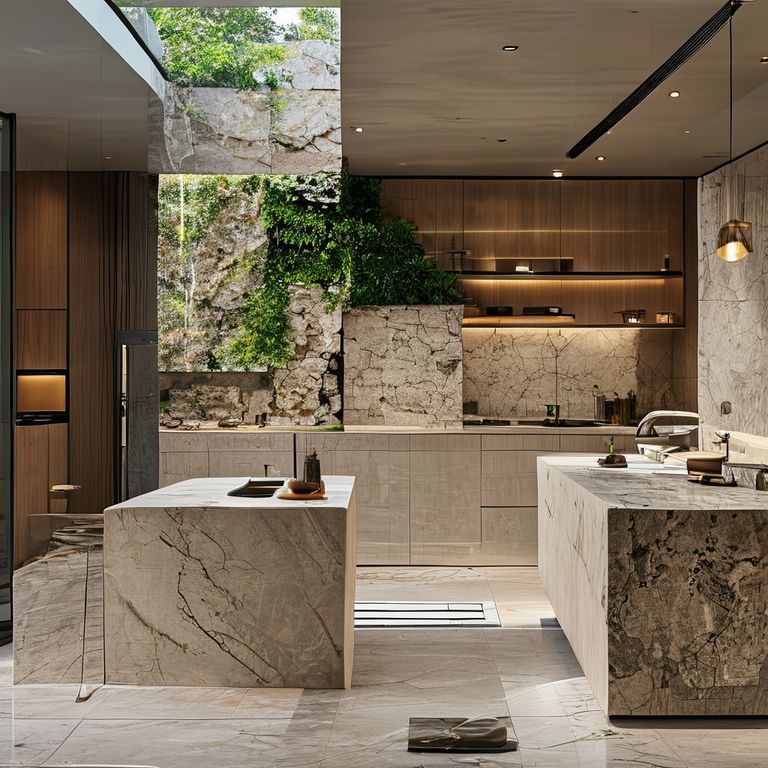
The versatility of the “word” also extends to the bathroom and the spa. In these sanctuaries of wellness, artificial stone creates a language of serenity. Because it can be molded and joined with nearly invisible seams, it allows for integrated sinks, “floating” vanities, and floor-to-ceiling wet rooms that look like they were carved out of a single block of ice or sand. It removes the visual noise of grout lines and cluttered transitions, creating a space where the mind can finally go quiet.
So, when someone asks, “人工石念什么字?”—what does artificial stone really say?—the answer is a multifaceted one. It reads as Innovation. It reads as Reliability. It reads as Artistry. It is the character of a new era where we no longer see a conflict between the “Natural” and the “Man-made.” Instead, we see a spectrum of possibility. We are the architects of our environment, and artificial stone is the medium through which we express our highest standards of living.
Looking toward the future, the “reading” of this material will only become more intriguing. We are seeing the rise of “smart” stones—surfaces with integrated wireless charging, touch-sensitive controls for lighting, and anti-microbial properties that are baked into the slab itself. The stone of tomorrow won’t just sit there; it will interact with us. It will be a living, functional part of our digital ecosystem, while still maintaining the cool, tactile soul of a mineral.
In conclusion, “Artificial Stone” is a phrase that encompasses the best of our history and the brightest of our future. It is a material that respects the aesthetics of the past while solving the problems of the present. Whether you are a designer looking for the perfect shade of “urban concrete” or a homeowner dreaming of a kitchen that looks like a cloud, artificial stone provides the vocabulary to make those dreams a reality. It is a language of elegance, a dialogue between the earth and the hand, and a testament to the fact that sometimes, the things we make ourselves are the most beautiful of all. Next time you see a stunning, seamless expanse of “stone,” don’t just look at it—read the story it tells of human brilliance.









