
The beauty of a logographic language lies in its ability to paint a portrait with a single stroke. To the uninitiated, a Chinese character might look like a complex grid of ink, but to those who look closer, it is often a visual riddle, a piece of ancient DNA, or a sudden flash of modern ingenuity. Lately, a specific linguistic curiosity has been making rounds in design circles and among typography nerds alike: “人工石这个字念啥?”—or, for the English speaker, “How do you pronounce the character for ‘Artificial Stone’?”

At first glance, it sounds like a trick question. In standard Mandarin, “artificial stone” is typically a three-character phrase: rén gōng shí (人工石). But there exists a singular, elegant, and highly specialized character that fuses these three elements into a single block of meaning. That character is 砼, pronounced “tóng.”
If you haven’t encountered it before, you aren’t alone. It isn’t a relic of the Han Dynasty or a fossil found on an oracle bone. Instead, it is a masterpiece of 20th-century functionalism. Born in 1953 from the mind of Cai Fangyin, a celebrated Chinese structural engineer, “Tóng” was created as a shorthand for “concrete.” Cai realized that writing the full term for concrete—shùn ní tǔ (水泥土)—was a tedious task for engineers and architects scrawling through endless blueprints. He looked at the essence of the material: it is a stone (石) made by human (人) labor (工). By stacking “人,” “工,” and “石” into one structure, he created a linguistic monolith that mirrored the very substance it described.
There is something inherently romantic about the word “Tóng.” It represents the intersection of human ambition and the raw earth. For centuries, humanity sought to replicate the permanence of mountains. We carved into marble, we stacked granite, and we waited for the slow churn of geological time. But with the advent of artificial stone—concrete—we became the geologists. We learned to mix, pour, and set our own destiny. The character “砼” captures that precise moment of alchemy where “Man” and “Work” transform “Stone.”
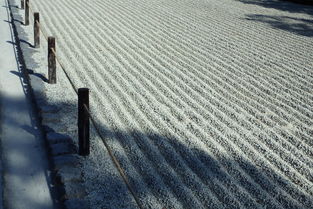
When we discuss “artificial stone” today, we are often talking about the backbone of our civilization. Look out your window in any major city, from the shimmering skyline of Shanghai to the brutalist masterpieces of London, and you are looking at a world built on the foundation of Tóng. It is a material that has suffered from a bit of a PR problem over the decades, often dismissed as cold, gray, or utilitarian. However, we are currently living through a “Concrete Renaissance.” The “artificial stone” is no longer just a structural necessity hidden behind glass and steel; it has become a premier aesthetic choice for the sophisticated minimalist.
The allure of artificial stone lies in its paradox. It is incredibly strong yet infinitely plastic. It can take the shape of a soaring cathedral arch or the razor-thin edge of a kitchen island. In the hands of masters like Tadao Ando, Tóng becomes a medium of light and shadow. Ando’s use of smooth, silk-like concrete surfaces proves that artificial stone can possess a spiritual quality. When light hits a concrete wall, it doesn’t just bounce off; it seems to be absorbed into the very texture of the “man-made rock,” creating a soft, ethereal glow that natural stone often struggles to replicate.
Beyond the grand scale of architecture, the “artificial stone” has found its way into the intimate spaces of our homes. The rise of engineered stone—quartz, terrazzo, and high-performance concrete composites—has redefined luxury. Why? Because artificial stone offers a level of control that nature cannot guarantee. It allows for a seamlessness that makes a bathroom feel like it was carved from a single block of moonlight. It offers a durability that stands up to the chaos of a lived-in kitchen while maintaining the poise of a gallery piece.
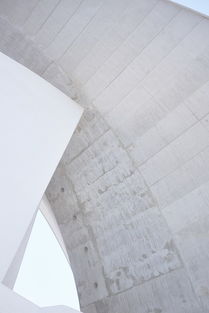
But back to the word itself: Tóng. Why does it resonate so much now? Perhaps because we are in an era where we value the “hand-made” and the “thoughtfully engineered” more than ever. The character for “artificial stone” doesn’t just mean a fake version of something real. It signifies a “perfected” version. It is stone, but with human intelligence baked into its molecular structure. It is the literal embodiment of the Anthropocene—an era defined by human impact—rendered in a single, balanced character.
When you ask, “How do you pronounce this word?” you are really asking about the identity of the modern world. Tóng is the sound of the skyscraper; it is the rhythm of the highway; it is the silent strength of the bridge. It is a word that reminds us that we are creators. We don’t just inhabit the world; we build it, grain by grain, mix by mix.
As we move into the second part of this exploration, we’ll look at how the concept of “artificial stone” is evolving beyond the gray slabs of the past. We’ll dive into the world of sustainable “bio-stones,” the high-fashion obsession with concrete textures, and why the “Tóng” philosophy is the key to the next century of design. Whether you are an architect, a homeowner, or just someone who appreciates the hidden stories behind the words we use, the journey of the man-made stone is far from over.

Continuing our journey into the soul of “Tóng,” we find ourselves at a fascinating crossroads of technology and environmental consciousness. If the 20th century was about the sheer power of artificial stone—the ability to pour cities out of mixers—the 21st century is about the refinement and responsibility of that power. The question of “what we call it” is evolving into “how we make it better.”
The modern interpretation of “人工石” (artificial stone) has expanded far beyond the basic mix of aggregate and cement. We are now entering the age of “Smart Stone.” Imagine a material that doesn’t just sit there but actually cleans the air. Photo-catalytic concrete is a real-world application of Tóng that uses sunlight to break down pollutants in the atmosphere. Here, the “Man” and “Work” components of the character take on a protective role. We aren’t just building for shelter; we are building for the health of the planet.
This evolution is particularly visible in the realm of high-end interior design. If you’ve scrolled through a design feed lately, you’ve likely seen the rise of “Terrazzo” and “Liquid Stone” finishes. These are the glamorous cousins of the traditional concrete slab. Terrazzo, a form of artificial stone that dates back to 15th-century Venice, is the ultimate example of the Tóng philosophy: taking fragments of marble, glass, and granite (the “Stone”) and using human ingenuity (“Work”) to bind them into something more beautiful than the sum of its parts. It is a sustainable art form, a way of recycling the “broken” into the “bespoke.”
For the contemporary homeowner, the choice of artificial stone is often a statement of values. Natural marble is breathtaking, certainly, but it is also fragile and finite. Engineered stone, or “Quartz,” has become the gold standard for those who want the look of the earth with the resilience of a diamond. It is non-porous, stain-resistant, and comes in colors that nature never intended, from deep, galactic blacks to whites so pure they look like fallen snow. This is the “Tóng” spirit in action—improving upon the natural world to fit the demands of modern life.
But let’s talk about the vibe. There is a specific “Concrete Chic” that has taken over the luxury market. It’s an aesthetic that favors honesty. There is no pretension in artificial stone. It doesn’t try to hide its seams; it celebrates them. In a world full of plastic and fleeting digital trends, there is something deeply grounding about a heavy, cool-to-the-touch concrete table or a poured-resin floor. It feels permanent. It feels “real,” even though we call it “artificial.”
This brings us back to the linguistic beauty of the character 砼. Notice the balance of the character. The “人” (man) sits at the top, supported by the “工” (work), and both are grounded by the “石” (stone) at the bottom. It is a visual representation of stability. In English, the word “artificial” often carries a negative connotation—meaning “fake” or “insincere.” But in the context of Tóng, “artificial” is a badge of honor. It represents the pinnacle of human craft. It is “Art-ificial” in the truest sense of the word: the result of Art.
Designers today are pushing the boundaries of what this “Art” can do. We are seeing 3D-printed stone structures that look like they grew organically from the ground. We are seeing “translucent concrete” that uses optical fibers to allow light to pass through a solid wall, turning a heavy monolith into a glowing lantern. When we ask “人工石这个字念啥?”, we aren’t just learning a pronunciation; we are opening a door to a future where our buildings can breathe, glow, and endure.
Furthermore, the “Tóng” philosophy is influencing the fashion and furniture industries. We see jewelry made from polished concrete and watches with stone-paste dials. These items challenge our perceptions of value. Why should gold be the only material we cherish? The grit, the texture, and the brutal honesty of artificial stone offer a different kind of luxury—one that is rugged, intellectual, and understated.
As we look toward the future, the “Artificial Stone” will likely be our greatest ally in the fight against climate change. Researchers are developing “Carbon-Negative Concrete,” which actually absorbs more CO2 during its setting process than was emitted during its production. The character “砼” might one day symbolize not just “Man-Made Stone,” but “Earth-Saving Stone.” The “Work” (工) we put into it will be the work of restoration.
In conclusion, the next time you see the character 砼, or hear the word “Tóng,” think of it as a bridge. It bridges the gap between the raw materials of our planet and the soaring dreams of our species. It is a reminder that we have the power to create something lasting, something beautiful, and something meaningful out of the most basic elements.
Whether you are admiring the smooth finish of a museum wall, choosing a countertop for your first home, or simply marvelling at the fact that a 70-year-old engineering shorthand has become a symbol of modern design, remember the riddle of the artificial stone. It is a testament to the fact that when Man and Work meet Stone, the result is nothing short of legendary. The word is Tóng. The material is the future. And the story is just beginning. So, the next time someone asks you about that “man-made stone character,” you can tell them it’s not just a word—it’s the DNA of the world we’ve built.









