
The Phonetic Gateway to Modernity
“人工石这个字怎么读?” If you find yourself asking this question, you are likely standing at the intersection of curiosity and craftsmanship. Phonetically, in Mandarin Chinese, it is pronounced “Rén Gōng Shí.” But to the global design community, these three syllables represent far more than a literal translation of “Artificial Stone.” They signify a seismic shift in how we perceive luxury, durability, and the very foundation of our living spaces.
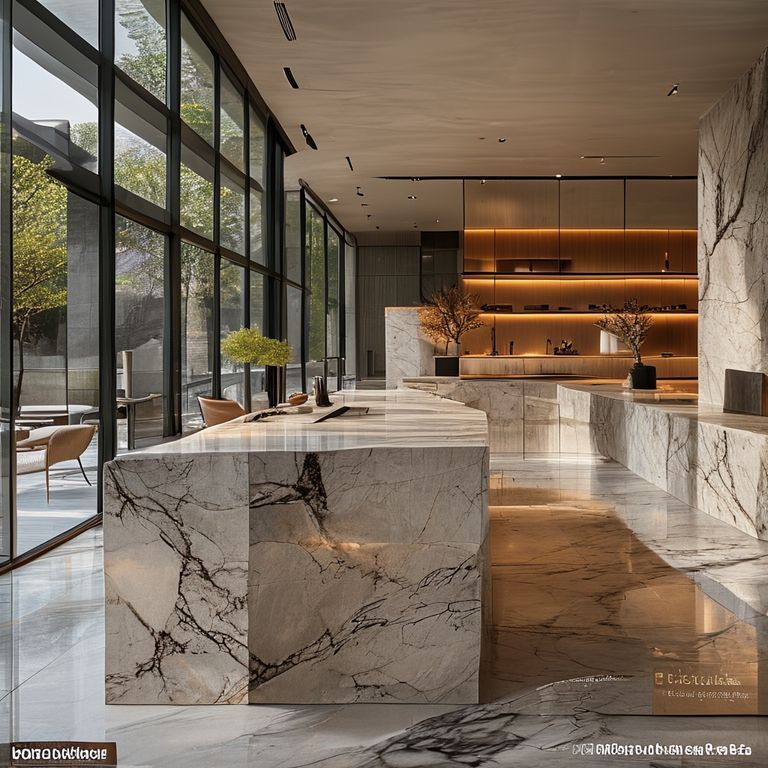
To understand the weight of “Rén Gōng Shí,” one must first deconstruct the characters. Rén (人) stands for humanity. Gōng (工) represents work, labor, or artistry. Shí (石) is the timeless element of stone. When joined, they tell a story of human ingenuity mastering the raw power of nature. It is the art of taking the Earth’s most resilient minerals and refining them through a crucible of technology to create something that nature, in all its chaotic beauty, could never achieve on its own: perfection.
For decades, the world of high-end interior design was obsessed with the “natural.” We craved the cold touch of marble and the rugged grain of granite. But nature is temperamental. It stains, it cracks, it hides porous secrets that can ruin a kitchen island or a bathroom vanity in a single spill of red wine. This is where the narrative of the “Artificial Stone” begins to captivate the modern homeowner. It is the answer to a question we didn’t know how to ask: “Can we have the soul of the Earth with the resilience of a diamond?”
The linguistic inquiry—”How do you read this?”—is often the first step for international buyers and designers looking toward the manufacturing powerhouses of the East. In the bustling markets of Foshan or the high-tech labs of global surface giants, “Rén Gōng Shí” is the password to a world of endless aesthetic possibilities. It’s not just “fake stone.” It’s engineered stone. It is a symphony of 93% crushed quartz mixed with high-performance resins and pigments, vibrated and pressed into slabs that defy the limitations of the quarry.
When you speak the words “Rén Gōng Shí,” you are acknowledging a legacy of transformation. You are talking about surfaces that can mimic the delicate, wispy veining of Calacatta marble or the deep, brooding industrialism of concrete, all while remaining completely non-porous and scratch-resistant. The attraction lies in the control. In a world that often feels chaotic, the ability to specify the exact pattern, tone, and texture of your environment provides a sense of curated peace.
Why has this specific term become a focal point? Because the global market has realized that the future of architecture isn’t just about what we dig up; it’s about what we create. The soft article of today isn’t selling a commodity; it’s selling an experience. When a designer explains the benefits of artificial stone to a client, they aren’t just talking about a countertop. They are talking about the “Rén Gōng”—the human work—that ensures a family can cook, live, and create memories on a surface that won’t fade with time.
The beauty of “Rén Gōng Shí” is that it bridges the gap between the organic and the synthetic. It is a chameleon. In the hands of a master architect, it becomes a seamless wall cladding that reaches toward a skylight. In the hands of a furniture designer, it becomes a sleek, minimalist dining table that feels as smooth as silk but is as hard as bedrock. The phonetic sound of the words might be a brief lesson in Mandarin, but the meaning is a universal language of quality.
As we move further into the 21st century, the “how to read” aspect becomes a metaphor for “how to understand.” To read artificial stone correctly is to see it not as a substitute, but as an evolution. We are no longer limited by what the mountain gives us. We are limited only by our imagination. The rise of “Rén Gōng Shí” is a testament to the fact that when human creativity meets geological strength, the result is nothing short of breathtaking.
The Alchemy of the Modern Slab: Why “Artificial” is the New “Aspirational”
Having mastered the pronunciation and the basic philosophy of “Rén Gōng Shí,” we must now look at the “why.” Why does this material command such a massive presence in the luxury markets of London, New York, Shanghai, and Dubai? The answer lies in the alchemy of its creation. If natural stone is a wild horse—beautiful but unpredictable—artificial stone is the thoroughbred: bred for performance, speed, and grace.
The manufacturing process of high-end engineered stone is a marvel of modern engineering. It begins with the selection of raw quartz, one of nature’s hardest minerals. These are not just any rocks; they are carefully graded for purity and color. This is where the “Gōng” (the artistry) really shines. By controlling the size of the quartz aggregates—from fine powders to chunky crystals—manufacturers can create textures that range from the ultra-smooth “honed” look to a rugged “leathered” finish.
But the real magic happens in the vacuum. To ensure that “Rén Gōng Shí” is superior to natural stone, the mixture of quartz and resin is subjected to intense vibration and pressure in a vacuum environment. This removes every single microscopic air bubble. The result? A slab that is denser than granite and completely impervious to liquids. You could leave a pool of lemon juice or a streak of permanent marker on a premium artificial stone surface for hours, and it would wipe away with nothing more than a damp cloth. In the world of high-stakes interior design, this isn’t just a feature—it’s a revolution.
Furthermore, the “Artificial” label is increasingly becoming synonymous with “Sustainable.” While traditional quarrying involves exploding mountainsides and massive waste, the production of engineered stone allows for a much higher degree of resource efficiency. Many modern “Rén Gōng Shí” facilities now incorporate recycled glass, mirrors, and even ceramic scraps into their slabs, turning potential waste into high-fashion surfaces. This speaks to a new generation of consumers who want their homes to reflect their values without sacrificing their aesthetic.
Let’s talk about the visual vocabulary of these stones. In the past, “man-made” was a derogatory term in the world of luxury. It implied a repetitive, “printed” look that lacked the depth of real marble. Those days are long gone. Today’s top-tier artificial stones utilize advanced “through-veining” technology. The patterns aren’t just on the surface; they go all the way through the slab. When you cut a mitered edge for a waterfall island, the veins flow naturally around the corner, creating an optical illusion of a solid block of precious stone. This level of detail is why “Rén Gōng Shí” is now the first choice for five-star hotels and flagship luxury boutiques.
The versatility of the material also allows for “impossible” designs. Natural marble is brittle; try to cut a long, thin cantilevered breakfast bar out of it, and it may snap under its own weight. Artificial stone, with its resin-bonded structure, has incredible flexural strength. It allows architects to push the boundaries of what a kitchen or a lobby can look like. It enables thin, large-format slabs that can be used for flooring, cabinetry fronts, and even ceiling accents, creating a “monolithic” look that is currently the height of interior fashion.
But perhaps the most attractive quality of “Rén Gōng Shí” is its consistency. If you are a developer working on a hundred-unit luxury apartment complex, you cannot afford the variance of natural stone. You need the kitchen in penthouse A to look exactly like the kitchen in penthouse B. Artificial stone offers that guarantee. It provides a “controlled beauty” that allows the rest of the interior design—the lighting, the fabrics, the art—to shine against a perfect, reliable backdrop.
So, when you ask “人工石这个字怎么读” (How do you read the characters for artificial stone?), you are really asking about the future of our built environment. You are asking about a material that has transcended its “man-made” origins to become a category of its own. It is a celebration of what we can achieve when we stop trying to imitate nature and start trying to improve upon it.
In conclusion, “Rén Gōng Shí” is not just a product; it’s a perspective. It represents the shift from the “found” to the “formed.” Whether you are a homeowner looking for the perfect countertop that will survive a decade of family dinners, or an architect looking to wrap a skyscraper in a skin of light-reflecting quartz, this material offers a canvas that is as durable as it is beautiful. The next time you run your hand over a cool, flawless surface that looks like a dream and performs like a machine, you’ll know exactly how to read it. It is the pinnacle of human craft. It is the stone of tomorrow. It is Rén Gōng Shí.









