
The allure of marble has captivated humanity for millennia. Its veined beauty, its cool touch, and its association with classical art and architecture have cemented its status as a timeless material. Yet, the natural world, while abundant, has its limits. Extracting and transporting natural marble is an endeavor that carries a significant environmental footprint, and its inherent porosity can present challenges in certain applications. Enter artificial marble, a marvel of modern material science that artfully mimics the elegance of its natural counterpart while offering a host of practical advantages. But what exactly is this sophisticated material made from? The answer lies in a clever fusion of natural minerals and advanced synthetic binders, meticulously engineered to create surfaces that are as beautiful as they are resilient.

At its core, artificial marble, often referred to as engineered stone or quartz surface, is a composite material. The primary component, typically making up around 90-95% of the product, is finely ground natural quartz. Quartz is one of the most abundant minerals on Earth, known for its exceptional hardness, durability, and resistance to scratching and heat. This natural abundance is a key factor in the sustainability and cost-effectiveness of artificial marble compared to rarer natural stones. The quartz is processed into a fine powder or aggregate, which forms the structural backbone of the material. This meticulous grinding and sorting process ensures a consistent particle size, which is crucial for achieving uniform color and pattern throughout the slab.
The remaining 5-10% of artificial marble is a carefully formulated mixture of resins and pigments. These resins, most commonly unsaturated polyester resins or acrylic resins, act as the binder, holding the quartz particles together. The choice of resin significantly influences the final properties of the material, such as its flexibility, stain resistance, and UV stability. These binders are not merely passive components; they are instrumental in creating a non-porous surface. Unlike natural marble, which can absorb liquids and stain easily, the resins fill in any microscopic voids between the quartz particles, creating a solid, impermeable barrier. This inherent impermeability is one of the most significant advantages of artificial marble, making it ideal for high-traffic areas and surfaces prone to spills, such as kitchen countertops and bathroom vanities.
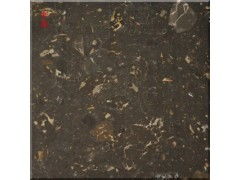
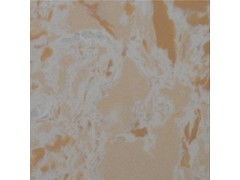
Pigments are then added to the resin mixture to achieve a vast spectrum of colors and patterns. This is where the artistry of artificial marble truly shines. The ability to precisely control the color and the distribution of pigments allows for an almost limitless palette. From classic whites and subtle greys to vibrant blues and deep blacks, artificial marble can be crafted to complement any design aesthetic. Furthermore, manufacturers can introduce different mineral aggregates or metallic flecks to mimic the intricate veining and crystalline structures found in natural stones like Carrara or Calacatta marble. Some advanced techniques even involve embedding translucent particles or using special lighting effects to replicate the depth and shimmer of genuine marble. The creation of these patterns is not left to chance; it’s a controlled, almost alchemical process. Manufacturers can engineer specific veining patterns, replicate the random beauty of natural formations, or even create entirely novel aesthetic designs that go beyond what nature offers. This level of customization is a powerful draw for designers and homeowners alike, offering unparalleled creative freedom.
The manufacturing process itself is a testament to modern engineering. The raw materials – quartz aggregate, resins, and pigments – are thoroughly mixed to ensure a homogenous blend. This mixture is then poured into molds, typically for large slabs. The slabs are then subjected to a vibrocompression process. This involves intense vibration and vacuum, which removes air bubbles and compacts the material, creating a dense and uniform structure. Following compression, the slabs undergo a curing process, often in an oven, where the resins harden and bind the quartz particles permanently. This curing step is critical for achieving the material’s strength and durability. After curing, the slabs are trimmed, polished to a desired sheen, and inspected for quality control. The result is a product that not only visually resembles natural marble but often surpasses it in practical performance. The precision and control inherent in this manufacturing process are what elevate artificial marble from a simple imitation to a superior material in its own right. It’s a dance between raw materials and refined processes, culminating in surfaces that are both aesthetically pleasing and functionally robust.
The creation of artificial marble is a fascinating intersection of geology and polymer science, resulting in a material that offers a compelling blend of beauty and brawn. Moving beyond its composition, understanding its manufacturing process unveils the secrets behind its remarkable properties and widespread appeal. The journey from raw ingredients to stunning finished slabs is a sophisticated one, involving precise control over every stage to ensure consistency, durability, and aesthetic perfection.
The process typically begins with the careful selection and preparation of the primary component: natural quartz. This abundant mineral is quarried, then subjected to a series of crushing and grinding operations. The goal is to reduce the quartz to a fine powder or aggregate of specific particle sizes. This controlled comminution is vital, as the size distribution of the quartz particles directly impacts the density, strength, and surface texture of the final product. Think of it like baking a cake – the fineness of your flour matters. Different manufacturers might use slightly different grading techniques, leading to subtle variations in the feel and appearance of their engineered stone.
Simultaneously, the binder system is meticulously prepared. As mentioned, unsaturated polyester resins are a common choice, known for their excellent mechanical properties and ability to form a hard, durable matrix. Acrylic resins are also employed, often prized for their superior UV resistance and clarity, which can contribute to richer, more vibrant colors. These resins are combined with catalysts and other additives that initiate and control the polymerization process – the chemical reaction that transforms the liquid resin into a solid, cross-linked polymer.
The crucial step of color and pattern creation occurs during the mixing phase. Pigments, which are inorganic mineral compounds chosen for their lightfastness and stability, are added to the resin mixture. The exact type and amount of pigment, along with the method of dispersion, determine the final color. To achieve the characteristic veining and patterns of marble, manufacturers employ several ingenious techniques. Some introduce concentrated colorants in specific patterns, while others use different colored aggregates or create marbled effects through controlled mixing and swirling. For instance, a technique called “random distribution” might involve tumbling the quartz aggregates with colored resins to create a more natural, unpredictable pattern. Alternatively, “linear veining” might be achieved by introducing colored resin in thin streams during the pouring process, mimicking the streaks found in natural stone. The ability to precisely replicate or even improve upon nature’s designs is a hallmark of engineered stone.
With the components thoroughly mixed and aesthetically formulated, the mixture is ready for molding. Large slabs, typically measuring around 120 inches by 55 inches, are formed. The mix is poured into specialized molds. This is where the magic of densification happens. A process called “vibrocompression” is employed, which involves intense vibration and vacuum application. The vibration breaks down surface tension and helps the particles settle into a dense arrangement, while the vacuum extracts any trapped air. This is a critical stage for eliminating voids and creating a material that is exceptionally strong and non-porous. Imagine squeezing a sponge to remove all the air – that’s the principle, but on a much more granular level.
Following compression, the slabs enter a curing oven. Here, controlled heat accelerates the polymerization of the resins, causing them to harden and permanently bind the quartz particles into a solid matrix. The duration and temperature of the curing cycle are precisely managed to ensure optimal strength and stability. Once cured, the slabs undergo a series of finishing processes. They are trimmed to their final dimensions, and their surfaces are polished to a high sheen using specialized grinding and polishing machines. The degree of polish can be varied, from a matte finish to a mirror-like gloss, catering to different design preferences. Finally, each slab undergoes rigorous quality control checks to ensure consistency in color, pattern, and surface integrity, looking for any imperfections that might have escaped the earlier stages.
The end result of this intricate process is a material that offers a compelling set of advantages. Its non-porous nature makes it highly resistant to stains, mold, and mildew, ideal for kitchens and bathrooms. Its hardness and durability translate to excellent resistance against scratches and chips, ensuring a long lifespan. Furthermore, the controlled manufacturing process allows for greater consistency in color and pattern compared to natural stone, where variations are inevitable. This predictability is a significant benefit for large projects where matching is paramount. While often compared to natural marble for its aesthetics, artificial marble is a distinct material, born from human ingenuity and a deep understanding of material science, offering a beautiful, practical, and increasingly sustainable choice for modern interiors.









