
The kitchen has long been heralded as the beating heart of the home, a sanctuary where culinary creativity meets the warmth of domestic life. In the modern era, the centerpiece of this sanctuary isn’t just the stove or the refrigerator—it is the countertop. It is the stage upon which our daily lives play out, from the frantic energy of a Monday morning breakfast to the slow, wine-soaked conversations of a Saturday night dinner party. When it comes to selecting a material that balances the demands of utility with the aspirations of high-end design, artificial stone—often referred to as engineered stone or quartz—has emerged as the undisputed champion of the contemporary interior.
But how do you make artificial stone look truly “good”? The answer lies in understanding that artificial stone is no longer a mere substitute for natural marble or granite. It has undergone a design renaissance, evolving into a sophisticated medium that offers possibilities natural stone simply cannot match. To achieve an aesthetic that is both breathtaking and timeless, one must look beyond the surface and delve into the harmony of texture, tone, and space.
The primary allure of artificial stone is its incredible visual consistency. Unlike natural stone, which can be temperamental with unpredictable veining and structural “flaws,” engineered stone allows for a level of precision that is a designer’s dream. If you are aiming for a minimalist, “Japandi,” or ultra-modern aesthetic, this consistency is your greatest ally. Imagine a kitchen island wrapped in a pristine, snowy white quartz that remains perfectly uniform from one end to the other. There is a rhythmic peace in that continuity, a visual stillness that calms the chaos of a busy home. By choosing artificial stone, you are choosing a canvas that you can control.
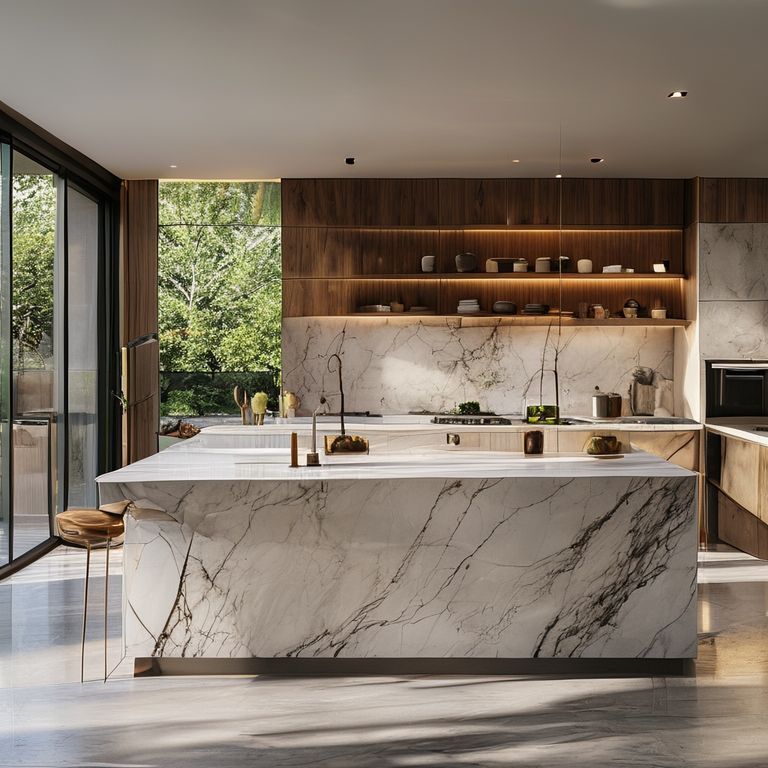
However, “looking good” doesn’t always mean looking uniform. The most stunning applications of artificial stone today involve the “hyper-realistic” textures that mimic the world’s most sought-after marbles—Calacatta, Carrara, and Nero Marquina—without the porous fragility of the real thing. To make these look exceptional, you have to play with the scale of the veining. For a large, expansive kitchen, bold, sweeping veins that flow across the surface like a river can create a dramatic focal point. In smaller spaces, a more delicate, whispered graining prevents the room from feeling cluttered. The “look” of the stone should speak to the volume of the room.
Furthermore, we must consider the “mood” of the stone. Artificial stone technology has advanced to the point where we can choose from a staggering array of finishes. While a high-gloss, polished finish is the traditional go-to for a luxurious feel, the trend is shifting toward “honed” or “leathered” finishes. These matte textures offer a tactile, organic quality that feels sophisticated and understated. A matte charcoal artificial stone countertop, for instance, doesn’t just look good; it feels like an anchor in the room. It absorbs light rather than reflecting it, lending a sense of weight and permanence to the cabinetry below.
The true secret to making artificial stone look expensive lies in the “monolithic” approach. Because artificial stone can be cut and joined with nearly invisible seams, you can create a look of solid, carved blocks. This is where the concept of the “waterfall edge” comes into play. By extending the countertop material vertically down the sides of the cabinetry to the floor, you create a continuous flow of stone. It transforms a piece of furniture into a piece of architecture. It is a statement of confidence, suggesting that the stone isn’t just a lid on a box, but a foundational element of the home’s structure.
Color choice is, of course, the most personal aspect of the design process. To make artificial stone look its best, it should either harmonize perfectly with your cabinetry or provide a deliberate, high-contrast punch. For a soft, airy feel, tone-on-tone palettes are currently dominating high-end design. Think greige cabinets paired with a warm, sandy-toned engineered stone. This creates a “quiet luxury” vibe that feels expensive without trying too hard. Conversely, if your kitchen features dark wood or navy cabinetry, a bright, crisp white artificial stone with subtle gold veining can provide a stunning “pop” that brightens the entire floor plan.
In this first part of our exploration, it’s clear that artificial stone is far more than a practical choice. It is a design tool of immense power. It offers the beauty of the earth with the reliability of modern engineering. But the surface is only the beginning. To truly unlock the aesthetic potential of your countertops, we must look at the details—the edges, the integration, and the light.
As we transition from the broad strokes of color and texture, the second part of making artificial stone countertops look truly magnificent involves the “finer details”—those subtle choices that elevate a kitchen from “nice” to “extraordinary.” If the slab itself is the melody, the edge profiles, backsplashes, and lighting are the orchestration that brings the music to life.
One of the most overlooked aspects of making artificial stone look good is the edge profile. Most people default to a standard eased edge, which is clean but perhaps a bit safe. If you want your countertops to look bespoke and high-end, consider a mitered apron. This technique involves joining two pieces of stone at a 45-degree angle to create the illusion of a much thicker, heavier slab. A 2-inch or 3-inch mitered edge gives the countertop a sense of grandeur and “heft” that screams luxury. On the other hand, if your home leans toward a more classic or “grandmillennial” style, a subtle ogee or bullnose edge can soften the lines of the room, making the stone feel more like a piece of hand-crafted furniture than a cold surface.
Then, there is the concept of “The Total Look”—the seamless integration of the countertop with the backsplash. In traditional designs, the backsplash is often a separate entity—tiles, mosaics, or perhaps a different stone. To make artificial stone look incredibly chic, use the same material for both the countertop and the full-height backsplash. This eliminates visual “noise” and creates a sleek, uninterrupted vertical plane of stone. When the veining of the countertop continues up the wall, it creates a sense of infinite space. It is a trick used by world-class interior designers to make even modest kitchens feel like high-concept galleries.
We must also talk about the “Integrated Sink.” One of the unique advantages of artificial stone is the ability to create a sink out of the same material as the countertop. This results in a completely seamless transition where the stone appears to dip down into the basin. Not only is this incredibly hygienic because there are no lips or crevices for debris to hide, but it also creates a streamlined, sculptural aesthetic that is impossible to achieve with stainless steel or porcelain. It makes the countertop feel like a single, unified object of art.
Lighting is the “secret sauce” that many homeowners forget. You can have the most beautiful artificial stone in the world, but if it sits in the dark, its depth and detail are lost. To make your stone truly shine, you need a layered lighting scheme. Under-cabinet LED strips are non-negotiable; they cast a direct glow onto the surface, highlighting the subtle flecks of quartz or the delicate veins in the pattern. If you have a waterfall island, consider adding toe-kick lighting at the base. This makes the massive stone island appear to “float” above the floor, adding a futuristic, ethereal quality to the room. Pendant lights above the island should be chosen to complement the stone—for instance, brass fixtures to highlight gold veining, or matte black to contrast with a pure white surface.
Let’s not forget the importance of the surrounding environment. Artificial stone doesn’t exist in a vacuum. To make it look its best, you must consider the “material dialogue.” Stone is inherently hard and cool. To balance this, pair your countertops with “warm” materials. Natural wood flooring, woven bar stools, or a collection of handmade ceramic vases can provide the necessary contrast. The juxtaposition of the precise, engineered stone against the organic imperfections of wood and clay creates a balanced, lived-in luxury.
Maintaining the “good look” of artificial stone is arguably as important as the initial design. While it is incredibly durable and stain-resistant, it is not invincible. To keep that “day one” luster, avoid harsh chemicals. A simple mixture of mild soap and water is all you need. The beauty of artificial stone is that it doesn’t require the tedious sealing and polishing that natural marble does, but it still deserves respect. Using trivets for hot pans and cutting boards for prep work ensures that the surface remains scratch-free and vibrant for decades.
In conclusion, artificial stone is a testament to how far design technology has come. It allows us to dream bigger, creating spaces that are both functional and breathtakingly beautiful. By focusing on the continuity of the grain, the drama of the waterfall edge, the seamlessness of the integrated backsplash, and the warmth of the surrounding materials, you can create a kitchen that isn’t just a place to cook, but a masterpiece of modern living. Whether you prefer the bold statement of a dark, moody stone or the serene elegance of a bright, light-filled space, artificial stone provides the perfect foundation for your vision. It is the intersection of nature’s inspiration and human ingenuity—a surface that truly makes a house feel like a home.









