
The modern kitchen has evolved from a mere utility room into the beating heart of the home—a theater of culinary creativity, a sanctuary for morning reflections, and the social hub for late-night conversations. At the center of this evolution stands the countertop. In recent years, artificial stone—ranging from engineered quartz to acrylic solid surfaces—has become the undisputed monarch of the kitchen landscape. Its rise to power is well-earned; it offers the breathtaking aesthetics of natural marble or granite with a structural integrity that often surpasses its geological cousins. However, owning an artificial stone countertop is much like owning a high-performance sports car: it possesses incredible durability, but its brilliance is preserved only through a specific set of refined behaviors.
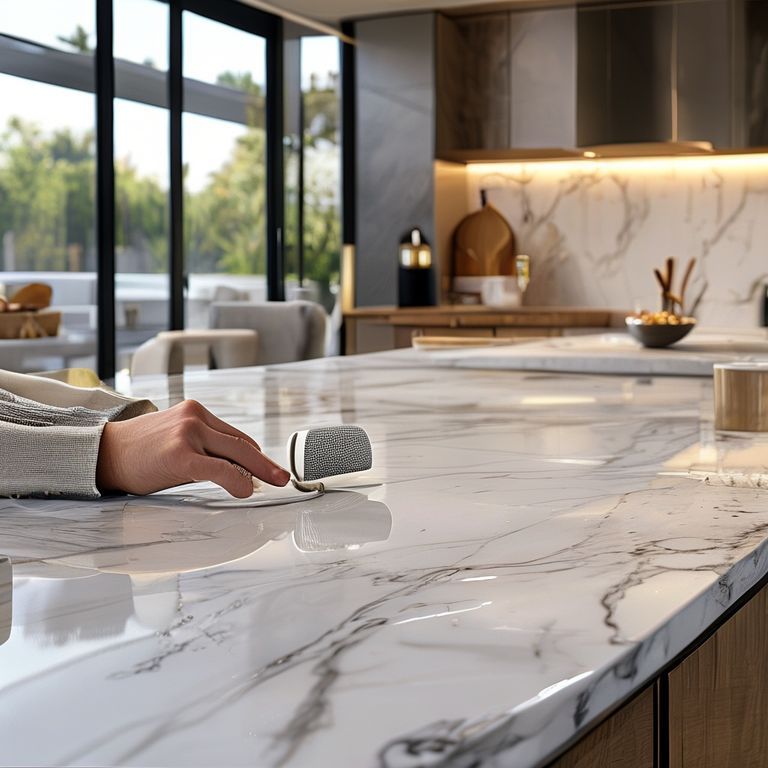
To truly appreciate the nuances of living with artificial stone, one must first understand what it is. Unlike natural stone, which is sliced from the earth, artificial stone is a masterpiece of human engineering—a blend of crushed minerals (like quartz) or pigments bound together by high-quality resins. This resin is the secret sauce that makes the surface non-porous and resistant to bacteria, but it is also the element that dictates how you must treat it. Understanding this “mineral-resin dance” is the first step in moving from a casual user to a connoisseur of your home’s surfaces.
The Thermal Threshold: A Lesson in Resilience
If there is one cardinal rule that separates the amateurs from the experts, it is the management of heat. We often fall into the trap of thinking that because a surface looks like rock, it should handle fire like rock. But remember the resin we mentioned? Resins are polymers, and polymers have a “glass transition temperature.” While your quartz or solid surface can easily withstand the ambient heat of a sunny kitchen, the concentrated thermal shock from a pot fresh off the induction hob or a tray straight out of a 400-degree oven is a different story.
Placing a hot vessel directly onto the surface can cause “thermal shock,” leading to hairline fractures or, in some cases, a permanent yellowing or scorching of the resin. The savvy homeowner doesn’t see a trivet or a heat pad as an inconvenience; they see it as a design opportunity. Whether it’s a minimalist silicone mat or a vintage wooden board, these barriers are the bodyguards of your countertop. When you’re in the flow of a complex recipe, it’s tempting to slide a pan onto the nearest empty space. Resist that urge. By respecting the thermal threshold, you ensure the surface remains as pristine as the day it was installed.
The Chemistry of Cleanliness
We live in an age where “clean” is often associated with harsh, clinical scents and powerful chemicals. However, when it comes to artificial stone, less is almost always more. Many common household cleaners contain high levels of acidity or alkalinity (think vinegar, lemon-based sprays, or heavy-duty oven cleaners). These substances can act as “etching” agents on the resin binder. Over time, frequent use of aggressive chemicals will strip the factory-applied luster, leaving the surface looking dull and lifeless.
The ritual of cleaning artificial stone should be one of gentleness. A soft microfiber cloth, warm water, and a drop of pH-neutral dish soap are usually all that is required to maintain the “as-new” glow. For those stubborn spots—perhaps some dried honey or a rogue splash of pasta sauce—patience is a better tool than force. Soak the spot for a few minutes with a damp cloth to soften the debris rather than reaching for a scouring pad. Avoid abrasive “magic” sponges or steel wool at all costs. These tools are essentially fine-grained sandpaper; while they might remove the stain, they will also remove the finish, creating a dull patch that becomes a magnet for future grime.
The Cutting Edge: Why Your Countertop is Not a Board
Artificial stone is incredibly hard. On the Mohs scale of mineral hardness, quartz ranks quite high, which gives many people a false sense of security. They believe they can slice a crusty baguette or dice an onion directly on the surface without consequence. While the stone might not show a deep gouge immediately, the microscopic scratches inflicted by a sharp blade do two things: they dull your expensive kitchen knives instantly, and they create tiny fissures where oils and pigments can eventually settle.
Using a dedicated cutting board is a sign of a kitchen managed with finesse. It’s about more than just protecting the stone; it’s about the hygiene of the workspace. Even though artificial stone is non-porous, those micro-scratches can become breeding grounds for bacteria if not meticulously cleaned. By using a board—be it wood, bamboo, or high-density plastic—you preserve the structural integrity of your stone and the sharpness of your cutlery. It’s a win-win for the culinary enthusiast.
The Tinted Trap: Managing Pigments
We often praise artificial stone for being “stain-resistant,” but it is vital to note that it is not “stain-proof.” The world of food is full of aggressive pigments. Turmeric, saffron, red wine, balsamic vinegar, and even the tannins in a wet tea bag can be surprisingly persistent. If these substances are left to sit for hours, they can migrate into the very top layer of the resin.
The secret to a stainless existence is the “wipe-as-you-go” philosophy. If you spill red wine during a lively dinner party, don’t wait until the guests have left to address it. A quick, graceful swipe with a damp cloth prevents the pigment from ever finding a foothold. If you do find a stubborn shadow left behind, a paste of baking soda and water applied gently can often draw the pigment out without damaging the stone. It’s about being proactive rather than reactive—a mindset that keeps your kitchen looking effortless.
Continuing our exploration into the world of artificial stone, we must look beyond the daily cleaning and the heat mats. To truly master the longevity of your surfaces, one must understand the physical stresses and environmental factors that play out over years, not just days. A countertop is a structural element of your home, and like any structure, it reacts to weight, light, and the passage of time.
The Gravity of the Situation: Weight and Impact
It is a common sight during home maintenance: someone standing on the countertop to change a recessed lightbulb or reach a high shelf. To the casual observer, the stone feels solid and immovable. However, artificial stone—especially in areas where it has been cut out for a sink or a cooktop—has specific “stress points.” These areas are structurally thinner and more susceptible to cracking under concentrated weight.
Furthermore, the seams where two slabs meet are held together by specialized epoxy. While these seams are incredibly strong, they do not possess the same flexural strength as the stone itself. Applying hundreds of pounds of pressure by standing on these areas can cause the seam to pop or the stone to hairline-fracture. Always use a stepladder. Your countertop was designed to hold the weight of a Thanksgiving turkey and a collection of heavy appliances, but it was never intended to be a flooring surface.
Beyond static weight, we must consider the “impact factor.” While artificial stone is remarkably chip-resistant, it is not indestructible. The edges and corners are the most vulnerable zones. Dropping a heavy cast-iron skillet or a Le Creuset pot on the edge of an undermount sink can result in a “chink” in the stone’s armor. While professional repair kits exist, the mend is rarely invisible to the trained eye. Managing the movement of heavy cookware with a degree of mindfulness—ensuring you don’t “clonk” the edges—is a habit that pays dividends in the long run.
The Solar Factor: UV Rays and Pigment Stability
One of the most overlooked aspects of artificial stone care is its relationship with the sun. Many modern homes feature large, floor-to-ceiling windows that flood the kitchen with natural light. While this is aesthetically divine, it can be taxing for certain types of artificial stone. The resins used in many quartz and solid-surface products can be sensitive to prolonged, direct ultraviolet (UV) radiation.
Over several years, a countertop that sits in a “sun bath” for six hours a day may undergo a subtle color shift. This is particularly noticeable in darker hues or vibrant colors, which may fade or develop a slight yellowish tint in the sun-drenched areas compared to the shaded parts. If you are in the design phase, consider the placement of your stone or the use of UV-filtering window films. If your kitchen is already established, simply being aware that the sun is a “reactive” element helps you understand why your stone might look different after a decade. It’s also why artificial stone (unless specifically rated for it) is rarely recommended for outdoor kitchens.
Seams and Seals: The Myth of Maintenance-Free
Artificial stone is often marketed as “maintenance-free,” which is a bit of a marketing hyperbole. While it certainly requires less work than porous stones like Carrara marble—which needs periodic sealing to prevent water absorption—artificial stone still benefits from “deep care.”
For engineered quartz, “sealing” is generally unnecessary because the surface is non-porous. However, for “solid surface” materials (like Corian), the beauty lies in its “renewable” nature. Because it is a consistent material all the way through, it can be professionally buffed to remove years of micro-scratches, effectively resetting the clock on its appearance. If your solid surface has lost its luster after five years of heavy use, don’t despair. A professional refinishing can bring back that satin or high-gloss glow, making it look brand new.
For quartz owners, the maintenance is more about “surface conditioning.” There are specialized stone polishes designed specifically for engineered surfaces that don’t leave a waxy buildup but do add a layer of “slip,” making it even harder for spills to stick. Using these once a month is like giving your kitchen a spa day; it’s not strictly “necessary,” but it elevates the environment.
Living Harmoniously: The Psychology of the Surface
Ultimately, the most important detail in using artificial stone is your mindset. A home is meant to be lived in. There will be spills. There will be the occasional accidental clink of a glass. The goal isn’t to live in a museum where you’re afraid to touch the surfaces; the goal is to develop a “rhythm of care.”
When you view your countertop not just as a flat object to put things on, but as a significant investment in your home’s value and your daily joy, the “rules” don’t feel like chores. They become part of the ritual of the home. You don’t use a trivet because you’re afraid; you use it because you appreciate the craftsmanship of the stone. You don’t wipe up the wine immediately because you’re a neat freak; you do it because you want to keep the “canvas” of your kitchen clean for the next masterpiece.
Artificial stone is a testament to human ingenuity—a bridge between the raw beauty of the earth and the precision of modern technology. By paying attention to these details—the heat, the chemicals, the impact, and the light—you ensure that this bridge remains sturdy and beautiful for decades. You aren’t just maintaining a countertop; you are preserving the backdrop of your life’s most flavorful moments. In the grand design of a home, it is these small, consistent acts of stewardship that define true luxury. Let your artificial stone be a reflection of that care, standing as a brilliant, resilient centerpiece in the heart of your sanctuary.









