
人造石是什么材料做的,对人体有害?,人造石是啥
The modern kitchen has evolved far beyond its utilitarian roots. It is no longer just a place where meals are prepared; it is the heartbeat of the home, a sanctuary of design, and a testament to our personal aesthetic. Central to this transformation is the material we choose for our surfaces—the countertops that bear the weight of our morning espressos and late-night conversations. For decades, natural marble and granite reigned supreme, but a new protagonist has taken center stage: artificial stone. Yet, as we lean into the sleek lines and impeccably uniform patterns of these engineered marvels, a lingering question often surfaces in the minds of the discerning homeowner: What is this material, really? And more importantly, is it safe to live with?
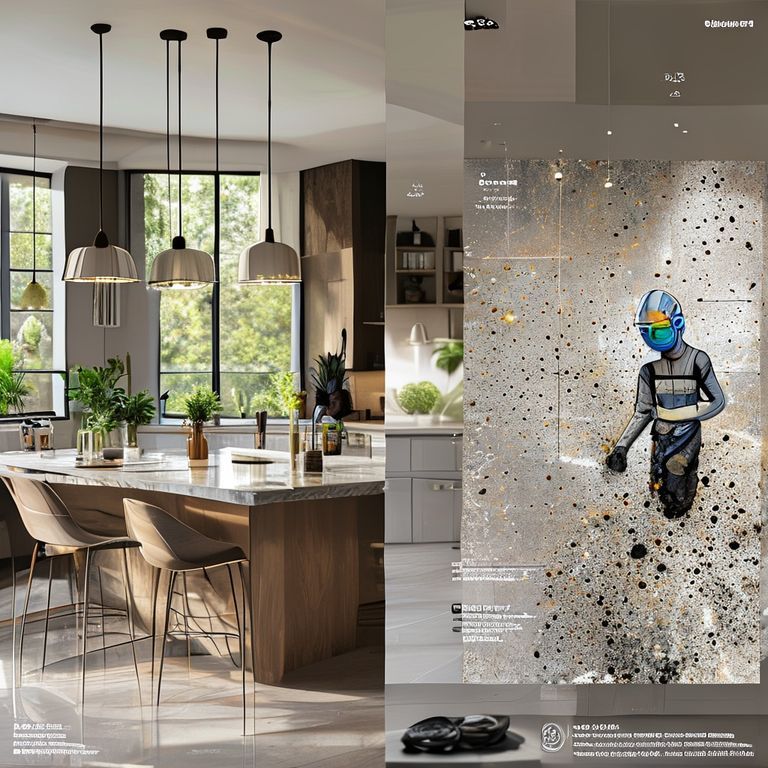
To understand artificial stone, one must first appreciate the concept of “alchemy” in modern manufacturing. We aren’t talking about turning lead into gold, but rather turning crushed minerals and high-performance resins into something that often outperforms Mother Nature herself. Artificial stone is a broad umbrella term, but in the contemporary interior design world, it primarily refers to two heavyweights: Engineered Quartz and Solid Surface materials.
Engineered Quartz is perhaps the most famous iteration. It is a composite material made primarily of crushed natural quartz—one of the hardest minerals on Earth. Typically, these slabs consist of about 90% to 94% ground quartz, which is then bound together by a sophisticated cocktail of polyester resins and pigments. The result is a surface that mimics the depth and crystalline beauty of natural stone but lacks the unpredictable veins and structural weaknesses often found in quarried blocks. When you run your hand across a high-end quartz countertop, you are feeling the literal grit of the earth, reimagined through the lens of industrial precision.
Then there is the “Solid Surface”—think brands like Corian. These are a different breed of artificial stone. Instead of heavy mineral content, they are composed of a blend of Alumina Trihydrate (ATH), acrylic or polyester resins, and pigments. ATH is a fine white powder derived from bauxite ore, and when mixed with acrylic, it creates a material that is non-porous, incredibly smooth, and capable of being thermoformed into wild, curving shapes that natural stone could never achieve. If quartz is the rugged, refined athlete of the stone world, solid surface is the versatile, seamless artist.
But why the shift away from pure, unadulterated natural stone? The answer lies in the limitations of nature. Natural marble is porous; a spilled glass of red wine or a squeeze of lemon can leave a permanent “scar” or etch mark on its surface. Granite, while tougher, requires periodic sealing to keep bacteria and stains at bay. Artificial stone was engineered specifically to solve these “problems.” By filling the microscopic voids between mineral particles with resin, manufacturers created a surface that is essentially “closed.” It doesn’t breathe, which means it doesn’t absorb. For the busy professional or the chaotic family household, this lack of maintenance is not just a convenience—it is a liberation.
However, the “artificial” label carries a certain weight in an era where we are increasingly conscious of the chemicals in our environments. The word itself can evoke images of laboratories and synthetic fumes. This brings us to the core of the debate: what are these binders and pigments doing in our homes? Are we inviting a Trojan horse of toxicity into our kitchens?
The binders—typically polyester or acrylic resins—are polymers. In their liquid state during manufacturing, they are indeed chemical-intensive. However, the secret lies in the “curing” process. Through a combination of intense pressure, vibration, and heat (often referred to as the Bretonstone process in quartz manufacturing), these resins undergo a chemical reaction that transforms them from a liquid into a hard, inert solid. Once this process is complete, the resins are “locked,” and the material becomes chemically stable.
The aesthetic versatility of artificial stone is where it truly outshines its natural counterparts. Because pigments are added during the mixing phase, manufacturers can create colors that do not exist in the wild—crisp, clinical whites, deep midnight blues, or even slabs that perfectly mimic the iconic “Calacatta” marble veins with mathematical precision. This allows for a level of design consistency that is impossible with natural stone, where one slab might look perfect and the next from the same quarry might have a distracting “muddy” patch.
As we stand in our kitchens, admiring the cool, smooth expanse of an engineered slab, we are looking at a triumph of material science. We have taken the raw, chaotic beauty of the earth and refined it into something predictable, durable, and breathtakingly beautiful. But as with any modern innovation, the beauty must be weighed against the biological. In the next section, we will strip away the marketing gloss and look directly at the health implications—from the factory floor to your cutting board—to determine if artificial stone truly earns its place in a healthy home.
When we pivot the conversation toward health, we have to look at the life cycle of the material. There is a significant difference between the “finished product” sitting in your kitchen and the “raw process” occurring in a fabrication shop. To answer the question “Is artificial stone harmful?” we must address three specific areas: Silica dust, Volatile Organic Compounds (VOCs), and food safety.
The most pressing concern in the industry today isn’t actually for the homeowner, but for the craftsmen who cut and polish the stone. This is the “silica issue.” Because engineered quartz contains such a high concentration of natural quartz, cutting it releases an incredibly fine dust known as respirable crystalline silica. If inhaled without proper protection over long periods, this can lead to silicosis, a serious lung disease. This has led to some headlines suggesting that “artificial stone is dangerous.” It is crucial, however, to distinguish between the occupational hazard of manufacturing and the safety of the inert slab in your home. Once the stone is installed and the dust is cleaned away, it no longer poses a respiratory risk. As a consumer, your role is to ensure that the company you hire follows ethical and safe wet-cutting practices to protect their workers.
Now, let’s talk about what stays in your home: Volatile Organic Compounds, or VOCs. These are the gases that “off-gas” from synthetic materials—the “new car smell,” so to speak. People often worry that the resins in artificial stone will leak chemicals into the air. While it is true that cheap, low-quality artificial stones from uncertified factories might use inferior resins that off-gas significantly, high-quality, reputable brands are a different story.
Most premium artificial stone products are Greenguard Gold certified. This means they have been tested and proven to have extremely low chemical emissions, meeting some of the world’s most rigorous third-party standards for indoor air quality. In many cases, the VOC emissions from a high-quality quartz countertop are lower than those from the wooden cabinets they sit upon. The “danger” here is largely mitigated by choosing brands that prioritize chemical stability.
Then there is the matter of “Food Contact.” This is where artificial stone often wins the gold medal. Because materials like quartz and solid surfaces are non-porous, they do not harbor bacteria, mold, or mildew. In a natural stone countertop, microscopic fissures can trap raw chicken juice or moisture, creating a breeding ground for pathogens. Artificial stone is inherently hygienic. Most are NSF/ANSI Standard 51 certified, meaning they are safe for direct food contact. You could, theoretically, knead dough directly on the surface without worrying about what’s lurking in the pores of the stone. For families with young children or anyone concerned about kitchen hygiene, this is a massive health benefit, not a hazard.
What about radiation? There was a period of “granite panic” where people feared natural stone emitted dangerous levels of radon gas. While natural stones do emit trace amounts of radon (usually at negligible levels), artificial stone typically has even lower emissions because the manufacturing process allows for the screening of raw materials. You are likely getting more radiation from the soil in your backyard or the bricks in your walls than from your engineered countertop.
So, where does that leave us? Is artificial stone harmful? The short answer is: No, not as a finished product in your home, provided you choose quality.
However, we must be smart consumers. The “harm” in artificial stone usually comes from the “unknowns” of bargain-basement products. When a deal seems too good to be true, it might be because the manufacturer used cheaper, less stable resins or omitted the curing stages that ensure chemical inertness. These are the products that might smell like “plastic” for months or stain easily because they aren’t properly densified.
To ensure your home remains a sanctuary, look for the “Big Three” certifications: NSF (for food safety), Greenguard Gold (for air quality), and a reputable manufacturer’s warranty. When you buy from established leaders in the industry, you aren’t just buying a slab of stone; you’re buying the peace of mind that comes with decades of chemical engineering and safety testing.
In the end, the choice of artificial stone is a choice for the future. It is a material that respects our need for beauty and our demand for functionality. It offers a level of durability that natural stone struggles to match—resisting scratches, stains, and heat with an almost stoic resilience. By understanding the science behind the slab, we can move past the “artificial” stigma and appreciate these surfaces for what they are: highly engineered, safe, and stunning additions to the modern home.
Whether you are drawn to the crystalline depth of quartz or the seamless, sculptural flow of a solid surface, you can rest easy knowing that the “alchemy” used to create your countertops was designed with your lifestyle—and your health—in mind. Modern living is about making informed choices, and in the case of artificial stone, the evidence points toward a material that is as safe as it is spectacular. Embrace the precision, enjoy the aesthetics, and cook with the confidence that your surfaces are working with you, not against you.









