
Imagine standing in your kitchen, morning light filtering through the window, reflecting off a surface that looks like it was plucked from a high-end Italian villa. It’s sleek, it’s cool to the touch, and—best of all—it doesn’t freak you out when a drop of red wine hits the surface. This is the allure of quartz. For anyone knee-deep in a renovation or just daydreaming about a kitchen refresh, the question “厨房台面石英石多少钱一米?” (How much is a quartz kitchen countertop per meter?) is usually the first hurdle. But as you’ve likely discovered, the answer is rarely a single number. It’s a spectrum that ranges from “surprisingly affordable” to “I might need to sell my car.”
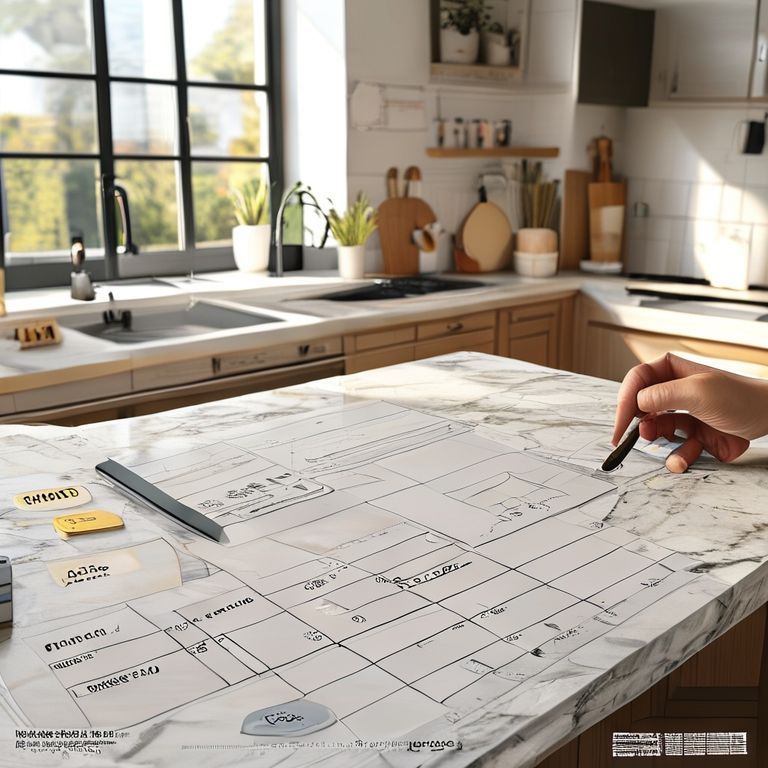
To understand quartz pricing, we first have to strip away the marketing fluff. Quartz isn’t a slab of rock pulled directly from the earth like granite or marble. It’s an engineered marvel, a composite of roughly 90% to 94% crushed natural quartz crystals bound together by polyester resins and pigments. This “recipe” is exactly why the price fluctuates so wildly. You aren’t just paying for the stone; you’re paying for the technology, the artistry of the pattern, and the reliability of the brand.
In the current market, you might see quotes ranging anywhere from 200 RMB to over 3,000 RMB per linear meter. Why the massive gap? It usually starts with the “Big Three”: Brand, Thickness, and Complexity.
Let’s talk about brand first. In the world of quartz, names like Caesarstone, Silestone, or local high-end players like Sinostone carry a premium. You’re paying for a guarantee that the resin won’t yellow over time and that the slab won’t crack under the heat of a stray kettle. On the other end of the scale, unbranded or “white label” slabs from smaller factories can be incredibly budget-friendly. They look great in the showroom, but the resin-to-stone ratio might be slightly off, making them more prone to scratches or stains. It’s a classic case of getting what you pay for, though there are plenty of “middle-ground” manufacturers that offer stellar quality without the designer price tag.
Then there’s the physical dimension—the thickness. Generally, quartz slabs for kitchen use come in 15mm, 20mm, or 30mm. In many modern designs, the 20mm slab is the sweet spot. It offers enough structural integrity to handle heavy pots and pans without requiring the massive price jump to a 30mm slab. However, if you’re looking for that ultra-thin, minimalist European aesthetic, or conversely, a chunky, “waterfall” edge look, the pricing shifts. Thicker slabs cost more to produce and significantly more to transport and install due to the weight.
Color and pattern are perhaps the most subjective yet impactful price drivers. A plain, solid white or sparkling “fine grain” quartz is relatively easy to manufacture. The process is consistent, and the waste is low. These are your entry-level prices. But once you move into the territory of “Calacatta” styles—those beautiful slabs with long, flowing veins that mimic natural marble—the price climbs. Creating those veins requires sophisticated machinery and a high level of artistic control during the casting process. If you want a slab where the veins align perfectly across a seam (known as book-matching), you can expect to pay a premium for the craftsmanship and the extra material required to make those patterns meet.
We also have to consider the “invisible” ingredients. Not all quartz is created equal in terms of its chemical makeup. High-quality engineered stone uses vacuum vibro-compression technology. This process sucks all the air out of the mixture, creating a non-porous surface. Lower-priced quartz might skip the intensity of this process, resulting in microscopic air bubbles. You won’t see them with the naked eye, but you’ll certainly notice them a year later when a coffee spill leaves a permanent shadow. This is why the price per meter often reflects the density and longevity of the material.
As you start gathering quotes, you’ll find that “per meter” can be a tricky phrase. Does it mean a linear meter (the length of your cabinets) or a square meter (the total surface area)? Most contractors in China and abroad quote by the linear meter for a standard width (usually around 60cm). If your island is extra deep or you have a custom shape, those standard prices go out the window. It’s always worth clarifying exactly what that “meter” covers before you get too attached to a specific slab.
Ultimately, the first half of the quartz journey is about identifying where you sit on the spectrum of “Utility vs. Art.” If you just need a durable, clean surface for a rental property or a busy family kitchen, the lower-to-mid range options are phenomenal. But if the kitchen is the centerpiece of your home—a place where you entertain and appreciate the fine details—investing in a high-grade, patterned slab is often where the real value lies.
Once you’ve picked out that perfect slab of quartz, you might think the hard part is over. However, the price “per meter” is often just the opening act. The second half of the cost equation—the part that often surprises homeowners—comes down to fabrication, installation, and the “custom” factors that turn a raw slab into a functional countertop.
Fabrication is where the real magic happens, and it’s a significant portion of your total bill. Think of it like buying high-end fabric versus buying a custom-tailored suit. The fabric (the quartz slab) is one cost, but the tailor (the fabricator) is who makes it fit your life. When you ask about the price per meter, you should always ask if it includes “processing fees.” These fees cover the cutting of holes for your sink and stovetop. A top-mount sink is relatively simple to cut, but an under-mount sink requires the edges of the quartz to be polished to a mirror finish since they will be visible. That extra labor adds to the cost.
Then there are the edges. A standard “square” or “eased” edge is usually included in the base price. But if you want a bullnose, an ogee edge, or a trendy mitered edge that makes a 20mm slab look like a 60mm thick block of solid stone, the price per meter will climb. Mitered edges, in particular, require incredible precision; the two pieces of stone must be cut at a 45-degree angle and joined so perfectly that the seam is invisible. This is art, and like all art, it comes with a labor cost.
Installation is another variable that can’t be ignored. A quartz countertop is incredibly heavy. Installing a three-meter run of stone requires a team of professionals who know how to level the cabinets and ensure the stone is supported. If your kitchen is on the fifth floor of a walk-up apartment, or if the layout has awkward corners that require complex seams, expect the “per meter” price to reflect that difficulty. A botched installation can ruin even the most expensive slab, so this is not the place to look for the absolute cheapest bid. You want someone who uses high-quality epoxy that matches the color of your stone, ensuring those seams disappear as much as possible.
Let’s talk about the “Long-Term ROI” (Return on Investment). While the upfront cost of quartz might be higher than laminate or even some granites, the maintenance costs are virtually zero. You don’t need to seal quartz every year. You don’t need special pH-neutral cleaners (though they don’t hurt). You’re paying for peace of mind. When you calculate the price per meter over a ten-year period, quartz often ends up being more economical than “cheaper” materials that might chip, stain, or require professional refinishing.
So, how do you get the best deal without sacrificing quality? First, don’t be afraid to ask for “remnants.” If you have a small kitchen or just need a bathroom vanity, fabricators often have leftovers from large projects. You can get a high-end, Tier-1 brand slab for a fraction of the price because it’s technically “scrap” to them.
Second, consider the “standard” colors. Manufacturers often have a “Contractor Series” or “Value Collection.” These are the colors they produce in massive quantities. Because the production line never stops for these shades, the cost is lower. You might find a beautiful grey or a speckled white that looks 95% like the designer version but costs 40% less.
Third, look at the warranty. A company offering a 10-year or 15-year warranty on their quartz is a company that isn’t worried about their resin-to-stone ratio. This protection is part of what you’re paying for. If a cheaper supplier won’t put it in writing, that’s a red flag that could cost you much more than a few hundred RMB down the line.
Finally, when you’re looking at your quotes, do a “total project” comparison rather than a “per meter” comparison. One vendor might have a low price per meter but high fees for every single cut and edge. Another might have a higher base price but includes the sink cutout and a premium edge for free. Always ask for the “all-in” price based on your specific kitchen layout.
In the end, quartz is more than just a place to chop vegetables. It’s the foundation of your kitchen’s aesthetic and a workhorse that takes daily abuse. Whether you go for the budget-friendly local stone at 400 RMB per meter or the luxury imported slab at 2,500 RMB, the value is in the details. By understanding the components of the price—from the resin quality to the skill of the installer—you can make a choice that fits both your budget and your dream. After all, the best price is the one that makes you smile every time you walk into your kitchen and run your hand across that smooth, perfect surface.









