
The kitchen has long been the undisputed heart of the home, but in recent years, it has also become its most scrutinized fashion runway. We obsess over the grain of the wood, the hue of the cabinetry, and most importantly, the slab that crowns our islands and workspaces. For decades, the industry standard whispered a “more is more” philosophy. If you wanted luxury, you went thick—3 centimeters of heavy, hulking stone that signaled permanence and wealth. But as the design pendulum swings toward the sleek, the streamlined, and the understated, a new question has begun to echo through the showrooms of Milan and the workshops of New York: Is 1.2cm quartz thickness actually enough?
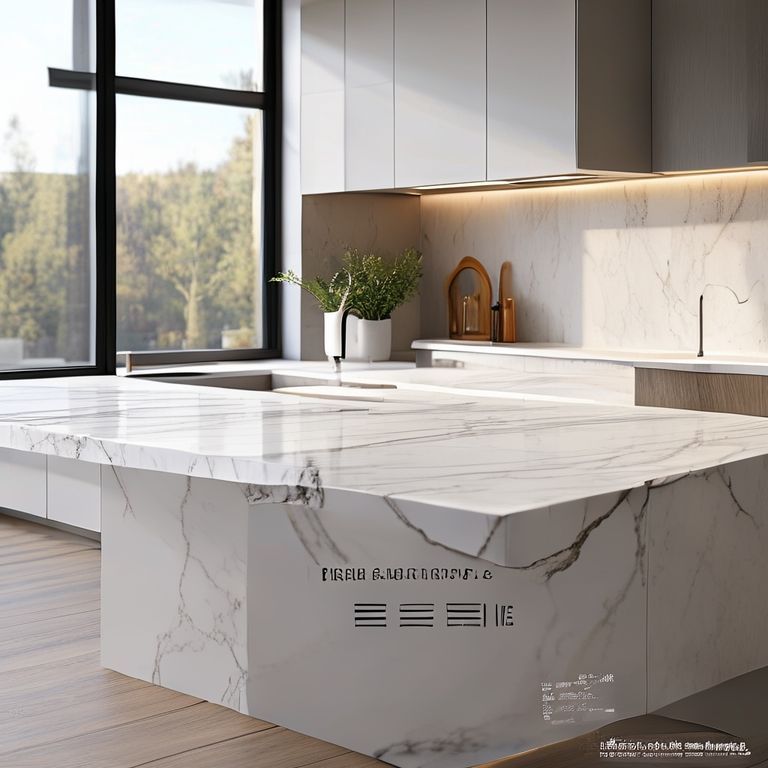
To answer this, we have to look past the surface. We have to talk about the philosophy of the “Slim-Line” aesthetic. In the contemporary design world, there is a certain intellectual arrogance in making something look effortless. A 1.2cm (or 12mm) quartz slab is the architectural equivalent of a perfectly tailored Italian suit—it’s light, it’s sharp, and it doesn’t need to shout to get attention. But homeowners often hesitate. We are conditioned to equate thickness with strength. We think of 1.2cm and we imagine a brittle cracker, waiting to snap under the weight of a heavy cast-iron skillet or the accidental impact of a dropped wine bottle.
However, quartz isn’t just a rock dug out of the ground and sliced like bread. It is a triumph of material science. It is an engineered marvel, a blend of roughly 90-94% crushed natural quartz crystals bound together by high-performance polymer resins and pigments. This manufacturing process involves intense vibration, vacuuming, and pressure, resulting in a non-porous, incredibly dense material. When you understand the density of quartz, you realize that a 1.2cm slab of this material is vastly more durable than a 3cm slab of many natural marbles or limestones. The “enough-ness” of 1.2cm isn’t just about the stone itself; it’s about the confidence of the engineering behind it.
Think about the visual impact. In a world where we are increasingly claustrophobic, the 1.2cm thickness offers a “floating” sensation. It allows the cabinetry beneath it to breathe. Designers are currently obsessed with the “shadow gap” look, where a thin quartz slab sits atop the cabinets with a small recessed spacer, making the countertop look like it’s hovering in mid-air. This level of sophistication is nearly impossible to achieve with a chunky 3cm slab, which tends to dominate the room and weigh down the visual flow. 1.2cm is for the homeowner who wants their kitchen to feel like a gallery, not a masonry yard.
But let’s talk about versatility. One of the greatest secrets of the 1.2cm thickness is its utility beyond the horizontal. Because it is significantly lighter than its 2cm or 3cm counterparts, it becomes the perfect candidate for vertical applications. Have you ever walked into a high-end hotel bathroom and seen walls that appear to be made of solid, seamless stone? That is often 1.2cm quartz. It’s light enough to be mounted as a full-height backsplash or even as wall cladding in a shower without requiring the structural reinforcements that a heavier stone would demand. It allows for a “total look” where the countertop seamlessly transitions up the wall, creating a monochromatic, monolithic aesthetic that is the height of modern luxury.
So, when we ask if 1.2cm is “enough,” we are really asking a question about our own lifestyle. If you are someone who appreciates the precision of modern architecture, who values the interplay of light and shadow, and who wants a material that is as technologically advanced as it is beautiful, then 1.2cm isn’t just enough—it’s the ideal. It’s the sweet spot where the raw power of engineered stone meets the finesse of contemporary art. It challenges the old-school notion that weight equals value. In the world of premium interiors, elegance is often found in the leanest lines.
Of course, moving from the conceptual beauty of a thin slab to the practical reality of a Tuesday night dinner requires a bit of grounding. People worry about the “snap factor.” They ask, “What happens if I lean on it? What happens if I have a massive holiday turkey and a dozen guests leaning against the island?” The honest answer is that 1.2cm quartz is extraordinarily strong, but like any premium material, it requires the right foundation. You wouldn’t put a high-performance racing engine in a rusted-out chassis, and you shouldn’t put a 1.2cm quartz slab on uneven or unsupported cabinetry.
The “secret sauce” to making 1.0cm or 1.2cm quartz work perfectly is the substrate. In many professional installations, a 1.2cm slab is paired with a solid sub-top—usually a high-quality layer of marine-grade plywood or a specialized honeycomb support system. This provides the stone with a rigid, flat surface to rest on, effectively distributing any weight or impact across the entire footprint of the cabinets. When supported correctly, a 1.2cm slab can handle the rigors of a busy kitchen just as well as its thicker siblings. It’s a partnership between the stone and the structure. This approach also allows for creative edge detailing. You can keep the 1.2cm edge exposed for that razor-sharp look, or you can use a mitered apron to make the slab appear as thick as you want, while keeping the overall weight of the installation low.
There is also a massive logistical advantage to the 1.2cm choice that rarely gets mentioned in the glossy magazines: the ease of handling. Thicker slabs are nightmares for installers. They require more manpower, more specialized lifting equipment, and they carry a higher risk of damaging your floors or cabinets during the move. A 1.2cm slab is nimble. It can be maneuvered into tight apartments, up narrow staircases, and into elevators where a 3cm slab would simply be a non-starter. This agility often translates into lower labor costs and a much faster installation timeline. You’re not just buying a countertop; you’re buying a smoother renovation experience.
Let’s touch on the environmental and economic side of things. Using 1.2cm quartz means using less raw material and less energy in transport. In an age where we are all trying to be a bit more conscious of our footprint, opting for a thinner, lighter slab is a subtle nod toward efficiency. You get the same surface area, the same scratch resistance, and the same heat resistance, but with a more efficient use of resources. It’s a smarter way to build.
Is there any reason to avoid it? If you are a fan of traditional, ornate design—think heavy crown molding, Victorian-style corbels, and deeply carved wood—a 1.2cm slab might look a bit “lost.” It is a material that speaks the language of minimalism. If your heart is set on a classic, chunky ogee edge profile, you’ll need more meat on the bone, and 3cm would be your friend there. But for the vast majority of modern, transitional, and industrial-style homes, the 1.2cm thickness is a revelation.
In the end, the debate over “石英石1.2厘米厚度够不” (is 1.2cm quartz thick enough?) is a debate between the past and the future. The past says “thick is strong.” The future says “density and design are king.” We are seeing a move away from the bulky and toward the refined. We are seeing homeowners realize that they don’t need a three-inch slab of rock to prove they have a quality kitchen. They need a surface that is durable, beautiful, and integrated into the architecture of the home.
1.2cm quartz is not just “enough.” It is a bold statement. It says that you understand the material science, you appreciate the nuance of slim design, and you aren’t afraid to break away from the “bigger is better” mentality. It offers a level of crispness that defines a space, turning a functional countertop into a work of minimalist sculpture. Whether it’s the backdrop to your morning espresso or the stage for a grand dinner party, 1.2cm quartz stands up to the task with a quiet, undeniable grace. So, if you’re standing in a stone yard, looking at that sleek 12mm slab and wondering if it can handle your life—rest easy. It’s got more than enough strength to carry the weight of your world.









