
When you step into a kitchen that feels just right, it’s rarely because of a single gadget or a fancy appliance. Usually, it’s the flow, the light, and that one expansive surface that ties everything together: the countertop. In the modern era of home renovation, the question “Is artificial stone good for countertops?” has shifted from a skeptical query to a cornerstone of interior design discussions. If you’ve been scouring the web for “artificial stone countertop pictures and videos,” you’re likely already captivated by the seamless finishes and the mesmerizing variety of patterns available today. But beauty, as they say, is often more than skin deep—especially when it comes to a surface that has to withstand the chaos of a Tuesday night dinner and the elegance of a Saturday cocktail party.
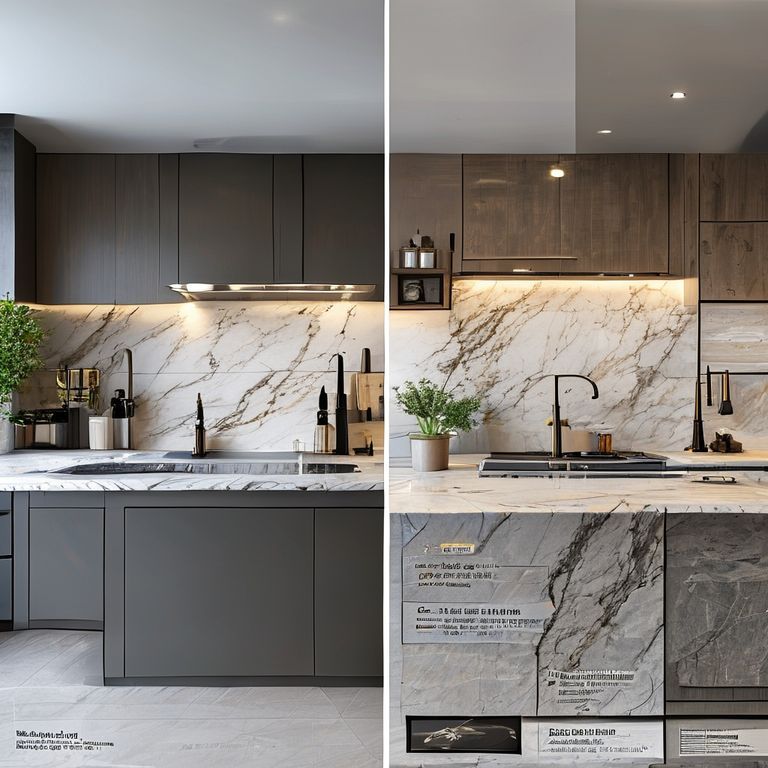
To understand why artificial stone has become the darling of architects and DIY enthusiasts alike, we first have to deconstruct what it actually is. We aren’t talking about cheap plastic or flimsy laminates. Today’s engineered stone—primarily quartz and sintered stone—is a marvel of human ingenuity. By combining crushed natural minerals (like quartz) with high-quality resins and pigments, manufacturers have created a material that captures the soul of natural stone while shedding its temperamental nature. It’s the answer to the age-old heartbreak of seeing a red wine stain bloom on a pristine piece of Italian marble.
The visual appeal is the first thing that hits you. When you browse through a collection of high-definition videos showcasing these materials, you see a spectrum that nature simply can’t provide on demand. You have the “Classic Carrara” look—that soft, ethereal white with grey veining—which offers the timelessness of marble without the constant fear of etching. Then there are the bold, avant-garde designs: deep charcoals with gold lightning-bolt veins, or matte concrete finishes that ground an industrial-style loft. Artificial stone allows for a level of consistency that is impossible with natural slabs. If you see a sample you love in a showroom or a video gallery, that is exactly what will show up at your door. There are no “surprises” hidden in the middle of the slab, no unwanted rust spots or structural fissures that natural granite might harbor.
But why the obsession with videos and galleries? Because artificial stone is tactile. In a video, you can see how the light dances off a “leathered” finish versus a “high-polish” shine. You can see the thickness of a mitered edge that makes a standard slab look like a massive, solid block of stone. Designers use these visual collections to demonstrate how a countertop isn’t just a workspace; it’s a canvas. You can wrap it down the sides of an island in a “waterfall” effect, creating a continuous flow of pattern from the horizontal to the vertical. This seamlessness is one of the strongest arguments for the material. Because it is manufactured, pieces can be joined with such precision that the seams become nearly invisible to the naked eye, a feat nearly impossible with the irregular edges of natural stone.
Beyond the aesthetics, the “soft” power of artificial stone lies in its reliability. We live in a fast-paced world where nobody wants to spend their Sunday sealing their countertops. Natural stones like granite and marble are porous; they breathe, which means they also drink. They soak up oils, juices, and bacteria if not treated with religious care. Artificial stone, by contrast, is non-porous. It is a fortress. This makes it inherently more hygienic, a factor that has skyrocketed in importance recently. When you watch a demonstration video of someone wiping away dried beet juice or permanent marker from a quartz surface with nothing but a damp cloth, you realize the “goodness” of the material isn’t just about how it looks in a photograph—it’s about the peace of mind it offers during the daily grind.
As we look at the vast “complete collection” of design possibilities, we see that artificial stone has also democratized luxury. High-end looks that were once reserved for those who could afford to fly to a quarry in Tuscany are now accessible. This isn’t about “faking it”; it’s about optimizing. It’s about taking the best parts of the earth’s geology and refining them through a process that ensures every square inch is functional. Whether you are aiming for a minimalist Scandinavian kitchen or a moody, dark-toned bathroom sanctuary, the versatility of this medium is unparalleled. It adapts to your vision, rather than forcing you to design around the limitations of a fickle, natural slab.
Continuing our deep dive into the world of artificial stone, we have to talk about the “lifestyle ROI”—the return on investment that goes beyond the resale value of your home. When people ask if artificial stone is “good,” they are often weighing it against the heavyweights: Granite and Marble. Granite is tough, sure, but its busy patterns can feel dated. Marble is gorgeous, but it’s a “diva” that requires constant attention. Artificial stone sits comfortably in the middle, offering the beauty of the latter with the brawn of the former.
Durability is where the “video” evidence really shines. You’ll often see stress tests where heavy objects are dropped or knives are scraped across the surface. While no material is truly indestructible, engineered stone is incredibly resilient to chips and scratches. This is particularly vital for the heart of the home—the kitchen island—where homework is done, groceries are dropped, and life happens. The hardness of quartz, for instance, ranks high on the Mohs scale, meaning it can take the hits of a busy household without showing the scars of battle.
However, to be a savvy consumer, you must understand the nuances of the “complete collection” available. Not all artificial stones are created equal. You have Quartz, which is the most common, and then you have Sintered Stone (like Dekton or Neolith), which is processed under even higher heat and pressure. Sintered stone takes the heat resistance to an entirely different level. While you should generally use a trivet on quartz to avoid “thermal shock” to the resins, sintered stone can often handle a hot pan straight from the stove. When you’re watching videos of professional chefs’ kitchens, you’ll often see these ultra-compact surfaces being used because they can withstand the literal heat of a high-pressure environment.
Another factor that makes artificial stone a superior choice for many is the environmental and ethical narrative. While quarrying any stone has an impact, many manufacturers of artificial stone are now leaning into sustainable practices. They use recycled glass, mirrors, and silica, and they recycle the water used in the manufacturing process. This appeals to the modern homeowner who wants a beautiful space that doesn’t come with a heavy conscience. When you look at the “pictures” of modern factories, you see high-tech facilities that prioritize precision, reducing the waste that often occurs when cutting irregular natural boulders.
Let’s talk about the “All-In-One” visual appeal. When you search for “pictures and videos” of these countertops, pay attention to the lighting. Artificial stone has a unique way of interacting with LED under-cabinet lighting. Because the pigments are distributed evenly, the glow is consistent. There aren’t “dead spots” in the stone where light is absorbed awkwardly. This makes it a dream for photographers and, more importantly, for your social media feed. In an era where we share our lives online, having a “picture-perfect” kitchen is a silent motivator for many renovations.
The installation process is another area where artificial stone wins points. Because the material is consistent in its structural integrity, it is easier for fabricators to cut complex shapes. If you want a circular breakfast bar or an integrated sink where the stone flows directly into the basin, artificial stone is your best friend. The integrated sink, in particular, is a trending feature in “video collections” because it eliminates the grime-catching lip of a traditional under-mount sink. It’s a sleek, monolithic look that feels incredibly futuristic and clean.
Cost is always the elephant in the room. Is artificial stone cheap? No. But is it a better value? Usually, yes. When you factor in the lack of maintenance costs—no annual sealing, no special pH-neutral cleaners, no professional polishing—the total cost of ownership over ten years is often significantly lower than that of natural marble or high-end granite. You are paying for a “set it and forget it” lifestyle. You’re paying for the luxury of not worrying when your guest spills a glass of red wine or your child decides to use the counter as a coloring book.
In the end, the “complete collection” of images and videos you see online isn’t just marketing fluff; it’s a testament to the evolution of home design. Artificial stone has moved past being a “substitute” and has become a “standard.” It offers a level of customization, durability, and sheer aesthetic joy that natural materials struggle to match in a modern context. Whether you’re looking at a slab that perfectly mimics a foggy morning in the Alps or one that looks like a galaxy of shimmering stars, the choice of artificial stone is a declaration that you value both form and function. It’s about creating a space that looks like a magazine cover but functions like a high-performance workshop. So, is artificial stone good for countertops? If you value your time, your sanity, and your home’s aesthetic future, the answer is a resounding yes.









